




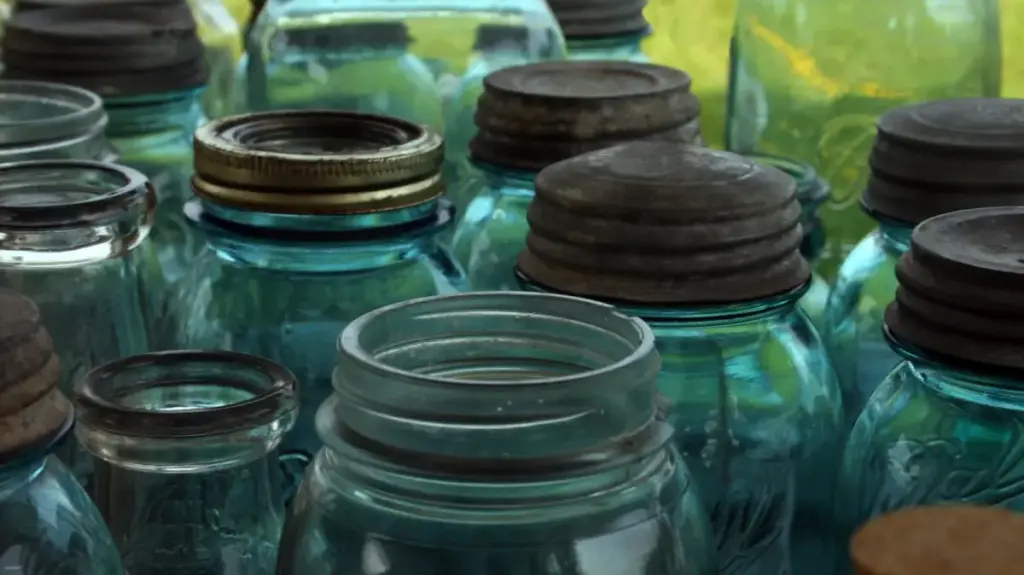
For generations, vintage Mason jars have remained a staple of American households, transitioning seamlessly from practical food preservation tools to rustic home decor accents. Whether utilized as centerpieces or collected for their historical charm, these glass vessels hold a steady appeal among antique enthusiasts. Among the most sought-after and valuable discoveries on the secondhand market is a specific nineteenth-century iteration known simply as the lightning jar. Prized by serious collectors and casual thrifters alike, these unique pieces command attention—and occasionally hefty price tags—at estate sales, flea markets, and thrift stores across the country.
The distinctive name of the lightning jar derives from its innovative mechanism, which features a glass lid secured by a wire bail-and-clamp closure designed to be operated with lightning speed. Introduced in the late nineteenth century, this closure system marked a significant departure from the traditional metal screw-on lids of the era. Historical accounts from the period noted that older metal lids frequently imparted an undesirable metallic taste to preserved foods, a flaw that the glass-and-wire configuration successfully eliminated. Furthermore, the design provided a more reliable seal, making it a revolutionary advancement in home canning technology during a time when food preservation was an essential domestic task.
The history of the lightning jar dates back to the 1880s, following a pivotal patent by Henry William Putnam. Putnam designed a wire hinge system that ingeniously connected the glass base of the jar directly to its glass lid, creating a self-contained unit that reduced the risk of losing hardware components. The popularity of the design led to widespread manufacturing. Over the decades, at least eleven different glass companies across the United States produced their own versions of the lightning jar. Because of this diverse manufacturing background, many of these authentic antiques lack the familiar brand logos, such as Mason or Ball, that modern collectors often associate with vintage glassware.
To ensure proper sealing for food preservation, many of these historical jars were originally fitted with a rubber ring positioned on the underside of the glass lid. This rubber gasket created an airtight environment necessary for canning fruits, vegetables, and meats. However, as manufacturing techniques evolved and newer materials emerged, packaging and preservation methods shifted. By the late 1960s, lightning jars had largely fallen out of fashion, replaced by modern jars that offered easier operation and longer-lasting seals. Despite their eventual commercial decline, the original specimens produced in the late nineteenth and early twentieth centuries have achieved legendary status among modern vintage hunters. While modern manufacturers have produced decorative replicas over the decades, avid thrifters reserve their highest enthusiasm for authentic antiques from the original production eras.

Signs a lightning jar may be worth something
While a broad array of vintage kitchen items and antique tableware has experienced renewed popularity among interior designers and collectors, old glass jars hold a particularly enduring fascination. Vintage glass Mason-style lightning jars, instantly recognizable by their trademark wire closures and matching glass lids, are generating notable buzz within the secondhand marketplace. Depending on the rarity, condition, and manufacturer, pricing for these items varies dramatically. Online marketplaces feature listings starting at modest prices around fourteen dollars, while rarer or exceptionally well-preserved examples routinely command prices in the low hundreds. In some instances, individual authentic jars have reportedly fetched as much as four hundred and fifty dollars from dedicated collectors. This wide pricing spectrum has turned routine thrift store browsing into a high-stakes treasure hunt for many shoppers hoping to spot a valuable piece hiding among modern glassware.
Navigating the market for antique glassware requires a discerning eye, as distinguishing an authentic nineteenth-century lightning jar from a later reproduction can be challenging. Specialized antique documentation and authentication guides provide detailed criteria for evaluating prospective finds, yet mastering a few fundamental indicators can help casual thrifters make informed decisions in the aisle. Examining the wire hardware offers immediate clues regarding a jar’s authenticity. On genuine antique half-pint jars, for instance, the wire components typically twist tightly four or five times around the lid rather than featuring a single, simplistic twist commonly found on modern replicas. Similarly, authentic quart-sized versions generally feature a distinct metal collar equipped with a punched hole on either side through which the wire loops securely pass.
Beyond the hardware, inspecting the glass itself reveals crucial information about the manufacturing era. Authentic lightning jars of virtually any size typically feature embossing directly on the base, displaying identifying details such as the manufacturer’s name—such as Putnam—alongside a mold number that indicates the specific style and production batch of the jar. Because some sophisticated reproduction manufacturers have replicated base embossing, buyers are advised to examine the lip of the jar as well. An exceptionally smooth, modern-feeling rim often suggests a replica rather than a hand-finished nineteenth-century product. Even though modern knock-offs may lack historical value, they frequently retain an appealing aesthetic quality that makes them suitable for contemporary home decoration. Nonetheless, discovering a genuine nineteenth-century lightning jar tucked away on a local thrift store shelf remains a premier accomplishment for dedicated collectors of vintage Americana.