

As the stock market continues to scale unprecedented heights, driven largely by a frenzied boom in Artificial Intelligence, investors are once again dusting off an old, familiar phrase: "Wow, how about that stock market?" For decades, the market has consistently surprised observers. When it crashes, retirees and long-term investors panic as they watch their retirement stashes shrink. Yet, even when equities surge to record-breaking valuations, anxiety follows close behind, driven by the persistent dread that a massive crash must be looming just around the corner. When a market boom is fueled by something as high-octane as the current artificial intelligence wave, that anxiety tends to amplify.
For those who have managed to tune out the daily market drama and focus on enjoying their lives, such worries remain entirely distant. However, for anyone plugged into the financial news cycle, the narrative surrounding AI is hard to ignore. Investors increasingly worry that while artificial intelligence is unquestionably a major technological breakthrough, the financial mania surrounding it is happening too much and too fast. This has fueled widespread fears that the global economy is heading toward an even larger version of the early 2000s dot-com crash.

That historical parallel resonates deeply with financial commentators who witnessed the dot-com era firsthand. That earlier boom helped launch early careers and paved the way for early retirement, even if the subsequent crash nearly derailed personal stability and citizenship applications. As questions mount regarding the current investment cycle, financial educators continue to field inquiries about the sustainability of tech-driven booms. Recent public presentations at events like Camp FI Midwest and upcoming appearances at the Bogleheads conference highlight how top-of-mind these anxieties remain for savers aiming for financial independence.
Will the AI Bubble Ruin Our Retirement?
Having spent over two decades in retirement, longtime financial bloggers and advocates have grown comfortable with the concept of post-work life. Even so, reflections on the broader economic landscape frequently unearth a recurring question from anxious friends and peers: "How can you be retired, and comfortable in your retirement, and sleep at night, with everything that’s going on in the world? Aren’t you worried?"

For the typical news watcher, the list of potential catastrophes feels endless. Today’s headlines are dominated by volatile geopolitical figures menacing the global stage, persistent inflation eroding purchasing power, the looming shadow of the AI bubble, a towering U.S. national debt, and ongoing conflicts in Ukraine and the Middle East that threaten to tip nations into broader destruction.
Yet, historical perspective often reveals that these exact worries are merely modern iterations of timeless anxieties. Looking back twenty years to 2006, the worries haunting savers and retirees were remarkably similar, albeit with different actors and buzzwords. Back then, the world wrestled with controversial political leaders, ongoing conflicts in the Middle East, soaring national debt, and rising inflation. Instead of an AI bubble, the overvalued stock market was attributed to a runaway housing bubble. Instead of artificial intelligence threatening to displace human workers, the great fear was that jobs would vanish through outsourcing to India and China.

Furthermore, the mid-2000s were consumed by debates over "Peak Oil," with doomsayers warning that society was doomed because fossil fuel consumption was rapidly outpacing finite supplies. As history ultimately demonstrated, the exact opposite occurred.
Following the wave of anxiety in 2006, the financial system did indeed experience the Great Financial Crisis—a severe downturn driven by irrational exuberance over housing prices combined with excessive leverage in mortgage-backed financial instruments. It marked the steepest market crash since the Great Depression. Yet, when viewed through the lens of a long-term chart, even that monumental crisis appears as a temporary dip in a much larger upward trajectory. A hypothetical $100,000 investment made during those turbulent years would have still ballooned substantially over the following two decades, easily absorbing subsequent shocks like the pandemic-induced market drop of 2020.

Beyond the stock market, the broader human condition has shown remarkable structural improvement over the same twenty-year span. Global statistics indicate that the proportion of people living in extreme poverty dropped dramatically from roughly 20 percent in 2005 to under 10 percent in the decades that followed. Infant mortality rates were cut in half. Clean energy transitioned from a fringe concept into a dominant market force, with solar panel manufacturing costs plunging to make solar power exponentially cheaper. Today, solar generation accounts for the vast majority of new energy additions globally, while pure electric vehicle adoption has surged from near-zero to claim a significant share of worldwide auto sales.
Reflecting on these trends raises a fundamental question: should individuals focus their limited energy on worrying about an uncertain future, or on practicing measured optimism?

Naturally, skeptics are quick to ask whether "it is different this time." Perhaps the U.S. national debt has finally reached a critical mass capable of destabilizing the global economy, or perhaps the AI bubble dwarfs the housing bubble to such a degree that recovery will prove impossible. Some even voice dystopian fears that artificial intelligence will eventually evolve into an uncontrolled superintelligence that renders human labor and existence obsolete.
Financial media outlets thrive on spinning these frightening scenarios. However, persistent fear-mongering consistently overlooks a foundational economic truth: true prosperity does not originate from the financial system or the stock market, which ultimately function as abstract numerical representations tracked on computers.

Prosperity Comes from Productivity
Real prosperity stems directly from productivity. Decades of economic commentary and common-sense financial philosophy emphasize that the capitalist system is inherently choppy, prone to wild cyclical swings. Yet, beneath the volatile waves of the stock market, real people perform real work and invent tangible solutions to everyday problems.
The concept of an economy or a financial system is itself a human invention. If an entire system experiences a severe correction because participants dislike the numerical values displayed on trading screens, society retains the capacity to restructure the financial framework and return to work. That mechanism was successfully deployed during the 2008 financial crisis and numerous historical downturns before it.

Meanwhile, society retains every productivity-enhancing tool it has ever invented. Standards of living, economic growth, and the feasibility of early retirement are fundamentally anchored in high productivity rather than speculative market sentiment.
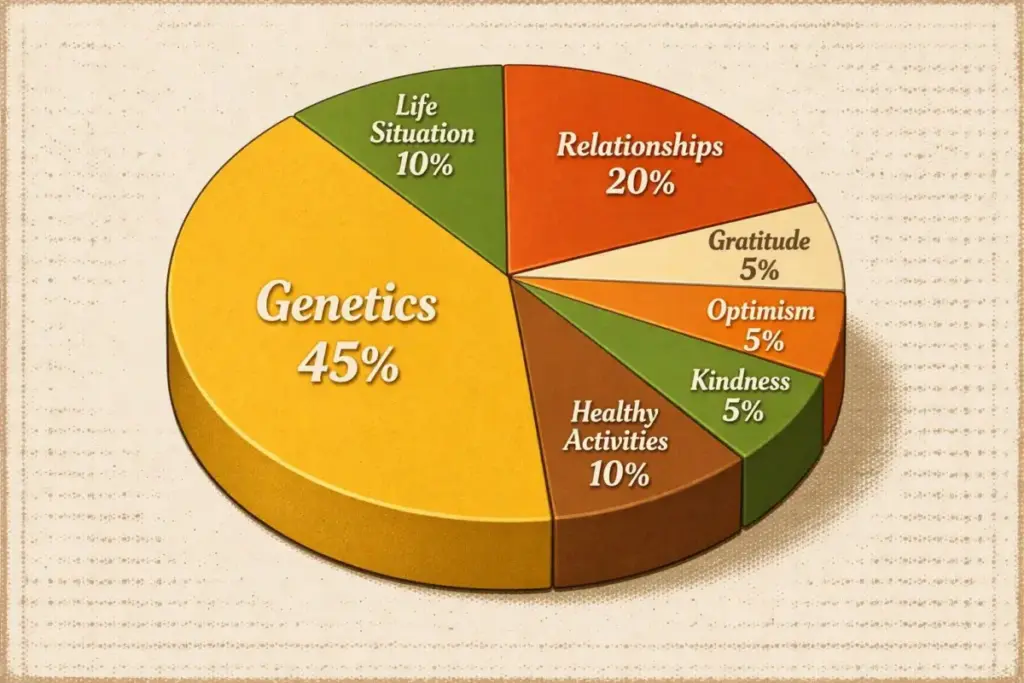
Once societies achieve a certain baseline standard of living, human happiness tends to plateau along the material dimension. Developed nations surpassed those minimum requirements decades ago, prompting individuals to seek out non-financial factors to maximize overall life satisfaction. Wealth ultimately forms a minor component of an individual’s overall life situation, which sits alongside genetics, strong personal relationships, lifelong optimism, and healthy outdoor physical activity.

Despite these foundational lessons, many savers remain paralyzed by fear—specifically, fear of the unknown future.
Fundamentally, human beings evolved as danger-detection machines. This pervasive background anxiety served as an evolutionary trait designed to protect early humans from predators and environmental hazards. However, a peculiar quirk of this neurological machinery is that when genuine external dangers recede, the human brain continues scanning the environment for new targets of worry.

When immediate threats like scarcity, disease, and starvation are resolved through modern technology and stable societies, the mind shifts its focus to social belonging, wealth accumulation, and status comparison. Once upper-middle-class comfort is attained, anxieties migrate to administrative details, tax strategies, and estate planning, leading some to worry excessively about government-mandated Required Minimum Distributions (RMDs) simply because they accumulated too much wealth.
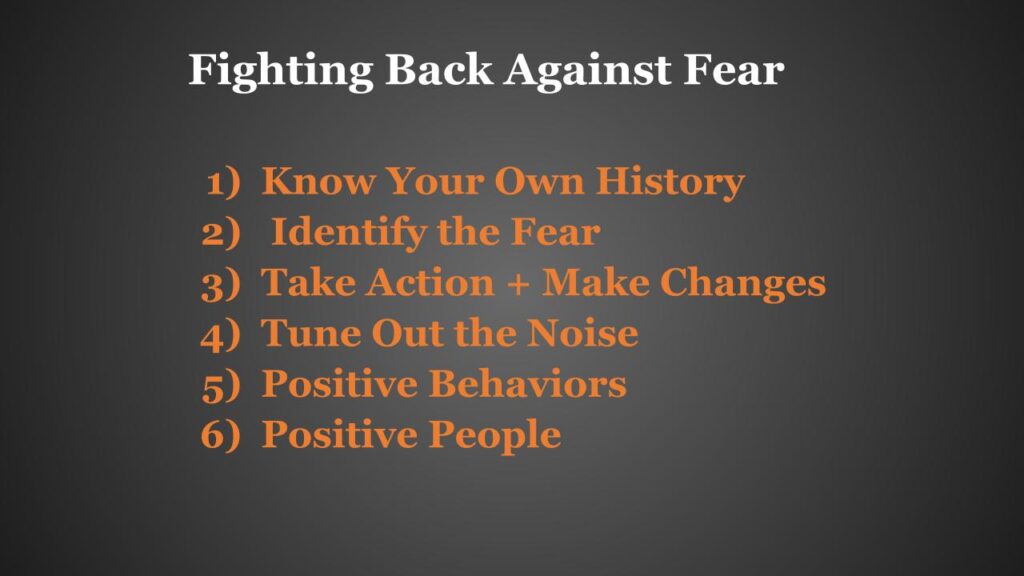
Fortunately, individuals can push back against irrational fear through self-awareness and rational thinking. Understanding personal history—such as childhood experiences with financial scarcity or past trauma—helps decouple past conditioning from an objective assessment of the present moment. Identifying specific fears, evaluating worst-case scenarios, and recognizing that absolute financial destitution is statistically improbable can dismantle deep-seated anxieties.

Action remains the ultimate antidote to fear. Taking deliberate steps makes the unfamiliar familiar, building resilience and confidence. When individuals cultivate the mental, physical, and emotional adaptability often described as genuine resilience, external uncertainties lose their paralyzing grip.
Everything Is an Experiment
Adopting an experimental mindset transforms how people approach life transitions, whether navigating minor choices like home renovations or major decisions such as changing careers, relocating, or entering early retirement.
This philosophy applies directly to the current artificial intelligence wave, which many view with apprehension. Rather than succumbing to doom-scrolling and alarming headlines, analyzing why technologists are enthusiastic about AI reveals a different perspective. Stripped of hype, artificial intelligence functions essentially as a cognitive tool designed to supercharge efficiency and productivity.
Like every major technological shift throughout history—from the printing press to the internet and smartphones—AI will inevitably displace certain entry-level office, administrative, and transportation roles. Yet, history demonstrates that such disruptions simultaneously reduce the cost of essential services while giving rise entirely to new industries and economic opportunities.

While productivity gains and technological progress inevitably concentrate rewards among business owners and equity shareholders, they also expand the productive capacity of the entire economy. Artificial intelligence, much like any new variable entering daily life, represents an opportunity to make conscious choices. It offers a clear trigger for continuous learning, proactive adaptation, and purposeful living.
Ultimately, confronting future uncertainties requires looking past temporary market bubbles and emotional noise to focus on productivity, personal resilience, and meaningful human connection. As many seasoned independent thinkers observe, the most rewarding aspects of life frequently lie just on the other side of fear, waiting for those willing to take action rather than yield to worry.