



Raise your glasses! Now, hold them up until your arms begin to shake. That is the fundamental, agonizing challenge that athletes take on at a competitive steinholding event, which serves as the focus of the latest Long Read featured on the Outside Podcast.
Published on October 18, 2026, the audio feature transports listeners into the uniquely grueling world of competitive beer-holding, a sport where raw physical endurance, mental fortitude, and precise biomechanics collide. In 2025, writer Martin Fritz Huber attended the U.S. national championships of steinholding, an event held during New York City’s bustling annual Oktoberfest celebration in Central Park. Huber immersed himself so completely in the vibrant culture and intense atmosphere of the tournament that he subsequently took a deep dive into the competition’s shaky German roots, the rigorous training and technique employed by elite athletes, and the bizarre backstories of some of its greatest competitors.
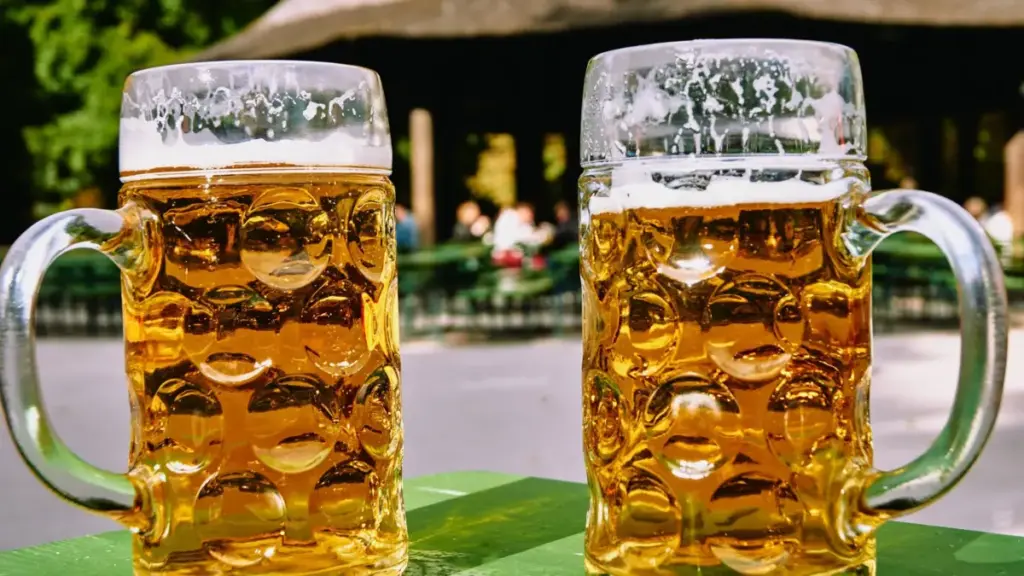
The sport of steinholding, traditionally known in German as Masskrugstemmen, appears deceptively simple to the casual observer. Competitors are handed a traditional Bavarian one-liter glass stein—known as a Masskrug—which is filled to the brim with beer. When accounting for the heavy glass vessel itself and the liquid payload, a standard competition stein weighs approximately five pounds. The rules are starkly minimalist: contestants must extend one arm straight out in front of their bodies, parallel to the ground, with the palm facing down or inward, and hold the heavy mug aloft for as long as humanly possible. The slightest drop of the arm, bend of the elbow, or spill of the beer results in immediate disqualification.
What begins as a manageable test of strength quickly transforms into a profound exercise in psychological endurance. Within minutes, lactic acid floods the shoulders, forearms, and wrists. Tremors begin, sweat pours, and the mind must find a way to override the body’s desperate screams to drop the weight. It is this crucible of pain and perseverance that captured Martin Fritz Huber’s attention amid the festive sounds of Central Park’s Oktoberfest.
As detailed in the Outside Podcast episode, Huber’s fascination led him to investigate the historical underpinnings of the activity. While modern competitive steinholding has evolved into a standardized, highly regulated sport in the United States and various other parts of the world, its origins are deeply rooted in traditional Bavarian festival culture. In Germany and Austria, holding a heavy beer stein for extended periods historically grew out of tavern wagers, tests of local machismo, and folk traditions associated with celebratory gatherings. Over time, these informal displays of strength coalesced into structured tournaments, eventually crossing the Atlantic to find a passionate, rapidly growing following in the United States, where organizations like the U.S. Steinholding Association now sanction regional and national championships.
Attending the 2025 U.S. national championships in Central Park provided Huber with a front-row seat to the pinnacle of the sport. Against the backdrop of Bavarian music, pretzels, and thousands of festival-goers, the nation’s top steinholders gathered to test their limits. Rather than dismissing the event as a mere novelty or a drunken party trick, Huber’s reporting treats competitive steinholding as a legitimate athletic endeavor, complete with specialized training regimens, tactical considerations, and dedicated athletes who take the sport very seriously.
During his deep dive into the subculture, Huber explored the specific training and technique employed by athletes who aspire to national prominence. Success in steinholding requires far more than brute upper-body strength. Competitors must master biomechanical efficiency, locking their joints, engaging their core muscles, and finding a precise center of balance to minimize the strain on the anterior deltoid muscles. Some athletes incorporate specific isometric holds, grip-strengthening exercises, and endurance conditioning into their regular workout routines, treating their preparation with the same discipline seen in more traditional endurance sports.
Furthermore, Huber’s exploration uncovered the bizarre and fascinating backstories of some of the sport’s greatest competitors. Behind the fierce concentration on the Central Park stage are everyday people—engineers, teachers, and tradespeople—who discovered an unexpected knack for outlasting their peers under extreme physical duress. Their journeys to the national championships often involve years of backyard practice, regional qualifying victories, and legendary battles against the clock and their own trembling limbs.
By bringing these stories to the audio format, the Outside Podcast offers listeners a comprehensive look into a subculture that blends athletic grit with traditional festivity. Through Huber’s reporting, the listener is invited to appreciate the subtle complexities of a sport defined by a single, agonizing motion: arm straight, mug steady, eyes forward, holding the line against the inevitable onset of fatigue until only one person remains standing.