
A deleted music video featuring a DJ performing high above the landscape of Grand Teton National Park has reignited public scrutiny and federal concern over unauthorized drone operations in America’s protected public lands, where such flights carry the weight of steep financial penalties and potential jail time.
The online controversy centers on a video clip that surfaced on October 14, posted by a YouTube user before being swiftly scrubbed from the internet along with the creator’s broader digital footprint. According to local reporting by the Jackson Hole News and Guide, the footage captured a man wearing a green jacket actively mixing music on Blacktail Butte, a prominent 7,000-foot mountain situated entirely within the boundaries of Grand Teton National Park in Wyoming. Accompanying the performance were striking aerial shots that appeared to have been captured by an uncrewed aircraft soaring above the rugged landscape.
When the video began circulating across online platforms, including community forums like Reddit, viewers quickly questioned whether the filmmaker had secured the necessary permits or if the flight directly violated longstanding federal regulations. As digital outrage mounted, internet users urged one another to report the footage to park authorities.
Outside reached out to the creator of the video for comment regarding the production of the music video and the source of the aerial footage, but did not receive a response prior to publication. Meanwhile, local park administration has acknowledged being made aware of the circulating clips.
Emily Davis, a spokesperson for Grand Teton National Park, confirmed to Outside that park officials are currently reviewing the footage. However, Davis declined to specify the exact coordinates of the filming location within the park, whether the drone operator had obtained prior written authorization from the park superintendent, or if law enforcement rangers had formally issued citations in connection with the incident.
Behind the ongoing review lies a strict framework of federal regulations designed to protect both the natural environment and human safety within the national park system.
Drones Are Prohibited in National Parks
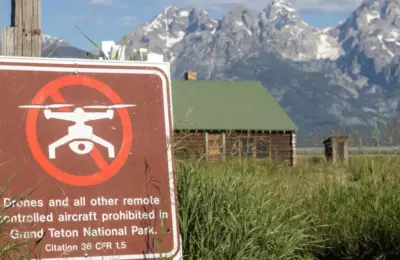
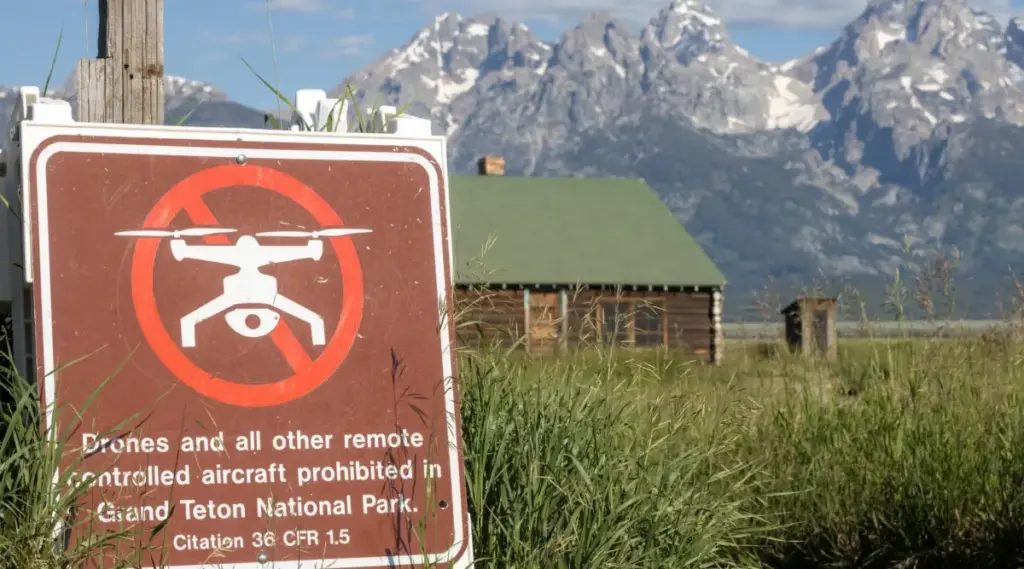
The National Park Service enacted a comprehensive ban on uncrewed aircraft systems across all 433 of its managed sites nationwide in 2014. Under this directive, operating a drone is strictly prohibited unless the pilot has secured explicit, written approval directly from the park superintendent. Violating this federal prohibition is no minor infraction; offenders face severe consequences, including civil fines of up to $5,000 and potential imprisonment for up to six months.
The restrictions are not arbitrary. Park officials emphasize that recreational drones pose significant, multifaceted threats to the delicate ecosystems and visitor experiences that national parks are mandated to preserve.
"Drones can disturb or displace wildlife, create noise, detract from the natural soundscape and scenic views, and pose safety hazards to visitors," Davis explained to Outside, outlining the primary concerns of park management. Beyond environmental disruption, she noted a more critical operational danger: "Unauthorized flights can also ground aerial search-and-rescue missions and wildland firefighting operations."
The incident at Blacktail Butte is far from an isolated occurrence, reflecting a persistent challenge for land managers tasked with policing vast wilderness areas against the backdrop of rapidly advancing and increasingly accessible consumer drone technology. Over the past decade, unauthorized drone flights have repeatedly sparked public controversy and environmental concern across America’s iconic western parks.
In May 2026, just months prior to the Grand Teton DJ video, a visitor in neighboring Yellowstone National Park filmed an illegal drone operating within mere feet of a famous grizzly sow, widely known as Beryl, and her two dependent cubs as they traveled alongside a park roadway. That incident, which was documented by Cowboy State Daily, drew widespread condemnation from wildlife advocates and park enthusiasts for dangerously harassing wildlife.
The friction between recreational drone pilots and park rules dates back to the very inception of the 2014 ban. In the summer of 2014, the fragility of the park environment was underscored when a tourist crashed a drone directly into Yellowstone’s iconic and biologically sensitive Grand Prismatic Spring. Later that same year, another pilot lost control of an aircraft, plunging a drone into the depths of Yellowstone Lake.
Wyoming’s national parks have also seen incidents where the operators could not be readily identified, frustrating law enforcement efforts. In 2017, Grand Teton rangers took the unusual step of appealing publicly to the community for assistance after an unauthorized drone was spotted hovering repeatedly over grizzly bears near the park’s scenic Oxbow Bend area. Despite the public appeal, neither the drone nor the pilot was located at the scene by park personnel.
With the recent disappearance of the Blacktail Butte music video and its creator’s online presence, the latest episode highlights a growing friction between modern digital content creation and the strict legal realities of federal wilderness protection. As park officials continue their review of the footage, the convergence of viral culture and federal conservation laws has once again made it clear that unauthorized drones remain unwelcome in the national parks.