

Published October 14, 2026 03:07AM
By Angelica Haggert
For most people, stepping into a haunted house is a quintessential autumn pastime, a fleeting thrill designed to test the nerves before a return to safety. For Angelica Haggert, however, the relationship with fear is remarkably contradictory. Haggert has never been through a haunted house as a paying customer. The scariest movie she has ever managed to watch is the 2002 psychological horror film The Ring, and while she enjoys a good thriller novel, she admits to being quick to scream when someone appears around a corner a little too fast.
Yet, every October, Haggert disappears into the seasonal whirlwind known as haunt season to manage and orchestrate spooky experiences for thousands of thrill-seekers. Over more than a decade in the industry, she has worked behind the scenes in temporary haunts running through greenhouses, retrofitted shipping containers, sprawling corn mazes, dense forests, and open fields. While each physical setting presents its own distinct atmosphere, the ultimate objective remains entirely consistent: to transport guests into an alternate, terrifying reality, if only for a brief moment.
Having carved out a niche in a small, tight-knit industry populated by unconventional creatives, Haggert has spent more than ten years managing hundreds of scare actors and witnessing thousands of visitors scream in genuine terror before laughing at themselves. Her tenure has involved painting dozens of artificial tombstones, losing countless pairs of work pants to fake blood spills, and logging countless hours bathed in the disorienting glow of strobe lights. Beneath the theatrical chaos, however, lies a complex logistical operation driven by narrative design, environmental hazards, and strict safety protocols.
How Do You Design the Scariest Haunts?
When visitors enter or exit an attraction, one of the most frequent questions they ask is how the creative teams dream up such intense scares and whether there are overarching storylines. To the average guest, the experience might feel like a chaotic barrage of monsters and jump scares, but Haggert notes that the best haunts are firmly rooted in cohesive narratives.
While she often jokes to curious patrons that she simply lacks sleep or suffers from persistent nightmares, the reality is a deliberate exercise in examining what makes things classically scary and translating those themes into a unified story. Even if visitors do not catch every narrative nuance, a structured storyline elevates the entire production. From character names—even though the monsters rarely pause to introduce themselves—to subtle environmental easter eggs hidden within sets and set dressings, the storyline serves to guide guests through the emotional peaks and valleys of terror.
Throughout her career working across three different outdoor haunts, Haggert has experienced varying styles of collaborative writing. At her current location, broad themes and overarching stories are debated and refined by a small leadership group of four people, after which the specific characters, dialogue cues, and scene layouts are written and designed by a dedicated lead storyteller.
The Operational Complexity of Outdoor Haunts
Operating a haunted attraction outdoors introduces a vast layer of logistical complexity that indoor facilities rarely have to navigate. Unlike permanent indoor buildings with reliable climate control and fixed infrastructure, outdoor setups must contend with unpredictable autumn weather, operating rain, shine, or snow. Furthermore, outdoor managers must factor in the natural environment, utilizing real fields, ancient trees, and local wildlife—including the occasional curious raccoon—as part of the immersive landscape.
From a practical standpoint, keeping actors warm often requires careful layering beneath costumes. Powering remote props, lighting arrays, and complex sound systems across a dark field requires resourceful engineering, usually achieved through car batteries or banked solar power connections.
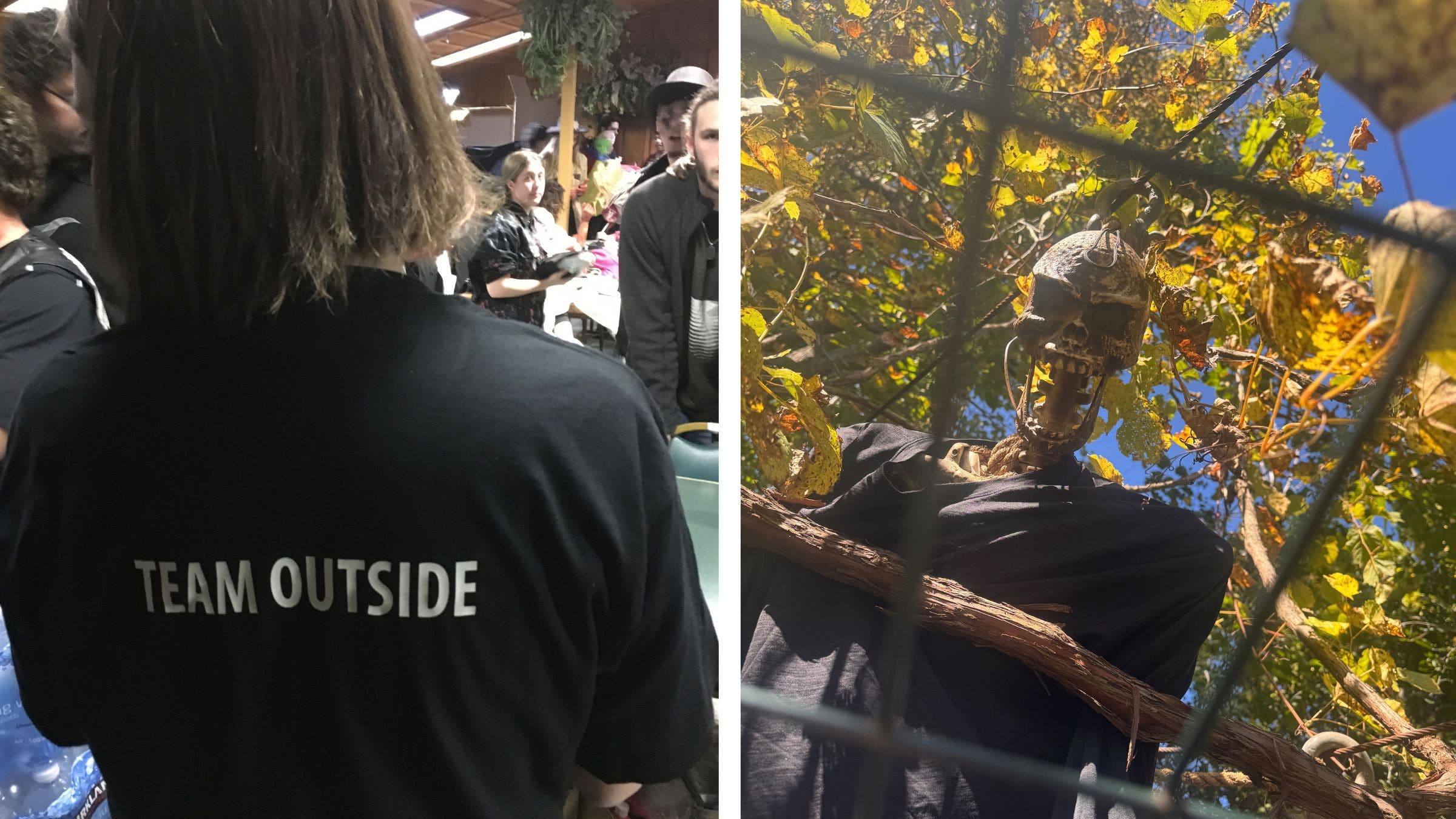
Yet, from the perspective of the visitor, the great outdoors provides a distinct atmospheric advantage that cannot be fully replicated inside a building. The ambient uncertainty of natural surroundings forces guests to question every sensory input: Are those shifting shadows being cast by the autumn wind rustling through the branches, or is someone lurking quietly in the brush? Is that sudden rustling noise in the field a harmless raccoon, or a zombie waiting to leap out and trigger a scream? Despite the added operational hurdles, Haggert has proudly identified as "Team Outside" for more than a decade, noting she would have little interest in running a traditional indoor haunt.
Costume, Makeup, and the Reality of Near-Darkness
A common misconception among the public is that haunt actors require intricate, highly detailed makeup to be effective. In reality, because the vast majority of haunted attractions take place in near-total darkness, fine cosmetic details are virtually invisible to the passing public.
The most effective haunt makeup typically relies on dark smudges to convey dirt, fatigue, or general dishevelment, paired with strategically placed highlights and fake blood that draw attention to an actor’s features when caught in a sudden flash of light. On average, preparing an actor for their role takes roughly 15 minutes.
Outdoors, elaborate costumes take a backseat to practical considerations and performance capability. Actors frequently wear multiple layers of clothing to combat the chill, rain gear to stay relatively dry, sturdy boots to navigate muddy dirt paths, and even hats and gloves. Because the physical environment is demanding, the success of the scare depends far less on high-fashion costume design and far more on how effectively an actor can manipulate a visitor’s emotions during a brief interaction.
Scripting and the Rhythm of Performance
For those familiar with traditional theater, haunt acting demands a unique set of skills. Performers are tasked with executing the exact same performance roughly every 12 minutes, repeating the cycle for hours on end, while facing an entirely new audience every single time. Compounding the challenge is the emotional and physical state of the audience, who may arrive cold, boisterous, genuinely terrified, intoxicated, or simply overwhelmed.
Because individual interactions last anywhere from 30 seconds to five minutes and vary wildly from group to group, management relies heavily on suggestive scripting rather than rigid, memorized dialogue. Actors are typically provided with key thematic phrases or words—such as "They’re coming…" or "Can you see him?"—rather than mandated lines, giving them the flexibility to improvise based on the reactions of the people standing directly in front of them.
Safety Rules and Actor-Visitor Boundaries
Safety protocols regarding physical contact vary by region, but at Haggert’s current operation in Ontario, Canada, actors are strictly prohibited from touching the visitors. Staff members are trained to remain at "punching distance" from customers. When people experience sudden fear, their physiological fight-or-flight response can manifest chaotically, and maintaining physical separation ensures that neither guests nor performers are accidentally injured. While some specialized attractions incorporate touch-based scares, Haggert emphasizes that an environment can be deeply terrifying without any physical contact whatsoever.
Conversely, visitors are strictly instructed not to touch the performers. Policies regarding cell phone usage, recording, and flashlights vary depending on the specific venue, but guests are universally urged to follow all pre-show instructions provided by staff before stepping past the threshold.
Command Centers and the Illusion of Control
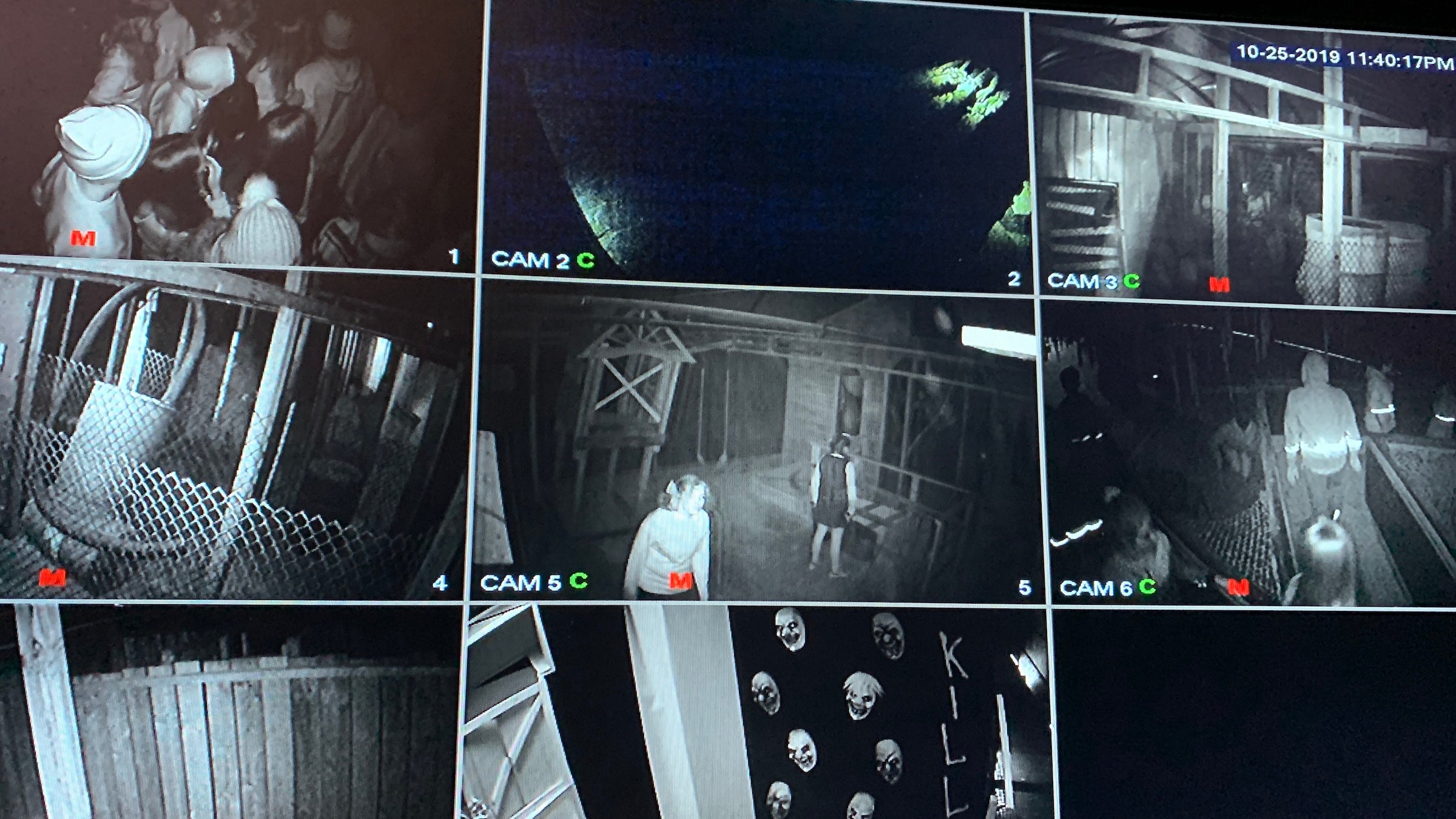
During live operations, management requires a vantage point to oversee the sprawling network of scares. One of Haggert’s favorite historical setups involved a haunt constructed out of repurposed shipping containers, where one container was transformed into a master control room equipped with night-vision security monitors and override triggers for lighting and sound effects, effectively functioning as a control panel for theatrical magic.
In more traditional outdoor settings, Haggert typically manages the production from hidden staff pathways tucked carefully behind hay bales, strategically placed perimeter fencing, or shadowed corners. While guests practically never spot management during the tour, the actors are acutely aware that supervisory eyes are always watching.
Safety Measures for Iconic Props
Among the most popular elements of any haunted attraction is the classic chainsaw scare, which reliably prompts a deafening roar and immediate panic. In Ontario and many other jurisdictions, removing the actual cutting chain from the chainsaw is a mandatory safety requirement. The absence of a chain does nothing to diminish the terrifying auditory impact; the effectiveness of the gag relies entirely on the actor’s handling, using the machine to project noise and intimidation safely. This same rigorous logic applies to any potentially dangerous prop patrons might encounter, including machetes, axes, and metal pipes. While the props may be heavy or authentic in appearance, their blades are dulled, and they are operated exclusively by highly trained professionals committed to ensuring guests remain entirely out of harm’s way.
Managing Audiences and Escorting the Overwhelmed
Most temporary haunted attractions operate under strict time and resource constraints. Because delivering effective scares requires dozens of actors moving groups through at a rapid pace—operating under that strict 12-minute cycle—there is very little flexibility to adjust the intensity of the performance for younger or more sensitive audiences on the fly. While some large amusement parks have experimented with light-up wands or necklaces to signal actors to tone down the scares, implementing such systems in fast-moving, mixed-group environments presents significant operational hurdles. Instead, some venues achieve success by offering limited daylight pre-opening time slots without actors, allowing cautious visitors to walk through and examine the sets, lighting effects, and atmosphere at their own pace.
While Haggert has never had to completely shut down an active haunt for emergency safety reasons over a decade of management, she has frequently intervened to escort individuals out of the attraction. Removals typically occur for two primary reasons: visitors becoming dangerously overwhelmed by fear, or patrons becoming excessively unruly.
When a visitor experiences a severe stress reaction—such as a full panic attack, a psychological meltdown, or freezing completely in place out of sheer terror—actors are rigorously trained to break character instantly. Performers know to transition rapidly from a terrifying persona to a calm, reassuring human presence, dropping all threats and introducing themselves by their real name to anchor the customer back to reality. Once the performer radios for assistance, Haggert steps in to calm the individual down, often using humor to guide them safely back to the outside world. Ironically, that walk of shame or safety back to the exit can occasionally feel just as daunting to the overwhelmed customer, as they are still navigating the dark, eerie confines of the outdoor landscape.
Remaining Afraid
Despite dedicating a decade of her life to the meticulous engineering of terror, Haggert has no plans to cross the barrier into visitor status. She loves the profound, immersive artistry that a well-designed haunt creates, but she harbors a genuine aversion to being startled or frightened herself. It remains an affectionate running joke among her staff that everyone knows not to play a practical joke or launch a surprise scare on her when she is walking the grounds to check on operations.
As haunt season continues, Haggert encourages enthusiasts to seek out spooky local attractions and experience the scares she remains far too terrified to face herself.