



For more than a year, acclaimed Brazilian astrophotographer Kiko Fairbairn lived with a singular vision in mind: traveling thousands of miles to northern Spain to photograph the total solar eclipse of August 12, 2026. Months of meticulous digital mapping, satellite terrain study, and equipment checklists preceded the trip. Yet, as any seasoned landscape photographer will attest, planning from a continent away is only the prologue. The true test begins the moment boots touch the ground, and for Fairbairn, the hard work ultimately culminated in a breathtaking visual triumph.
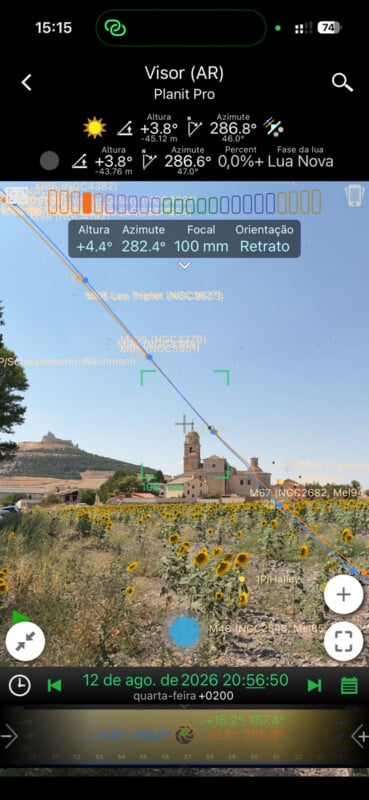
"Once I arrived near Burgos, the real photographic search began," Fairbairn told PetaPixel. "I spent time scouting the landscape, using planning apps to fine-tune how the path of the eclipse would align with the terrain and the elements I was finding in the foreground."
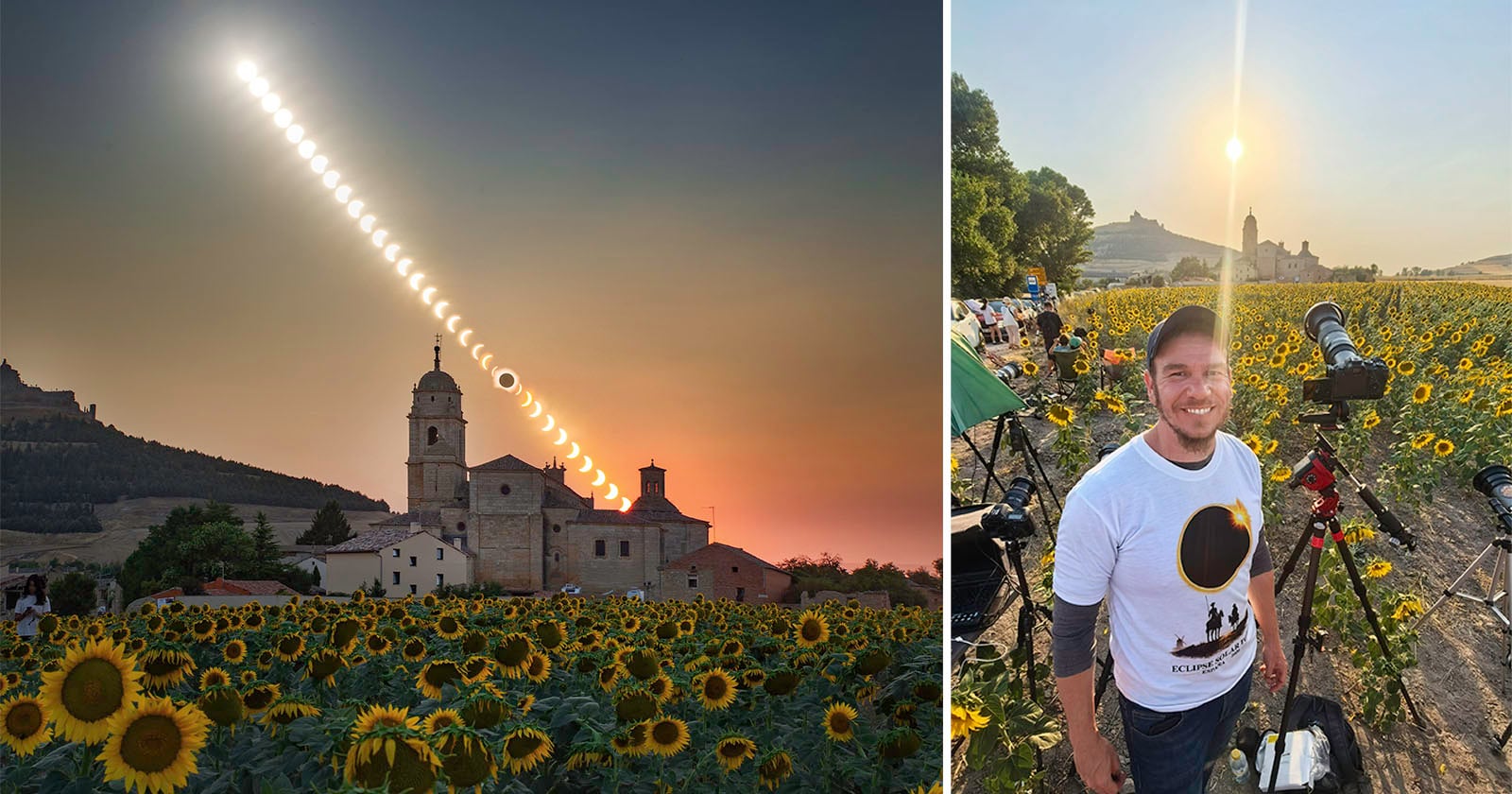
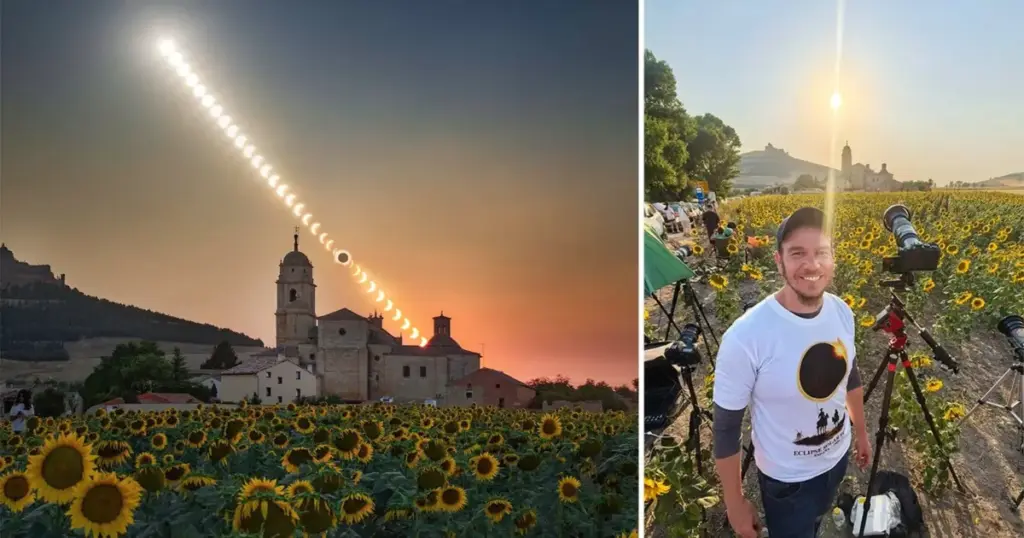
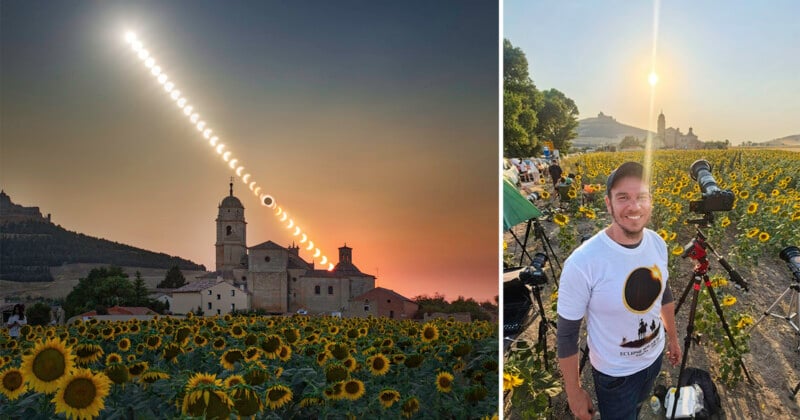
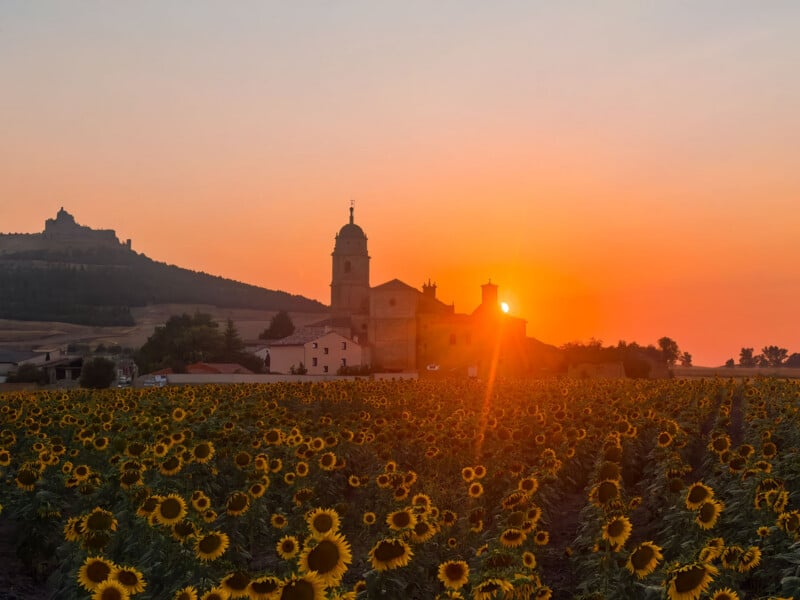
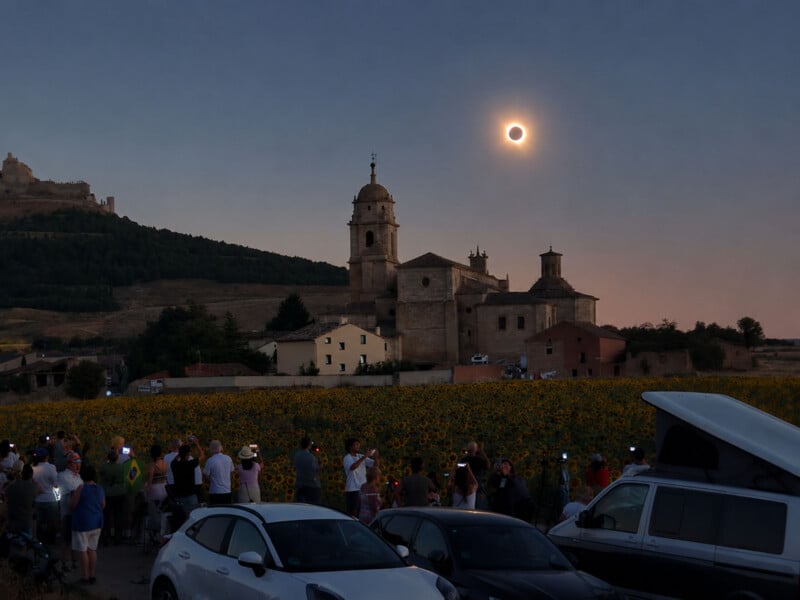
That intense ground-level scouting led him to a sprawling, vibrant field of sunflowers situated near the historic town of Castrojeriz, complete with an ancient stone church and distant castle ruins rising dramatically behind the crops. The moment he laid eyes on the composition, everything clicked into place. After months of abstract preparation and theoretical calculations, the conceptual photograph materialized right before him. The landscape, the architecture, the agricultural rows of sunflowers, and the anticipated path of totality seemed destined to converge.
This high-stakes endeavor was far from Fairbairn’s first astronomical rodeo. A few years prior, the veteran photographer captured an annular solar eclipse in his native Brazil. However, as Fairbairn quickly points out, witnessing and documenting a total solar eclipse is an entirely different caliber of experience. Spain represented the culmination of more than a year of relentless anticipation, imagination, and strategic logistics, followed by those split-second, instinctual decisions in the field that no smartphone application or geographical map can ever make for a photographer.
The delicate balance between rigorous preparation, on-the-ground scouting, and pure atmospheric luck—particularly concerning cloud cover during the precious minutes of totality—remains one of the most exhilarating aspects of professional photography. When all those variables successfully align, the result transcends simple documentation and enters the realm of magic.
A Multi-Camera Approach
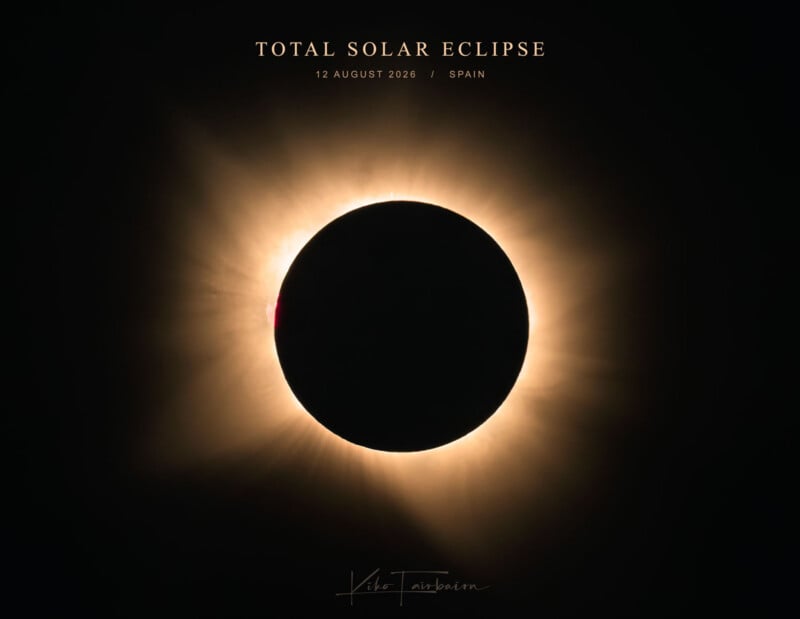
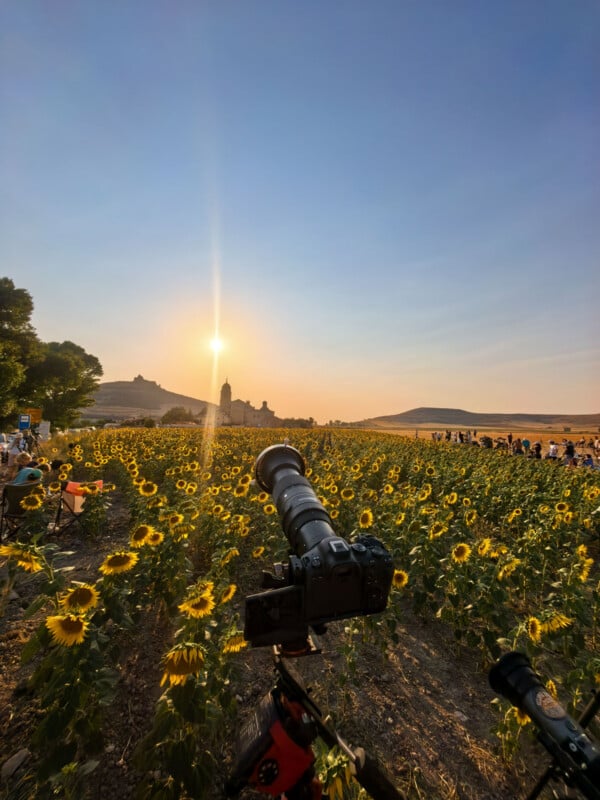
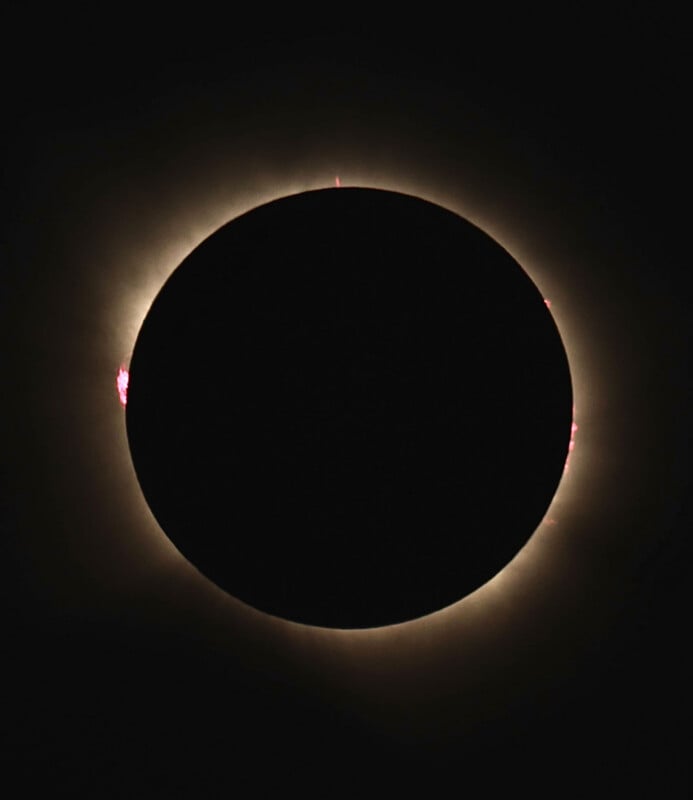
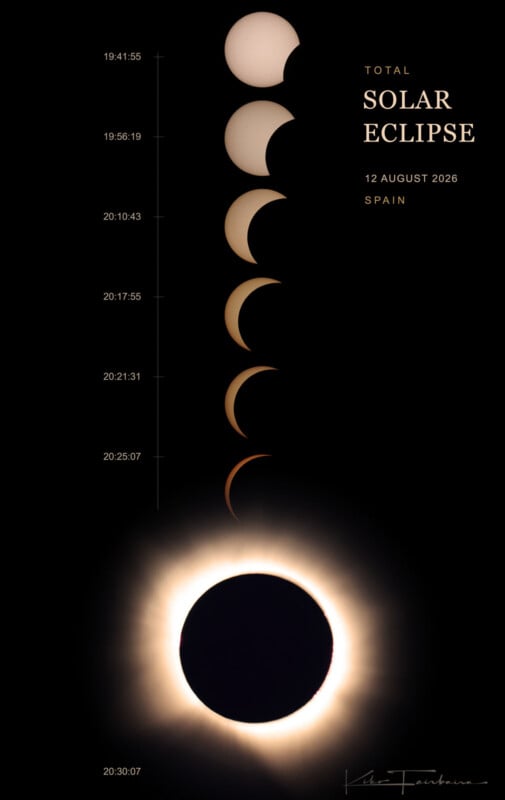
To tackle the complexities of a total solar eclipse, Fairbairn deployed a multi-camera strategy designed to cover multiple narrative angles simultaneously. His first camera setup was dedicated strictly to capturing high-magnification, close-up details of the Sun itself. For this technical task, he mounted a 150-600mm telephoto zoom lens equipped with a 2x teleconverter, pairing the glass with a specialized solar filter and a motorized celestial tracker to compensate for Earth’s rotation.
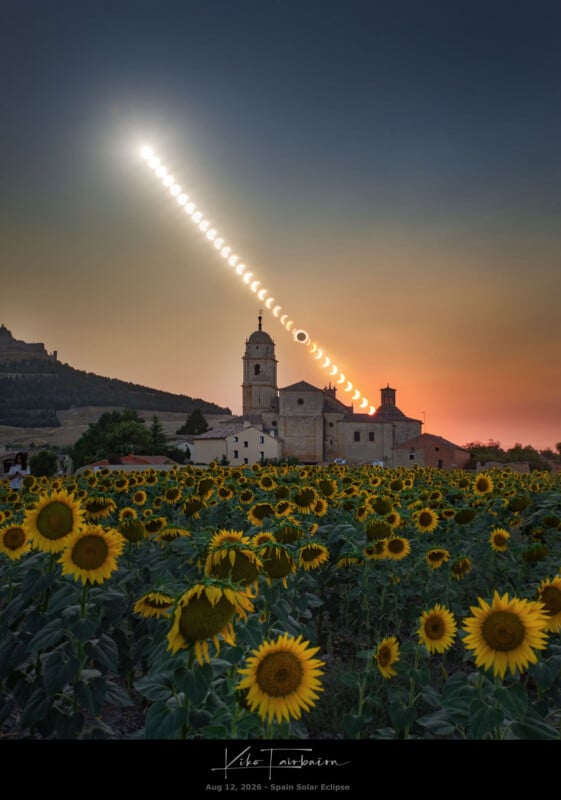
This dedicated rig recorded the progression of the eclipse continuously, granting Fairbairn the creative freedom to focus his attention elsewhere with a second camera system aimed at environmental storytelling and landscape integration. While the close-up frames of the solar corona were captured using a modern Canon EOS R6 Mark III, Fairbairn relied on a trusted classic for his wide-angle landscape framing: his dependable, long-serving digital SLR, the Canon EOS 5D Mark III.
"It’s an old workhorse," Fairbairn says of his venerable 5D. "लेकिन it was perfect for what I wanted to do here."
For that second mission, the sunflower field near Castrojeriz exercised a magnetic pull. Photographing a solar celestial event over a field of heliotropic flowers—whose entire biological identity is intrinsically tied to the Sun—presented a powerful thematic resonance. However, Fairbairn was careful to avoid leaning on the concept as a mere visual gimmick. The composition still had to stand firmly on its own merits as a compelling photograph.
Upon selecting the ideal field, he spent hours walking the terrain, evaluating various angles and focal lengths to secure a layered, dynamic composition featuring healthy, expressive foreground blooms, a distant historical church, and looming medieval castle ruins on a nearby hill. Initially experimenting with an ultra-wide 16-35mm lens, he found that distant architectural elements appeared too diminutive within the frame. He ultimately switched to a 24-70mm zoom lens, locking the focal length at 38mm. This choice brought all the desired narrative elements into harmonious balance: the foreground sunflowers, the distant church, the hillside castle ruins, and the diagonal progression of the eclipse traversing the sky, with totality perfectly positioned directly above the church architecture.
Technical Decisions In the Field
Managing exposure during a total solar eclipse presents severe technical challenges because ambient light levels plunge dramatically over a very short window of time. To safeguard against blown highlights or crushed shadows without needing to fumble with camera settings during the event itself, Fairbairn opted for aggressive exposure bracketing on his landscape camera.
For each phase of the sequence, he captured a foundational exposure alongside a darker frame shot two stops down and a brighter frame shot two stops up. This resulted in RAW file sequences captured at shutter speeds such as 1/50, 1/200, and 1/800 of a second. By choosing aggressive bracketing, he secured a wide exposure safety margin, ensuring ample shadow and highlight data for post-processing without forcing him to manually adjust dials as totality approached.
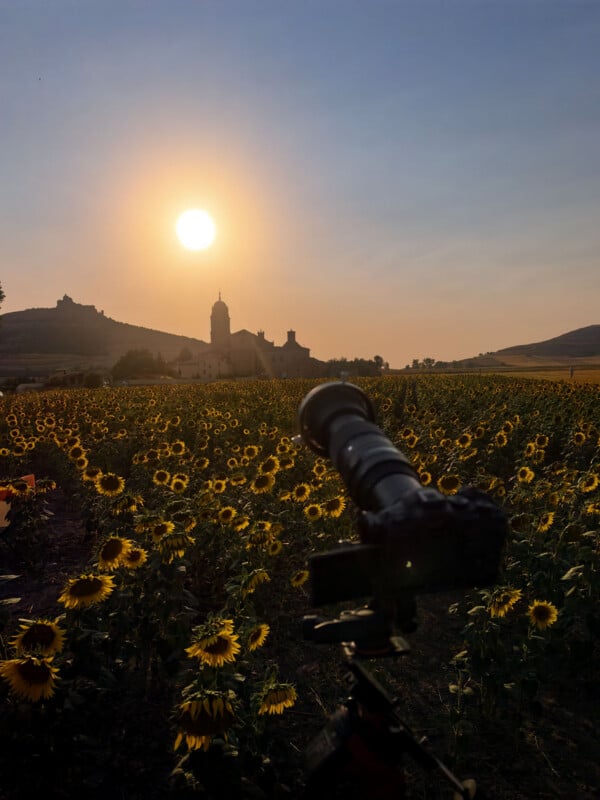
In total, he fired off nearly 300 frames while utilizing a Haida ND 3.0 filter. To ensure the camera system maintained uninterrupted operation throughout the sequence, he powered the body via a dummy battery linked to an external power bank. Because he kept his cameras and tripod compositions completely static throughout the eclipse—which lasted precisely 1 minute and 46 seconds at his specific geographic coordinates in northern Spain—he was able to cherry-pick the optimal exposures from each bracketed sequence during post-production, blending darker or brighter frames as needed.
This meticulous preparation allowed the technical framework to essentially fade into the background. By automating his exposure strategy and locking down his composition well in advance, Fairbairn ensured he would not spend the most extraordinary seconds of the event staring blindly at the rear LCD screen of his camera.
The Precious Moments of Totality
Speaking of totality, Fairbairn’s location granted him exactly 106 seconds of totality to record and, crucially, to experience. For the photographer, making time to step away from the viewfinders was an indispensable part of the journey.
"One of the biggest mistakes we can make as photographers during an eclipse is becoming so focused on capturing it we forget to actually experience it," Fairbairn reflects.
He counts himself exceptionally fortunate to have traveled to Spain alongside his sister. Beyond assisting with behind-the-scenes documentation—including recording the precise moment Fairbairn finally looked away from his equipment to gaze up at the sky unassisted—her footage captured a raw human reaction that words struggle to fully convey.
"My reaction in that video says much more than I could probably describe in words. There is this immediate sense of shock and awe—almost disbelief at what I was seeing," Fairbairn notes. Despite spending more than a year planning, scouting, and preparing gear, nothing entirely prepares a person for the visceral visual and emotional impact of totality.
For those 106 seconds, observers watch an extraordinary cosmic alignment unfold in real time. The quality of ambient light shifts radically, the surrounding landscape takes on an unfamiliar hue, and the Sun—a constant fixture of daily life—suddenly appears alien and transformed behind the dark disk of the Moon. It is a surreal, beautiful, and genuinely arresting phenomenon.
For those who ever get the chance to witness a total solar eclipse firsthand, Fairbairn’s advice is straightforward: take the photographs, but make sure to look up. While some images endure because of the technical skill captured within the frame, others remain unforgettable because of the sheer feeling of standing beneath the darkened sky.
Beyond nailing the imagery, Fairbairn emphasized that the true highlight of the expedition was sharing the experience with loved ones. Having his sister and close friends from the Brazilian astronomy and astrophotography community by his side elevated a rare scientific event into a deeply personal milestone. Traveling companions provided invaluable support, helping troubleshoot equipment hiccups and easing pre-eclipse nerves in the tense hours leading up to first contact.
Fairbairn readily admits he felt considerable tension before totality arrived. With over a year of planning invested and no second chances allowed, the pressure to execute was high. Even with precise planning software confirming the solar and lunar trajectories, a persistent voice in the back of his mind questioned whether every variable had been accounted for until the moment the alignment fell perfectly into his composition.
The Astrophotography Connection
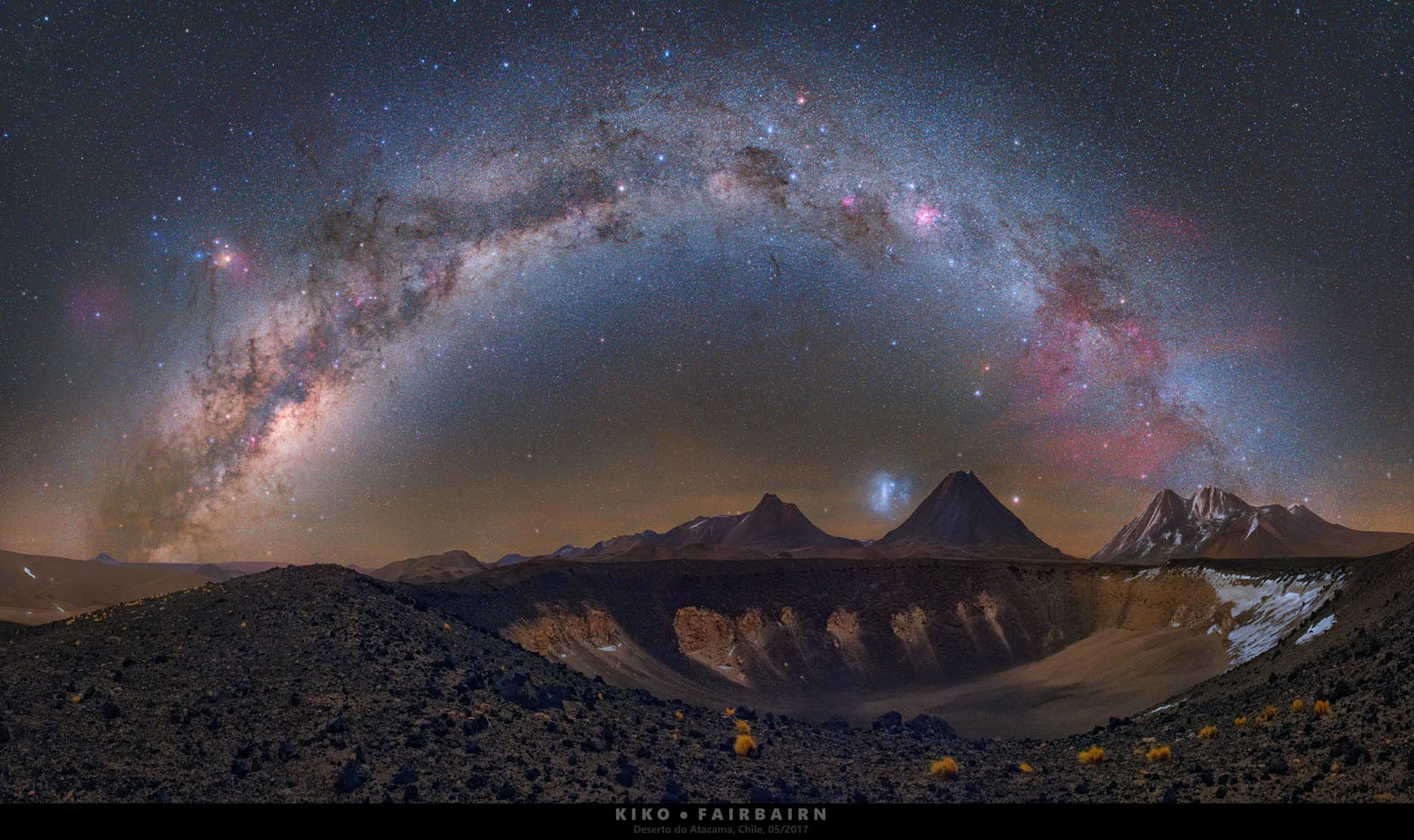
As a seasoned astrophotographer with more than 15 years of experience specializing in deep-sky imaging, tracked landscapes, and expansive panoramas, Fairbairn brings a deep scientific appreciation to his craft. His extensive portfolio has earned international recognition, including publication by NASA, National Geographic, the BBC, and Scientific American, alongside winning the prestigious Sir Patrick Moore Prize in the 2019 Astronomy Photographer of the Year competition. He is also an active science communicator, having delivered TED talks and educational lectures at schools and observatories regarding the intersection of art and astronomy.
Yet, while traditional astrophotography often involves long, deliberate exposures spanning hours under dark skies, a total solar eclipse operates on an entirely different temporal scale. Totality is finished in the blink of an eye, leaving photographers less than two minutes to capture a transient celestial alignment.
That fleeting window makes the underlying astronomical mechanics all the more poetic. The Sun is roughly 400 times larger than the Moon, but it is also roughly 400 times farther away from Earth, creating the precise cosmic coincidence where both bodies appear nearly identical in angular size from our planetary perspective. This geometric alignment is what allows the Moon to block the brilliant solar photosphere completely during totality, exposing the ethereal tendrils of the solar corona.
Understanding those mechanics deepens the experience of watching an eclipse unfold overhead. It transforms a visual spectacle into a tangible awareness of planetary motion—a rare moment where the Earth, Moon, and Sun achieve a momentary, perfect intersection from one exact spot on the globe.

As the equipment packed down and the sky returned to normal, Fairbairn carried away memories that extended far beyond the digital files stored on his memory cards. Sharing those 106 seconds of cosmic shadow with his sister and dear friends solidified the expedition as one of the defining highlights of his life, proving that the true value of chasing the cosmos lies just as much in the human connections forged beneath the sky as it does in the images brought home.