
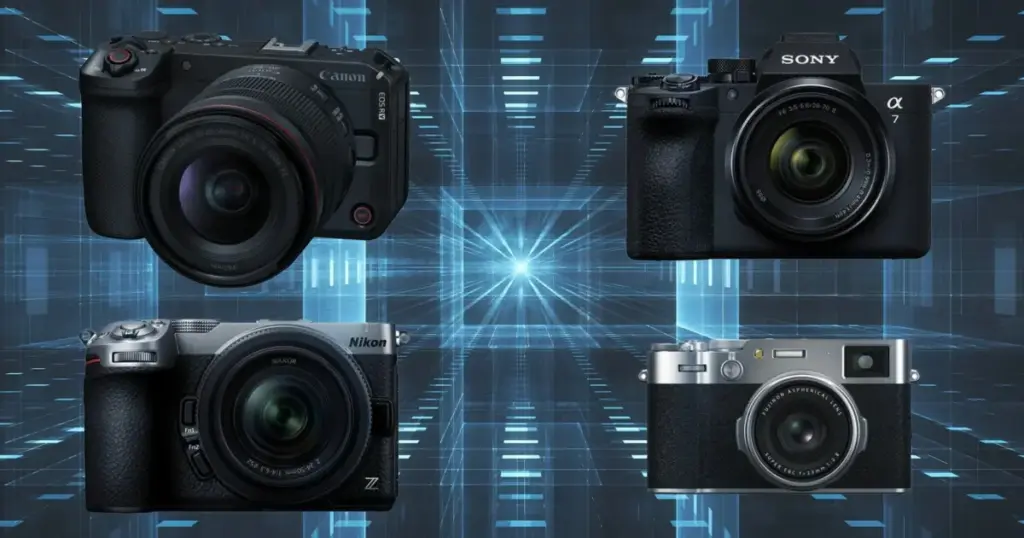
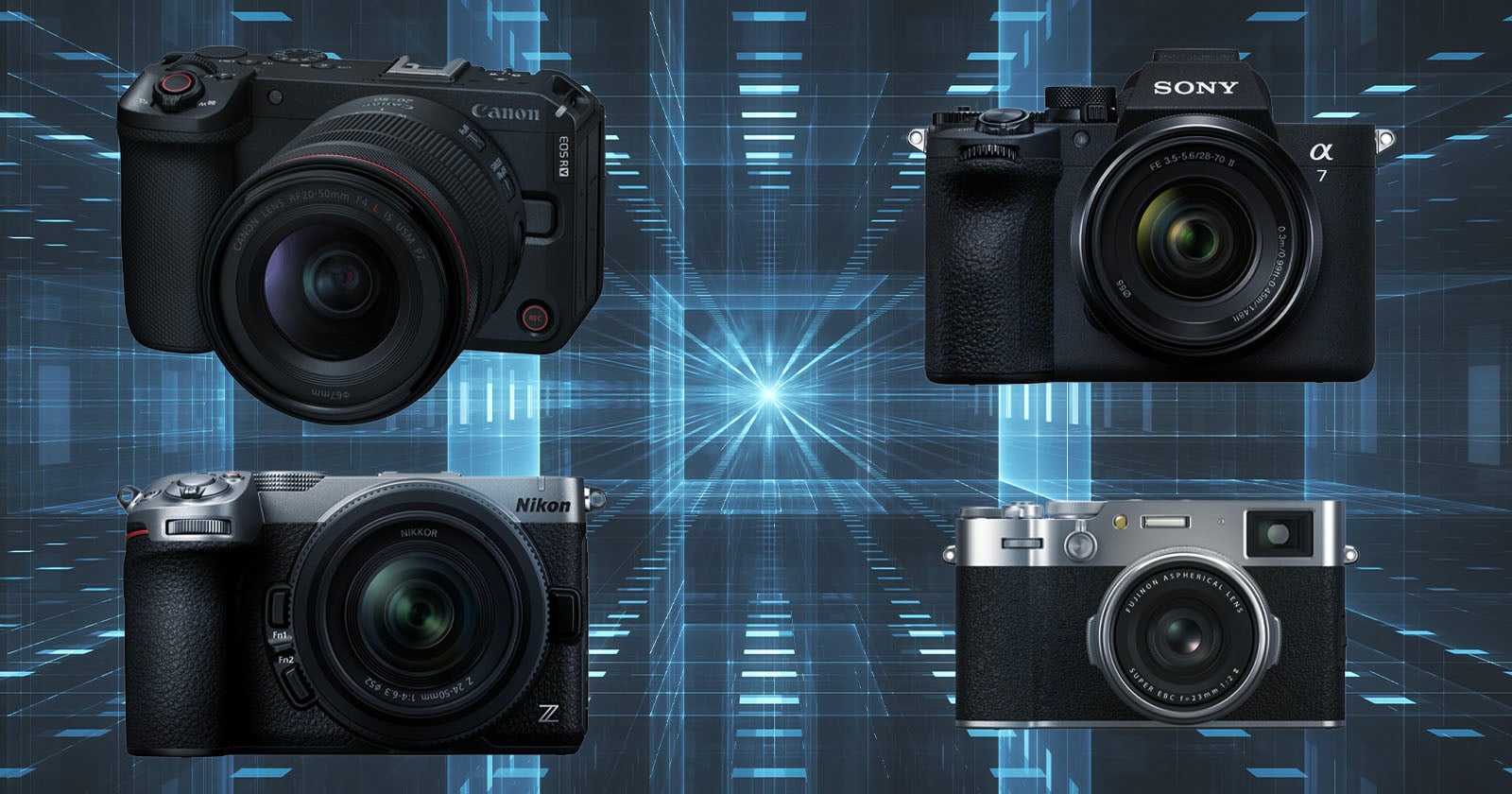
In an industry navigating rapid technological shifts, the heavyweights of the digital imaging world are looking ahead with strikingly different blueprints. A recent series of exclusive executive interviews published by the prominent Japanese business publication Nikkei has shed light on how the top four camera manufacturers—Canon, Nikon, Sony, and Fujifilm—plan to shape the future of photography.
Spotted initially by industry observers at Photo Rumors, the feature brought together top leadership figures from across the sector: Go Tokura of Canon, Hiroyuki Ikegami of Nikon, Kenji Tanaka of Sony, and Koji Matsumoto of Fujifilm. Each executive was pressed on the existential and practical questions currently facing the market, specifically the explosive growth of generative artificial intelligence, the ever-increasing demand for advanced video performance, and the enduring consumer desire to replicate the looks and textures of traditional film photography.
While all four companies share a common goal of maintaining profitability and relevance in an era dominated by increasingly capable smartphones, their strategic answers reveal starkly contrasting visions for where the camera industry is heading next.
Canon Focuses on the Joy of the Shoot and Hybrid Creator Demands
For Canon, the current resurgence in the camera market is being heavily propelled by a demographic that many traditionalists might find surprising: younger consumers. According to Canon’s Go Tokura, this new wave of buyers is approaching compact digital cameras with a mindset distinct from previous generations of gear-focused enthusiasts.
"Young people are driving the current growth of compact digital cameras," Tokura tells Nikkei. "They certainly aren’t buying them just because of high performance or image quality; they enjoy the shooting experience itself, even if it comes with some minor inconveniences."
This shift in consumer behavior is forcing a reevaluation of how camera hardware is designed, marketed, and structured. Historically, camera lineups were strictly hierarchical, segmented primarily around pure performance benchmarks and tiered price points. However, Tokura notes that Canon’s future strategy must weave in intangible elements of style, tactile feel, and the pure experiential joy of capturing an image. As diverse ways of enjoying photography spread across society, individual users are increasingly looking for tools that allow them to express their unique sense of self.
Looking toward immediate product developments, Canon is also positioning itself to capture the exploding demand for hybrid content creation. Tokura points out that the company intends to expand its dedicated video-oriented "V Series" lineup based on direct feedback from customers.
Crucially, this expansion will not happen in a vacuum. Canon recognizes that modern creators often need to pivot seamlessly between moving and still imagery. Consequently, the company is prioritizing the enrichment of its video-oriented lens selection, ensuring that new glass designed primarily for video capture can perform just as reliably when shooting traditional stills.
Nikon Balances Flagship Tech Cascades with the "Smartphone Plus One" Strategy
Nikon’s leadership shares some of Canon’s observations regarding the changing demographic landscape, but the company is approaching its operational and product roadmap through a different lens.
Hiroyuki Ikegami explains that Nikon is currently in the middle of a foundational transition. While the company’s flagship Z9 camera has set a high standard for professional performance, cascading those advanced features down into lower-end, more accessible models has proven to be a deliberate and time-consuming process. Simply rushing to complete a broad lineup spanning from high-end to low-end can drive down average selling prices, a risk Nikon is carefully managing as it concentrates heavy investments into next-generation image processing engines, specialized sensors, and advanced video capabilities.
At the same time, Nikon is acutely aware of the ubiquitous presence of mobile phones in everyday life. Rather than viewing smartphones purely as an existential threat, Ikegami frames them as an opportunity to establish a symbiotic relationship with dedicated camera hardware.
As smartphones become more sophisticated, Nikon believes there is a distinct and growing demand for dedicated cameras to act as a "smartphone plus one" device—a secondary tool that helps preserve precious smartphone battery life while offering superior optical performance and a more engaging physical shooting process. The core objective, Ikegami notes, is developing products that naturally appeal to younger demographics who are eager to pick them up and step away from their phone screens.
Sony Pivots Toward "Spatial AI" and the Broader Entertainment Ecosystem
While Canon and Nikon focus heavily on the physical camera as an experiential tool or a complementary device to mobile technology, Sony’s vision for its Alpha series breaks sharply with traditional industry paradigms. Kenji Tanaka outlines a future where Sony’s camera business is deeply integrated into a much broader technological and entertainment framework driven by what the company calls "Spatial AI."
Tanaka explains that Spatial AI involves capturing the physical world using advanced image sensors to build a digital twin. Within this digital replica, reality can be made more attractive, or different ways of presenting it can be thoroughly simulated. That digital simulation is then transformed back into tangible content for people to experience in the physical world.
According to Sony, the term originated from the foundational idea that artificial intelligence should not be deployed merely to achieve operational efficiency or labor savings. Instead, AI must be harnessed to fundamentally expand the world of entertainment. Ultimately, Sony wants to reach a point where its systems can generate content tailored optimally for each individual user, leveraging sophisticated spatial recognition and subject tracking technologies.
Under this expansive philosophy, the Alpha brand is viewed not as a standalone camera business that must prop itself up entirely through its own isolated initiatives, but rather as an essential engine for creating value for both creators and content consumers. Consequently, Sony’s definition of a "creator" extends far beyond traditional photographers and film directors.
"Anyone who creates something and inspires emotion is a creator," Tanaka says. "This includes not only photographers and film directors, but also dancers, musicians, and athletes. We want to utilize Spatial AI to enhance and expand their creativity."
Fujifilm Champions the Tactile Joy of Analog Photography in an AI Era
Amid the push toward deep software integration and spatial computing, Fujifilm remains steadfast in the philosophy it has championed over recent years: photography must fundamentally remain fun.
Koji Matsumoto notes that the widespread adoption of smartphones has democratized photography on a global scale. Through constant exposure to social media and digital imagery, everyday people have developed a much more discerning eye for visual media. This cultural shift has driven up the demand for dedicated cameras among individuals who care deeply about intentional self-expression, directly fueling Fujifilm’s strong market performance.
To sustain this momentum, Fujifilm relies heavily on hands-on marketing strategies. The company actively encourages potential users to experience the joy of photography at retail stores and shooting events—an intangible feeling that Matsumoto argues smartphones simply cannot deliver on their own.
This experiential approach relies entirely on a foundation of technology cultivated over many decades. For Fujifilm, the enduring consumer affection for the tactile, analog feel of turning physical dials, combined with the distinct, nostalgic color tones associated with classic film photography, is only possible thanks to the accumulated engineering expertise of the traditional camera industry.
While acknowledging the rapid rise of generative artificial intelligence and its ability to synthesize digital visuals, Matsumoto draws a firm line at the human element of image-making. AI can certainly generate impressive images, he argues, but only human beings possess the subjective, lived sense of feeling that allows someone to look at a capture and say with absolute certainty, "This is real."