

For over a decade, photographer Kathy Shorr has dedicated her lens to one of the most painful and deeply entrenched crises in contemporary American life: the pervasive reality of gun violence. Over a span of 13 years, Shorr has traveled across the United States, listening to, sitting with, and photographing the individuals whose lives have been irrevocably altered by firearms.
Recently, Shorr completed the third installment of her expansive body of work. Entitled SHOT: We the School Community, the powerful new project zeroes in on a specific and heartbreaking demographic: students, parents, teachers, and broader community members whose educational sanctuaries have been shattered by school shootings. Spanning elementary schools, high schools, and universities across the country, the project serves as a sweeping visual census of a uniquely American trauma.
Rather than imposing a strict directorial vision on her subjects, Shorr offered each participant total autonomy over their portrait location. Every person selected a site that held profound personal significance and connected them directly to the tragedy they survived or the loss they suffered. According to Shorr, these choices generally fell into one of two distinct categories. Some participants courageously chose to return to the exact site of the tragedy to actively confront the physical space where their lives changed forever. Others opted for environments deeply rooted in healing, safety, and personal comfort, seeking spaces that offered solace away from the public eye.
"I gave the survivors the autonomy to choose a place of profound significance to them," Shorr tells PetaPixel. The resulting images capture the raw, unvarnished emotional landscape of a nation grappling with persistent school violence. The series touches upon numerous communities scarred by mass casualty events, including Oxford High School in Michigan; Robb Elementary School in Uvalde, Texas; Michigan State University; Apalachee High School in Winder, Georgia; The Covenant School in Nashville, Tennessee; Florida State University in Tallahassee, Florida; Brown University; Annunciation School in Minneapolis, Minnesota; and Evergreen High School in Colorado.
The scope of the project underscores a devastating conclusion that Shorr has arrived at over her years of documentation. The work reveals a simple but devastating truth, according to the photographer: no one is safe from gun violence in American schools, nor anywhere else across the country.
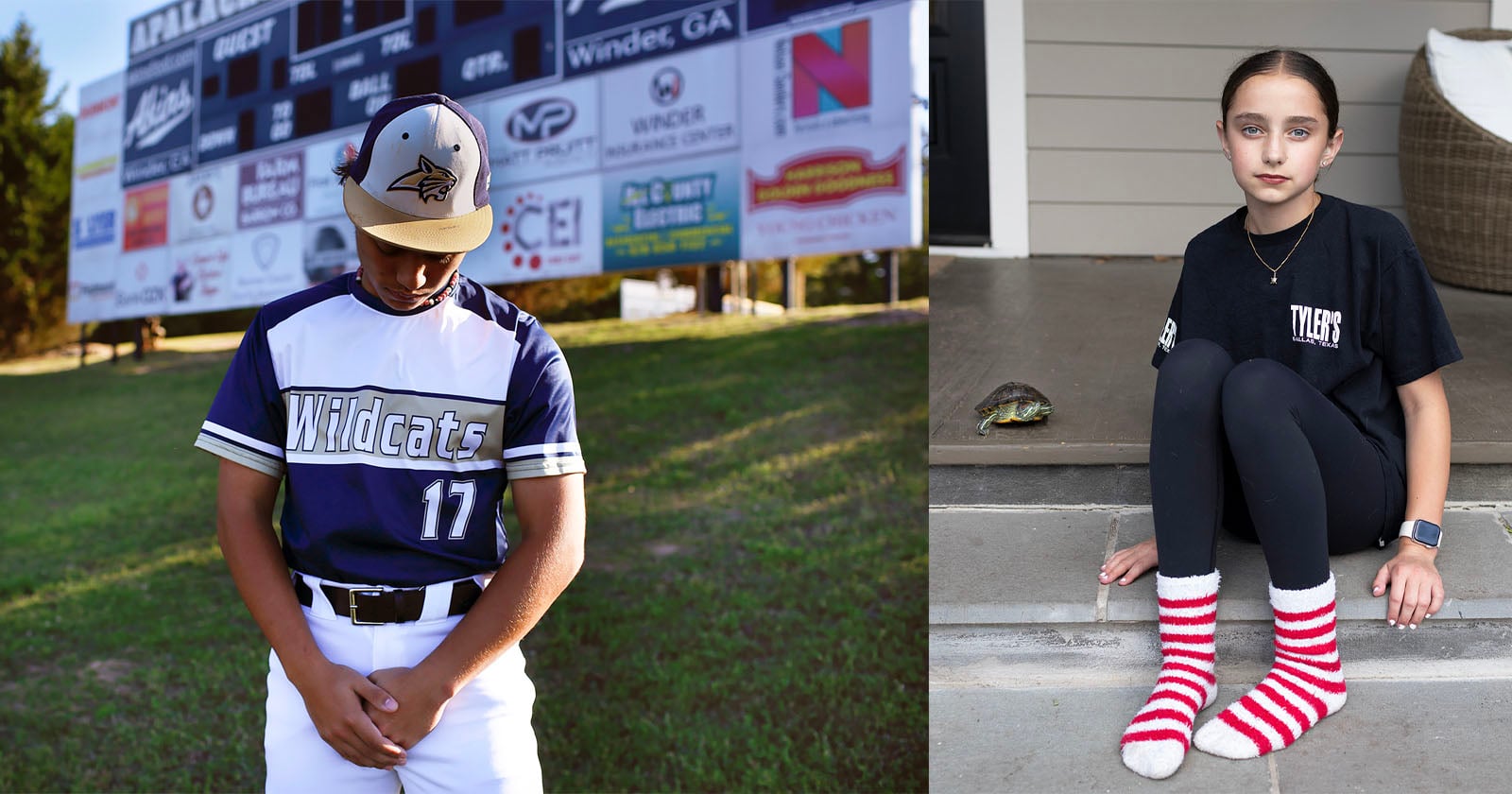
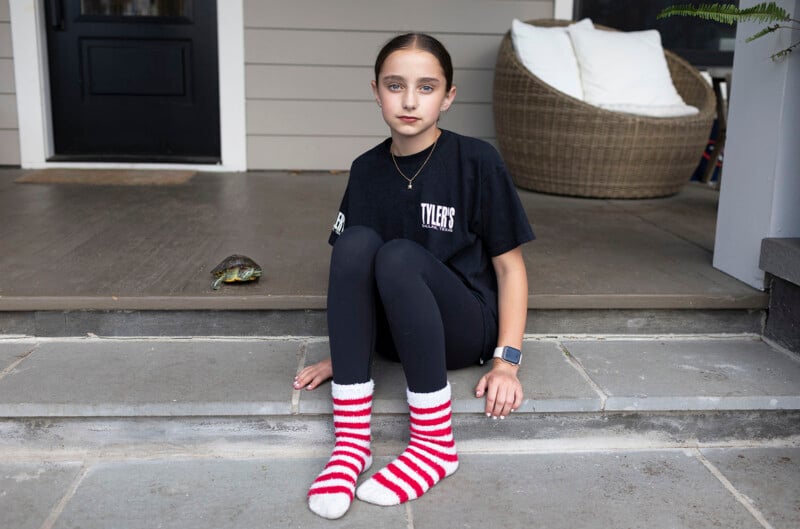
The intimate stories behind the portraits highlight the deep, generational ripples of these tragedies. Among the participants is young Orla, a student at the Annunciation School in Minneapolis, Minnesota, who was inside the church when a shooting occurred. Her best friend, Harper, was killed during the attack. In an act of profound remembrance, Harper’s parents wanted Orla to have Harper’s pet turtle, Bubbles, who is featured sitting beside Orla on stone steps in her portrait. Around her neck, Orla wears a delicate necklace containing some of Harper’s ashes.
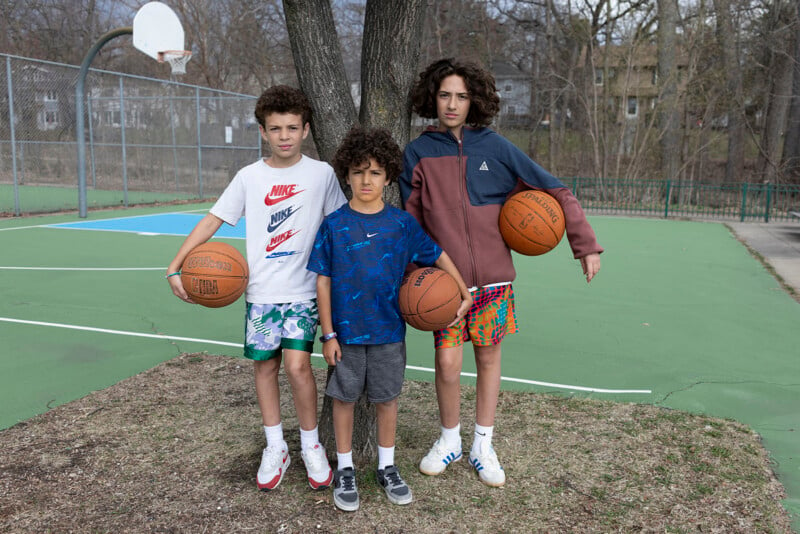
Also from the Annunciation School are three brothers—Arlo, Julian, and Dario—who were all inside the church on August 27, 2025, when a 23-year-old former student armed with an AR-15-style rifle, a shotgun, and a handgun opened fire. Roughly 300 students were attending Mass for the opening of the school year when the gunman barricaded the doors and fired 120 rounds through the church’s stained-glass windows. Two students were killed and 28 people were injured before the shooter died by suicide. Arlo, dressed in a white shirt in the portrait, was struck by shrapnel in the head and back. All three brothers are currently in therapy and harbor a deep reluctance to ever step foot inside a church again.
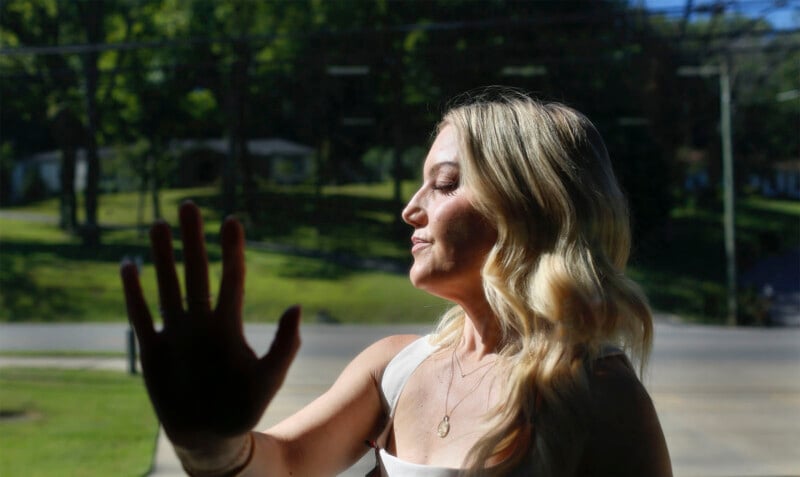
The project similarly captures the enduring trauma in Nashville, Tennessee, following the March 27, 2023, attack at The Covenant School, where a 28-year-old former student shot and killed three nine-year-olds and three adults, including the school principal. Melissa, whose son Ozzy was a student at the time, is photographed holding her hand up toward the light with her eyes closed in profile. During the attack, some students and teachers fled down a hill to a local firehouse, locking themselves inside for safety. Before official reunification locations were established, frantic parents searched the area, leading Melissa to spot Ozzy inside the building. In a poignant moment of connection through glass, both mother and son pressed their hands against the windowpane.
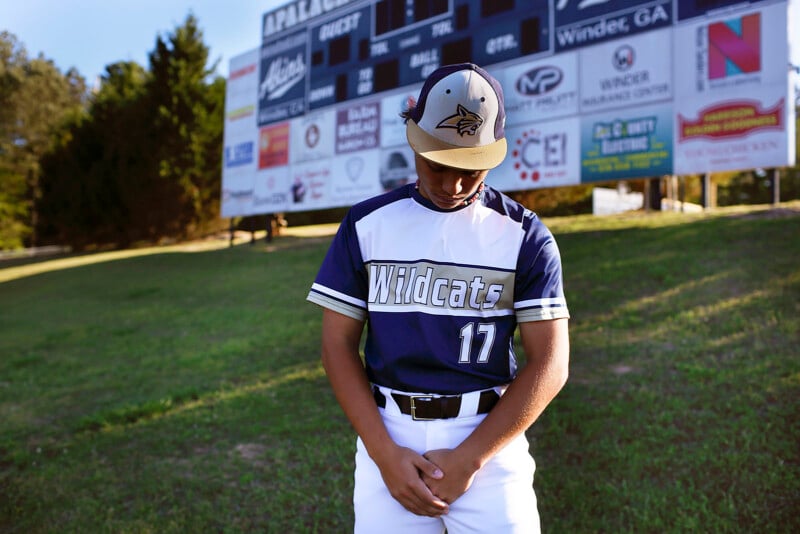
In Winder, Georgia, Elijah Rivera-Rodriguez stands on the athletic field of Apalachee High School. In September 2024, a 14-year-old student brought an assault rifle to the school—given to him by his father despite known mental health issues—and killed two students and two teachers. The shooter’s father subsequently faced criminal charges, becoming only the second parent in the nation to be held legally responsible for a mass shooting committed by their child. The athletic field where Elijah was photographed served as the reunification point for parents and students on the day of the shooting, a grueling process that took most of the day. Elijah noted that he will carry the memory of that day for the rest of his life.
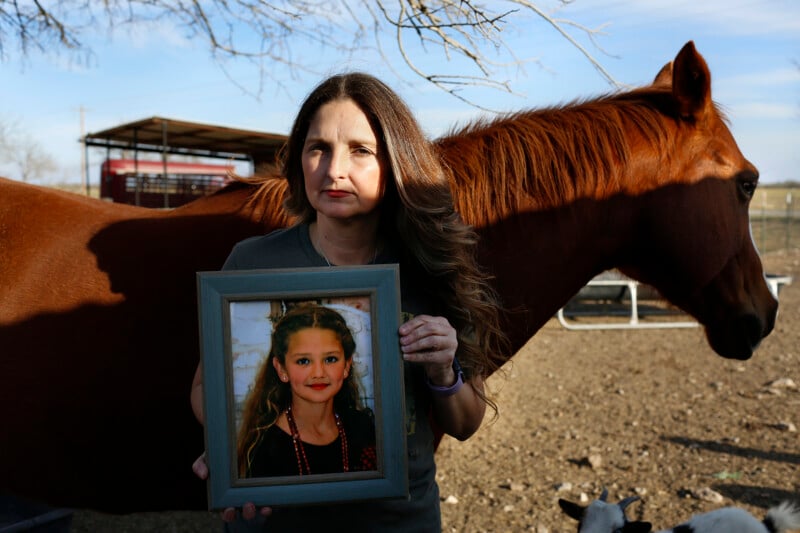
The project also documents the lingering grief in Uvalde, Texas, where a May 24, 2022, shooting at Robb Elementary School saw an 18-year-old former student fatally shoot 19 students and two teachers. April Elrod, whose daughter Makenna was killed in the massacre, was photographed on her family farm standing alongside Makenna’s horse, Little Red. April and her family regularly travel to agricultural fairs with their animals to provide children with joyful, interactive experiences.
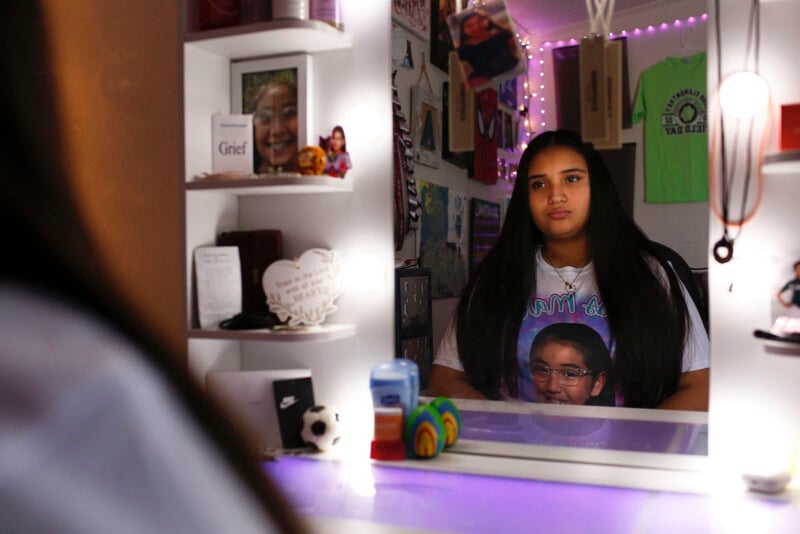
In another Uvalde portrait, 12-year-old Abby sits in her bedroom, which she has transformed into a dedicated shrine for her best friend, Tess, who was killed in the same shooting. Abby, who was a student at Robb Elementary at the time, now receives her education through homeschooling. Kim and Felix Rubio, who also lost their daughter Lexi during the Robb Elementary tragedy, were photographed standing near the batting cages where Lexi used to play softball. In the wake of her unimaginable loss, Kim has emerged as a passionate gun violence prevention advocate, frequently traveling to the Texas State House in Austin to testify and share her story.
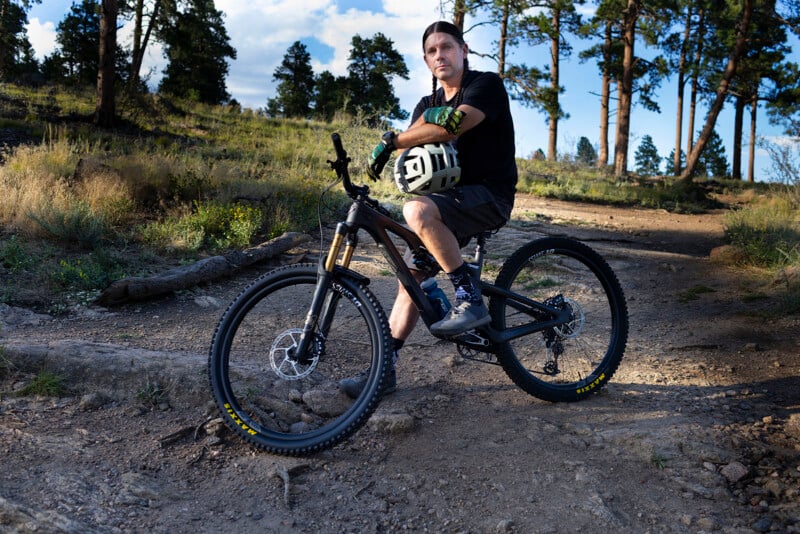
Educators and staff members, too, bear the physical and psychological scars of these events. Andrew Speers, a teacher at Evergreen High School in Colorado, was sitting with a group of fellow teachers in the cafeteria in September 2025 when a 16-year-old student opened fire with a .38-caliber handgun during lunchtime. The attack injured two students physically and left countless others emotionally traumatized over a harrowing nine-minute span before the shooter died by suicide. Speers, who teaches graphic arts, photography, and mountain bike repair, and coaches the Mountain Bike Club, was part of the group initially targeted by the gunman. Today, he struggles with memory gaps regarding the chaotic events of that day.
Kai Palat, a freshman at Evergreen High School at the time of the shooting, was chased down a hallway alongside a friend by the gunman. While Kai managed to escape uninjured, his friend was shot, and the assailant continued the pursuit. In his portrait, Kai sits at a grand piano, his reflection mirrored in its polished lid. He relies on playing the piano and the companionship of his cat, Tiger, to cope with the persistent anxiety stemming from that day.
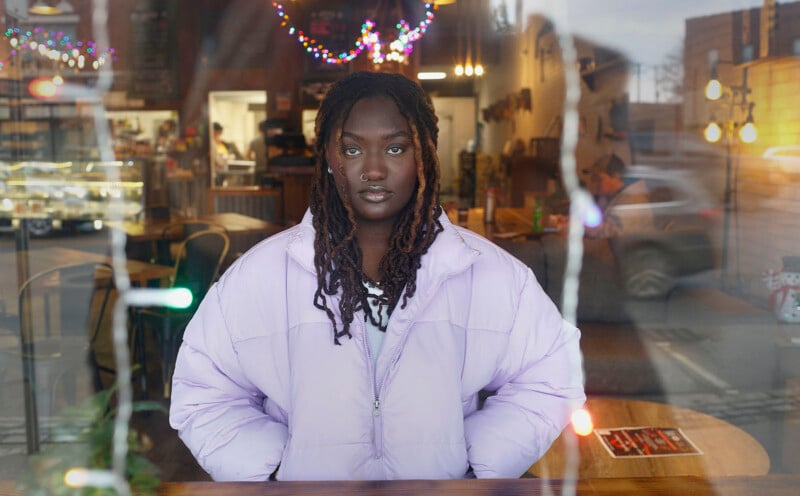
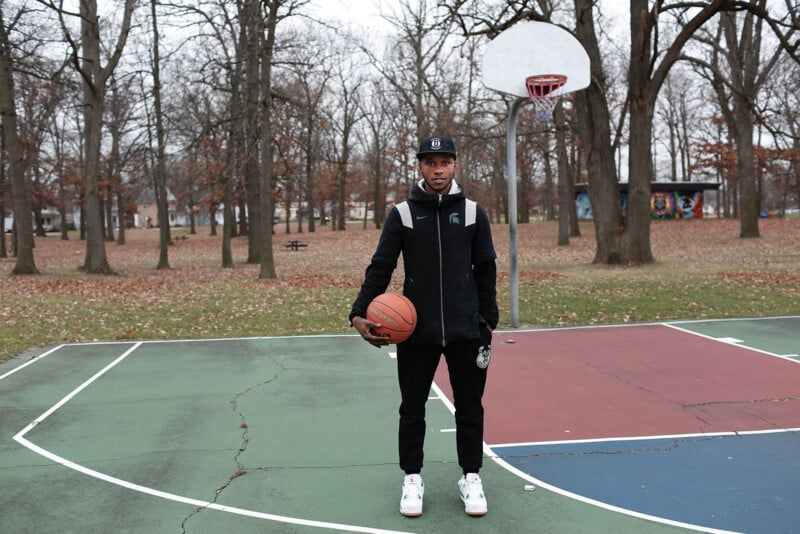
At Oxford High School in Michigan, where a November 2021 shooting left four students dead and seven wounded by a 15-year-old shooter whose parents provided the weapon despite severe mental health red flags, siblings Zoe and Abu Touray carry the weight of survival. Abu, a freshman at the time, is photographed as a senior holding a basketball on an outdoor court, still navigating the deep trauma of the day. His older sister, Zoe, who was a senior when the shooting unfolded, was photographed at a local coffee shop where students frequently gathered after classes. In the aftermath, Zoe established a small non-profit organization dedicated to supporting others who have lived through school shootings.
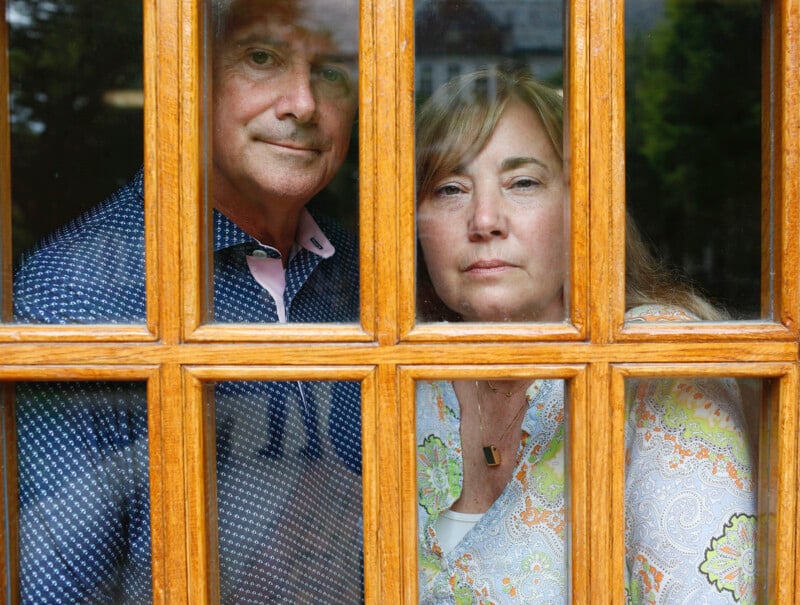
University campuses are similarly represented in Shorr’s comprehensive project. At Michigan State University in Lansing, Nancy and Ted Verner asked to be photographed inside Berkey Hall, standing behind a wooden-framed glass door while Shorr shot from the outside. On the evening of February 13, 2023, a gunman entered an unlocked campus building, forced his way into an ongoing class through a broken back door, and killed two students while injuring five others before continuing his rampage across campus. Nancy and Ted’s daughter, Alex, an athlete and student in the classroom, was among the dead. The couple now runs a non-profit organization raising funds for student scholarships in her honor.
At Florida State University in Tallahassee, Alessandra Borges is captured sitting at a desk by a window, holding a dried flower from a bouquet she brought to a memorial service. In April 2025, a 20-year-old student brought a Glock handgun belonging to his stepmother to the campus near the Student Union and opened fire, killing two university employees and wounding six students. For Alessandra, a junior majoring in political science, the tragedy marked the second time a school shooting touched her life; when she was in the eighth grade, a close friend was killed in the mass shooting at Marjory Stoneman Douglas High School in Parkland, Florida. Despite the heavy shadows cast by these events, fellow FSU student Emily Dorman chose to press forward. Having dreamed of attending the university—where both of her parents had previously studied—Emily refused to let the campus shooting deter her educational plans, entering her freshman year with unwavering resolve.
Reflecting on the broader cultural and political landscape surrounding the crisis, Shorr expresses frustration that gun violence has evolved into such a deeply polarizing issue in the United States. She emphasizes that the constitutional framework surrounding firearms does not preclude common-sense safety measures aimed at protecting the public.
"The Second Amendment in America is not going to go away," Shorr notes. "We must move past the division and work on the common ground that most rational people can agree on. For instance, if you are a parent or have children in your home, including teenagers, you want those children to be safe and to live long, healthy lives. Why, then, would anyone leave a firearm unlocked where a child could see it, find it, play with it, or take it to school? All guns should be secured with gun locks or stored in gun safes in homes with children or mentally impaired individuals."
Shorr points directly to cases like Oxford High School and Apalachee High School, where unsecured firearms readily accessible to minors resulted in fatal tragedies and subsequent prison sentences for the responsible parents. Drawing parallels to other heavily regulated industries in American history, she argues that public safety initiatives have successfully shaped the automotive and tobacco sectors through collective compromise, and the firearms industry must face similar accountability.
"This should not be an issue open to debate," Shorr adds. "Both the auto industry and the tobacco industry saw Americans come together to create common-sense laws that protected everyone. This same collective action must happen in the gun industry as well. It should not be a political battleground; it is a human rights violation not to protect our children."
The completion of SHOT: We the School Community marks the conclusion of a broader trilogy by Shorr. Her previous works include SHOT: 101 Survivors of Gun Violence in America, photographed between 2013 and 2025, and SHOT: We the Mothers Philadelphia and Miami, documented from 2021 to 2023. Over the course of 13 years spent documenting gun violence, Shorr has forged deep connections with roughly 300 survivors whose resilience has fundamentally transformed her perspective.
"Having worked on this trilogy for 13 years, I have met 300 remarkable survivors who have completely changed my life," she reflects. "Many people ask me how I can spend so much time on such a depressing subject. I always tell them that while the subject matter is heavy, the people are anything but depressing. They are courageous, strong, caring, and generous individuals who participate in these projects because they want to help others avoid experiencing the pain they have endured. With each person I photographed, I became more determined to share their stories with the world, turning their private heartbreak into a powerful catalyst for change."