

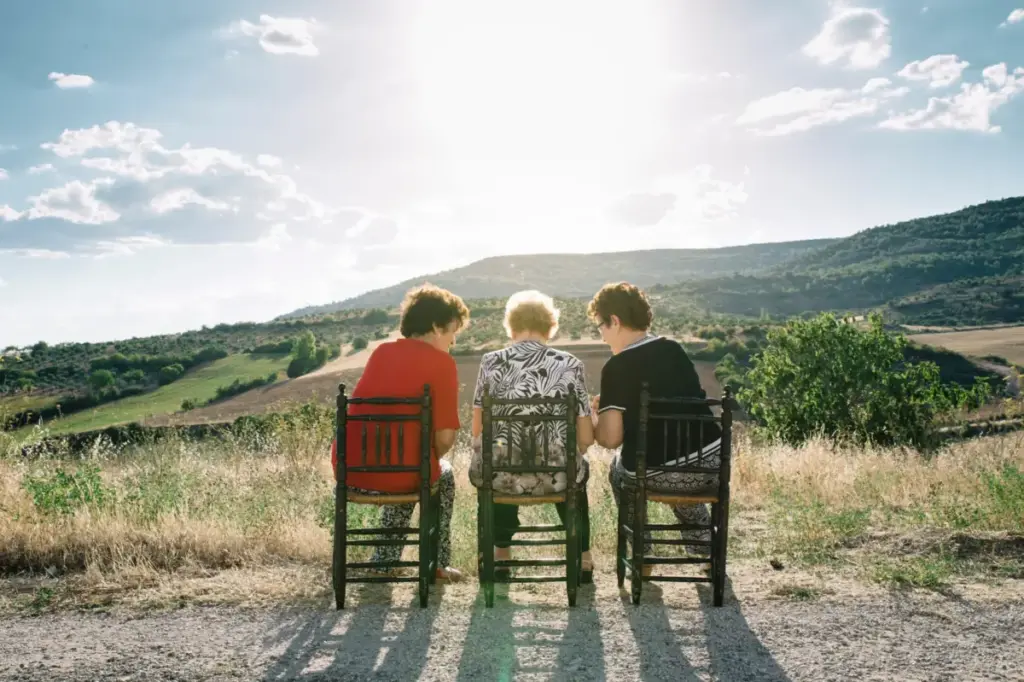
When an American health and science journalist relocated to Italy in 2024, one of the first cultural nuances to capture their attention was the distinct rhythm of daily life among Italian nonne, or grandmothers. Across historic city centers and quiet neighborhood lanes, these women can routinely be observed walking briskly and independently, managing errands, visiting friends, and navigating urban environments without external assistance. Many of them dress with vibrant intention, wearing cheerful colors and well-tailored outfits, while making no effort to mask or conceal their age.
It came as little surprise, then, when a new wellness phenomenon began circulating across social media platforms like TikTok and Instagram under the banner of "nonnamaxxing." The viral concept posits that anyone can optimize their health, well-being, and longevity simply by adopting the lifestyle habits of Italian grandmothers. While social media trends are often fleeting, public health experts and lifestyle commentators note that this particular movement offers remarkably sensible guidance.
There is substantial empirical backing to suggest the world has much to learn from Italian matriarchs. Italy consistently ranks near the top of the European Union in overall life expectancy, and the nation boasts a steadily growing population of centenarians. Furthermore, a cluster of villages on the Italian island of Sardinia is formally designated as one of the world’s five Blue Zones—regions where people live measurably longer, healthier lives than anywhere else on earth.
Current online guidance associated with nonnamaxxing encourages practices such as disconnecting from social media, preparing home-cooked meals from scratch, wearing simple cotton nightgowns, and prioritizing unhurried lunches shared with friends. While these suggestions certainly capture elements of traditional Italian life, public health specialists and gerontologists point out that the phenomenon extends far beyond aesthetics designed for social media feeds. In fact, 96-year-old Licia Fertz, an influential Italian nonna based in the historic city of Viterbo, argues that the reality of the lifestyle is quite the opposite of a passive online aesthetic.
"I put on my makeup and dress in cheerful colors, even if I’m not leaving the house, because presenting yourself well is an act of self-love," Fertz explains.
As experts weigh in on the viral movement, it becomes clear that the daily routines of Italian grandmothers offer a blueprint for a happier, healthier, and longer life, rooted in tangible physiological and psychological benefits.
Embrace Aging
For observers newly arrived in Italy, one striking observation is how completely women of advanced age embrace their appearance. At public pools and Mediterranean beaches, women of all ages—including grandmothers—frequently wear bikinis without hesitation. This visible comfort with aging highlights a broader cultural mindset that views getting older as a completely natural, unashamed phase of the human life cycle rather than a condition to be corrected or concealed.
Fertz emphasizes that this psychological framework is fundamental to maintaining a long and vibrant life. "Never think of yourself as old," she advises. "You are born young."
Modern scientific research increasingly supports the notion that a positive attitude toward aging can directly influence longevity. A recent scientific study established a clear association between how women perceive the aging process and the actual biological pace at which their bodies age.
Dr. Sonja Lyubomirsky, a distinguished professor of psychology at the University of California, Riverside, and the author of How To Feel Loved, explains that adopting a mindset functions much like putting on a pair of glasses or a coat. "It certainly matters very much what our mindset is when we think about aging," Dr. Lyubomirsky notes. "Is it a gift? Is it about wisdom, maturity, and the richness of life, or is it about deterioration and loss?" While acknowledging that both perspectives contain elements of truth, she stresses that individuals retain the power of choice.
Lend a Hand
In Italian neighborhoods, school dismissal times are crowded not only with working parents, but also with grandmothers. Italian nonnes are deeply integrated into the daily fabric of their families, frequently taking on active caregiving roles for their grandchildren. In many ways, the broader Italian social structure and economy rely heavily on the unpaid labor and support provided by grandmothers—a dynamic widely recognized and discussed within local communities.
Gerontological research demonstrates that caregiving later in life can foster healthier aging and serve as a psychological buffer against cognitive decline. One recent study found that grandparents who engaged in regular childcare activities—ranging from caring for sick grandchildren and helping with homework to driving them to school—scored significantly higher on tests measuring memory and verbal fluency compared to older adults who did not participate in childcare.
"I live with my grandson," Fertz shares. "I’m a great-grandmother, and every day spent with my great-granddaughter is a gift that never ceases to amaze me."
Even for individuals who are not grandparents, engaging in regular acts of service and helping others yields parallel health dividends. According to research published in the American Journal of Preventive Medicine, adults who volunteered more than 100 hours per year exhibited a reduced risk of overall mortality, alongside heightened levels of optimism and a stronger sense of personal purpose compared to non-volunteers.
Walk Daily
Urban design across Italy prioritizes pedestrian access, meaning walking is rarely viewed as a dedicated exercise regimen; rather, it is seamlessly woven into the mechanics of daily existence. Even in households with access to automobiles, certain destinations remain reachable exclusively on foot due to the famously narrow medieval streets characteristic of Italian towns and cities. Furthermore, higher fuel costs across Europe reinforce this pattern. While occasionally inconvenient, a pedestrian-first lifestyle carries profound correlations with long-term cardiovascular health and longevity.
"Walking is the most fundamental form of human physical activity, and many, many hundreds of studies confirm that walking helps people age slower and better," explains Dr. Daniel Lieberman, a professor of human evolutionary biology at Harvard University. "Walking helps you age well."
Paola Mariotti, a pediatrician and grandmother based in Florence, notes that walking was equally central to the lifestyle of her own grandparents, who lacked a car and walked everywhere out of necessity. As a modern nonna, Mariotti actively tracks her physical activity on her mobile device, maintaining a baseline of at least 5,000 steps daily while striving for 10,000 or more whenever possible.
While many urban and suburban environments outside of Europe lack pedestrian infrastructure, a 2025 study published in the American Journal of Preventive Medicine demonstrated that incorporating even 15 minutes of brisk walking into a daily routine can measurably reduce the risk of premature mortality.
Live Mindfully
At local cafés throughout Italy, patrons frequently observe older women enjoying a single espresso while quietly watching the surrounding street life, entirely untethered from digital devices, smartphones, or laptops. This cultural inclination toward unhurried presence is often encapsulated by the phrase dolce far niente, denoting the sweetness of doing nothing. Beyond a romanticized ideal, these moments of deliberate pause reflect a broader cultural contentment with mindfulness, prioritizing quality of life over relentless productivity.
Jonathan Alpert, a psychotherapist based in New York, suggests that the online popularity of nonnamaxxing speaks less to literal Italian grandmothers and more to a growing desire among younger generations to escape intense hustle culture. "The appeal here is the fantasy of a life that feels grounded, warm, and unhurried," Alpert observes. "A lot of younger people are burned out by the pressure to constantly optimize themselves, be productive, and turn their lives into content."
While multitasking often creates a subjective illusion of efficiency, psychological research indicates that it frequently produces the opposite effect, elevating stress hormones and mental fatigue. Cultivating a mindful pause—such as quietly savoring a beverage without secondary distractions—has been associated in scientific literature with healthier, more resilient aging processes.
Eat Seasonally
Food culture in Italy places a heavy emphasis on consuming agricultural products strictly in season. Local markets frequently distribute informational charts indicating precisely which fruits and vegetables are harvested during each calendar month, making seasonal eating an integrated aspect of daily shopping rather than an elite dietary choice. Dr. Antonino De Lorenzo, professor emeritus of human nutrition at the University of Rome Tor Vergata, explains that the primary health advantage lies not merely in dietary variety, but in selecting fresh, ripe produce that requires fewer chemical preservatives and industrial processing.
"Freshness, variety, ripeness, and preparation methods can all exert a significant influence on a food’s nutritional profile," Dr. De Lorenzo notes. "A high-quality diet, maintained over time, promotes healthier aging, characterized by better preservation of physical, mental, and cognitive functions, as well as reduced exposure to major chronic diseases."
This pattern aligns directly with the traditional Mediterranean diet—characterized by a high intake of olive oil, fresh vegetables, fruits, whole grains, and legumes—which has repeatedly been linked in long-term nutritional studies to extended lifespan and reduced cardiovascular risk. Public health researchers consistently emphasize that the Mediterranean diet functions less as a restrictive fad and more as a sustainable philosophy of living.
Connect to Your Community
Stereotypical depictions often portray Italian grandmothers as deeply embedded in the social networks of their neighborhoods, sometimes to the point of neighborhood surveillance, inspiring viral internet jokes that frame nonne as the informal security systems of Italy. Beneath the cultural humor, however, lies a powerful foundation for mental health.
"The most important thing for living a long and happy life? Don’t isolate yourself," Fertz advises. "Always stay in touch with people, travel, plan outings, and get out of the house."
Data published in The American Journal of Geriatric Psychiatry indicates that maintaining a strong sense of purpose helps preserve cognitive function as individuals age. A separate study found that older adults with a heightened sense of purpose experienced a significantly lower risk of clinical depression and chronic loneliness. Whether finding fulfillment through local civic engagement, family caregiving, or personal hobbies, maintaining active social ties remains paramount.
As Fertz summarizes, avoiding stagnation is essential, noting that boredom is ultimately "the one thing that truly makes you old."