


The race to deliver a truly affordable electric vehicle has reached a fascinating crossroads, and the battle lines are being drawn not just by price tags, but by software, screens, and philosophy. Both Ford and a rising contender named Slate are aggressively pursuing the same highly coveted and elusive goal in the modern automotive landscape: a capable, practical electric pickup truck with a starting price comfortably below $30,000.
The Blank Slate Truck enters the market with a base MSRP of $24,950, requiring buyers to add a $1,450 destination charge. Meanwhile, the newly unveiled Ford Fathom kicks off at $28,350, alongside a $1,595 destination charge. While these figures place both vehicles within striking distance of budget-conscious consumers looking to make the leap to electric mobility, a closer examination of their respective cabins reveals a starkly different approach to modern automotive technology.
Ford has committed to outfitting the Fathom with a large, dedicated touchscreen that includes built-in support for Apple CarPlay and Android Auto. In sharp contrast, Slate bypasses a traditional infotainment system entirely. Instead of embedding a sprawling display into the dashboard, Slate expects the driver to bring their own screen, providing a dedicated mounting and charging space for a smartphone or tablet. For some minimalist drivers, this stripped-down approach is refreshingly pragmatic. However, for anyone accustomed to seamlessly glancing at maps, queueing up music playlists, and reading incoming messages on a proper center console display, Slate’s philosophy might feel a bridge too far.
Slate Makes Your Phone the Infotainment System
Slate’s decision to omit a traditional infotainment display is not merely a matter of leaving CarPlay off an optional equipment sheet. Instead, the company has architected its entire cabin experience around the idea that your personal smartphone or tablet should handle all heavy lifting. Phone mounting infrastructure and charging capabilities come standard right out of the box, while buyers can choose to add optional accessory speakers and a mounting bracket designed to accommodate a larger tablet device.
Navigation apps, music streaming services, and all other compatible applications that drivers would normally access through platform interfaces like CarPlay or Android Auto remain housed directly on the user’s personal device. In discussions with the automotive publication InsideEVs, Slate explained an innovative workaround for vehicle software maintenance: routine updates can be downloaded directly onto a user’s phone and subsequently transferred to the truck via a local connection. This design choice entirely eliminates the need for an embedded cellular connection within the vehicle hardware itself.
There is a distinct, logical appeal to this approach. If the primary components of your infotainment hardware live securely in your pocket, that technology cannot become hopelessly obsolete as the vehicle ages over years of ownership. Traditional dashboard screens often feel sluggish and outdated within a few short model years, but a personal smartphone is typically upgraded on a much more frequent cycle.
Yet, this philosophy introduces clear compromises. A smartphone screen is inherently smaller than a dedicated automotive display built into the dashboard. Furthermore, even though Slate deliberately omitted an infotainment screen to keep manufacturing complexity and vehicle costs down, early prospective owners online are already actively discussing aftermarket stereos, custom Raspberry Pi integrations, and various DIY engineering projects to retrofit CarPlay or Android Auto into the truck.
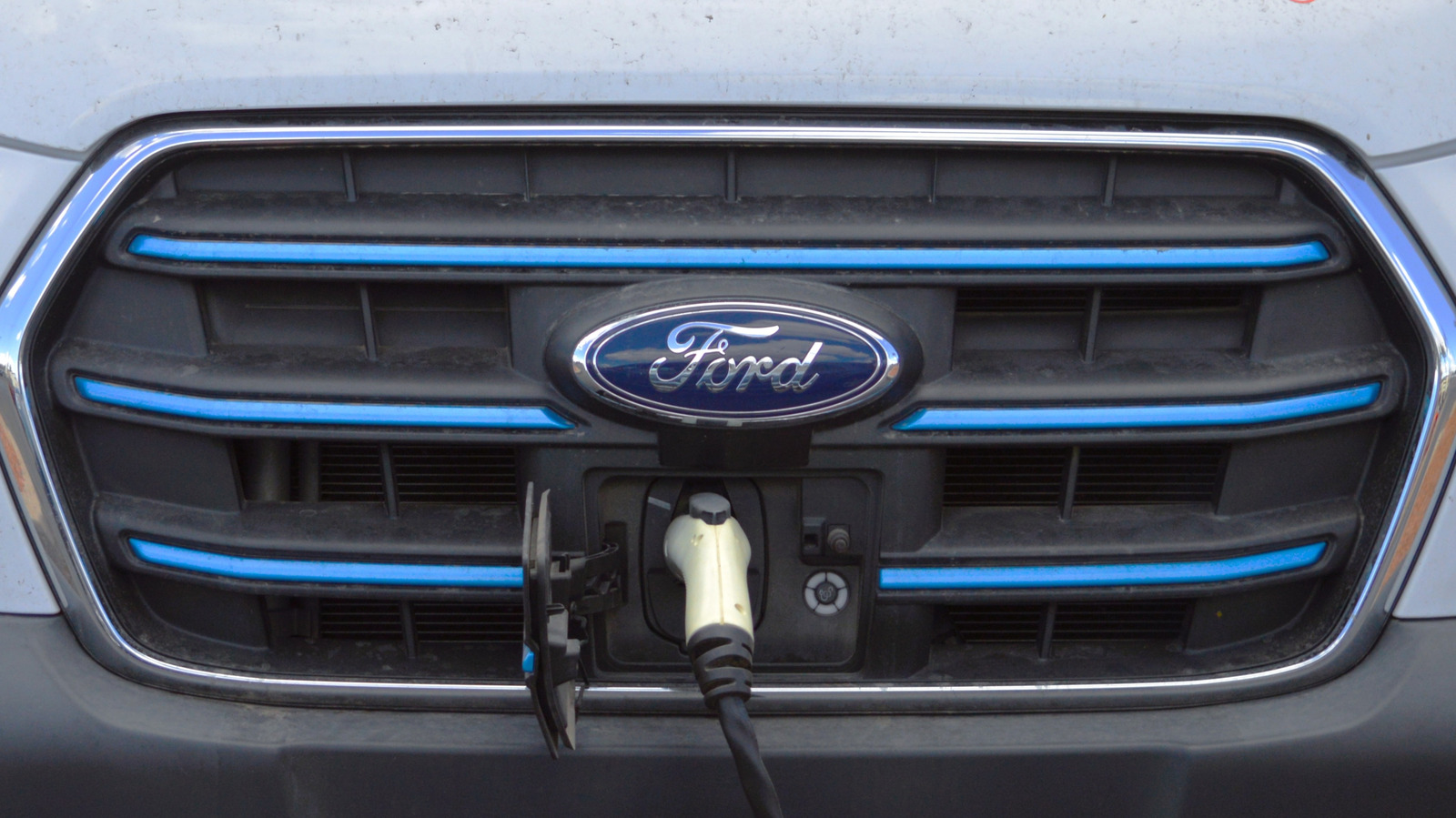
Ford, conversely, is sticking to a much more familiar automotive blueprint. The Fathom’s built-in touchscreen display will fully support both Apple CarPlay and Android Auto. Beyond smartphone mirroring, the Ford electric truck will also incorporate a digital key feature, bidirectional power capabilities to run external appliances or tools, and the necessary underlying hardware to support Ford’s next-generation BlueCruise hands-free driving system, which will be available via activation. Ford has not yet publicly disclosed the Fathom’s projected driving range, maximum towing capacity, or payload limits, though preorders are officially scheduled to open in early 2027.
Ford and Slate Are Cutting Costs in Very Different Places
The wide gap in infotainment strategy between the two companies makes significantly more sense when examining how each manufacturer is engineering a low-cost electric vehicle from the ground up.
Slate is a completely new entity starting from scratch, giving it the operational freedom to ruthlessly question every single component that needs to be included in a modern vehicle. Ford, on the other hand, possesses more than a century of traditional automotive manufacturing experience. Its solution to the affordability puzzle focuses on dramatically streamlining engineering and assembly workflows while retaining more familiar, consumer-friendly equipment inside the cabin environment.
To achieve this, Ford is investing a substantial $2 billion to completely retool its Louisville Assembly Plant around its newly developed Universal EV Production System. According to the automaker, this dedicated EV platform utilizes approximately 20 percent fewer parts than a typical traditional vehicle, incorporates 50 percent fewer cooling hoses and physical connections, and features a wiring harness that is more than 4,000 feet shorter than the one found in its first-generation electric SUV, the Mustang Mach-E. Ford estimates that assembly times using this platform will net out at roughly 15 percent faster than the plant’s previous manufacturing output. This massive engineering undertaking is entirely aimed at aggressively cutting manufacturing costs without leaving the cabin looking sparse or unfinished.
Smartphone integration is far from an arbitrary consideration for modern car buyers. Data from Deloitte’s 2025 Global Automotive Consumer Study, which surveyed more than 31,000 consumers across 30 countries, highlights the enduring importance of this technology. The study found that 63 percent of respondents in the United States consider seamless smartphone connectivity features like Apple CarPlay or Android Auto to be either somewhat or very important when shopping for their next vehicle.
Even so, Slate’s unconventional approach is not inherently flawed. A less expensive, two-door electric pickup truck carrying significantly fewer complex electronics may hit the exact sweet spot for commercial fleets, rural workers, or minimalists who simply want reliable electric transportation without digital clutter. At the same time, the absence of smartphone mirroring technology can easily transform from a minor quirk into a major daily annoyance after living with the vehicle for a prolonged period. The five-seat Ford Fathom, meanwhile, is shaping up to be a considerably more conventional daily driver that caters directly to consumer expectations established by decades of automotive evolution.