


After stepping away from the director’s chair for more than a decade to raise a family, Indonesian filmmaker Ariani Darmawan has made a triumphant return to cinema with her debut feature film, Jani Be Good. The deeply personal project is currently making waves internationally, playing in the prestigious Asian Future competition at the Tokyo International Film Festival. For Darmawan, the transition back to filmmaking was driven by a singular, overwhelming desire to return to the craft she loves, while channeling her profound recent lived experiences into art.
Reflecting on her long absence from the industry, Darmawan shared in an interview that stepping away was necessary to focus on raising her child and managing her household. Getting back to directing, she notes, became all she really wanted once she found the bandwidth to return. That personal journey directly shaped Jani Be Good, transforming her nuanced understanding of domestic life into a poignant, multi-generational portrait of four women navigating the complexities of family, obligation, and silent endurance.
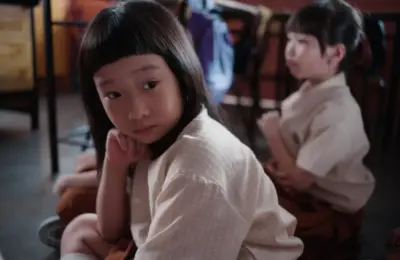
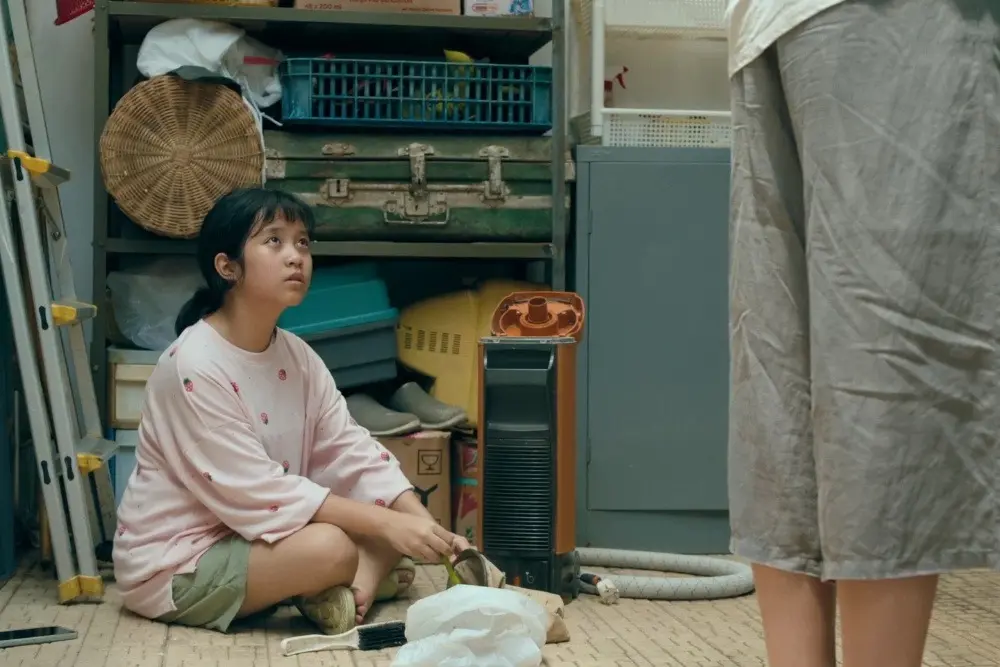
Unfolding over the course of four intense December days in the lead-up to Christmas, the narrative of Jani Be Good centers on 13-year-old Jani. The young girl’s world is upended after she overhears a heated argument between her 18-year-old sister, Julia, and their mother, Winnie, which ultimately prompts Julia to pack up and leave home. Winnie, a resilient single mother working as an accountant while supplementing her income by fulfilling fruit hamper orders on the side, understandably grows increasingly short-tempered and high-strung with the daughter who chose to stay behind. Meanwhile, Jani—who maintains a clandestine line of communication with the departed Julia via secret messages—finds solace and support in her grandmother, affectionately known as Oma. Oma spends her days laboriously making spring rolls to sell, systematically putting money aside to pay for her own eventual cremation. The household is distinctly Chinese-Catholic, grounding the family’s traditions, anxieties, and interactions in a specific cultural and religious reality.
The film relies on a stellar ensemble cast to bring these intricate familial dynamics to life. The four central roles are portrayed by Chempa Puteri, Sigi Wimala, Tutie Kirana, and Hyori Mika. Behind the scenes, Darmawan co-wrote the screenplay alongside writer Cyntha Hariadi. The film was brought to life by producer Meiske Taurisia for Palari Films, the prominent Jakarta-based production company she co-runs with fellow producer Muhammad Zaidy. Established in 2016, Palari Films is steering the theatrical release of Jani Be Good in Indonesian cinemas, slated to premiere on December 10.
The collaboration began in 2022 when Taurisia, an old friend of the director, reached out to Darmawan with an offer to direct a family drama—a genre Darmawan admits she has always deeply loved. As a working mother, Darmawan explains, family life is the subject matter she is most compelled to explore right now. She notes that it is only recently, through the lens of daily parenthood, that she has truly noticed the sheer volume of unseen, unrelenting care work that family life demands every day. Becoming a mother herself fundamentally shifted the way she perceives her own mother and the silent sacrifices of the past.
Recalling her childhood, Darmawan notes that as a young girl, she watched her mother keep the entire household running efficiently—rummaging through paperwork at her desk, coordinating phone calls, and cooking dinner every evening—without ever pausing to wonder how her mother actually felt emotionally. It required having her own family in her late thirties for Darmawan to fully comprehend how exhausting, all-consuming, and emotionally draining that invisible labor truly is.
As the youngest sibling in her own family growing up, Darmawan was often treated as the child who understood the least about adult matters. Paradoxically, she believes that exact positioning granted her the unique emotional freedom to observe human behavior and family dynamics from a comfortable distance. Reflecting on this perspective, she notes that you can only truly see the entire constellation of a family when you are standing outside of it.
In Jani Be Good, the titular character Jani is constantly instructed by the adults around her to "be good," even though she is already remarkably well-behaved. The film intimately follows Jani as she slowly begins to look past her immediate circumstances and recognize her mother, sister, and grandmother not merely as authority figures, but as flawed human beings carrying their own distinct set of unfulfilled wants, personal failings, and internal struggles.
Darmawan points out that people often harbor a romanticized assumption that a household composed entirely of women will naturally find a harmonious way to get along. However, her film challenges that notion head-on. Family problems remain fundamentally the same whether a household consists exclusively of women or a mix of men and women, provided there is an underlying conflict to begin with, she explains. Communication can break down just as easily between women, heavily influenced by internal family power dynamics—particularly when a mother acts as the primary breadwinner and consequently feels that she has the most right to speak the loudest and dictate the rules.
In many traditional Asian families, Darmawan observes, disagreements and emotional friction are frequently met with heavy, suffocating silence in a conscious effort to avoid hurting a relative’s feelings. Yet, she argues, that practiced avoidance ultimately ends up hurting everyone involved even more deeply. If emotional grievances are continually kept bottled up and are never genuinely confronted or resolved, they remain open wounds that are quietly passed down from one generation to the next.
She identifies this exact behavioral pattern in numerous all-female households, where maintaining a deliberate quietness simply to avoid making a public scene becomes a primary survival mechanism for getting through the day. While the film never explicitly spells this out through heavy-handed dialogue, Darmawan weaves the theme visually into the fabric of the story, showing it in how the women fiercely protect themselves at home behind a front gate that remains perpetually shut and windows fitted with heavy security bars.
When Winnie is confronted with Julia’s abrupt departure, her instinctive response is to work harder and redouble her efforts, channeling her care for her remaining daughters through a relentless stream of logistical instructions and daily corrections. Darmawan was careful to ensure that Winnie was never caricatured or villainized on screen. She emphasizes that Winnie is simply not a villain, and because Darmawan is a mother herself, she intimately understands Winnie’s perspective. She knows how dangerously easy it is to fall into the trap of feeling like the sole authority who holds the right to speak the loudest in the room, which is why she approached the character with deep empathy rather than judgment.
From the very beginning of the creative process, Darmawan, Hariadi, and Taurisia were entirely aligned in their conviction that no single character should carry the blame for the family’s fractures. Instead, they drew extensively from their own real-life families and their personal, complicated experiences as daughters and mothers. For Darmawan, the most significant creative hurdle during development was the collaborative co-writing process itself. Having primarily written her own singular projects in the past, she faced the unique challenge of taking Hariadi’s prose and translating it into cinematic scenes that could firmly hold an audience’s attention without diluting or losing the distinct voice of the original writer.
Darmawan’s prior filmography spans a diverse range of shorts and documentaries. Her acclaimed short film Sugiharti Halim successfully competed at the prestigious Clermont-Ferrand International Short Film Festival and screened at both Rotterdam and Busan, while her project Silenced also found a home at Rotterdam. She fondly describes those earlier creative endeavors as small-scale, homebound, and DIY productions—a foundational training ground that taught her the value of watching quietly and allowing people and physical spaces to carry the emotional weight of a scene.
Producer Meiske Taurisia notes that she has closely followed Darmawan’s short films since the early 2000s and always maintained a strong conviction that the director would eventually return to narrative filmmaking. What ultimately convinced Palari Films to back the project was the remarkable maturity of Darmawan’s artistic perspective on the realities of modern womanhood and motherhood.
The production schedule for Jani Be Good was remarkably compact and efficient. The team shot the entire feature in just 13 days—a first for Palari Films—utilizing a single residential house located in Bandung as the primary location. Two months before cameras officially rolled, Darmawan, Hariadi, and the four lead actors gathered together in that very house to read through the script, followed by formal rehearsals in Jakarta. They then returned to the Bandung location for a final two weeks of intensive pre-production preparations alongside acclaimed cinematographer Teoh Gay Hian and production designer Suherina. Notably, none of the four lead actresses knew one another prior to the project, necessitating a careful casting process that featured tailored chemistry tests built around young star Chempa Puteri.
Reflecting on the collaborative environment, Taurisia explains that while she sat in on the entire production process, she firmly believes in leaving the creative execution and final authority to the director. Comparing the dynamic to a kitchen, Taurisia describes the director as the head chef who inherently knows her ingredients best.
Palari Films has built a formidable reputation on the international and domestic circuits, most notably winning Locarno’s top honor—the Golden Leopard—at the festival’s 74th edition with Vengeance Is Mine, All Others Pay Cash (Seperti Dendam, Rindu Harus Dibayar Tuntas). Since 2017, the company’s diverse output has ranged widely from theatrical hits like Posesif and Aruna and Her Palate to prominent Netflix original titles such as Borderless Fog (Kabut Berduri), Dear David, and this year’s psychological thriller Sleep No More. For Jani Be Good, the production company applied for international development funding, though those applications were ultimately unsuccessful. Domestically, Taurisia points out that critical festival success brings welcome diversity, industry recognition, and a stronger overall company portfolio.
However, festival success is a double-edged sword locally. Taurisia explains that high-art festival recognition can sometimes make their films appear overly artistic or insufficiently accessible to mainstream audiences, leading local commercial investors to perceive the projects as financially risky ventures.
The producer points to distribution as a much larger, structural industry problem in Indonesia. While the country has no shortage of cinema exhibitors, it crucially lacks independent distributors capable of reaching audiences across the vast, island-spanning archipelago. One of a filmmaker’s absolute worst nightmares, Taurisia notes, is having a newly released film prematurely judged and pulled over a single Thursday-to-Sunday weekend box-office stretch before local cinemas even give the project a chance to find its audience.
In an innovative effort to counter these distribution bottlenecks, Palari Films launched Kelas Komunitas Palari (the Palari Community Class) this year. The workshop series is specifically designed to teach independent film communities around the country how to independently stage localized screenings and paid watch parties within their own regions. Jani Be Good is serving as the program’s very first high-stakes test case.
Taurisia emphasizes that many talented directors struggle immensely to secure funding and backing to make a second film after their debut, and the persistent gaps in the local film value chain do nothing to alleviate that pressure. She questions how the industry can realistically hope to build stable, let alone sustainable, filmmaking careers under such conditions.
Looking ahead, Palari’s active production slate thoughtfully mixes returning auteurs with fresh, first-time directors. Acclaimed director Edwin is attached to helm the coming-of-age feature tentatively titled Menari dengan Bayangan (Dancing With My Shadows), which is being developed as a collaborative project with Hindia, the popular solo musical project of singer-songwriter Baskara Putra. Meanwhile, Aditya Ahmad’s debut feature project Goldfish recently picked up three awards at the Busan Asian Project Market, and Khozy Rizal’s debut feature, I Wanna Dance With Myself, is also lined up on the company’s robust slate.
As for Darmawan—who co-founded the well-regarded independent library and bookstore Kineruku—she fully intends to continue directing feature films moving forward, though she expects her future projects to develop organically around the rhythms of her family life and her ongoing work at the bookstore. Regarding thematic directions, she remains wide open to exploring diverse stories, provided they center on complex, emotionally resonant relationships between people that are simultaneously sweet and sorrowful. That delicate intersection, she concludes, is precisely where human experiences become genuinely complicated and endlessly interesting.