In the ever-evolving landscape of modern gastronomy, chefs and home cooks alike continually seek innovative ways to bridge disparate culinary traditions, creating hybrid dishes that honor their origins while forging entirely new flavor profiles. A prominent example of this creative momentum has materialized in the development of a unique, cross-cultural recipe that marries the distinct, unmistakable components of a classic American fast-food cheeseburger with the comforting, high-heat techniques of a traditional Asian-style fried rice preparation. This ambitious culinary crossover demonstrates how familiar pantry staples, when approached with a fresh perspective, can be reconfigured into a cohesive, sophisticated meal that appeals to a wide array of palates.
At the heart of this inventive dish is a meticulously constructed burger sauce, a foundational element designed to capture the creamy, tangy, and subtly sweet profile characteristic of iconic burger condiments. The preparation of this vital component begins on the stovetop, where finely chopped white onion is gently simmered alongside apple cider vinegar, granulated sugar, a precise measurement of kosher salt, and a splash of water in a small saucepan over medium heat. This initial cooking phase is carefully timed to ensure the onion softens without taking on any harsh color, a process that typically requires about one minute.
Once softened, the mixture is transferred to a blender, where it is united with a generous measure of mayonnaise, ketchup, a dash of soy sauce for umami depth, yellow mustard, garlic powder, and paprika. The contents are processed until completely smooth, yielding a velvety emulsion that bridges the gap between classic Thousand Island dressing and specialized burger spreads. Culinary experts note that this sauce benefits significantly from advanced preparation; it can be crafted up to four days in advance and kept chilled in an airtight container, allowing the complex flavors to meld and deepen over time.
With the foundational sauce prepared, the focus shifts to the dynamic execution of the fried rice and the final assembly of the dish, a process that requires precise timing and heat management to achieve the desired textures. The procedure commences with the preparation of the protein and binding elements. Two large eggs are whisked together in a medium bowl with a delicate pinch of kosher salt and freshly ground pepper, then set aside to await their integration into the hot skillet.
Simultaneously, a measured portion of sesame seeds is toasted in a medium nonstick or cast-iron skillet over low heat. Requiring constant attention and frequent stirring to prevent burning, this toastiness is achieved in approximately three minutes, after which the aromatic seeds are transferred to a plate to reserve their crunch and nutty fragrance.
The utilization of the skillet continues with the cooking of the ground beef, a core component that anchors the dish in the tradition of classic American diner fare. Vegetable oil is heated in the same pan over medium-high heat before the beef is added and pressed firmly into a thin, uniform layer across the surface of the skillet. Seasoned lightly with salt and pepper, the meat is left undisturbed to develop a deep, caramelized crust underneath, a crucial step lasting between six and eight minutes that builds rich, savory undertones.
To elevate the beef further, a small amount of sugar and soy sauce is introduced, and the mixture is actively stirred and broken apart until the meat is thoroughly cooked through, a rapid process taking roughly one minute. The seasoned beef is then transferred to a separate plate, though home cooks utilizing advanced meal preparation schedules have the option to execute this step up to two days ahead, storing the cooked beef in an airtight container in the refrigerator until final assembly.
The subsequent phase of the recipe brings the various elements together in a seamless sequence that highlights the fluidity of fried rice cookery. Finely chopped white onion and the remaining vegetable oil are introduced to the skillet and stirred frequently until the onions achieve a translucent state, which takes about one minute. Immediately following this, the reserved egg mixture is poured into the pan, with the cook swirling the vessel to ensure an even coating of the base.
After allowing the eggs to cook undisturbed for a brief five-second window, the mixture is stirred in a circular motion utilizing a heatproof rubber spatula or wooden spoon. This technique produces delicate, tender curds that are just set, requiring approximately thirty seconds of attentive manipulation.
The climax of the preparation involves returning the cooked ground beef to the pan alongside two cups of chilled, cooked short-grain white rice. The inclusion of chilled rice is a time-tested technique in fried rice preparation, as colder grains possess lower moisture content, preventing the final dish from becoming heavy or gummy. The mixture is cooked with frequent stirring until the rice is thoroughly softened and heated through, a process taking about five minutes.
At this juncture, freshly chopped iceberg lettuce cut into one-inch pieces is folded into the pan alongside a final addition of soy sauce, with the entire mixture seasoned to taste with salt and pepper. The addition of the lettuce introduces a vital element of crisp freshness and textural contrast, which is preserved by limiting the cooking time to a brief thirty seconds, just as the leaves begin to wilt under the residual heat.
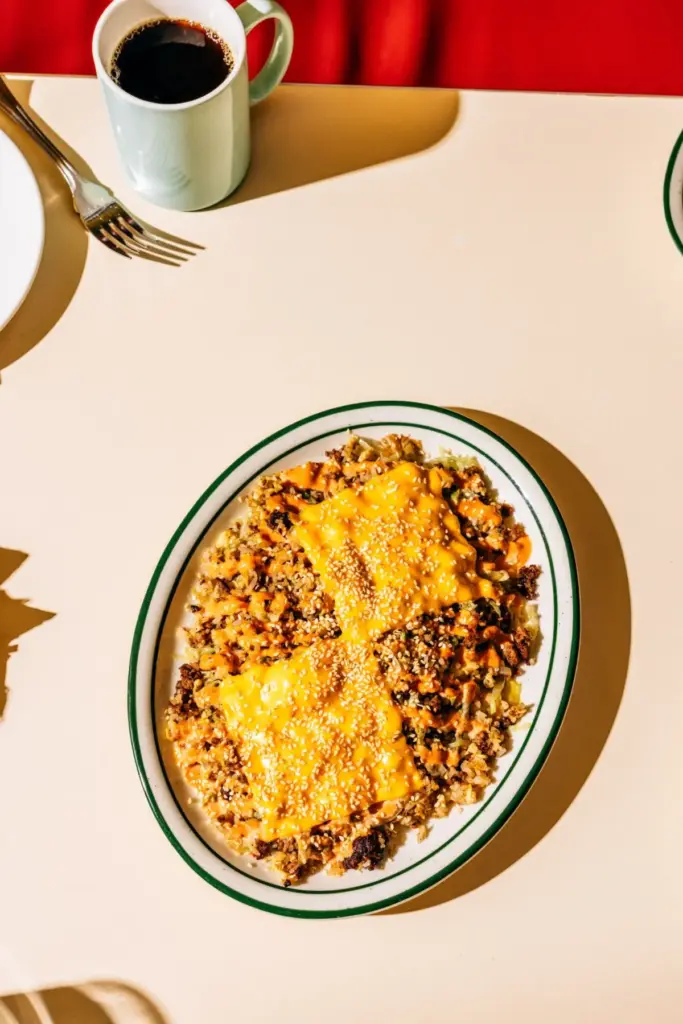
The final transformation of the dish incorporates the signature elements that complete the burger-inspired motif. Approximately two tablespoons of the previously prepared burger sauce are drizzled directly over the rice, with the remainder reserved for alternative culinary applications. To emulate the quintessential cheeseburger experience, two slices of American cheese are arranged in a single layer across the top of the rice.
The skillet is then covered, and the heat is reduced to low, allowing the ambient warmth to melt the cheese uniformly over the course of about one minute. Alternatively, for those seeking to recreate a traditional restaurant presentation, the fried rice can be transferred to an ovenproof platter, topped with the sauce and cheese, and placed under a broiler until the cheese is melted and bubbling, a process that takes up to two minutes. The dish is finalized with a generous dusting of the toasted sesame seeds prepared at the outset, bringing a nutty, aromatic finish to a meal that successfully merges two distinct culinary worlds into a singular, cohesive dining experience.