This article is sponsored by The Honest Kitchen. Vetstreet maintains editorial control and uses current product information plus independent pet-nutrition and veterinary sources. Vetstreet may earn a commission if you purchase through links in this article.
The practice of adding bone broth to canine diets has transitioned from a niche home-cooking trend to a widely accepted method for enhancing dog meals. While human cooks often view bone broth as a complex, seasoned culinary endeavor, preparing a safe and effective version for dogs requires an entirely different, highly simplified approach. A dog-appropriate broth relies on just two primary components: plain animal bones and water. It demands meticulous cooling, thorough straining, and the absolute exclusion of common culinary ingredients like onions, garlic, chives, bouillon, seasoning blends, or added salt.
While homemade bone broth can be a valuable addition to a dog’s diet, it is important for pet owners to understand its limitations. The finished liquid serves as an occasional meal topper designed to add moisture and aroma; it is not a complete diet, nor is it a validated treatment for joint pain, digestive disorders, or other systemic health issues.
For many pet owners, the labor-intensive process of simmering, cooling, and straining bones at home is a rewarding task. However, achieving absolute food safety requires constant supervision to ensure every single bone fragment is removed. When time, travel, or safety concerns make home cooking impractical, commercial, dog-specific products offer a convenient alternative. Brands like The Honest Kitchen provide instant powdered broths and ready-to-pour toppers, allowing owners to introduce the benefits of broth without the hazards of handling cooked bones in the home kitchen.
What Bone Broth Can and Cannot Do for Dogs
Bone broth is the nutrient-dense liquid that remains after animal bones and connective tissues are simmered in water for an extended period. As the mixture cools, it often develops a soft, gelatinous texture. This gel consistency occurs because collagen within the bones and connective tissues breaks down into gelatin, which then dissolves into the warm liquid.
In canine nutrition, the primary benefits of bone broth are practical and sensory. It is highly effective at moistening dry kibble, altering the texture of a meal to appeal to older dogs, and adding a rich aroma that can stimulate the appetite of reluctant eaters. Additionally, for medically stable dogs that require encouragement to stay hydrated, a splash of flavorful broth can significantly increase their daily fluid intake.
Beyond these simple benefits, broth serves as an excellent tool for mental enrichment. A small portion can be frozen into toys or silicone molds to create a long-lasting, low-calorie treat. This allows owners to vary their dog’s daily routine and add variety to their meals without overhauling their primary diet.
However, pet owners must maintain realistic expectations regarding what bone broth cannot achieve. It is not a nutritionally complete food. It lacks the precise balance of proteins, fats, essential vitamins, and minerals required to sustain a dog as a primary diet. Consequently, it should never replace a significant portion of a dog’s complete-and-balanced food.
According to the U.S. Food and Drug Administration (FDA) guidelines on pet food labeling, a product’s nutritional adequacy is determined by its official adequacy statement, not by how wholesome or familiar its ingredients sound. Bone broth is strictly a supplemental product.
Furthermore, bone broth should not be viewed as a medical treatment. It cannot cure arthritis, repair a damaged gut lining, detoxify the liver, or substitute for professional veterinary care. If a dog exhibits clinical signs of illness—such as vomiting, refusing food, showing signs of pain, lethargy, dehydration, or suffering from persistent diarrhea—the correct course of action is to seek immediate veterinary diagnostics rather than attempting to manage the condition with broth.
Additionally, if a dog is currently on a veterinary-prescribed therapeutic diet, a strict sodium restriction, a low-fat regimen, or an elimination food trial, owners must consult their veterinarian before introducing any broth. Even a plain, dog-specific product can disrupt a carefully managed medical plan.
Ingredients and Equipment for Dog-Safe Bone Broth
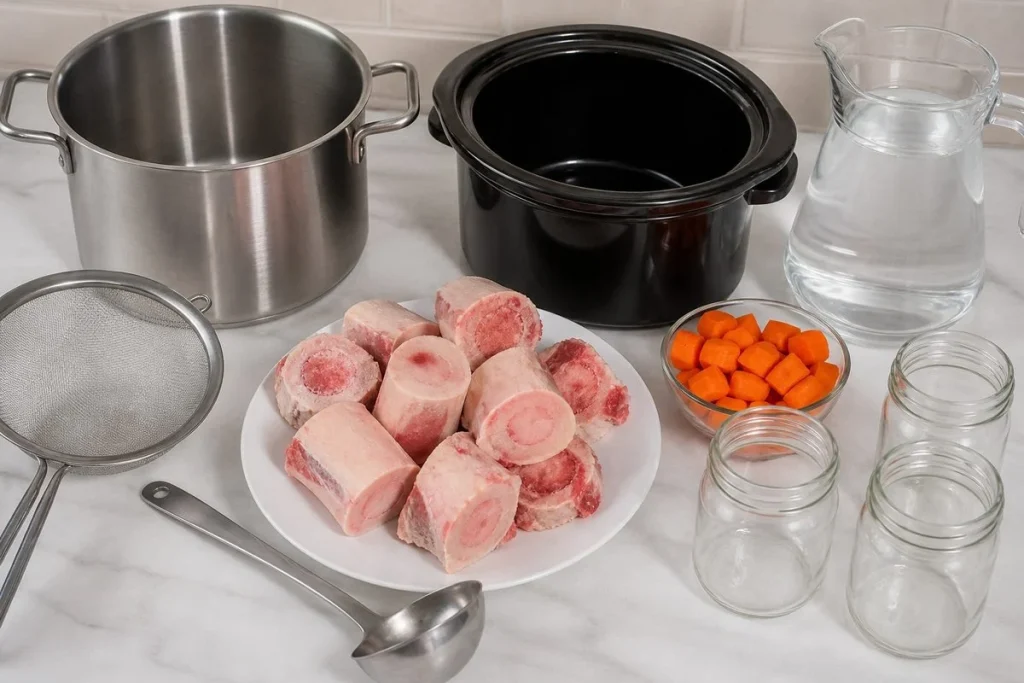
The most important rule of making dog-safe bone broth is to keep the ingredient list exceptionally short. The safest and most effective recipe requires only two things:
- Plain animal bones (such as beef marrow bones, chicken frames, or turkey necks)
- Clean water
Vegetables, table salt, vinegar, and aromatic herbs are entirely unnecessary. Keeping the recipe minimal makes it much easier to monitor exactly what your dog is consuming and significantly reduces the risk of accidental exposure to toxic substances.
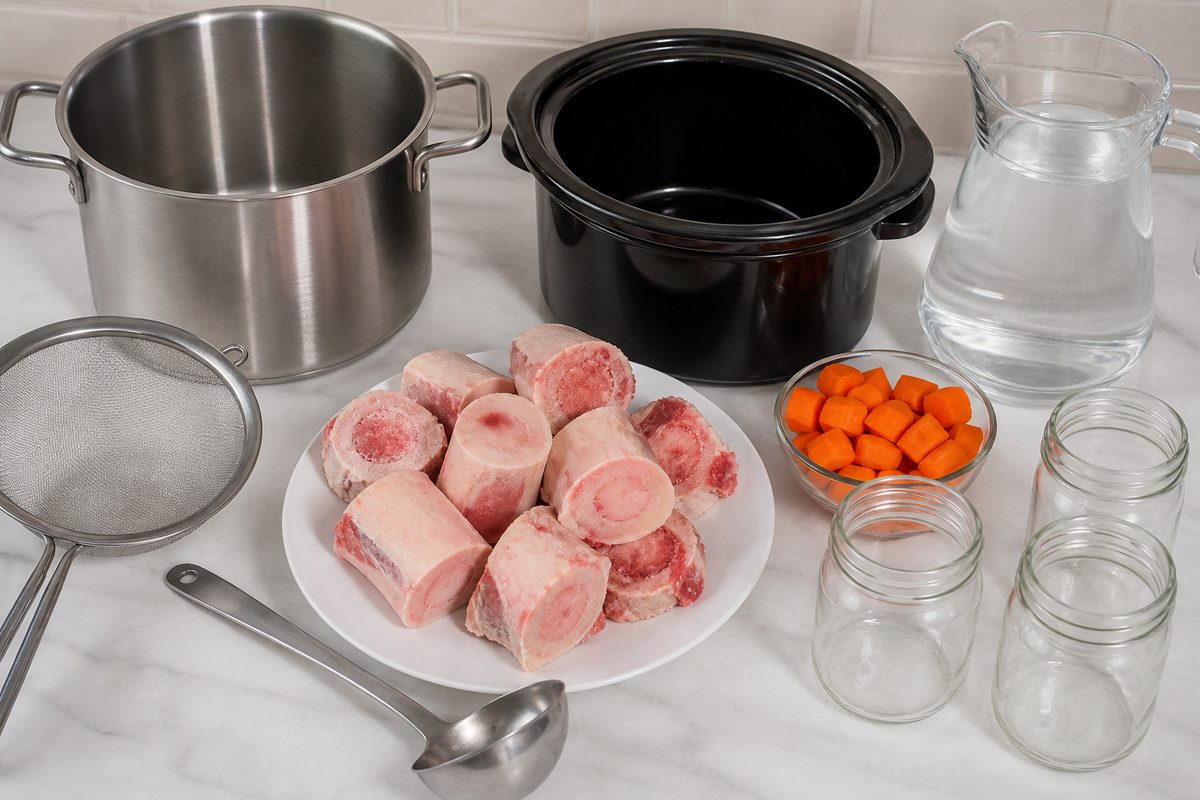
To prepare the broth, you will need a standard stockpot, a slow cooker, or a pressure cooker capable of maintaining a safe, controlled simmer. Essential kitchen tools include a heat-safe utensil for stirring and removing large bones, a fine-mesh strainer, clean storage jars, and sufficient refrigerator space to cool the liquid quickly. For maximum safety, passing the broth through a fine-mesh strainer a second time helps catch any microscopic bone splinters that may have slipped through the first pass. If you lack the time or confidence to guarantee a completely bone-free liquid, opting for a commercially prepared, dog-specific broth is the safer choice.
Under no circumstances should human-grade seasonings be added to the pot. Onions, garlic, chives, and leeks belong to the Allium family and contain compounds that can cause oxidative damage to a dog’s red blood cells, potentially leading to hemolytic anemia. This risk extends to powdered versions of these ingredients as well.
Similarly, store-bought bouillon cubes, standard gravy mixes, pan drippings, and pre-packaged human soups should be avoided, as they frequently contain high levels of sodium and hidden onion or garlic flavorings.
The ASPCA Animal Poison Control Center lists onions, garlic, and excessively salty foods among the primary household hazards for pets. This is why diluting standard grocery-store chicken or beef broth is not a reliable shortcut; even packages labeled "low sodium" or "all-natural" often contain onion juice, garlic powder, or unspecified "natural flavors" that are unsafe for canine consumption.
Similarly, do not use bones left over from human meals if they were cooked with sauces, rubs, marinades, or heavy salt. Leftover rotisserie chicken bones, seasoned rib bones, or the liquid strained from a family pot roast are unsuitable for dogs.
Finally, standard food safety and sanitation practices are critical when handling raw meat and bones. Always wash your hands, sanitize all cutting boards and utensils, and keep raw ingredients properly refrigerated prior to cooking. Additionally, ensure pets are kept clear of the cooking area to prevent them from grabbing hot utensils or raw bones.
The Cooking, Straining, and Cooling Process
Preparing bone broth for dogs is less about culinary complexity and more about safety and hazard prevention at every stage of the process. Organizations like the American Kennel Club (AKC) emphasize the importance of plain preparation and the strict exclusion of potentially toxic flavorings when cooking for pets.
Preparation and Simmering
Begin by inspecting your ingredients. Ensure the bones are fresh, plain, and completely free of any residual seasoning or sauces. Before turning on the heat, set out your strainers and storage containers so they are ready when the cooking process is complete.
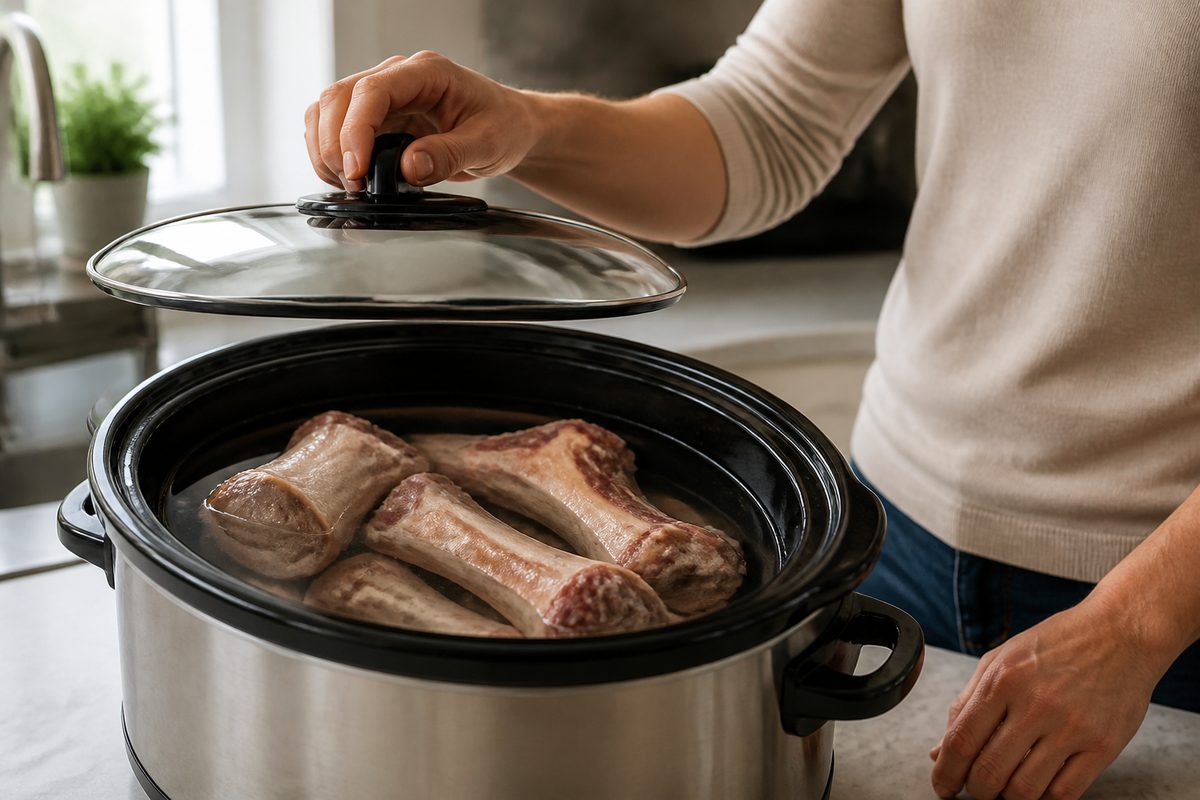
Place the bones into your cooking vessel and add enough water to cover them completely, keeping in mind the minimum and maximum fill lines of your specific appliance. Do not add salt, pepper, or spices.
Bring the liquid to a gentle, controlled simmer rather than a rolling boil, which can cause excessive evaporation and agitation. The exact cooking time will vary depending on your appliance and the size of the bones. However, remember that cooking the broth for an exceptionally long time does not make it safer; safety is achieved through proper ingredient selection, hygienic handling, rapid cooling, and flawless straining.
Bone Removal and Double-Straining
Once the simmering process is complete, use a sturdy utensil to lift the large bones out of the hot liquid. Place them immediately into a secure, pet-proof trash can. Never leave cooked bones on a low countertop or in an open garbage bin where a dog could easily retrieve them. Cooked bones become brittle and splinter easily; if consumed, they can cause choking, severe mouth lacerations, or life-threatening gastrointestinal obstructions and perforations. Cooked bones have no safe secondary use as dog chews.
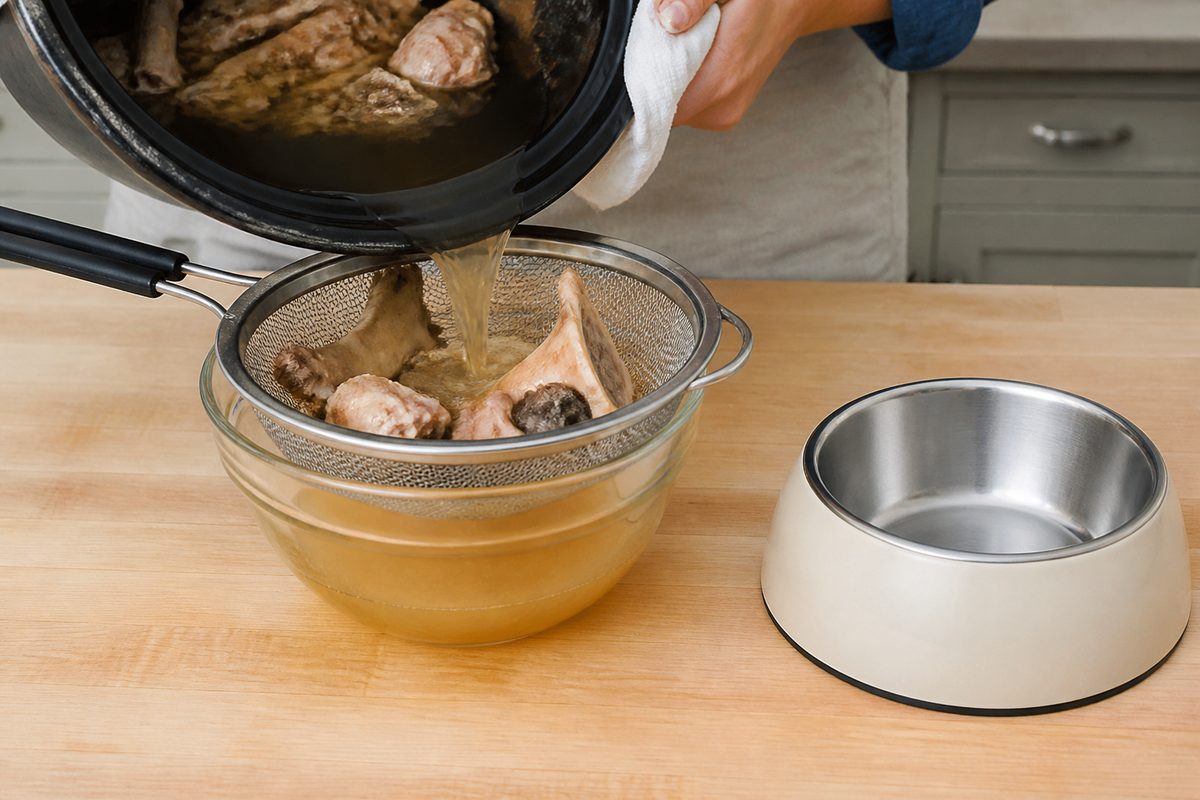
Next, carefully pour the hot liquid through a fine-mesh strainer into a clean, heat-safe container. If the pot is heavy or awkward to handle, work in small, manageable batches to prevent spills. Carefully inspect both the strained liquid and the mesh. If you notice any fine grit, sediment, or tiny bone fragments—or if you are at all uncertain—pour the liquid through a clean strainer a second time. Achieving a completely splinter-free liquid is the most critical safety threshold of the entire process.
Rapid Cooling, Defatting, and Portioning
Leaving a large, deep container of hot broth to cool slowly on the counter creates an ideal environment for bacterial growth. To cool the broth safely and quickly, divide it into shallow, wide containers and place them in the refrigerator.
Once the broth is thoroughly chilled, a firm, white layer of fat will typically solidify at the top. Carefully scrape off and discard this hardened lipid layer. Removing this excess fat makes the broth much lighter, easier to digest, and helps prevent gastrointestinal upset. This step is particularly important for dogs prone to pancreatitis or those on veterinary-managed low-fat diets.
Finally, divide the defatted broth into small, manageable portions. Using small silicone molds, ice cube trays, or small freezer-safe jars prevents the need to repeatedly thaw and refreeze a large batch. Be sure to label each container with the preparation date.
When introducing the broth to your dog, start with a very small amount—such as a single teaspoon for a small dog or a tablespoon for a larger dog—and monitor their stool, appetite, and overall comfort over the following 24 hours.
Safe Storage, Defrosting, and Serving Guidelines
Food safety practices must continue long after the stove is turned off. Keep your stored broth covered in the refrigerator and always use clean utensils when portioning out a serving. If the broth develops an unusual odor, changes color, or shows any signs of mold, discard it immediately.
For long-term storage, freeze the broth in pre-measured portions, leaving a small amount of headspace in each container to allow for expansion. When you are ready to use a frozen portion, thaw it in the refrigerator rather than leaving it on the counter at room temperature. Avoid repeatedly thawing and refreezing the same batch, as this increases the risk of bacterial contamination.
If you prefer to serve the broth warm, heat it gently until it reaches room temperature or a lukewarm state. Always test the temperature with your own finger before pouring it over your dog’s food to prevent painful mouth burns.
Because homemade broth is not nutritionally standardized, there is no universal serving size. Introduce it gradually and observe how your dog responds. If you notice soft stools, vomiting, increased itching, or a sudden loss of appetite, stop serving the broth immediately and consult your veterinarian. A new ingredient can occasionally trigger an adverse reaction or digestive sensitivity, even if the ingredients themselves are generally considered dog-safe.
Homemade vs. Commercial Bone Broth: Weighing the Options
Deciding whether to prepare bone broth at home or purchase a pre-made commercial product depends on an owner’s lifestyle, schedule, and comfort level with food preparation.
                  HOMEMADE BROTH                         COMMERCIAL DOG BROTH

Ingredient        • High control over raw ingredients    • High control via clear labeling
Control           • No added preservatives               • Formulated specifically for dogs

Time              • Requires hours of active simmering,  • Instant preparation; simply mix
Commitment          straining, cooling, and cleanup        with water or pour from package

Safety            • Requires absolute vigilance to       • Guaranteed bone-free; no cooked
Management          remove all bone fragments              bones handled in the home

Consistency       • Nutritional density and caloric      • Standardized calories, sodium,
                    values vary by batch                   and nutrients per serving

Storage &         • Requires refrigerator/freezer space  • Unopened packages are shelf-stable;
Portability       • Difficult to transport for travel      highly portable powdered formats
Homemade broth offers complete control over the sourcing of your ingredients and can be highly economical, especially if you routinely save raw bones from your own meal preparations. However, it requires a significant investment of time and carries the inherent responsibility of ensuring the final liquid is completely free of dangerous bone fragments.
In contrast, commercial bone broths formulated specifically for dogs eliminate the labor of cooking and the safety risks associated with handling cooked bones. These products offer standardized nutritional profiles, clear feeding guidelines, and extended shelf lives, making them highly convenient for travel, busy households, or pet owners who prefer to avoid handling raw meat and bones.
When Commercial Options Offer a Practical Alternative
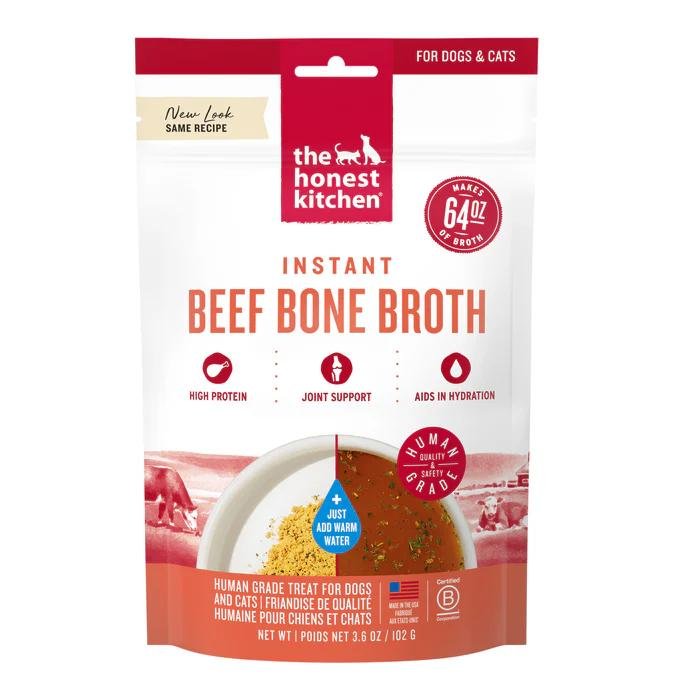
For pet owners seeking the benefits of bone broth without the intensive kitchen labor, commercial dog-specific toppers are a highly practical option. Brands like The Honest Kitchen offer specialized formulas designed to meet these needs safely.
- The Honest Kitchen Instant Turkey Bone Broth with Turmeric: This dehydrated, powdered supplement combines turkey broth, turkey, pumpkin, parsley, and turmeric. It is designed for intermittent or supplemental feeding and can be reconstituted quickly. The standard preparation instructions recommend mixing one-half tablespoon of the dry powder with one-quarter cup of warm water for every 25 pounds of a dog’s body weight. Owners should always check the physical packaging of the product in hand to verify current feeding guidelines.
- The Honest Kitchen Instant Beef Bone Broth with Turmeric: Utilizing a similar dehydrated format, this beef-based option offers an alternative flavor profile for dogs with poultry sensitivities, while maintaining the same ease of preparation.
- The Honest Kitchen Bone Broth Pour Overs: For owners who prefer a ready-to-serve liquid topper over a mixable powder, these pour-overs offer a convenient, pre-liquefied chicken-based option that can be added directly to a dog’s bowl.
These commercial options are especially useful for pet owners with busy schedules, those traveling with their dogs, or households looking to minimize food waste by preparing only what is needed for a single meal. However, even commercial toppers should be used mindfully. Always follow the package instructions, account for the extra calories in your dog’s daily meal plan, and consult your veterinarian before introducing new products if your dog has an underlying medical condition.
Frequently Asked Questions
Can dogs have bone broth made with onions or garlic?
No. Onions, garlic, chives, and other members of the Allium family contain toxic compounds that can damage a dog’s red blood cells, potentially leading to anemia. This danger applies to fresh, cooked, dehydrated, and powdered forms alike. You cannot make a seasoned human broth safe for a dog simply by diluting it with water; always use a broth prepared entirely without these ingredients.
Can dogs eat the cooked bones after the broth is finished?
No. Cooked bones become highly brittle and splinter easily. If swallowed, these sharp fragments can cause choking, severe cuts to the mouth and throat, or life-threatening punctures and blockages in the digestive tract. Always remove every bone fragment from the broth and discard them in a secure, pet-proof trash container.
How long can homemade bone broth be safely stored in the refrigerator?
Homemade bone broth should be cooled rapidly, kept in an airtight container, and used within a tight food-safety window of three to four days. For longer storage, freeze the broth in small, pre-portioned containers or silicone molds for up to several months. Always discard any broth that shows signs of spoilage, such as an sour odor, color changes, or mold.
Is bone broth a suitable replacement for a dog’s regular meal?
No. Bone broth is a supplemental liquid and does not contain the balanced range of proteins, fats, vitamins, and minerals required to serve as a primary diet. It should only be used as an occasional topper or treat to supplement a diet that is certified as complete and balanced for your dog’s specific life stage.
Can I give my dog bone broth on a daily basis?
Many healthy dogs can tolerate a small daily portion of plain bone broth. However, any daily addition must be factored into your dog’s total caloric intake to prevent unwanted weight gain. As a general rule, treats and toppers should make up no more than ten percent of a dog’s daily calories. If your dog has a history of pancreatitis, kidney disease, or is on a therapeutic diet, consult your veterinarian before making broth a daily habit.
The Bottom Line
Whether prepared at home or purchased as a convenient commercial option, safe bone broth for dogs must remain plain, thoroughly strained, and modestly portioned. Homemade preparation allows for complete control over ingredients but requires strict safety practices to eliminate the risk of bone splinters and toxic additives. Alternatively, commercial products like those from The Honest Kitchen offer a highly consistent, convenient, and safe way to add moisture and flavor to your dog’s bowl. Whichever approach you choose, remember that bone broth is a complement to—not a replacement for—a complete, balanced diet and professional veterinary care.