The modern stock market has a unique way of continually surprising observers. Whether it is plunging into a sudden downturn that triggers widespread anxiety over shrinking retirement savings or climbing to unprecedented heights, it never fails to provoke unease. When valuations reach record levels, a familiar anxiety sets in: the conviction that an even bigger crash is just around the corner. Today, that prevailing sense of dread is frequently pinned to the frenzied boom surrounding Artificial Intelligence, leading many investors to question whether they are standing on the precipice of a historic financial correction.

For those who have managed to tune out the daily economic noise, the broader AI story can be distilled into a rapid cycle of technological breakthroughs, massive corporate infrastructure investments, and sweeping market enthusiasm. Yet, the underlying concern among investors remains persistent. Many fear that while artificial intelligence is unquestionably a major technological leap, the mania surrounding its adoption is moving too fast and pushing valuations too high. This sentiment has fueled widespread speculation that markets are setting themselves up for a modern, supersized version of the early 2000s dot-com crash.
For veteran financial commentators who lived through the turn of the millennium, this cycle feels uniquely familiar. The dot-com boom helped launch early careers and paved the way for early retirement, only for the subsequent crash to threaten livelihoods and stability. Decades later, questions about current investment cycles and market volatility continue to surface regularly, prompting deep-dive public discussions at financial and early-retirement conferences across the country, from Camp FI Midwest to upcoming gatherings like the Bogleheads conference.

Reflecting on decades of personal retirement and observation, financial veterans often encounter a recurring question from anxious peers: how is it possible to remain comfortable and sleep soundly at night given the state of the world?
A traditional scan of the news cycle yields no shortage of alarming headlines. Observers point to political volatility, persistent inflation, towering national debts, and various geopolitical conflicts threatening international stability, all running parallel to anxieties over the AI bubble. Yet, looking back reveals that this brand of existential financial worry is hardly new.

Comparing current anxieties to those from twenty years prior reveals a striking continuity of human apprehension. In 2006, the worries of the day centered on entirely different flashpoints, yet the emotional undercurrent was identical. Back then, people worried about shifting geopolitical tensions, the national debt, inflation, and an overvalued stock market driven not by AI, but by a precarious housing bubble. There were parallel fears that globalization and outsourcing to nations like India and China would permanently strip domestic workers of their livelihoods. There was even widespread panic over Peak Oil, with dire predictions that the world was hurtling toward energy exhaustion—an outcome that was ultimately upended by technological shifts and increased production capacity.
Despite the heavy cloud of anxiety hanging over the mid-2000s, the subsequent twenty years witnessed remarkable economic resilience. Even the Great Financial Crisis—triggered by irrational exuberance in housing prices and overly complex financial leverage—stands in perspective when viewed through a long-term lens. While it was the largest economic contraction since the Great Depression, a diversified $100,000 investment made during that era still grew significantly over the ensuing two decades, weathering subsequent disruptions like the 2020 pandemic crash along the way.

Simultaneously, global socioeconomic indicators improved dramatically. Over a twenty-year span, the proportion of the global population living in extreme poverty dropped sharply, while infant mortality rates were cut in half. Clean energy transitioned from a fringe concept to a dominant market force, driven by a drastic reduction in the cost of solar panels and a massive surge in electric vehicle adoption.
These historical realities raise a fundamental question about human behavior: whether finite energy is best channeled into chronic worry about an uncertain future or directed toward constructive optimism. Critics frequently ask whether the current era is fundamentally different—whether the national debt has finally reached a tipping point, or if the AI bubble will produce a permanent economic stalemate. Financial media outlets consistently thrive on spinning intricate, scary narratives about impending doom.

However, these pessimistic outlooks often overlook a foundational economic principle: genuine prosperity is not born from abstract financial systems or the fluctuating numbers on a computer screen. Real prosperity stems from productivity.
The core mechanics of capitalism have always been choppy, prone to wild sentiment swings and speculative manias. Yet beneath these surface waves, real people continue to perform tangible work and develop practical inventions. The concept of an economy or a financial system is ultimately a human invention. When the architecture of the system strains under the weight of negative sentiment, societies have historically adjusted, reconfigured parameters, and returned to productive labor.

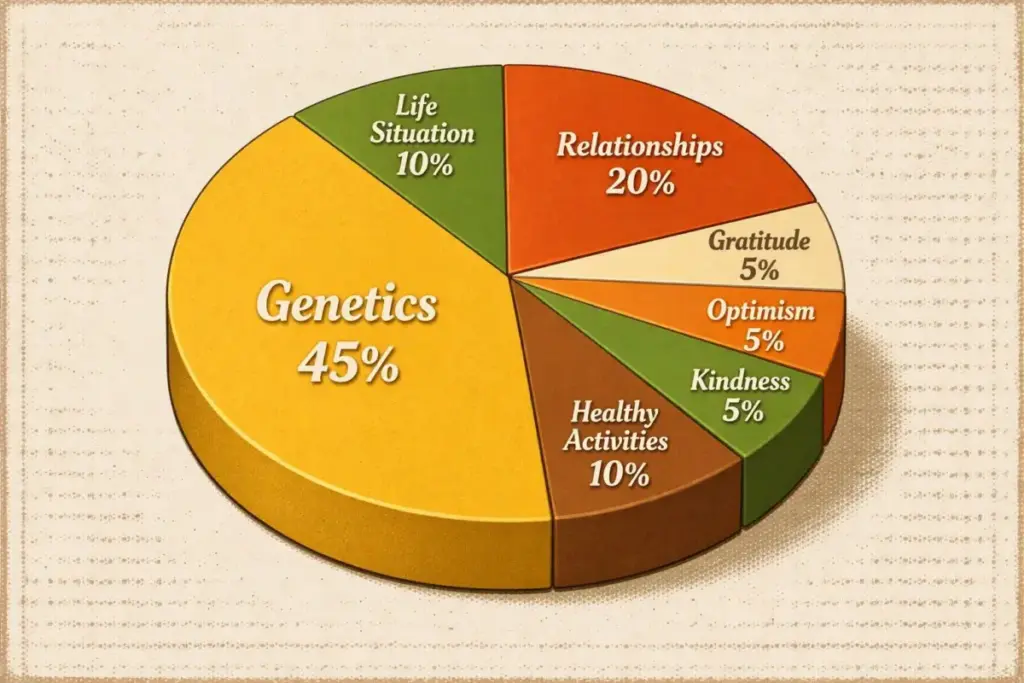
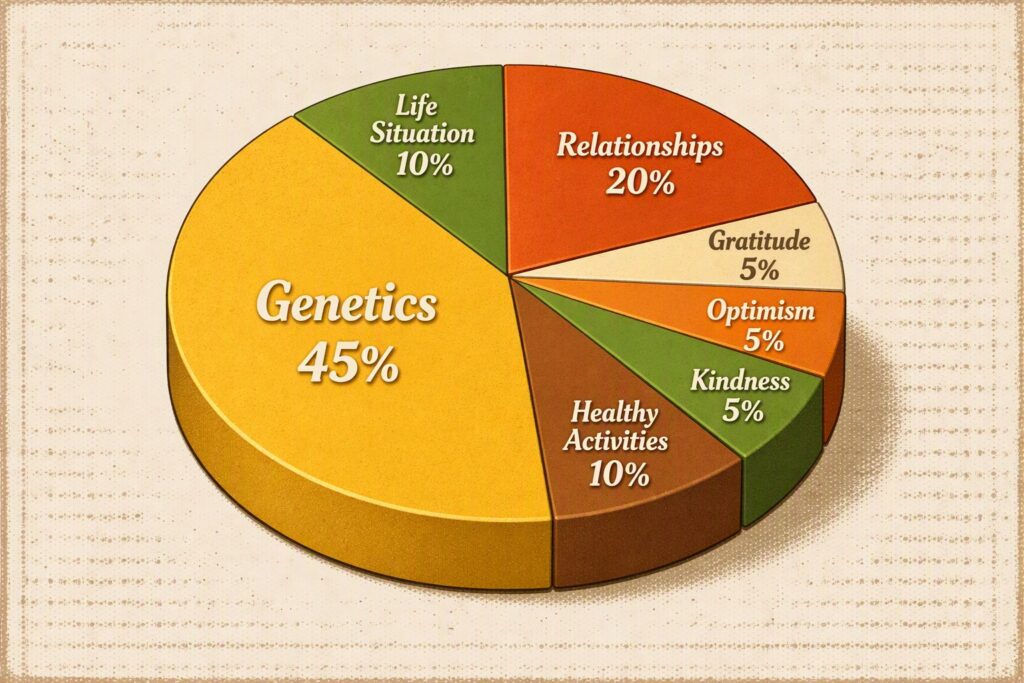
High productivity remains the primary driver of standard of living, economic growth, and the viability of long-term financial independence. Furthermore, once basic standards of living are secured, human happiness depends far less on incremental financial gains and far more on personal choices, close relationships, physical health, and a lifelong philosophy of optimism.
Despite these historical lessons, underlying anxiety remains prevalent even among experienced investors. Psychologically, human beings are essentially danger-detection machines. Background fear is an evolutionary trait developed to protect individuals from immediate physical threats. However, a quirk of this evolutionary machinery is that when genuine physical dangers are mitigated, the human brain continues scanning the environment for new targets of worry.

Once individuals successfully navigate physical threats, food scarcity, and tribal exclusion, financial anxieties naturally step in to fill the void. This tendency is amplified by cognitive biases like anchoring and the contrast effect, where individuals judge their lives based on relative comparisons rather than absolute well-being. Over time, these worries can manifest as micro-level fixations, eventually leading individuals to stress over complex tax strategies, estate distributions, and mandatory retirement account withdrawals simply because they have accumulated surplus wealth.
Combating this persistent cycle of fear requires a deliberate combination of self-awareness and rational thought. Understanding personal history—such as growing up in environments heavily influenced by scarcity mindsets or past trauma—can help illuminate the root causes of modern financial anxieties. Recognizing that these fears are frequently echoes of the past rather than objective evaluations of the present allows individuals to confront worst-case scenarios rationally and realize that hypothetical catastrophes are rarely as devastating as imagined.

Taking decisive action serves as an effective antidote to fear, transforming the unfamiliar into the manageable and building personal resilience. Furthermore, curating one’s daily mental diet by stepping away from sensationalized news cycles and focusing on tangible, positive behaviors helps restore psychological balance. Humans are physically and mentally wired for active problem-solving in dynamic environments; spending prolonged periods isolated in indoor, digital spaces naturally generates psychological friction.
By approaching new societal shifts—including the rapid rise of artificial intelligence—through the lens of experimentation rather than existential dread, individuals can reframe potential disruptions. Rather than succumbing to doom-scrolling, understanding the mechanics of technological advancement reveals its underlying utility. Artificial intelligence functions essentially as a cognitive tool designed to boost human efficiency, mirroring past technological revolutions like the internet and mobile computing.
While productivity-enhancing technologies inevitably displace certain traditional job categories and concentrate rewards among enterprise owners and shareholders, they simultaneously drive down service costs and catalyze entirely new industries. Artificial intelligence, much like every preceding economic shift, presents a series of choices. It remains up to individuals to decide whether to view emerging innovations as a source of paralyzing fear or as an active catalyst for lifelong learning, adaptation, and purposeful living.