

This week’s anonymous submissions, shared through the popular online series hosted by lifestyle brand Scary Mommy, suggest a demographic operating profoundly at max capacity. While the regular cadence of these weekly confessions often balances everyday trials, mild romantic daydreams, and familiar complaints about difficult mothers-in-law, the latest entries tilt heavily toward exhaustion, marital strain, and existential reassessment. Many contributors report an overwhelming desire to rewind the clock to carefree, pre-child years, while others openly contemplate leaving their partners or simply yearn for a single day free from the relentless demands of others.
Yet, amid the prevalent themes of dread and burnout, the spectrum of maternal experience remains wide. Some contributors celebrate milestone personal achievements or unexpected renewals of intimacy, proving that the emotional landscape of motherhood is far from monolithic. Whether wrestling with the complexities of perimenopause, the grief of lost pets, financial anxiety, or the quiet solace of blasting music alone in a parked car, the broad array of confessions offers a mirror to countless women who feel uniquely isolated in their struggles.
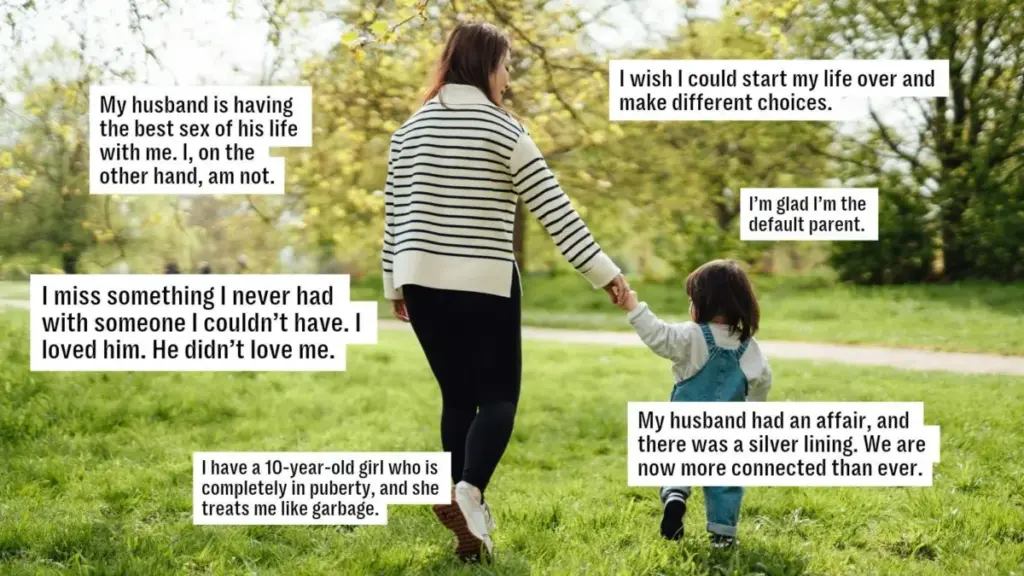
The emotional toll of partnership and marriage occupies a significant share of this week’s reflections, highlighting deep divisions within domestic relationships. Several anonymous mothers expressed profound disillusionment with their marital status, with one confessing that if she could turn back time, she would choose a different path entirely rather than taking on the emotional labor of parenting a grown man. Others detailed the quiet agony of staying in relationships for financial reasons, living in the same home with an ex-partner simply because affordable housing remains out of reach, or remaining married because the prospect of navigating a bitter custody battle with a resentful co-parent feels even more daunting than staying put.
Marital discontent extends into the bedroom and the realm of basic affection, where mismatches in libido, exacerbated by hormonal shifts and perimenopause, leave women feeling isolated or ashamed. While one contributor noted a surprising late-life sexual renaissance in her fifties, others reported navigating deep disconnects, noting that their husbands’ drinking habits had eroded physical attraction or that they had to repeatedly beg for basic expressions of warmth, such as a substantial hug. Conversely, a few entries underscored the unpredictable nature of long-term commitments, with one contributor noting a bizarre silver lining following an affair that ultimately forced a couple into deeper communication and connection, while another celebrated the end of a nearly three-year dry spell after seventeen years together.
Parenting dynamics present their own distinct set of trials, particularly around the unequal distribution of domestic labor and the emotional weight of being the household’s default parent. Numerous submissions highlighted the exhaustion of shouldering the mental load of meal planning, domestic upkeep, and emotional regulation without relief. Mothers of neurodivergent children spoke candidly about the relentless energy required to navigate advocacy systems, while others mourned shifting relationships with their children, including daughters entering difficult phases of puberty or adult children struggling to establish independence.
The financial pressures of the season added another layer of anxiety, particularly for families facing holiday expenses while grappling with tight budgets and children who still believe in holiday traditions. From mothers rationing resources to maintain access to medical treatments like Semaglutide, to those struggling with the rising costs of healthcare and long diagnostic delays—such as a nine-month wait to treat a shoulder injury—the intersection of economic strain and physical health emerged as a recurring source of distress.
Grief and loss also cast a long shadow over the weekly submissions, intersecting painfully with seasonal changes. Several contributors marked grim anniversaries, noting the loss of parents or dealing with the profound, unexpected devastation of losing a beloved family dog, which some confessed hurt worse than losing human relatives. For those managing the transition through perimenopause, surgical procedures like hysterectomies at a relatively young age, or the intensive efforts required to cut ties with alcohol, the journey toward personal health often felt isolating and unsupported.
Despite the heavy concentration of stress, burnout, and systemic frustration, the collective venting serves as a reminder of shared endurance. Whether finding fleeting moments of peace through loud music in a driveway, navigating friendships that naturally fade over time, or seeking professional help through intensive outpatient mental health programs, the anonymous voices reflect a resilient community searching for balance in an increasingly demanding world.