

Published October 31, 2026, at 5:00 AM
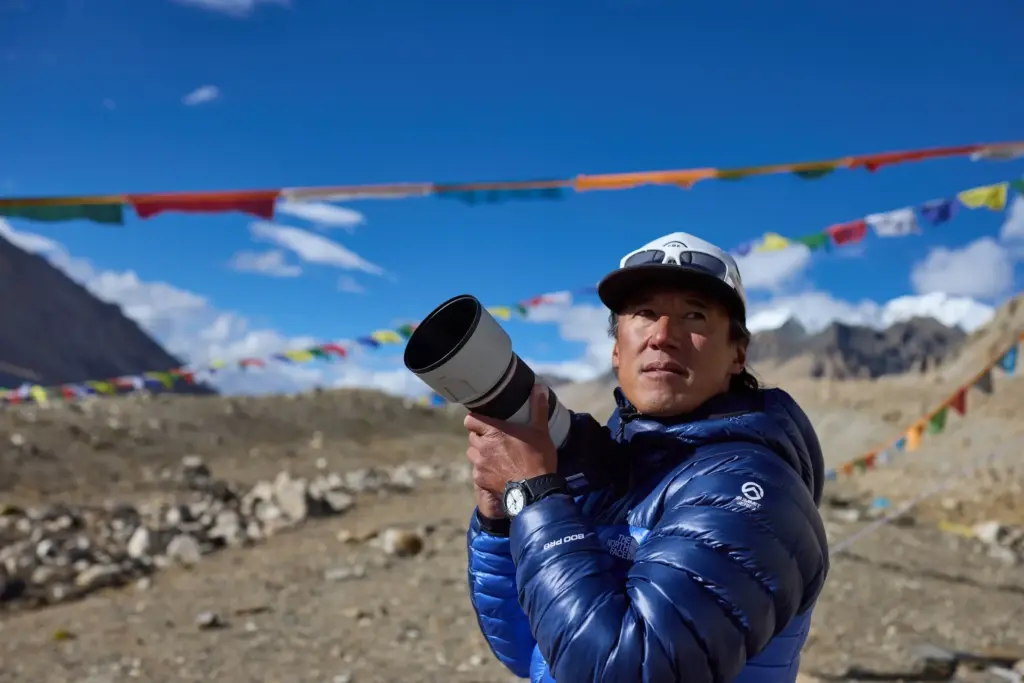
When Jimmy Chin was in his twenties, living out of a battered 1989 Subaru Loyale somewhere between the granite monoliths of Yosemite and the jagged peaks of the Tetons, he repeatedly tried to explain the concept of modern climbing to his father. His father, a librarian at Mankato State University in Minnesota, would listen patiently to his son’s impassioned accounts of vertical exploration before offering a humbling reality check: “Our language is 5,000 years old, and there is no word for what you do.”
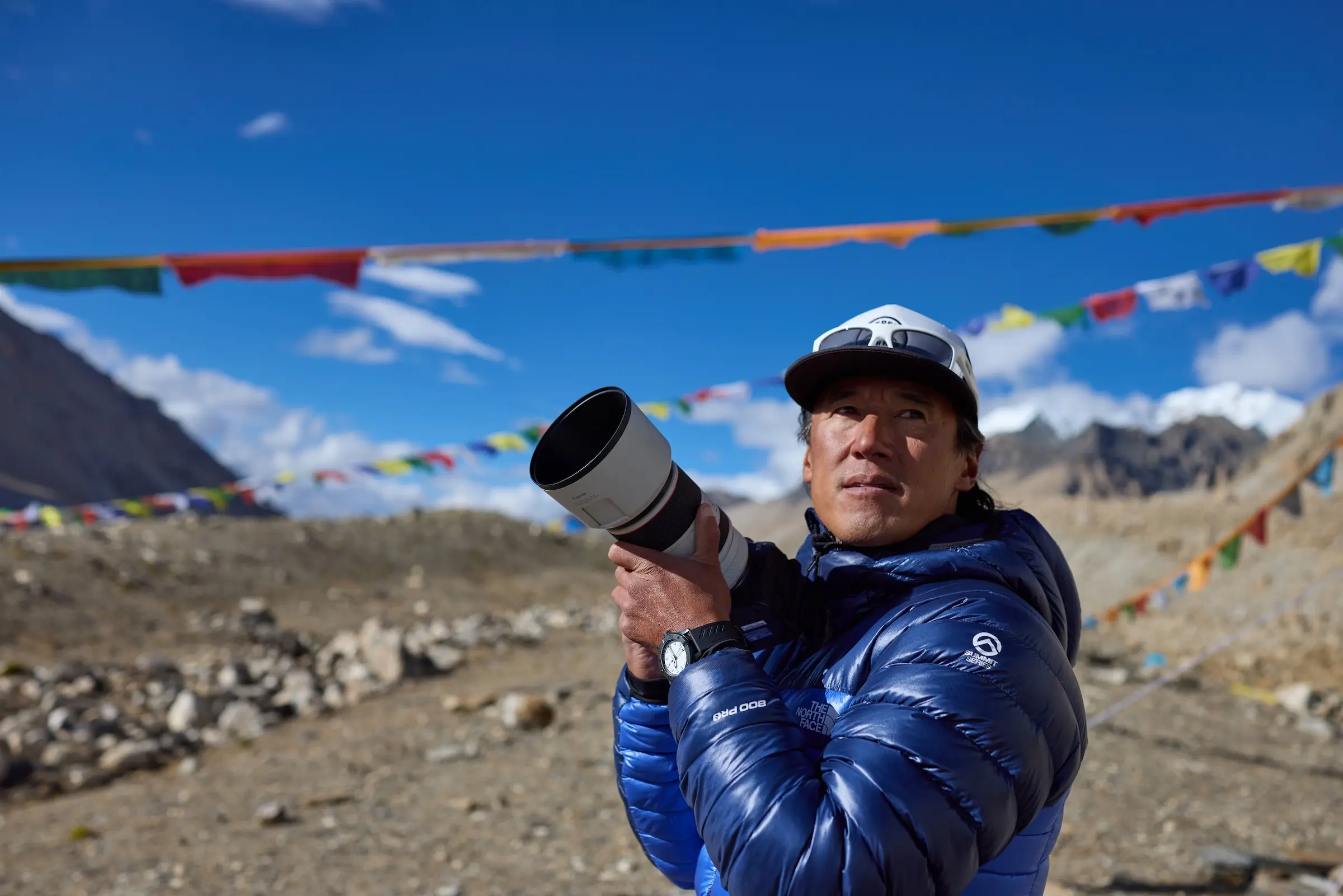
Chin has spent the decades since that conversation building a comprehensive vocabulary for it anyway. Over a storied career as an elite mountaineer, a pioneering adventure photographer, and the Oscar-winning director of Free Solo—featuring free-soloist Alex Honnold—Chin has continuously pushed the boundaries of visual storytelling. His latest film, Everest: The Other Side, documents Jim Morrison and the late Hilaree Nelson’s daring attempt to climb and ski down the treacherous North Face of the world’s tallest mountain. Yet, his latest project steps away from the cinematic lens and onto the printed page.
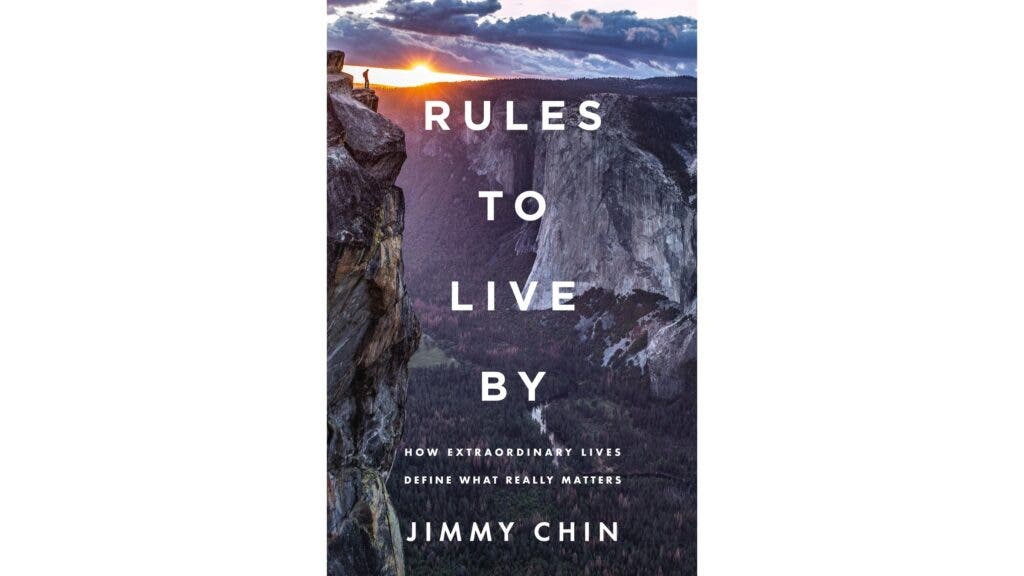
His new book, Rules to Live By, published by Celadon Books, presents the hard-earned wisdom of other extraordinary minds while functioning simultaneously as a deeply reflective memoir. The book is structured around ten intimate conversations with individuals who have resolutely lived life on their own terms: Yvon Chouinard, Yo-Yo Ma, Simone Biles, Ridley Scott, Kelly Slater, Annette Bening, Lynsey Addario, Kris Tompkins, Alex Honnold, and Bill King, a retired command master chief of SEAL Team 6. Throughout these dialogues, Chin asks each subject a variation of a singular, probing question: In the end, what really matters? In answering them, readers ultimately learn what matters most to Chin himself.
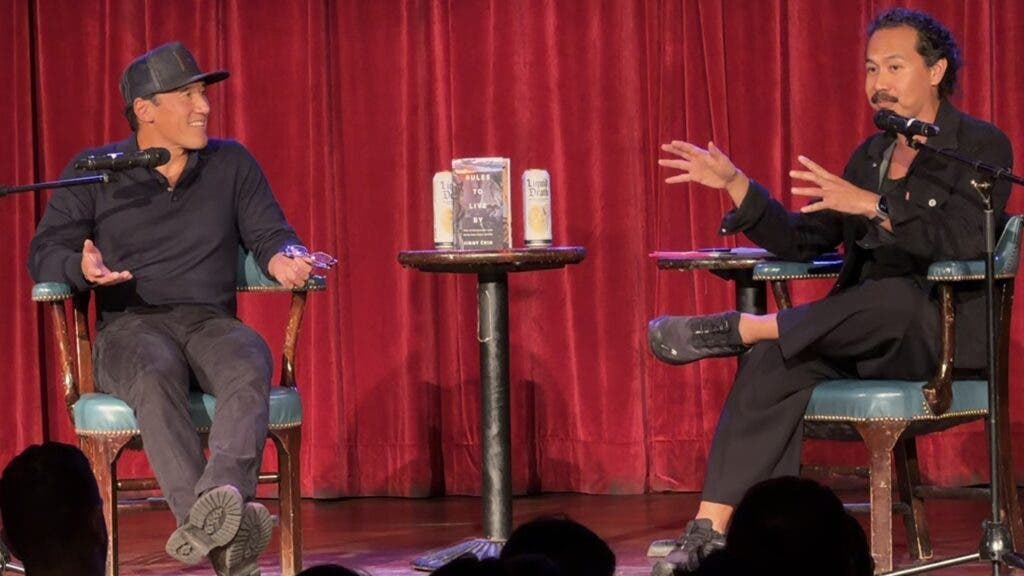
Earlier this month, Chin sat down on stage at the Bell House in Brooklyn for his inaugural book event. Admitting to the crowd that he hadn’t actually reread the book since turning in the final manuscript, he confessed with characteristic candor, “There’s a reason I’m a filmmaker. Writing is really, really difficult.” What followed was a wide-ranging, deeply personal conversation that drifted effortlessly from classical violin practice and rigorous military outposts to the mundane domestic mystery of a missing sock.
“If You’re Going to Do It, Do It Well”
Chin’s upbringing was defined by structure, high expectations, and an unyielding pursuit of excellence. Describing himself in the book as “the only son of an only son of an only son,” he reflects on a childhood where leisure was scarce and discipline was absolute.
“I started violin when I was three, and it became two hours of practice a day,” Chin recalled during the Brooklyn discussion. “Then martial arts, two hours a day. Then homework. That was my weekdays, and it was all I knew. But I learned discipline, and there was a very high expectation for excellence. My dad always said, ‘If you’re going to do it, you might as well do it well.’ I hated that. Sometimes I still struggle with it.”
Whenever he managed to perform well in school, his reward was simple: running off into the woods where rules temporarily ceased to exist. Growing up with librarian parents meant his home was always filled with books, a fact he jokingly blames for his eventual career path. When his parents later questioned how their son ended up living an unconventional outdoor life, Chin told them, “It’s your fault. You gave me all these books.”
Finding climbing in college felt like an immediate, undeniable calling. Having grown up believing that the entirety of the professional world consisted of three distinct career paths—lawyer, doctor, or professor—he told his parents after graduation that he would take just one year off to get the climbing out of his system before pursuing a traditional career. It was, by his own admission, a total fabrication. From age 21 to 28, he lived out of his car, sheltered in a cave in Yosemite’s Camp 4, or resided in a chicken coop in Jackson, Wyoming.
Navigating those early years required heavy emotional lifting, particularly when calling home. His sister, who graduated from Stanford and worked at Yale for nearly two decades, acted as a vital buffer and advocate. When Chin would check in on his mother’s state of mind, his sister would relay the steady refrain: “Mom just keeps saying, ‘I raised a homeless man.’”
With his father, the desire for understanding ran deep. While audiences frequently view his breathtaking films and photographs and ask about the greatest physical risk he has ever taken, Chin insists it was never a mountain. Rather, the most hazardous terrain was his early twenties, a period heavy with self-doubt. He remembers sitting through grueling storm days inside a dripping, freezing cave, soaking wet and questioning his choices while peers advanced smoothly into graduate programs and corporate careers. During this transitional period, he even played guitar in a reggae band composed entirely of classically trained kids who could expertly play whatever they set their minds to. When asked if they ever released an album, Chin laughed and admitted, “No… we weren’t that good.”
A Constellation of Answers
The genesis of Rules to Live By stemmed from a desire to explore life’s deeper inquiries outside the grueling, multi-year timelines of his documentary filmmaking. Because feature-length documentaries like Meru or Free Solo demand four, five, six, or seven years of intense physical and emotional investment, a filmmaker can only complete a handful in a lifetime.
“You have to bleed for them,” Chin explained. Wanting to honor extraordinary individuals he admired—people he would never direct a full-length film about—he conceived the book as a constellation of vastly different backgrounds and careers. Having recently turned 50, he found himself reflecting on the distinct phases of his life and contemplating the road ahead. He wanted to know what success looked like to these icons when they started, and what it meant to them now.
An Anomaly Among Anomalies
Chin’s path nearly intersected with a different cinematic milestone altogether: he almost walked away from Free Solo. Following the success of Meru, producers continually pressed him for his next project. When Chin mentioned to his friend and future producer Evan Hayes that he had been mulling over a documentary about Alex Honnold, Hayes interrupted him mid-name to declare it a green light from National Geographic, secured instantly without even a formal pitch deck.
Having filmed and photographed Honnold for a decade, Chin understood that adventure sports operate on extreme margins, yet Honnold was an anomaly even among those elite thresholds. “Even athletes at that level were confounded by what he was doing,” Chin noted.
When Chin called Honnold to share the news that the film was funded, Honnold casually replied that he was considering free-soloing El Capitan—climbing the massive 3,000-foot vertical rock formation without ropes or safety gear. Stunned and terrified by the implications, Chin immediately told Hayes he was out of the project.
Among Honnold’s inner circle, discussing the prospect of a free solo of El Capitan felt like inviting disaster into the ether. They had watched his progression—from soloing Moonlight Buttress to Half Dome—and knew the logical, perilous next step. Chin’s overriding fear was agonizingly simple: what if the presence of cameras somehow contributed to a fatal fall? It was a burden he knew he could not survive.
What ultimately changed his mind was the realization that Honnold intended to attempt the climb regardless of a film crew’s presence. Chin trusted Honnold’s meticulous nature, deep instincts, and utter lack of superficial motivation. To manage the immense pressure, Chin established three unbreakable rules for his elite crew—professionals who were both world-class climbers and filmmakers: they were Honnold’s friends first, climbers second, and filmmakers third, ensuring the production’s demands never compromised Honnold’s safety.
While viewers often point to the famous scientific brain scans featured in the documentary as proof of superhuman biology, Chin emphasizes that Honnold feels fear just like anyone else. His process involves systematically expanding his comfort zone through rigorous, disciplined repetition until what once terrified him becomes manageable.
Alive, and Alive Inside
Balancing extreme risk with family life remains a complex, deeply personal reconciliation for Chin. In 2017, when he attempted to dial back the danger in his daily routine, mountaineering legend Conrad Anker and Honnold invited him on an expedition to Antarctica, and he went. In his book, Chin argues that children require parents who are physically alive, but also parents who feel alive inside.
Acknowledging the heavy toll the mountains have taken on his community—including the tragic death of close friend Hilaree Nelson—Chin resists framing his choices as simple excuses. Instead, he views it as an inescapable calling. When responding to a note from retired SEAL Bill King following Nelson’s passing, Chin wrote that the mountains generously give life while simultaneously taking it away, concluding that while it never entirely makes sense, climbers fundamentally understand the duality.
When confronting dangerous situations in the field, Chin relies on a calculated breakdown of fear to prevent panic from taking hold. By actively separating perceived risks from actual, objective risks, he brings his mind back to the present moment, allowing him to mitigate hazards, form a concrete plan, and execute it efficiently.
The Question at the Undisclosed Location
Chin’s reputation for resilience eventually caught the attention of the United States military. Receiving a surprise directive to report to an undisclosed location, he surrendered his phone and found himself speaking before members of SEAL Team 6, all of whom had reportedly watched Meru.
When the presentation concluded, a seasoned operator in the back cut straight to the core inquiry: how Chin and his team managed the extraordinary discipline required to turn around just 100 meters short of the summit after spending 19 grueling days on a wall with only seven days of food. For Chin, knowing when to walk away from a lifelong objective when conditions deteriorate demands the highest level of mental fortitude.
Reflecting on shared traits between elite operators and high-altitude climbers, Chin highlighted a surprising foundational element: humor. Asking Bill King what specific trait helps candidates survive grueling military training, King answered immediately: humor. Whether a person is enduring extreme physical stress or navigating a critical juncture on a vertical wall, maintaining perspective through humor preserves rational decision-making and prevents catastrophic mistakes.
Yvon’s Wisdom
Among his mentors, outdoor apparel pioneer Yvon Chouinard holds a singular place. Chouinard’s advice—that complicating life is effortless while simplifying it is an immense challenge—resonates deeply with Chin. While he finds total simplification and mental calm on high-altitude expeditions where every single ounce matters, he jokes that finding a matching sock at home can still feel entirely overwhelming.
Addressing the future of the wild landscapes that shaped his life, Chin points to the philanthropic conservation efforts of Chouinard and Kris Tompkins, who helped preserve millions of acres of wilderness to establish national parks. Guided by Chouinard’s philosophy that individuals should contribute whatever specific tools they possess—whether activism, storytelling, or accounting—Chin views his media platform and his documentary projects, such as Wild Life, as his primary contribution to preserving the natural world for future generations.