




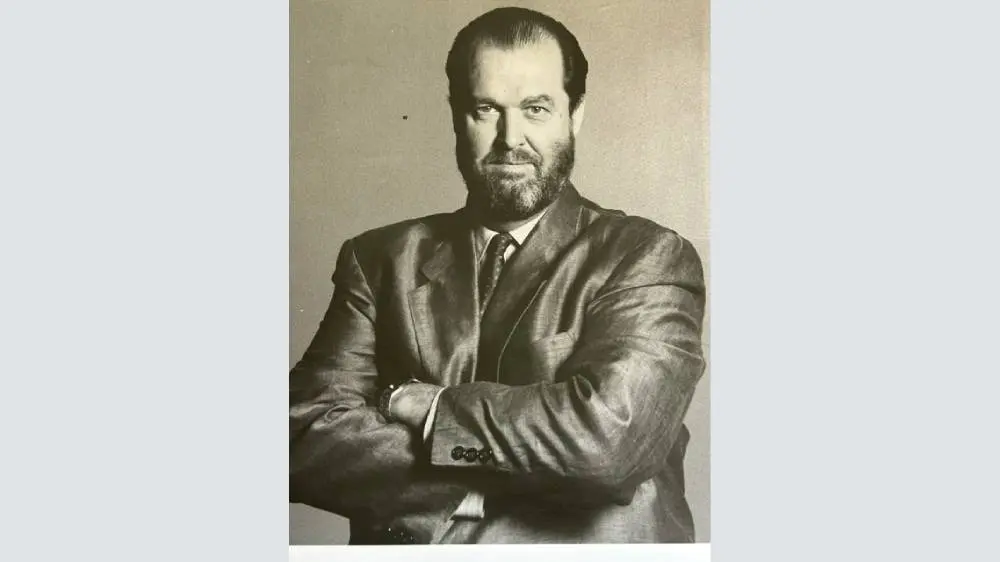
Throughout a career that spanned several decades, Buziak cemented his legacy as a transformative figure in the record business. He was widely recognized for spearheading the commercial and creative revitalization of RCA Records during the turbulent and shifting musical landscape of the 1980s. By championing a diverse roster of emerging rock acts, adult contemporary artists, and cultural phenomenon soundtracks, Buziak helped steer one of the industry’s most historic labels back to mainstream prominence.
Born in the mid-20th century, Buziak’s professional journey did not begin in the executive suites of the music world. Rather, his early career path took a distinctly corporate turn. In 1968, he made a pivotal life decision to leave a secure position at the Ford Motor Company to pursue his passion for the entertainment industry. This leap of faith initiated a steady climb through the ranks of music promotion and distribution.
Buziak initially took on foundational roles in sales, distribution, and local promotion, working out of Detroit and San Francisco. These grassroots experiences provided him with an intimate understanding of the regional markets and the mechanics of how records reached consumers. His talents soon caught the attention of major players, leading him to relocate to Los Angeles and join Capitol/EMI Records. At Capitol, he expanded his administrative and creative repertoire, holding critical promotion and Artists and Repertoire (A&R) roles that deepened his industry connections and sharpened his instincts for spotting commercial viability.
Seeking new challenges, Buziak transitioned to Arista Records, where his career trajectory truly accelerated. Operating under the legendary Clive Davis, Buziak thrived as the head of West Coast operations. His operational acumen and strategic oversight were so effective that the label later appointed him as its managing director in the United Kingdom. This international exposure broadened his global perspective on the music business, proving that he could manage complex operations across different cultural and economic landscapes. His impressive track record at Arista did not go unnoticed by industry stakeholders, serving as the direct springboard to his appointment as president of RCA Records in 1986.
When Buziak took the helm at RCA in the mid-1980s, the storied label was in need of modern vision and revitalized energy. He immediately set to work reshaping its catalog and signing philosophy. Under his leadership, RCA experienced a major commercial resurgence, driven by hit albums from artists such as Bruce Hornsby, the Eurythmics, and Love and Rockets.
Buziak also demonstrated a forward-thinking approach to distribution, recognizing that the future of the industry lay in strategic partnerships with independent labels. During his tenure, RCA established crucial distribution deals with prominent indie outfits like Beggars Banquet—which brought acts including Love and Rockets into the RCA orbit—and Jive Records. These collaborations significantly expanded and modernized the label’s roster, allowing RCA to tap into alternative, dance, and emerging urban markets that traditional major labels had often overlooked.
Perhaps one of Buziak’s most culturally enduring achievements at RCA was his oversight of blockbuster film soundtracks, most notably the cultural phenomena surrounding the "Dirty Dancing" movie franchise. Under his guidance, the soundtrack releases became massive commercial juggernauts. The albums spawned a number-one single with Eric Carmen’s "Hungry Eyes" and achieved critical and commercial acclaim with the Bill Medley and Jennifer Warnes duet "(I’ve Had) The Time of My Life," which went on to win both an Academy Award and a Grammy Award. These projects demonstrated Buziak’s keen ability to bridge the gap between Hollywood cinema and the mainstream pop charts, maximizing the revenue potential of film synchronization rights in ways that became an industry standard.
After leaving RCA Records in 1990, Buziak continued to expand his executive footprint in the entertainment and media sectors. He accepted a position as the president of Sony’s TriStar Music Group, where he applied his major-label expertise to the film studio’s music division. Eager to explore entrepreneurial avenues, he later founded Chameleon Entertainment as a joint venture with Time Warner, allowing him to nurture independent projects and artists with the backing of a major media conglomerate.
By the mid-1990s, Buziak shifted his professional focus toward corporate consulting, executive search, and venture capital. In 1995, he launched Buziak & Company LLC, a specialized consultancy that advised telecommunications and cable companies on media strategies and partnerships. His corporate acumen during this period was highlighted by his instrumental role in facilitating the sale of Paradigm Music Entertainment to Liberty Media, a major transaction that underscored his high-level negotiation skills.
In his later professional endeavors, Buziak remained active in international business development. He served as a board member for inVentures, a U.K.-based investment group. In that capacity, he initiated and oversaw a strategic merger with Redwood Partners, a U.S. corporate search firm. This union successfully created a multi-platform international consulting and venture group, blending his deep-rooted media expertise with cross-border corporate finance.
Throughout his life, Bob Buziak earned the respect of colleagues, artists, and competitors alike for his sharp business mind, his dedication to artist development, and his ability to navigate the shifting paradigms of the entertainment and corporate worlds. He leaves behind a legacy defined by the revitalization of classic American record labels, the curation of iconic soundtracks that defined a generation, and a diverse career that bridged the traditional music industry with modern corporate enterprise.