




When a domestic cat begins urinating or defecating outside the designated litter box, frustrated pet owners often attribute the habit to stubbornness, spite, or deliberate retaliation. According to renowned feline behavior specialist and author Pam Johnson-Bennett, this widespread assumption is not only fundamentally incorrect, but it also actively prevents households from addressing the true underlying problems. Feline behavior is governed by utility, biological drive, and environmental adaptation; cats consistently repeat actions that serve their immediate physical comfort and psychological security.
When a cat chooses an alternative location for elimination, the animal is responding to specific environmental, medical, or social stimuli that make the litter box untenable from the cat’s perspective. Understanding these underlying motives represents the essential first step toward resolving inappropriate elimination and restoring domestic harmony. Far from being random or malicious, litter box avoidance is an overt communicative act signaling that an element of the cat’s habitat, social structure, or physical well-being requires immediate attention.
Physical and Medical Challenges
Before addressing behavioral modifications or environmental adjustments, animal health professionals and behavior specialists emphasize the critical need to rule out underlying medical conditions. In many instances, elimination outside the litter box has nothing to do with training or environmental preferences, but stems directly from acute or chronic physical limitations.
Conditions such as osteoarthritis, soft tissue injuries, spinal deterioration, and general age-related stiffness can transform a routine trip to the litter box into a painful and arduous ordeal. High-sided boxes, enclosed entries, and models requiring top access demand physical agility that aging or injured felines may no longer possess. Similarly, navigating household obstacles—such as climbing a flight of stairs or traversing long hallways to reach a remote utility room—can exceed the physical tolerance of an ailing pet.
In situations involving feline lower urinary tract disease, interstitial cystitis, kidney dysfunction, or gastrointestinal distress, the animal may experience sudden, uncontrollable urgency. When a full bladder or bowel is paired with mobility restrictions, the cat simply cannot reach the designated facility in time. In other cases, cats experiencing painful urination or defecation can develop a conditioned negative association with the box itself, mistakenly concluding that the vessel, rather than internal inflammation, is the source of their agony.
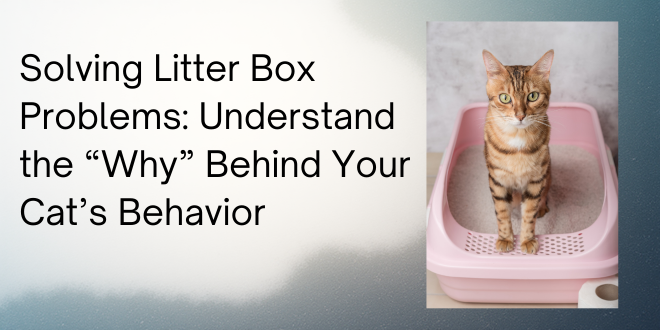
For senior felines and pets coping with chronic mobility impairments, eliminating in open, easily reached areas becomes a functional necessity rather than a behavioral malfunction. Remedying these scenarios requires human adaptability and compassion. Experts recommend transitioning to uncovered boxes with low-entry thresholds, ensuring that the front lip allows effortless entry without requiring a high step or leap.
Furthermore, these specialized boxes should be placed directly within the primary living zones where the cat spends the majority of its daily life, eliminating the need to navigate architectural hurdles. Placing washable or disposable absorbent pads beneath and surrounding the perimeter of the box provides a practical safety net for accidental spills or misdirected postures without penalizing the animal. Above all, caretakers must exercise patience and realistic expectations, recognizing that missed attempts are physical manifestations of disease or aging rather than defiance.
Litter Box Cleanliness and Survival Instincts
Beyond physical health, the sheer cleanliness of the litter pan stands as one of the most prominent determinants of feline compliance. Pet owners frequently judge the condition of a litter box by human sensory standards, concluding that scooping waste once a day, or even every other day, represents sufficient hygiene. From the perspective of a feline, however, such maintenance routines frequently fall well short of acceptable biological thresholds.
The feline compulsion to dig, eliminate, and systematically cover waste is not a learned domestic habit; it is an ingrained survival mechanism honed by thousands of years of evolution. In the wild, felines occupy an unusual ecological niche, acting simultaneously as predators to smaller creatures and prey to larger carnivores. Burying biological waste is a vital risk-mitigation strategy designed to mask territory markings and minimize scent signatures. Left exposed, the odor of feline urine and feces serves as a beacon that can draw competing, unfamiliar felines or apex predators, while concurrently alerting local prey species that a hunter is actively patrolling the vicinity.
When a domestic litter box is neglected, accumulated waste compromises the cat’s innate need for concealment. Encountering a soiled substrate, the animal perceives the location as compromised and intrinsically hazardous. Choosing an alternate location—such as the quiet corner of a guest bedroom or a freshly laundered rug in the dining room—is not an act of domestic rebellion. Rather, it represents logical problem-solving on the part of the cat, which selects a clean, scent-neutral environment that feels far safer than an unkempt box.

To accommodate feline sensory requirements, experts recommend scooping waste deposits a minimum of twice daily, with proactive owners monitoring the boxes throughout the day whenever passing them. Litter facilities situated in basements, laundry closets, or secondary rooms require dedicated vigilance, as their out-of-sight status frequently leads to human oversight.
Routine scooping alone is insufficient to maintain sanitary standards over time. Regardless of whether traditional clay, natural alternatives, or modern clumping litters are employed, microscopic residues inevitably contact the plastic basin. Plastic is naturally porous; as cats scratch and dig, fine fissures develop across the floor and walls of the pan, trapping bacteria, uric acid crystals, and persistent odors that clumping litter cannot fully absorb.
Consequently, pet caretakers must regularly conduct a comprehensive cleaning protocol by discarding all used litter, scrubbing the container thoroughly with warm water and mild, unscented soap, and refilling the unit with fresh substrate. Harsh chemical disinfectants or heavily perfumed detergents should be strictly avoided, as their lingering synthetic scents can repel sensitive feline noses. When evaluating litter hygiene, owners must bear in mind that a feline’s olfactory capabilities exceed human senses by orders of magnitude; an odor that smells mildly stale to a person is overwhelmingly offensive to a cat that must stand inside the confined enclosure.
Stress, Fear, and Inter-Cat Conflict
Litter box compliance is also intimately intertwined with psychological security. Domestic felines are highly vulnerable while in the act of elimination, requiring an environment that guarantees clear visibility, physical protection, and unobstructed escape routes. In environments characterized by unpredictability, dynamic household stress, or social friction among multiple animals, the litter box can rapidly evolve into a flashpoint of anxiety.
In multi-cat residences, inter-feline tension is a frequent, subtle driver of elimination outside the box. Dominant or aggressive cats often exploit litter facilities as strategic checkpoints, ambushing, stalking, or physically trapping lower-ranking companions while they attempt to use the pan. If an animal is startled, cornered, or attacked while attempting to eliminate, the resulting trauma can induce an immediate, lasting aversion to that specific location or receptacle.

To avoid the risk of being ambushed, a vulnerable cat may intentionally choose open areas of the home—such as hallways, living rooms, or central dining spaces—for elimination. Although deeply inconvenient for human residents, these open vantage points provide 360-degree visibility and multiple avenues of flight. From the center of a spacious room, the cat can monitor approaching household members or rival pets and flee before physical confrontation occurs.
By contrast, enclosed, hooded boxes or pans shoved tightly into dead-end corners, under low cabinets, or between noisy domestic appliances function as potential dead ends. While covered models are frequently marketed for human aesthetic preference and odor containment, they often serve to obscure a cat’s view of approaching threats and concentrate noxious odors within a confined space.
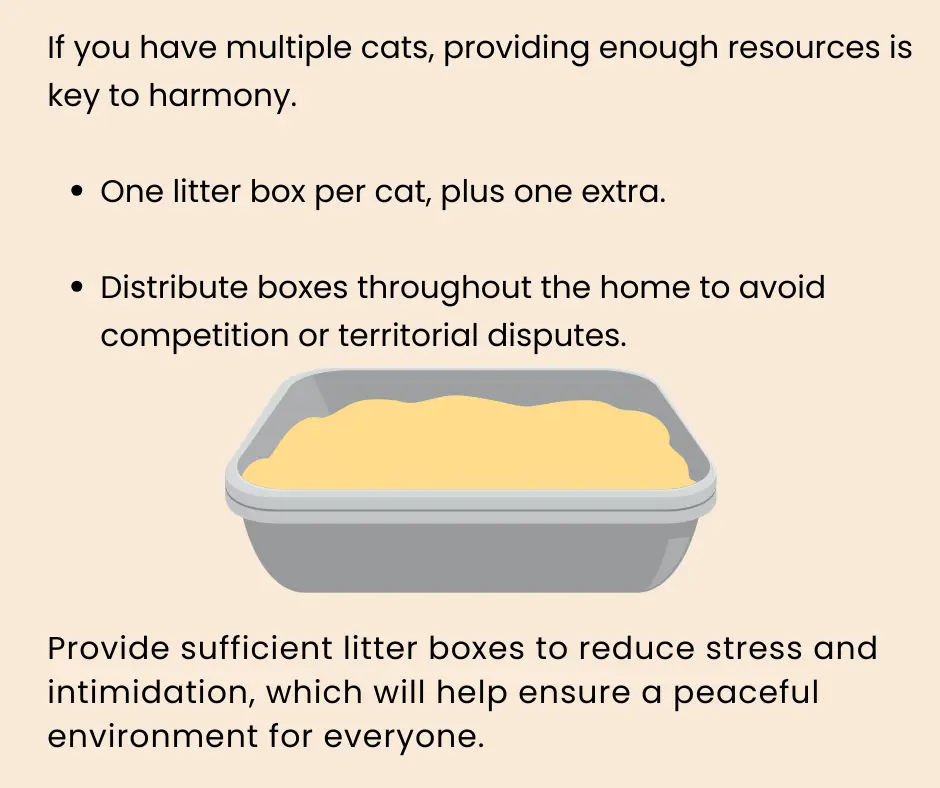
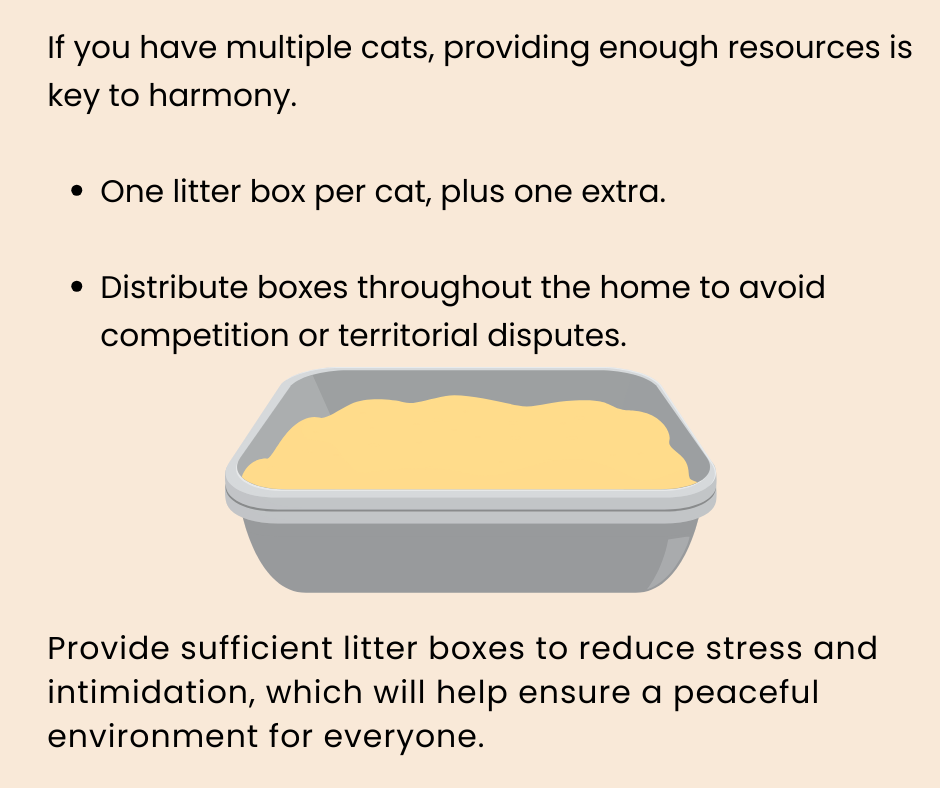
To eliminate these spatial hazards, behaviorists advocate providing multiple open-topped boxes situated across varied geographical zones of the dwelling. As a foundational principle of feline management, the total number of boxes should outnumber the resident feline population by at least one. In a three-cat household, for example, a baseline of four separate boxes is recommended to prevent resource monopolization.
Strategic placement is equally critical. In homes with multiple felines, social circles and separate territorial claims naturally emerge. Caretakers must map the natural daily movements and territorial boundaries of their pets, ensuring that litter pans are distributed within each group’s personal domain. Forcing a subordinate cat to venture across a hostile social boundary or cross the preferred resting zone of a territorial rival just to reach a bathroom facility reliably sparks litter box avoidance and territorial marking.
Even in single-pet households, chronic psychological stress can disrupt normal bathroom habits. Felines are creatures of rigid routine and predictable patterns. Sudden disruptions—such as residential moves, interior renovations, changes in work schedules, loud environmental noises, or the arrival of unfamiliar visitors—can destabilize an animal’s confidence, driving it to seek alternative elimination sites where it feels more physically and emotionally secure.

Reframing the Issue Through Feline Senses
Overcoming elimination challenges requires pet owners to shed subjective human biases and observe domestic spaces through the sensory framework of their companion animals. Felines do not possess the psychological architecture to conceptualize spite, vengeance, or intentional disrespect; they lack the moralized reasoning that humans project onto them. Labeling an animal as untrainable or vindictive simply obscures the systemic issues driving the behavior and damages the human-animal bond.
Every missed elimination represents an active, communicative signal. The cat is communicating that its current habitat, physical condition, or social surroundings have failed to satisfy its fundamental physiological and psychological needs. Whether the root issue stems from joint pain, an unwashed pan, social intimidation from another animal, or a poorly situated box, resolving the dilemma demands addressing the operational cause rather than scolding the outward symptom.
Punitive responses—such as verbal reprimands, physical confinement, or rubbing the animal’s nose in waste—are wholly counterproductive. Far from deterring future accidents, punishment elevates the cat’s systemic anxiety, exacerbates fear of the owner, and intensifies the animal’s conviction that the surrounding environment is fundamentally unsafe. By contrast, when caretakers employ keen observation, identify the underlying physical or environmental drivers, and implement structural adjustments to the home, the vast majority of feline litter box challenges can be resolved.
Professional Evaluation and Veterinary Guidance
Because the boundary between physical pathology and behavioral dysfunction in felines is exceptionally narrow, any sudden shift in bathroom habits warrants formal clinical scrutiny. Pet owners noticing new or persistent elimination outside the pan should initiate their intervention plan by scheduling a comprehensive physical examination and diagnostic screening with a licensed veterinarian.
Clinical diagnostics, including urinalysis, blood panels, and targeted imaging, remain the only dependable means of diagnosing or eliminating covert medical issues such as feline idiopathic cystitis, metabolic disorders, crystalline blockages, or degenerative joint disease. Feline behavioral strategies and environmental adjustments are intended to supplement, rather than replace, appropriate veterinary medical care.
For households seeking specialized structural advice regarding environmental enrichment, multicat territory planning, and dedicated litter facility architecture, extensive methodologies can be sourced from the published works of Pam Johnson-Bennett. Her extensive clinical experience in feline behavior science demonstrates that with empathetic observation, proper medical clearance, and thoughtful environmental management, pet owners can restore consistent, stress-free litter box habits to their feline companions.