





When comparing fast-food heavyweights, pitting Burger King’s iconic flame-broiled Whopper against a specialty item named the ButterBurger might initially seem like an easy prediction from a health and nutrition standpoint. Most consumers would likely assume that a burger with "butter" explicitly featured in its title would be the more indulgent, calorie-laden, and nutritionally taxing choice. However, a closer look at the nutritional profiles reveals that Culver’s might just surprise diners who are mindful of what they eat.
First off, despite what its name implies, the ButterBurger is not nearly as saturated in butter as one might fear. The Wisconsin-based regional chain simply applies a light touch of real butter to the crown of its toasted buns rather than soaking the meat or the entire sandwich in dairy fat. Furthermore, the regional chain leans heavily on fresh, high-quality ingredients, and while the exact culinary mechanics behind their nutritional advantage remain proprietary, the brand’s formula is clearly paying off. Fast-food enthusiasts frequently rank Culver’s among the top burger destinations in the country, but what flies under the radar for many casual diners is that the ButterBurger is also noticeably healthier than the Burger King Whopper in several key categories.
To establish a fair and direct nutritional comparison to the Whopper—which features a standard quarter-pound beef patty—nutrition researchers and analysts typically look to the Double ButterBurger from Culver’s, as it comes closest to matching the exact amount of meat by weight. For the purposes of maintaining a reliable baseline for both restaurant chains, standard hamburgers were chosen over cheeseburgers, keeping the comparison as simple and unadorned as possible. While the Whopper and the ButterBurger share similarities in certain nutritional areas, the categories where Culver’s secures an advantage are quite significant for anyone monitoring their daily dietary intake.
According to guidelines set by the U.S. Food and Drug Administration (FDA), elements such as sodium, added sugars, saturated fat, and trans fat represent the primary red flags to watch out for on a nutrition facts label. When evaluating the Burger King Whopper against these criteria, the single worst offender by a wide margin is sodium. A single standard Whopper contains a staggering 1,250 milligrams of sodium. That solitary sandwich accounts for roughly 54 percent of the FDA’s daily recommended maximum intake limit, which is calculated based on a standard 2,000-calorie daily diet, though individual caloric needs can vary depending on a person’s age, metabolism, and activity level.
Conversely, Culver’s Double ButterBurger offers a markedly more reasonable 580 milligrams of sodium. To put that into perspective, the Culver’s option contains less than half—roughly 46 percent—of the sodium load found in the Burger King flagship burger, making it a considerably safer bet for individuals who need to monitor their blood pressure or restrict their daily salt consumption.
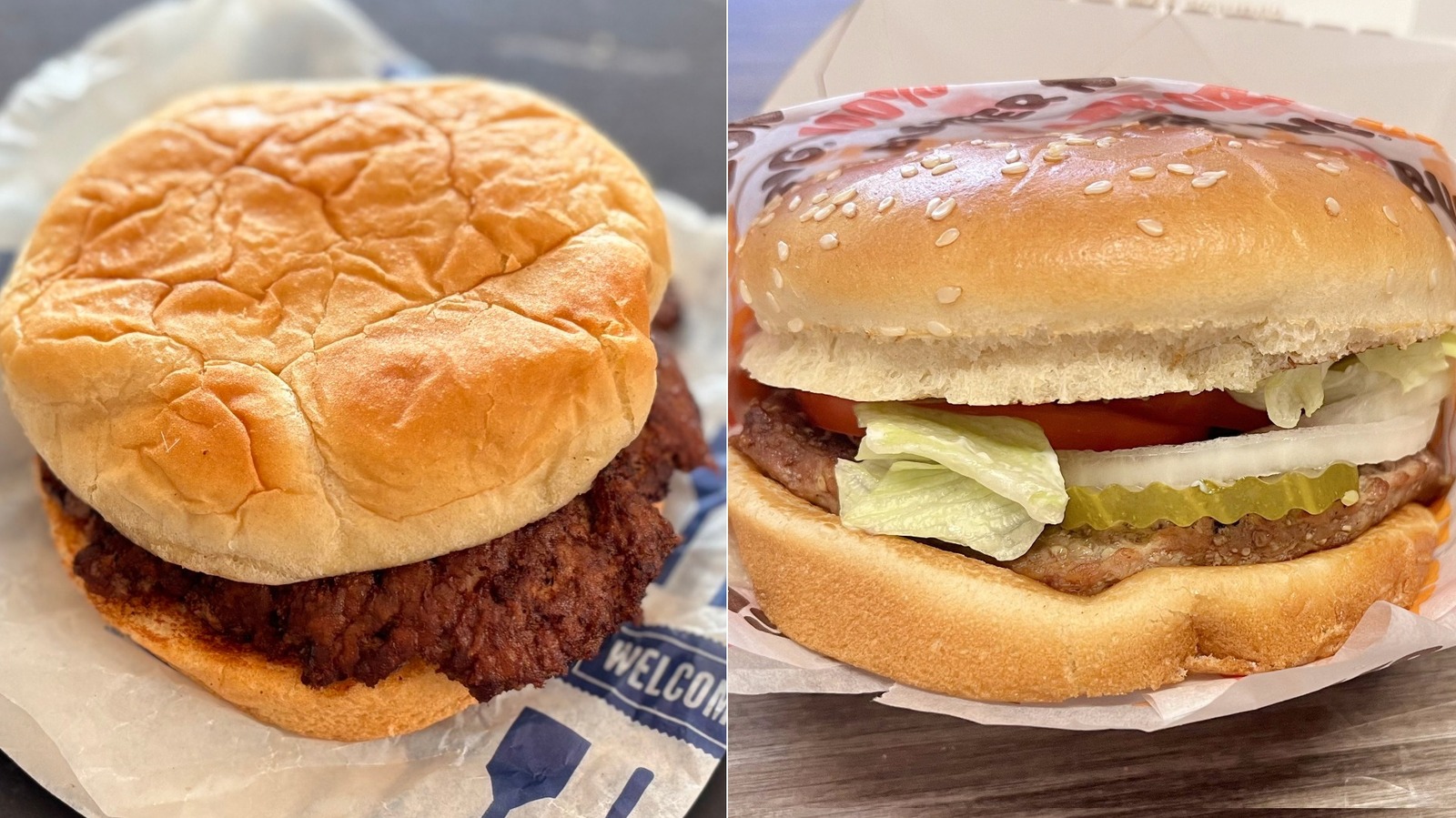
Culver’s ButterBurger is the more nutritional choice
The stark contrasts between the two sandwiches do not stop at sodium content. Another major point of divergence between the Burger King Whopper and the Culver’s ButterBurger is the amount of sugar present in each meal. The Whopper contains a surprisingly high 14 grams of sugar, a figure that often catches diners off guard given that it is a savory, meat-and-vegetable sandwich. The Culver’s Double ButterBurger, on the other hand, contains only 6 grams of sugar, once again cutting the consumer’s intake by more than half.
However, for diners who are closely watching their saturated and trans fat consumption, the matchup results in a dead heat. Both burgers deliver an identical amount of trouble in this category, offering 12 grams of saturated fat and 1 gram of trans fat per sandwich. That 12-gram figure represents a substantial chunk of an adult’s recommended daily limit for saturated fat. Furthermore, because health authorities recommend that daily trans fat intake be kept as close to zero as possible, neither fast-food option performs particularly well when it comes to these specific lipids.
When examining more positive nutritional attributes—such as protein and dietary fiber—the comparison remains largely even, though this is the one specific area where Burger King’s historic Whopper manages to secure a slight edge. Both the Whopper and the Double ButterBurger deliver an identical, robust 34 grams of protein, making them both substantial sources of the macronutrient. Where they differ slightly is in the fiber department. The Whopper delivers a modest yet noticeable 4 grams of dietary fiber, largely thanks to its generous allotment of fresh lettuce, tomatoes, and onions piled onto the sesame seed bun. The ButterBurger, meanwhile, trails slightly behind in this category, containing only a single gram of fiber.
Finally, there is the matter of overall calories. While nutritionists often note that raw calorie count is a somewhat blunt and imperfect instrument for measuring the overall healthfulness or nutritional quality of a meal, it remains an indispensable metric for many consumers. Calorie counts serve as a useful point of comparison, particularly when two food items are relatively similar in other nutritional aspects.
In the realm of energy density, Culver’s secures the advantage once again. The Double ButterBurger offers 560 calories, compared to the Whopper’s heavier 710 calories, and it accomplishes this while delivering the exact same amount of protein. Naturally, neither of these substantial fast-food burgers will single-handedly derail a well-balanced, nutrient-dense diet if consumed strictly as an occasional meal or a casual treat. However, for consumers who find themselves standing at the counter trying to decide between the two and who prefer an option that delivers fewer total calories alongside significantly less sodium and sugar, the evidence points clearly toward choosing Culver’s Double ButterBurger.