

Yet, stepping into the Chicago dining scene introduced an unexpected operational hurdle for Chayaluk—one deeply rooted in local culture. Operating in the Midwest comes with a specific social contract, she explains, pointing out that people in the region are still very much guided by a polite, accommodating ethos often referred to as "Midwest nice." In practical terms, this meant that during the early days of service, Taan’s kitchen was inundated with frequent requests from guests asking for ingredient substitutions or custom modifications to accommodate various personal preferences and dietary restrictions.
For a small restaurant operating with a compact kitchen and limited staff, trying to appease every single custom request proved unsustainable. Chayaluk notes that the constant alterations began to significantly slow down service, ultimately impacting not just the kitchen’s workflow, but the overall dining experience for the entire room. It reached a point where the environment felt less like an independent culinary establishment crafting intentional dishes and more like a mass-customization fast-casual chain. The breaking point arrived definitively when a guest placed an order for green curry mussels, but with a specific caveat: they wanted the dish prepared entirely without the mussels.
Faced with mounting operational strain and the risk of compromising the identity of her food, Chayaluk made the bold decision to implement a strict, limited substitution policy at Taan. She took to Instagram to clearly communicate the restaurant’s stance to the public, explaining that fundamental building blocks of the cuisine—such as pungent fish sauce and rich shrimp paste—form the very fabric that defines Thai food. Consequently, these foundational elements could no longer be removed from any dish that naturally included them, drawing a firm line in the sand regarding culinary integrity.
This friction between rigid kitchen philosophies and modern diner expectations is part of a broader, increasingly tense cultural tug-of-war currently playing out across the hospitality industry. A decade or so ago, asking for menu substitutions was generally frowned upon by culinary professionals and frequently derided by food critics as poor restaurant etiquette. In recent times, however, restaurants across the country report that custom-order culture has bubbled back up to the surface and is now being pushed in full force by a swirl of compounding societal factors.
The widespread popularity of fast-casual lunch bowl spots has successfully primed modern consumers to expect an exhaustive, highly detailed level of customization with every single food order they place. Meanwhile, the massive cultural influence of the book Unreasonable Hospitality has reinforced an intensified version of the classic "customer is always right" mentality, creating an environment where pushback from a venue is often met with immediate friction. Layer onto this the reality of the modern social media landscape, where food influencers and online reviewers treat any deviation from absolute consumer compliance—including a restaurant choosing not to honor a specific dietary preference—as an opportunity for an immediate, viral takedown. Couple all of these pressures with the harsh economic climate that makes simply keeping a restaurant afloat an everyday battle, and it is easy to see why numerous operators have chosen to capitulate, either by bending to endless custom requests or by altering their menus entirely, as seen in the broader industry trend of the great de-spicification of dishes to suit milder palates.
Amid this widespread wave of compliance, a growing counter-movement of independent restaurants is choosing to stand its ground. Establishments like Taan in Chicago and Ha’s Snack Bar in New York—which proudly announces in its Instagram bio that everything on its menu contains fish sauce—are refusing to dilute their culinary vision to satisfy every individual whim.
A similar dynamic has unfolded at Lom Wong in Phoenix, Arizona, where chef and co-owner Alex Martin and his wife, chef Yotaka "Sunny" Martin, have experienced a sharp uptick in substitution and modification requests following a wave of major national recognition. Last year, Chef Sunny Martin was honored by the James Beard Awards, and in August, the restaurant was distinguished with a Michelin Bib Gourmand. Following these accolades, the restaurant welcomed a surge of new diners, which unfortunately brought an influx of guests eager to pick dishes apart, demand modifications, or express confusion over the restaurant’s distinct service style.
According to Alex Martin, many of these newer guests struggled to understand why Lom Wong did not course its meal in a traditional European fashion. He points out that there remains a deeply ingrained European distinction of what an award-winning fine-dining restaurant is supposed to look like, leading some diners to incorrectly equate high culinary recognition with a white-tablecloth establishment. The response from the ownership team, however, was unwavering: that standard of dining is simply not who they have ever been, nor is it what their restaurant will ever become.
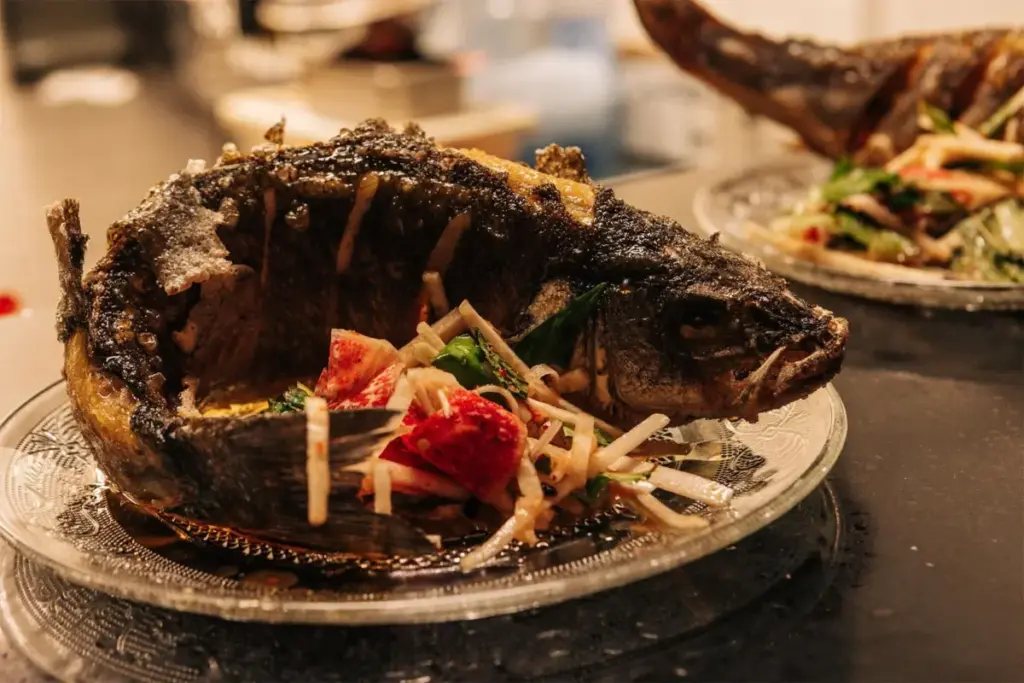
In response to the growing wave of custom requests, Lom Wong took to social media just like Taan to clearly set expectations before guests even walked through the door. Their public messaging clarified that the restaurant would not make substitutions simply to make a dish more familiar to Western palates, and that certain characteristics of the food—such as beef containing natural gristle or fish being served entirely whole—are fully intentional choices rooted in tradition. Alex Martin emphasizes that Chef Sunny serves as their guiding light of cultural context, constantly evaluating whether altering a specific element of a dish would compromise its cultural integrity. While Lom Wong is willing to accommodate certain minor tweaks, such as placing shrimp on the side of a mango salad, they steadfastly refuse to remove foundational components like beef or shrimp paste from dishes that necessitate them.
At Taan, Chayaluk has engineered a similar balance to address dietary restrictions without sacrificing culinary authenticity. The restaurant consistently features a dedicated vegan and gluten-free option—currently a thoughtfully prepared fried rice—that she describes as a catchall solution for diners who cannot consume other items on the menu. Crucially, Chayaluk ensures that this dish is executed with the same level of care and culinary ambition as everything else coming out of the kitchen, emphasizing that it is robust, substantial, and designed to be a satisfying meal rather than a mere afterthought or a hollow accommodation.
Front-of-house and kitchen staff at both Taan and Lom Wong are actively encouraged by ownership to uphold these firm boundaries. Both Chayaluk and Martin emphasize that these policies are just as vital for protecting their employees’ daily peace and mental well-being as they are for maintaining strict quality control for the diners. While implementing these boundaries has inevitably invited some minor backlash from disappointed guests, the proactive approach of setting clear expectations upfront—both through social media and during the initial greeting at the table—has been overwhelmingly well-received by the broader public.
The key, according to Martin, lies entirely in the delivery of the message, framing the policy with empathy and respect rather than confrontation. The restaurant’s approach involves kindly explaining to guests that while management deeply respects their personal preferences, those preferences ultimately belong to the individual diner, before gently steering them toward alternative menu items that naturally align with their dietary needs.