

The intersection of classic American diner culture and traditional Asian comfort food has long proven to be a fertile ground for culinary innovation. In the latest development capturing the attention of home cooks and food enthusiasts alike, a novel recipe has been introduced that successfully translates the unmistakable flavor profile of a classic cheeseburger into a savory, texturally rich fried rice dish. By combining the foundational elements of a smash burger—crispy-edged beef, melted American cheese, crisp iceberg lettuce, and a signature tangy special sauce—with chilled short-grain rice and wok-style techniques, this dish bridges two distinct culinary traditions into a cohesive, highly approachable meal.
The recipe, detailed in recent culinary breakdowns, relies on meticulous preparation and a harmonious balance of components that mirror the fast-paced, high-flavor environment of modern fusion cooking. Rather than relying on complicated equipment, the method utilizes standard kitchen staples like a nonstick or cast-iron skillet, a small saucepan, and a blender, making the sophisticated flavor profile accessible for weeknight cooking while maintaining the integrity of a restaurant-quality presentation.
Crafting the Signature Burger Sauce
The foundation of the dish begins with a meticulously balanced burger sauce designed to replicate the creamy, tangy, and slightly sweet condiment found at classic burger joints. The process initiates in a small saucepan over medium heat, where half of a small white onion, finely chopped, is brought to a simmer alongside apple cider vinegar, sugar, kosher salt, and water. This brief cooking window serves a crucial purpose: it softens the raw, pungent bite of the onion while allowing the vinegar and sugar to create a quick, mellow pickle-like base.
Once the onions reach the desired tenderness—a process that takes approximately one minute—the mixture is transferred to a blender. To transform this aromatic base into a rich, cohesive sauce, several classic burger condiment components are introduced. Mayonnaise provides the creamy, unctuous canvas, while ketchup contributes its characteristic sweetness and acidity. Depth of flavor is further enhanced through the addition of soy sauce, introducing a subtle umami note that elevates the sauce beyond standard commercial spreads. Yellow mustard introduces a sharp, bright tang, complemented by the warm, aromatic qualities of garlic powder and paprika.
Blending these ingredients until completely smooth yields a vibrant, cohesive burger sauce that can be prepared up to four days in advance. Kept chilled in an airtight container, the sauce melds its flavors over time, ensuring that the finished dish delivers a consistent, well-rounded flavor profile whenever it is assembled.
Preparing the Fried Rice and Bringing the Components Together
With the sauce prepared and resting in refrigeration, the focus shifts to the complex assembly of the fried rice and its protein components. The foundational technique begins simply, with two large eggs whisked together with a pinch of kosher salt and freshly ground pepper in a medium bowl, setting aside a rich base that will later yield delicate, tender curds.
Texture plays a vital role in the success of the dish, highlighted early in the process by toasting sesame seeds. In a medium nonstick or cast-iron skillet over low heat, sesame seeds are stirred frequently until they turn golden and aromatic, a process taking about three minutes before they are transferred to a plate to reserve their toasted crunch for the final presentation.
The protein element utilizes ground beef, a quintessential burger component, prepared to achieve maximum textural contrast. By heating vegetable oil in the same skillet over medium-high heat and pressing eight ounces of ground beef into a thin layer across the surface of the pan, the meat develops a deep, savory crust. Lightly seasoned with salt and pepper and left undisturbed for six to eight minutes, the beef forms a deeply browned underside characteristic of a high-heat smash burger. A touch of sugar and soy sauce is then introduced, and the meat is broken up and stirred until completely cooked through, before being transferred to a separate plate to await reintegration.
The aromatic foundation of the fried rice follows in the same skillet. The remaining finely chopped white onion is cooked in additional vegetable oil until translucent, taking approximately one minute. Immediately following this, the reserved egg mixture is poured into the pan, with the skillet swirled to ensure an even coating. After a brief five-second pause to let the base set slightly, the eggs are stirred in a circular motion using a heatproof rubber spatula or wooden spoon, resulting in soft, delicate curds formed after roughly thirty seconds.
The final assembly brings all the distinct elements together in a harmonious sequence. The cooked ground beef is returned to the pan alongside two cups of chilled, cooked short-grain white rice. Chilled rice is a critical component in fried rice preparation, as colder grains contain less surface moisture, preventing the dish from becoming heavy or gummy. The mixture is cooked and stirred frequently until the rice is softened and heated through, a process that takes about five minutes.
To bridge the gap between traditional fried rice and its burger inspiration, one cup of packed, one-inch pieces of iceberg lettuce is folded into the pan along with a final measure of soy sauce, with the mixture seasoned with additional salt and pepper. The lettuce, a non-traditional addition to standard fried rice, provides a refreshing, crisp contrast that mimics the fresh crunch of a classic burger topping. The cooking continues just until the lettuce begins to wilt, roughly thirty seconds.
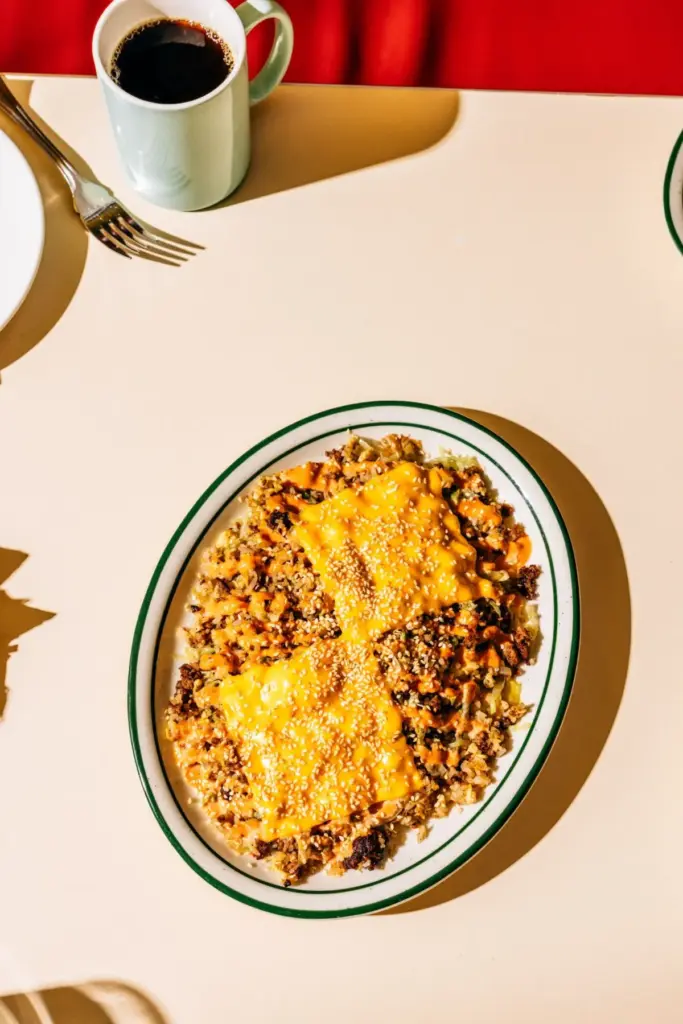
At this juncture, the culinary narrative reaches its peak. Approximately two tablespoons of the previously prepared burger sauce are drizzled directly over the rice, infusing the grains with its signature tang and richness, while the remainder of the sauce is reserved for alternative uses. To complete the transformation into a cheeseburger-inspired creation, two slices of American cheese are arranged on top of the rice in a single layer. The heat is reduced to low, and the pan is covered to allow the cheese to melt uniformly over the rice, taking about one minute.
Alternatively, to recreate a specific restaurant-style presentation, the fried rice can be transferred to an ovenproof platter, topped with the sauce and cheese, and placed under a broiler until the cheese is thoroughly melted—a process taking up to two minutes. The dish is finished with a generous scattering of the toasted sesame seeds prepared at the outset, adding both visual appeal and a nutty crunch to the final plate.
For home cooks seeking efficiency, the process offers logistical flexibility. Beyond the advance preparation of the burger sauce, the ground beef can be fully cooked up to two days in advance, transferred to an airtight container, covered, and chilled until ready to be incorporated into the final fried rice assembly. This thoughtful division of labor underscores the practicality of a recipe that manages to merge fast-food nostalgia with the comforting techniques of homestyle cooking.