

We have officially reached that familiar time of year again when every exceptional tomato prompts a quiet existential pondering: Will this be the last one for the season? As the oppressive summer heat gradually begins to yield to crisper breezes, our collective culinary desires undergo a distinct shift. We trade our preoccupation with minimizing time spent in front of a sweltering stove for the comforting anticipation of windows fogged up from bubbling pots of soup and long-simmering stews.

Fortunately, the current publishing season offers an abundance of exciting ways to joyously warm ourselves in the kitchen. Whether home cooks are seeking out projects involving the baking of border-traversing croissants and comforting counter cakes, or looking to keep their kitchens humming with Dutch ovens full of borscht, beef noodle soup, or budae jjigae, this season’s literary offerings cater to every mood. Beyond standard cookbooks, this season’s selections also feature creative diversions, including a divorce-inspired reflection where the accompanying essays are just as essential as the recipes, and a lush garden almanac that reads like an immersive escape into another world. Compiled here are twelve standout selections from the fall cookbook season that promise to make the colder months ahead both delicious and deeply engaging.
Kicking off the baking lineup is a vibrant collaboration between Joyce Tang and Soleil Ho. If it feels like everything is suddenly an Asian American bakery, you are entirely correct. In the Bay Area, Bake Sum—known for its Spam-musubi-esque croissants and ube pineapple buns—was an early adopter of the current trend, starting as a pandemic pop-up in 2020 before opening its permanent Oakland location the following year. In her colorful and playful new cookbook, chief baking officer Joyce Tang pulls back the curtain on her cuisine-bending treats, showcasing items like a quiche inspired by chawanmushi, the Japanese savory egg custard, alongside danishes styled after okonomiyaki and aloo matar, the traditional Indian spiced potato and pea dish. While the bakes involving laminated dough are undeniably ambitious, weekend-worthy projects, the book takes a welcomingly progressive approach. It eases novice bakers into the process via puddings and jellies—starting with a simple, accessible microwave mochi—before gradually exploring more advanced techniques in its chapter on cakes, and ultimately working its way up to complex croissants. This is an ideal volume for anyone who counts ambitious baking projects among their favorite ways to spend the colder months.

Shifting tone entirely, former Bon Appétit standout Carla Lalli has catalogued the dissolution of her 24-year marriage in her latest book. With poignant reflections on motherhood, personal identity, and how a professional background in restaurants intersects with both, Lalli continues the narrative thread established by previous releases like Tanya Bush’s "Will This Make Me Happy" and Rebecca May Johnson’s "Small Fires." Readers will find that they are here just as much for the candid essays as they are for the recipes. Those recipes—including flexible dishes such as a weeknight lamb chop special for any number and quick beans and rice for when the avocado is ripe—are delightfully loose and adaptable. They offer realistic suggestions for burnt-out weeknights, as well as for those glorious instances where getting yourself out to the beach takes precedence over fussing about provisions, solved neatly by offerings like peaches with lime and salt. Many of these ideas were birthed during what Lalli terms "separation summer," a period when she frequently found herself dining alone after years of cooking for four. These recipes and accompanying reflections, such as a list of things that made her feel free, will prove useful on difficult days, sick days, and whenever readers need a reminder of life’s enduring pleasures.
For those looking to escape indoors through grand aesthetics, Richard Christiansen of Flamingo Estate presents "Pleasure Principles." The Los Angeles-based lifestyle brand is famously sprawling and luxurious in its ambitions, earning a description from Martha Stewart as being "over the top." True to form, Christiansen’s book is predictably maximalist. While not strictly a cookbook, it feels like unearthing a paper trail while exploring the lush thicket of the author’s oft-Instagrammed garden. Stories detailing the construction of Christiansen’s property veer into historical detours about camellia plants and Coco Chanel, all interspersed with archival imagery and flora photography shot in the style of high-fashion editorials. A primer on the vast range of sage plants transitions smoothly into a January garden task checklist, seasonal project ideas like building a bird’s nest or making a sage tincture, and recipes for pasta with sage leaves embedded in the dough alongside vegetable broth featuring lotus petals and dried skullcap. The resulting work reads like an immersive fantasy world capable of making even the dead of winter feel vibrant and full of possibility.

Bringing the heat and a celebratory spirit, Meherwan Irani has teamed up with Jamie Feldmar for a book that practically demands a party. This energy stems partly from recipes like the deep-fried, carb-on-carb vada pav and crisp, thin dosas with coconut chutney, which naturally feed six or more people and benefit from the scale of communal cooking. The book feels raucous and alive, packed with bright colors, bold typography, and big proclamations designed to spark joyful debate. Questions such as whether vada pav is the greatest sandwich of all time, or whether this constitutes the best Indian cookbook in the world, invite readers to crowd around a table, tearing off pieces of seekh kebab with steaming naan and crushing cold beers. While whether Indian street food is definitively the best food on the planet remains open to discussion, this volume offers an accessible way to test the argument for anyone unable to visit India or Irani’s lauded North Carolina restaurants, Chai Pani and Botiwalla, in the immediate future.
For a different kind of outdoor connection, Alexis Nikole Nelson, widely known as the Black Forager, offers a joyful antidote to social media doom scrolls. Boasting nearly five million followers on TikTok alone, Nelson is beloved for her bubbly disposition, whimsical vibe, and clever creations like pine-cone-infused syrup and color-changing pine-needle cookies. Her long-awaited cookbook demystifies the vast array of edible plants available without venturing deep into the woods, focusing on accessible items like acorns and linden tree fruit found abundantly across suburban neighborhoods. Balancing practicality, safety, and play, the book takes its title from her signature video catchphrase, "Happy snacking. Don’t die." Featuring recipes like pickled magnolia flowers, Japanese knotweed granita, and maitake mushroom steaks, the guide promises to teach readers how to view their immediate surroundings through an entirely new lens.

Baking enthusiasts will also find solace in Dona Murad’s exploration of third-culture pastry through Librae Bakery. Drawing on her upbringing in Bahrain with an Indian and Portuguese mother and a Bahraini Persian father, alongside her time spent working in Copenhagen with her French Moroccan husband Andre, Murad’s New York City bakery has embraced a global perspective from its inception. The book features signatures like croissants with pistachio frangipane scented with rose water, morning buns spread with labneh and za’atar, and babka embedded with both lemon curd and black lime. While much of the book requires getting comfortable with master "mother dough" recipes and sourdough starters, Murad provides thorough, well-documented steps and imagery. For those seeking a less daunting entry point, her cookies, breads, and cleverly topped focaccia sheets provide approachable alternatives for bakers who respect traditional pastry techniques yet wish to push flavor boundaries further.
As temperatures continue to drop, Clara Lee and Eddo Kim offer an essential deep dive into the fundamentals of Korean home cooking with "Korean Soups." Opening with a comparative chart examining the distinct qualities of guk, tang, jjigae, and jeongol, the book progresses from foundational broth-making techniques into categorized applications. Readers will find quick-cooking soups, slow-night comforts, seasonal variations, restorative bowls, and dishes meant for sharing. The authors are well-known as the operators of Queens, the cherished San Francisco superette that closed in 2023 to transition into a line of pantry staples. Described as iconoclastic representatives of a new wave of Korean American cuisine, Lee and Kim have crafted an essential volume for anyone seeking comfort, a deeper understanding of home cooking, or simply a new way to utilize leftover gochujang.

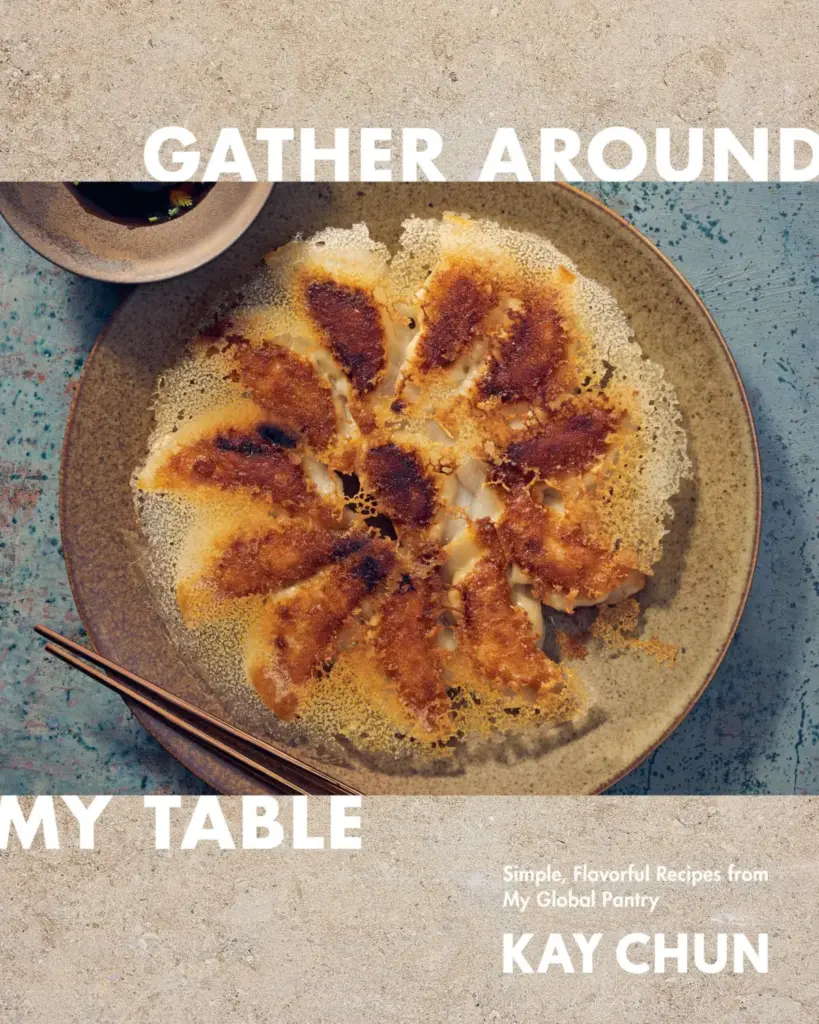
Continuing the theme of approachable weeknight cooking, NYT Cooking contributor Kay Chun presents "Gather Around My Table." Known among recipe developers for her low-lift yet flavor-packed flourishes, Chun starts the collection with snacks and pickles, such as quickly marinated sardines for toast and gilda-esque calamari skewered with fried peppers and olives. The book delivers on simple, weeknight-friendly food that avoids monotony, offering dishes like grilled tofu simmered in soy sauce with aromatics before receiving a ssam and taco treatment with perilla leaves and tortillas. By incorporating wakame and grated tomato into salad vinaigrettes, or amped-up doenjang into mustard dressings, Chun consistently offers creative ways to make familiar dishes more interesting and rewarding.
Bringing an irreverent and playful perspective to Asian cuisine, chef Eric Sze—known for his New York City restaurant Wenwen and the recently closed 886—has partnered with Elyse Inamine for his debut cookbook, "Taiwanese?" With a deliberate question mark in the title, the book serves as an ode to letting Taiwanese food be fun and experimental. Sze’s lu rou fan recipe, for instance, includes the unconventional addition of peanut butter, a choice earned after undertaking a rigorous crawl of more than 60 bowls of the dish in a single week. Featuring vivid photography by Alex Lau, the book explores unexpected commonalities between disparate culinary traditions through recipes like seared zhajiang lasagna with pork and octopus, beef noodle soup burgers, and an elaborate "diversity chicken soup" utilizing multiple varieties of poultry. It stands as a spirited pick for anyone who takes food seriously while remaining unimpressed by self-imposed culinary rules.

For those seeking sweetness without unnecessary complexity, Caroline Schiff’s "Daily Dessert" offers a welcome reprieve from fussy baking. The former Gage & Tollner pastry chef assures readers that sifting is largely unnecessary and that room-temperature eggs are rarely make-or-break. Designed with the kitchen lacking a dishwasher in mind, her recipes—such as a giant chocolate chip cookie that dirties just one bowl and requires no mixer—maximize flavor with minimal effort. Offering treats like black and white coconut macaroons and a cardamom counter cake with chocolate ganache that keep well for a week, Schiff champions a lifestyle where sweet treats are a regular, unceremonious part of daily life.
Celebrating the specific comfort of spoonable food, Alissa Timoshkina’s "Lozhka" tours Eastern Europe through an array of slurpable and scoopable dishes. Alongside expected soups and stews, the volume highlights Slovak and Belarusian mushroom stew with sauerkraut brine, Armenian lentil soup touched by prunes and walnuts, and numerous applications for millet, barley, and beans. Featuring dumplings of all varieties—filled, dropped, and steamed bread dumplings—the collection provides a fiber-rich, deeply comforting culinary journey designed to make the winter months feel entirely welcome.

Rounding out the season’s releases, Lucas Sin translates his conversational instructional style into print with his debut cookbook dedicated to Hong Kong’s cha chaan tengs. The former Junzi chef, whose Instagram tutorials guided many through the early pandemic, combines stunning, transportive photography with rich historical insights. Sin explains the origins of dishes like roast pork belly and tofu skin over rice, shares cast-iron sizzling pan etiquette, and highlights his favorite dining spots in Hong Kong. As he prepares to open his own cha chaan teng in New York City following popular pop-up trials, this volume serves as an ideal companion for anyone eager to explore the vibrant, diner-style cuisine of Hong Kong.