



By Financial News Staff
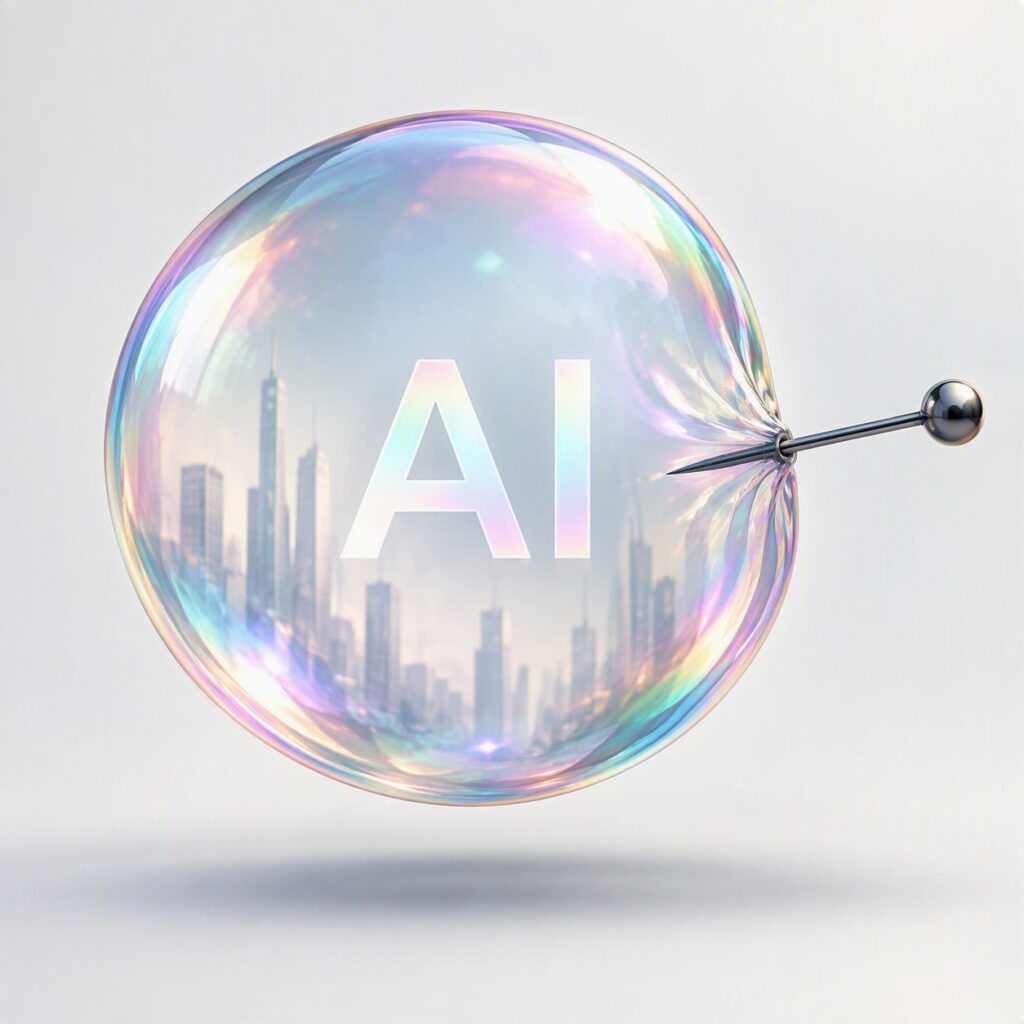
As financial markets continue to scale unprecedented heights, driven largely by a frenzied wave of artificial intelligence enthusiasm, investors are once again grappling with an age-old anxiety. Whenever stock markets surge to record valuations, a familiar sense of dread often follows. The prevailing fear is simple yet potent: the higher the boom, the bigger the impending crash. Today, that anxiety is predominantly pinned to the explosive rise of artificial intelligence, prompting widespread concern that the market is hurtling toward a modern version of the early 2000s dot-com bubble.

For veterans of the financial independence movement, however, these cyclical panics offer a valuable lesson in perspective. Looking back at past market cycles reveals that public anxiety is a constant companion to economic progress, regardless of the specific crisis of the day.
Will the AI Bubble Ruin Our Retirement?
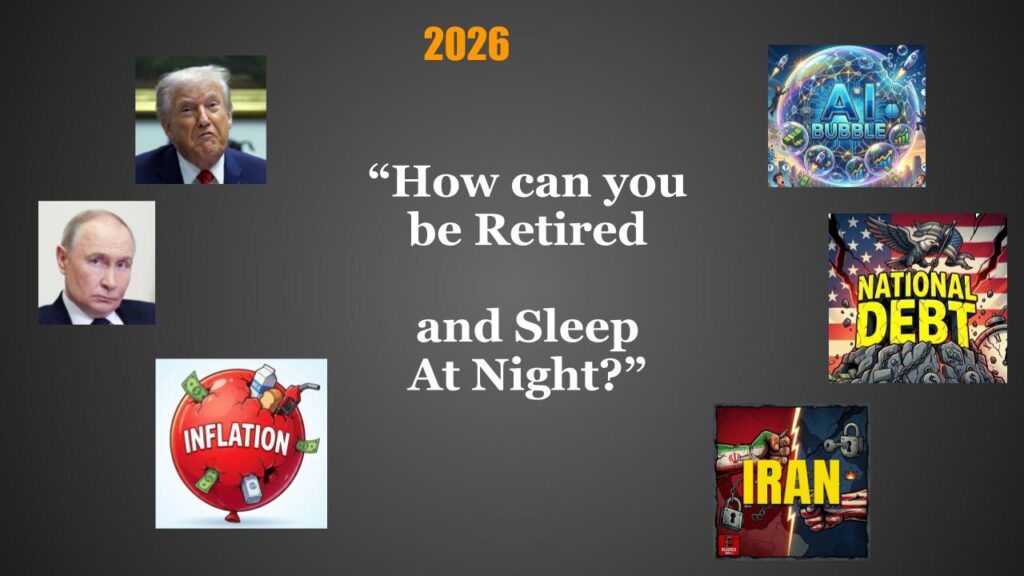
The debate over market stability often leads to deep-seated existential questions about retirement security. Long-term retirees frequently encounter inquiries from anxious observers wondering how anyone can remain comfortable and sleep at night amid a turbulent global landscape. Contemporary news cycles frequently amplify these fears, highlighting volatile geopolitical tensions, escalating national debts, persistent inflation, and the looming threat of technological disruption.
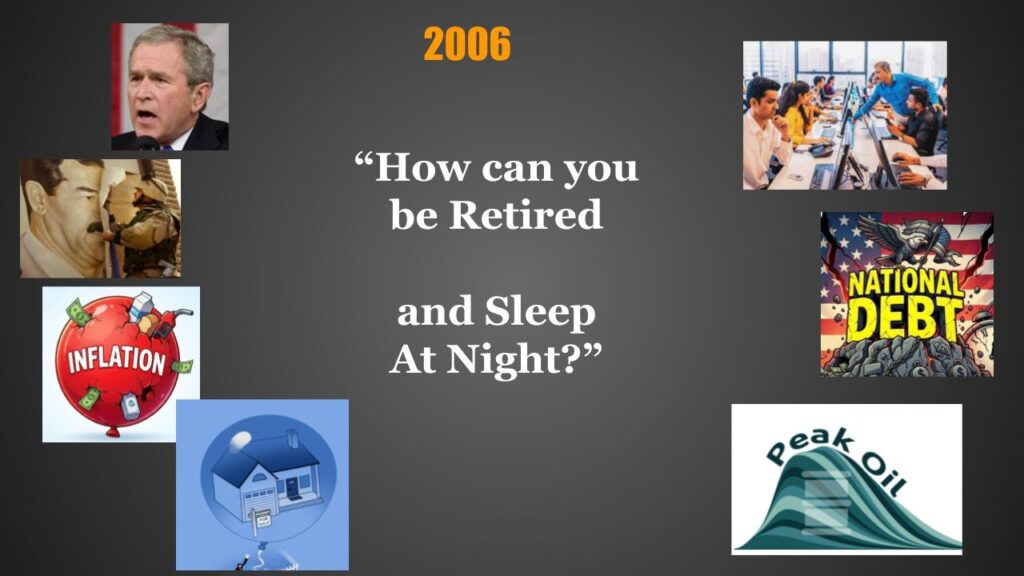
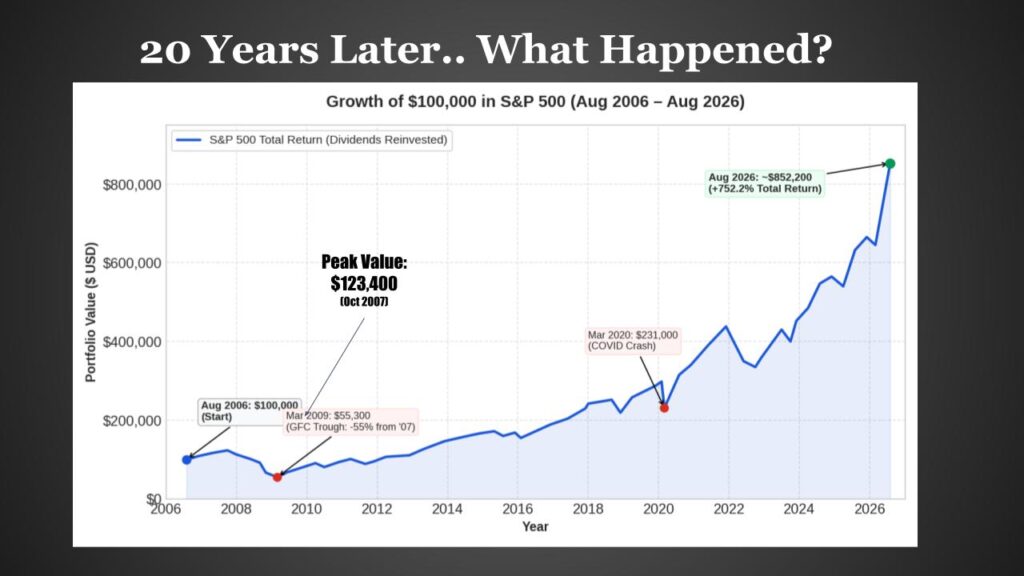
Yet, a historical glance backward demonstrates that the anxieties of any given era always feel uniquely catastrophic to those experiencing them. Two decades ago, in 2006, investors were staring down an entirely different set of terrifying headlines. Back then, public worry focused on the housing market bubble, escalating conflicts in the Middle East, outsourcing fears regarding the manufacturing and tech sectors in India and China, and widespread panic over "Peak Oil"—the theory that global energy consumption would soon outstrip finite fossil fuel supplies.
What followed those 2006 worries was indeed the Great Financial Crisis, triggered by a toxic mix of housing market exuberance and over-leveraged financial instruments. It was the most severe economic downturn since the Great Depression. Yet, when viewed through the lens of a twenty-year horizon, even that monumental crash appears as a temporary dip in a long-term upward trajectory. A standard investment portfolio weathered the storm of 2008 alongside subsequent shocks, such as the pandemic-induced volatility of 2020, ultimately demonstrating the remarkable resilience of broader economic systems.

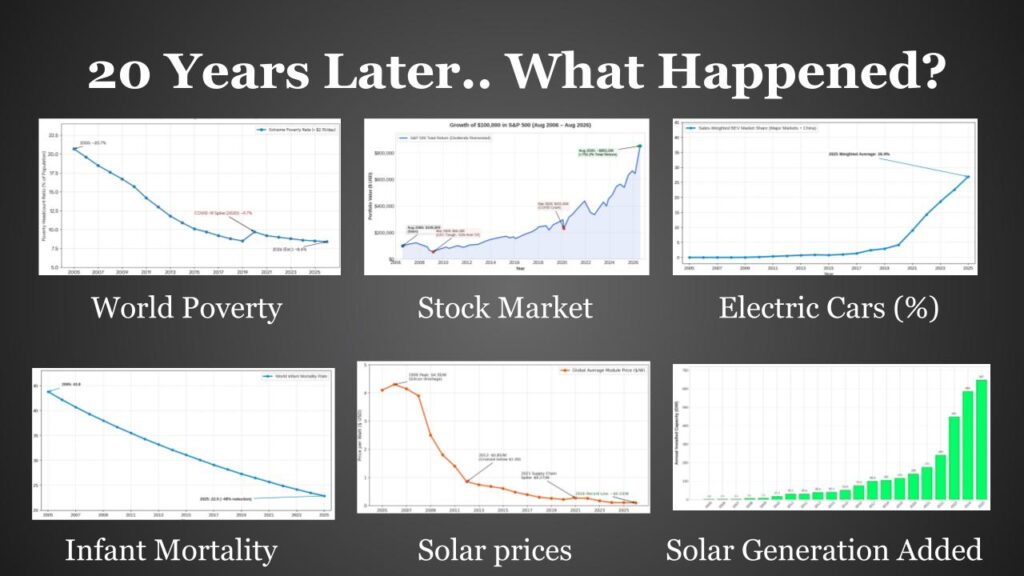
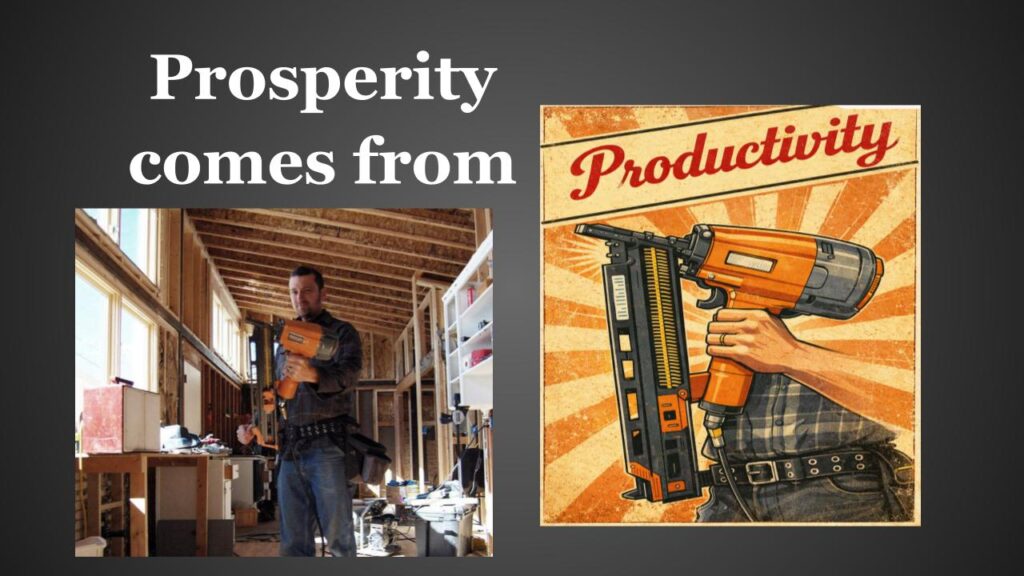
Simultaneously, the world outside the stock market experienced massive, quantifiable improvements. Over a twenty-year span, the proportion of the global population living in extreme poverty dropped significantly, while global infant mortality rates were cut in half. Clean energy adoption surged as solar panel technology became dramatically cheaper, accounting for a massive share of new electricity generation worldwide. Electric vehicle sales transitioned from a statistical novelty into a substantial fraction of the global auto market. These tangible advancements underscore a fundamental reality about human prosperity: it is driven primarily by productivity rather than financial speculation.
Productivity as the Foundation of Prosperity
Financial markets and stock indexes are fundamentally human inventions—complex ledgers tracking numerical values on computers. If a financial system experiences a severe correction due to speculative overextension, society retains the underlying tools, knowledge, and infrastructure required to rebuild and move forward. True economic prosperity and living standards do not originate from stock ticker symbols; they emerge from real people performing real work, solving practical problems, and creating innovative technologies.
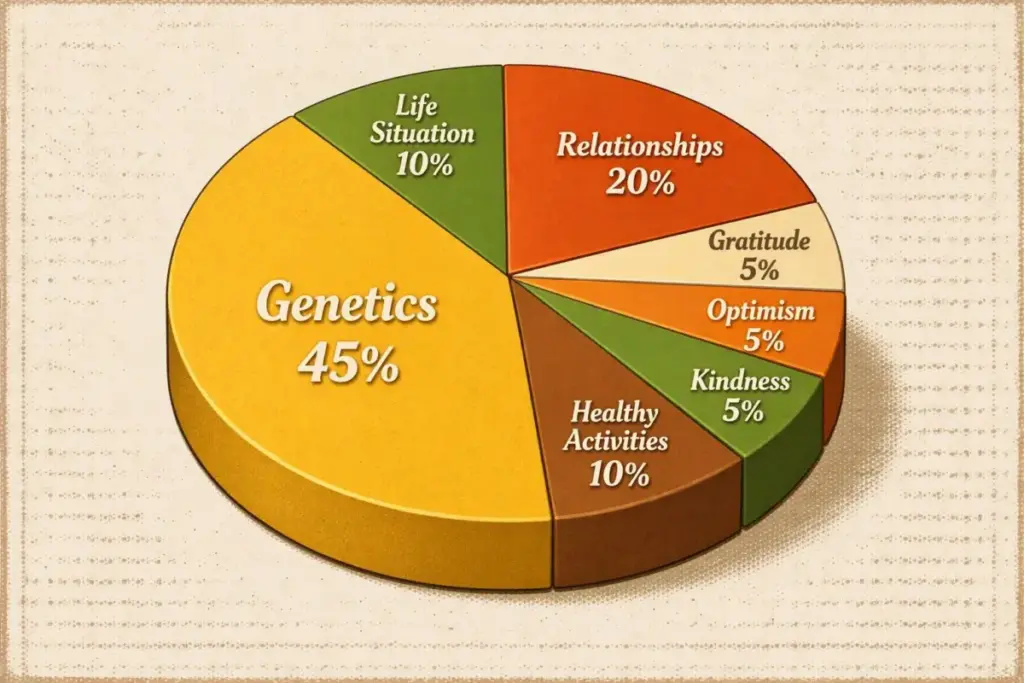
Furthermore, economic productivity is only one component of overall human well-being. Once a society achieves a stable baseline standard of living, human happiness tends to decouple from pure financial accumulation. Psychological research and life satisfaction metrics indicate that individual happiness is heavily influenced by non-financial factors, including genetics, strong interpersonal relationships, acts of kindness, optimistic philosophies, and regular physical activity in healthy environments.
Despite these reassuring realities, pervasive background anxiety remains remarkably resilient among many investors. This psychological persistence points to a deeper root cause: human biology.
The Evolution of Fear and the Danger Detection Machine
From an evolutionary perspective, human beings are essentially sophisticated danger-detection machines. This persistent background fear is an inherited trait designed to protect individuals from physical threats, predators, and environmental scarcity. However, a major quirk of this evolutionary machinery is its adaptability. When immediate physical dangers are successfully mitigated, the human brain does not simply turn off the alarm system; instead, it looks for new subjects to worry about.
As basic survival needs are met, human anxiety shifts upward through a hierarchy of concerns. People move from worrying about starvation and shelter to fretting about tribal belonging, social standing, neighborhood aesthetics, complex tax strategies, and estate planning. In modern financial circles, this anxiety frequently manifests as an obsessive fear of market corrections, legislative changes, or unexpected economic shifts.
Overcoming this pervasive background dread requires active self-awareness and rational evaluation. Examining personal history—such as childhood experiences with financial scarcity, family attitudes toward money, or past traumas—can illuminate why certain triggers provoke disproportionate emotional responses. Identifying specific fears by playing out worst-case scenarios often reveals that the imagined catastrophe is far less devastating in reality than anticipated.
Action remains one of the most effective antidotes to fear. By engaging directly with unfamiliar situations, individuals build resilience and competence, transforming abstract anxieties into manageable experiences. Similarly, curating a healthy mental diet by stepping away from sensationalized daily news cycles allows individuals to focus their energy on constructive behaviors, physical health, and positive social connections.
Viewing AI Through the Lens of Experimentation
This philosophy of active engagement and adaptability can be applied directly to the current artificial intelligence boom. Rather than viewing emerging technologies through a lens of paralyzing doom, framing new developments as experiments transforms potential threats into fascinating objects of study.
Artificial intelligence represents a profound shift in technological capability, functioning essentially as a cognitive tool designed to amplify human efficiency. Just as physical tools multiply human physical labor, advanced computing systems enhance cognitive productivity, driving economic growth and lowering the cost of essential services.
Like every major technological revolution that preceded it—from the Industrial Revolution to the advent of the internet and mobile computing—artificial intelligence will inevitably displace certain traditional job roles while simultaneously generating entirely new industries and economic opportunities. While these transitions often concentrate financial rewards among enterprise owners and shareholders, they also redefine the skills and capabilities required of the modern workforce.
Ultimately, artificial intelligence is simply another development in a long history of human innovation. It presents an opportunity to make deliberate choices—either to succumb to speculative fear or to use the technological shift as a catalyst for continuous learning, adaptation, and personal growth. As many financial independence advocates observe, the most rewarding experiences in life consistently lie just on the other side of fear, waiting for those willing to confront uncertainty with clarity, resilience, and optimism.