

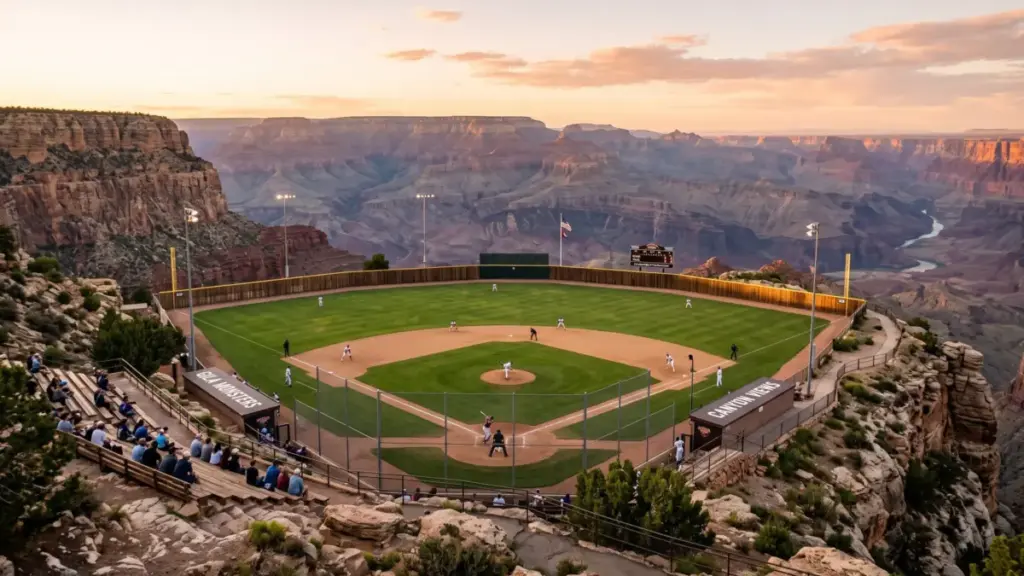
It is the question that fans of U.S. national parks and of Major League Baseball must contemplate following a surprising report that has bridged the gap between professional sports and federal conservation lands. On September 26, reporters Jake Spring and Stephanie Apstein of The Washington Post broke the news that Major League Baseball recently approached the Trump Administration about hosting a professional baseball game within the boundaries of a national park.
According to The Washington Post story, the Trump Administration is taking the inquiry seriously. Administration officials recently scouted three potential sites within Wyoming’s iconic Grand Teton National Park with the goal of potentially building a temporary or permanent baseball park to host the high-profile game. The report likened the proposed event to MLB’s popular Field of Dreams series, which memorably featured a makeshift stadium constructed in an Iowa cornfield for a regular-season game between the Philadelphia Phillies and Minnesota Twins, capturing the nostalgic spirit of the classic 1989 Kevin Costner film.
However, the initial reporting did not divulge what blueprints, if any, exist to construct a baseball stadium within a protected national park, nor did it address whether such heavy construction would disrupt threatened habitats, endanger local wildlife species, or disturb areas of profound cultural and historical significance.
For many conservationists and park enthusiasts, the immediate reaction to the news involved a stark mental image: watching a superstar athlete, such as Los Angeles Dodgers slugger Shohei Ohtani, belting a monstrous home run that ricochets off the 13,775-foot summit of the Grand Teton, soars high over Jenny Lake, and inadvertently bonks a grizzly bear near Mormon Row.
The statistical likelihood of such a feat occurring is, of course, exceptionally slim. Very few professional baseball players, even generational talents like Ohtani, possess the raw power to hit a home run that immense. Furthermore, the Trump Administration quickly poured cold water on the momentum of the proposal, releasing a formal statement to The Washington Post to clarify its official stance on the matter.
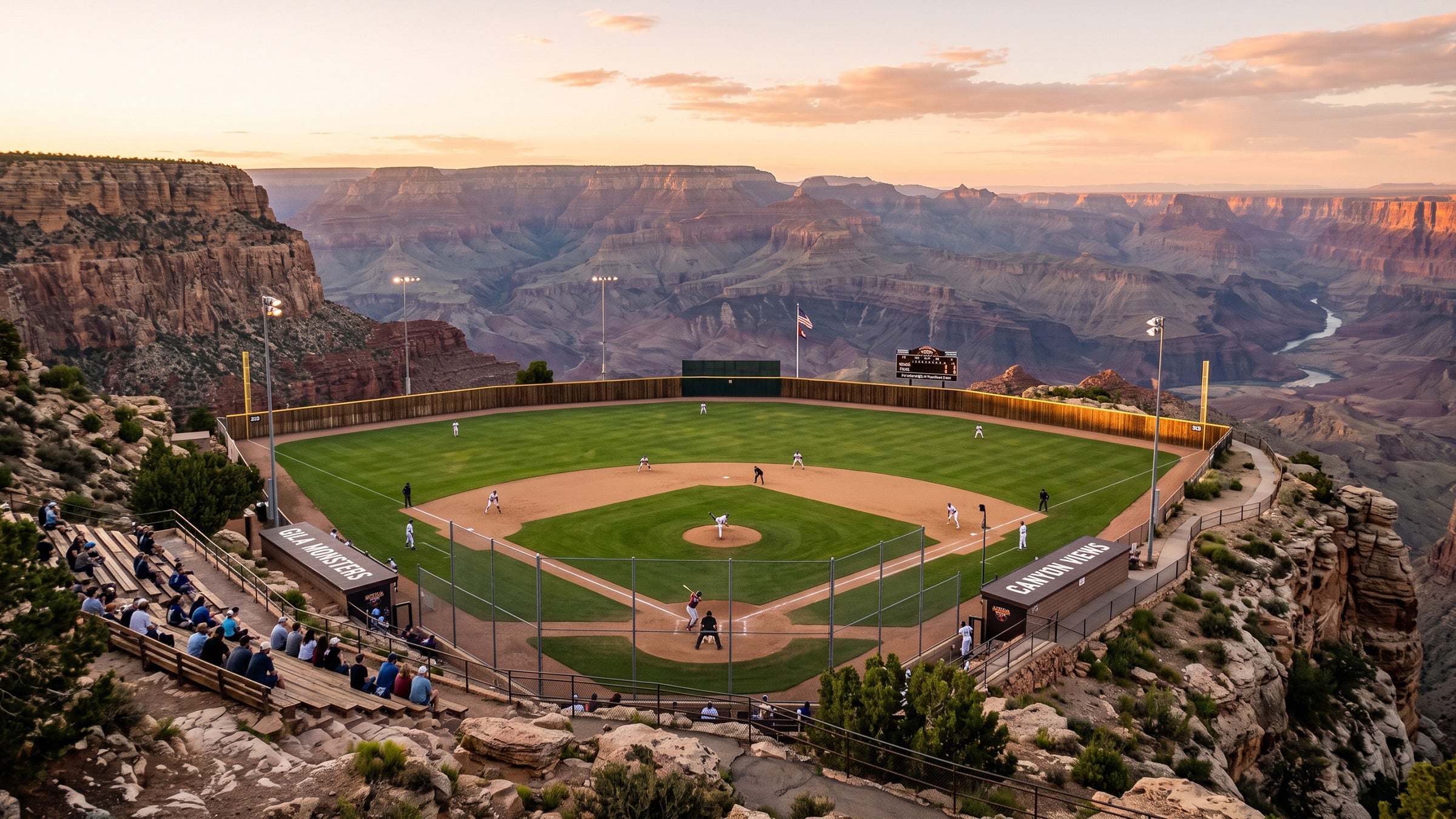
"This is not a Presidential directive, nor is it being directed by the White House. It’s also not being driven by the Department of the Interior," the administration’s statement read. "Therefore, this is not a White House or Administration priority."
While the prospect of a major league ballpark rising in the shadow of the Tetons appears unlikely to materialize, the intersection of professional sports and public lands has opened a broader conversation about the current state of the nation’s public infrastructure. For critics of recent federal land policies, the idea of an MLB game on protected federal property serves as an accidental metaphor for the mounting pressures facing the National Park Service.
Over the past two years, national parks across the United States have weathered a series of profound operational challenges. Observers of public land management have documented severe budget cuts, acute staff shortages, unprecedented lines at park entrances, the implementation of controversial tip lines, diverted visitor fee funds, proposed land swaps, and a wave of other policy shifts that conservation groups argue have strained the system to its breaking point.
While a professional sporting event on public land might seem detached from the day-to-day realities of park management, commentators and features editors have pointed out that such a spectacle could inadvertently function as a large-scale public awareness campaign. Staging a high-profile game under the banner of entertainment could theoretically mirror the very strains, compromises, and logistical hurdles that national parks have endured amid recent policy changes.
If such a matchup were ever to be seriously considered—perhaps imagining a contest between a powerhouse franchise like the New York Yankees and a struggling club like the Colorado Rockies, whose recent fortunes might reflect the beleaguered state of an underfunded agency—the event would undoubtedly require a completely reimagined set of rules to truly capture the current reality of the National Park Service.
As the discussion surrounding the proposal settles, the intersection of Major League Baseball and America’s public lands remains a fascinating thought experiment. It highlights the deep cultural resonance of both institutions while underscoring the ongoing debates about how the nation’s most treasured natural landscapes should be managed, protected, and experienced by the public in the years ahead.