




The stock market continues to surprise investors, regularly defying expectations as it reaches record-high valuations. For many, these historic peaks bring not celebration, but anxiety, as observers anticipate an inevitable crash. With the current market boom heavily driven by the frenzied expansion of Artificial Intelligence, comparisons to past market manias are everywhere. Yet, veteran financial commentators and long-term retirees argue that history provides a reassuring perspective for those willing to look past the daily financial headlines.

The debate surrounding the sustainability of the AI boom often mirrors the anxieties of past eras. Investors worry that the mania surrounding artificial intelligence is moving too fast, threatening to trigger a modern, amplified version of the dot-com crash of the early 2000s. For figures like early retirement advocate and internet financial commentator Mr. Money Mustache, that historical parallel is intimately familiar, recalling a time when the dot-com boom propelled his early career before the subsequent crash nearly derailed his trajectory.

Addressing these recurring anxieties requires stepping back from the day-to-day market volatility. Reflecting on decades of financial commentary and public speaking engagements—such as those delivered at Camp FI Midwest and upcoming appearances at the Bogleheads conference—analysts emphasize that human worry is a persistent constant, regardless of the specific economic drivers of the day.

Will Market Bubbles Ruin Long-Term Financial Independence?
Reaching over two decades of retirement brings a comfortable familiarity with market cycles, yet friends and financial observers frequently pose variations of the same anxious question: How can anyone remain retired and sleep peacefully given the state of the world?

The list of global concerns varies little in its underlying themes across generations. In the mid-2000s, during the peak of the housing bubble, worriers focused on geopolitical leaders, conflicts in the Middle East, national debt, inflation, outsourcing, and peak oil theories. Today, the names and technologies have shifted to political figures, modern global conflicts, and the technological disruption of artificial intelligence, yet the fundamental psychological undercurrent remains identical.

Despite the severe disruptions of the Great Financial Crisis—triggered by housing market exuberance and complex financial leverage—long-term equity markets demonstrated remarkable resilience. Historical charts illustrate that even the most catastrophic downturns since the Great Depression appear as temporary dips over a twenty-year horizon, where a standard investment portfolio still experienced substantial long-term growth. Furthermore, broader global metrics reveal significant societal improvements over the same period, including dramatic reductions in extreme poverty, cut-in-half infant mortality rates, exponential cost reductions in solar energy, and the rapid mainstream adoption of electric vehicles.

This historical continuity suggests that fear-driven narratives consistently overlook the fundamental engine of economic progress. Financial systems, stock markets, and monetary valuations are ultimately human-made constructs. When financial systems face severe stress, societies routinely adapt, restructure, and continue forward. True economic prosperity does not originate from computer-generated stock market numbers, but from human productivity.

Productivity, Prosperity, and the Limits of Wealth
The core driver of economic growth and the feasibility of early retirement has always been productivity. Capitalism experiences choppy, unpredictable swings, but beneath the surface volatility, individuals continue performing real work and developing tangible innovations.

Once societies achieve a baseline standard of living—a threshold surpassed decades ago in the developed world—additional wealth yields diminishing returns in terms of basic human happiness. Psychological and lifestyle factors, including strong personal relationships, maintaining an optimistic philosophy, physical health, and outdoor activity, play a far more dominant role in overall life satisfaction. Genetic predisposition and personal daily choices heavily outweigh sheer financial accumulation in determining an individual’s wellbeing.

Despite these established realities, baseline anxiety persists even among financially secure individuals. This pervasive background worry stems from human evolutionary biology. Humans evolved as danger detection machinery, utilizing caution as an adaptive trait to protect against predators and physical scarcity. However, once immediate survival needs and physical safety are secured, this detection mechanism does not simply switch off; instead, it shifts goalposts, finding new subjects for concern ranging from neighborhood homeowner associations and tax strategies to mandatory retirement distributions.

Combatting this persistent cycle of financial anxiety requires self-awareness and an understanding of personal history. Fear is frequently rooted in childhood experiences or familial scarcity mindsets rather than an objective evaluation of the present. By examining the worst-case scenarios of financial plans rationally, individuals often discover that the reality of potential setbacks is far less severe than imagined. Taking deliberate action transforms the unfamiliar into the familiar, fostering resilience and confidence.

Treating Technological Shifts as Experiments
The arrival of artificial intelligence represents the latest major technological shift to capture public attention and generate widespread apprehension. Rather than reacting to sensationalized headlines, reframing such developments as large-scale technological and economic experiments offers a more constructive perspective.

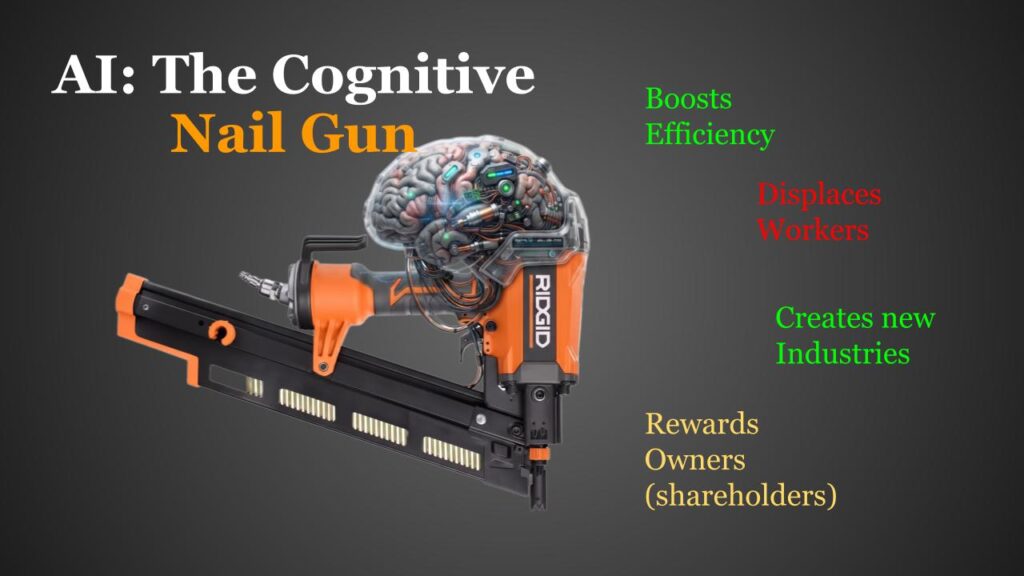
Viewed through the lens of economics and technology, AI functions as an advanced form of cognitive tool that enhances human efficiency and productivity. Like previous industrial revolutions, the advent of new productivity tools inevitably displaces certain traditional roles, particularly in entry-level administrative, software, and logistical fields. Simultaneously, however, it drives down service costs and sparks the creation of entirely new industries, mirroring the transformative arcs of the internet and mobile computing revolutions.

While the rewards of such technological advancements frequently concentrate among corporate owners and shareholders—a demographic that includes broad swaths of long-term index fund investors—the fundamental reality remains unchanged. Artificial intelligence is an opportunity for adaptation, learning, and strategic decision-making rather than a preordained catastrophe.
Ultimately, overcoming financial and technological apprehension involves tuning out the constant stream of sensationalized media, focusing on positive, productive behaviors, and aligning daily routines with human nature through physical activity, lifelong learning, and connection with optimistic communities. As many long-term financial independence advocates observe, the meaningful goals and lifestyle improvements individuals seek generally lie on the other side of managed fear.