



Contact: Hannah Nelson, 202-483-7382
Minneapolis — He may have played a demon on screen, but today, renowned actor Ron Perlman is confronting a real-life horror at the very academic institution that handed him his diploma more than half a century ago.
In a strongly worded letter dispatched today on behalf of People for the Ethical Treatment of Animals (PETA) to the President of the University of Minnesota—where Perlman earned his master’s degree in 1973—the Hellboy star and longtime animal rights advocate is calling for immediate and decisive action. Perlman is urging the university to permanently end what he describes as painful, archaic brain experiments on monkeys and to safely retire all surviving animals to reputable sanctuaries where they can live out their remaining days in peace.
What sparked the actor’s urgent intervention reads more like a screenplay for a medical horror film than standard academic research. According to comprehensive public records and internal documents obtained by PETA, laboratories at the University of Minnesota have housed invasive and harrowing procedures for years. In these facilities, experimenters—none of whom are licensed medical surgeons—have systematically sliced open the scalps of living monkeys, sawed away substantial portions of their protective skulls, bolted heavy metal headposts directly into their bone structure, and implanted raw electrodes deep into their brains.
The documented realities within these laboratories reveal a grim picture of suffering and surgical complications. Government and institutional records uncovered by animal welfare investigators detail specific incidents involving individual animals subjected to these protocols. In one particularly disturbing case, an experimenter drilled approximately 20 metal screws so deeply into the skull of a monkey named Everett that the hardware actually pierced his brain tissue. This catastrophic procedural failure caused the animal to vomit, grow progressively weaker, and suffer in agony for months before he was ultimately killed.
In another laboratory documented by PETA, a monkey named Bilbo was left with his brain tissue openly exposed for three days rather than receiving prompt, appropriate surgical intervention to close the wound and alleviate his distress. Meanwhile, in yet another campus facility, a female monkey named Ponyo reportedly suffered through a severe infection for weeks on end, with blood visibly leaking directly from a screw hole in her head, until the heavy metal headpost ultimately tore entirely loose from her compromised skull.
“Retiring the surviving monkeys to reputable sanctuaries would allow them to live out the rest of their lives in peace after enduring years of invasive procedures,” Perlman writes in his direct appeal to university leadership. “After everything these monkeys have endured, they deserve retirement—not another experiment.”
The scrutiny facing the University of Minnesota is part of a broader, ongoing examination of animal welfare standards within taxpayer-funded academic institutions across the United States. A comprehensive 2023 evaluation conducted by PETA scientists ranked the University of Minnesota as the fifth-worst violator of federal animal welfare standards among all universities operating animal laboratories supported by public funds.
Animal welfare experts and ethologists emphasize that the institutional environment experienced by these primates is a profound departure from their natural biology. In the wild, macaques live in large, complex, and tight-knit social groups, traveling up to two miles each day to explore diverse and stimulating habitats. At night, they naturally cuddle together in their favorite sleeping trees for warmth and security. This vibrant, social existence stands as a complete and tragic world away from the sterile, isolated, and painful reality they endure within the concrete confines of the University of Minnesota’s laboratories.
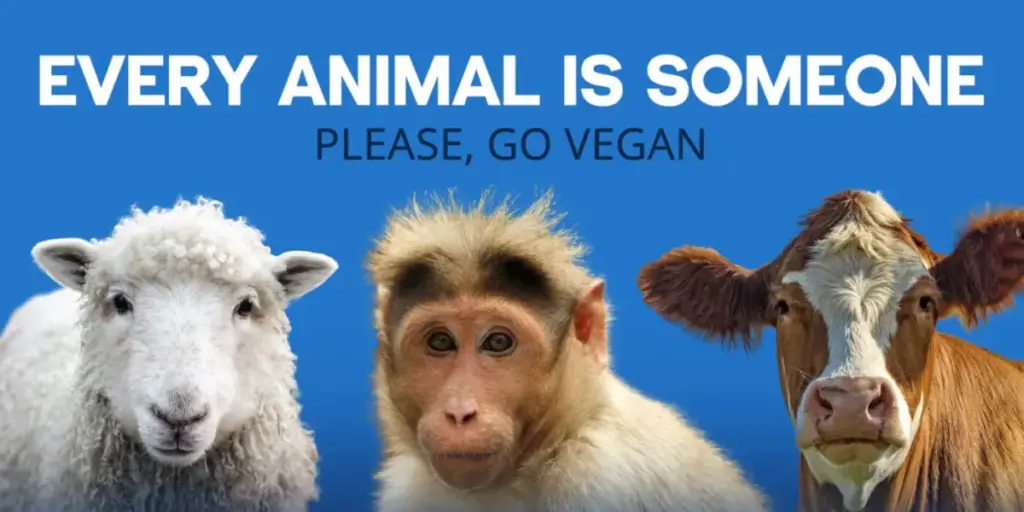
PETA, an organization whose guiding motto includes the principle that animals are not ours to experiment on, highlights these systemic issues through public education campaigns and outreach initiatives. The group points out that every individual animal possesses inherent value and offers educational resources, including free empathy kits, for individuals seeking to deepen their understanding of animal compassion and ethical treatment.
The mounting pressure from Perlman and animal advocates arrives at a critical juncture for the university, as the debate over the necessity and ethics of animal experimentation reaches a fever pitch in modern scientific communities. Perlman’s full letter to University of Minnesota President Cunningham outlines these concerns in explicit detail, calling for a complete reevaluation of institutional practices.
“Dear President Cunningham,” the letter begins, setting a tone of urgent accountability. “I am writing to urge the University of Minnesota to retire the surviving monkeys used in experiments by Jan Zimmermann and Matt Johnson to reputable sanctuaries, where they can finally begin to recover from years of invasive experimentation.”
Perlman acknowledges positive steps taken by the institution in related cases, noting, “I was encouraged to learn that, following a formal letter of reprimand and the cancellation of his protocols, Geoff Ghose no longer experiments on monkeys. I respectfully ask the university to take similarly decisive action against Zimmermann and Johnson, end their experiments on monkeys, and ensure that no other monkeys are subjected to such suffering.”
The actor’s appeal directly challenges the scientific necessity and oversight of the ongoing laboratory procedures. “I have learned that, for years, these laboratories have subjected monkeys to invasive brain surgeries in which portions of their skulls are removed, metal devices are implanted into their heads, and electrodes are inserted into their brains,” Perlman continues. “According to records obtained by PETA, these laboratories have experienced repeated surgical complications, infections, device failures, and other serious animal-welfare concerns, raising profound questions about oversight and accountability.”
Furthermore, Perlman’s letter positions the university’s reliance on animal models against the rapid advancements occurring elsewhere in the scientific landscape. At a time when leading academic and research institutions are increasingly embracing sophisticated, human-relevant technologies—such as organs-on-chips, complex human organoids, advanced neuroimaging techniques, and artificial intelligence models—the scientific community is shifting away from animal-based research. Because these modern alternatives offer data more directly applicable to human biology, and because funding priorities at major institutions like the National Institutes of Health and private philanthropic organizations increasingly reflect this paradigm shift, Perlman argues that the university’s practices are becoming obsolete.
“Continuing to rely on invasive monkey experiments leaves the University of Minnesota increasingly out of step with the direction of modern biomedical research,” Perlman states in his letter. He reiterates the humanitarian argument for closure and rehabilitation, emphasizing that retiring the remaining animals is both a scientific necessity and a moral imperative.
“Retiring the surviving monkeys to reputable sanctuaries would allow them to live out the rest of their lives in peace after enduring years of invasive procedures. After everything these monkeys have endured, they deserve retirement—not another experiment,” Perlman concludes. “Taking this step would also demonstrate compassionate leadership and help ensure that no other monkeys are subjected to similar suffering. Thank you for your time and consideration. I respectfully urge you to act.”