

“Aren’t you a busy little bird?”
(Full spoilers follow for VisionQuest Episodes 3 and 4, which are streaming now on Disney+.)
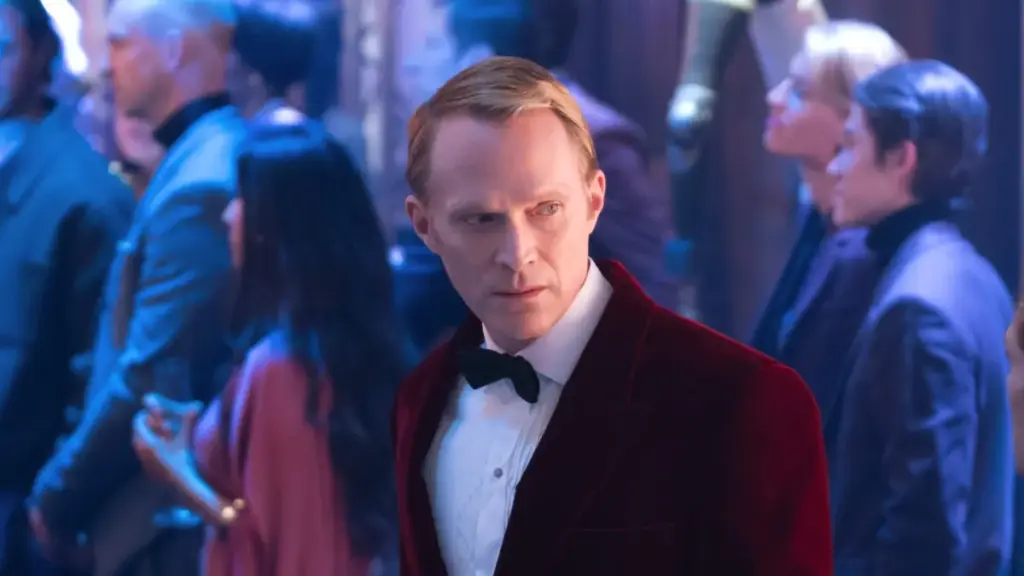
Marvel’s VisionQuest is turning out to be quite the pleasant little surprise. What initially seemed like an obligatory, unneeded follow-up to a loose end left dangling since the conclusion of WandaVision is rapidly developing into a prestige television series with plenty of heart, soul, and thematic depth of its own. It never truly pays to count out Paul Bettany’s synthetic hero, who continues to prove that there is plenty of dramatic mileage left in his metallic shell.
Mind you, entertaining as the first two episodes of the Disney+ series were, my one real reservation with VisionQuest out of the gate was that it proved somewhat difficult to connect with this particular version of Bettany’s character. As the synthetic protagonist notes himself, he possesses all the memories of the original Vision who fell in battle against Thanos, but he is entirely stripped of his soul. Given how remarkably poignant, empathetic, and utterly human the original Vision was across his past Marvel Cinematic Universe appearances, watching a cold, aloof, and largely emotionless copy of that character takes some serious getting used to for longtime fans.
Fortunately, that significant hurdle begins to fade rapidly across Episodes 3 and 4. Already, White Vision is making great strides in terms of understanding his own complex emotions, navigating internal conflicts, and embracing a side of himself that he does not yet entirely understand. Compared to Marvel’s earlier Loki series—which essentially relied on a quick-and-dirty narrative speedrun to transform the 2012-era variant of Loki played by Tom Hiddleston into something more resembling his post-Thor: Ragnarok self—VisionQuest feels like a far more coherent, deliberate, and purposeful way of bridging the vast gap between two wildly different versions of an established MCU character.
Certainly, Paul Bettany has a lot more raw material to work with across these two middle chapters, both from a comedic standpoint and a dramatic one. His character’s frequent, erratic malfunctioning processors give the veteran actor some welcome opportunities to deploy a bit of dry physical comedy, particularly in Episode 3. Furthermore, both episodes make the most of the rapidly deepening bond developing between Vision and Tommy, played by Ruaridh Mollica. By all rights, their evolving relationship should feel rushed or unearned given the brevity of the season, but somehow the narrative alchemy makes it all work anyway. By the time Vision is gently coaxing his son on how to safely reboot his systems in a local hotel swimming pool, he feels well and truly on the road to reclaiming that lost humanity that was so vital to the original character.

That transformative process continues in earnest in Episode 4, where Vision pointedly stops drawing such a hard, rigid distinction between his past self and his present iteration.
I also deeply appreciate how well the show’s writing team is succeeding in ensuring that Agatha All Along is not required viewing to understand the plot. While this is certainly not a television series you would want to dive into without at least having seen WandaVision, it also does a remarkably fine job of explaining everything viewers need to know about Tommy’s bizarre, supernatural existence. Cleverly, it manages this without making his brother Billy’s parallel journey—as seen in other corners of the magical MCU—into mandatory homework for the audience. This narrative restraint helps the series stand much more firmly on its own two feet rather than simply feeling like the final, contractual act of an interconnected streaming trilogy.
Another massive plus firmly in VisionQuest‘s favor is that it features such a lovable, eccentric supporting cast of artificial intelligence goofballs. While James Spader’s returning Ultron doesn’t completely steal the show to quite the same degree he did in the initial two episodes, he remains one of the absolute comedic and dramatic highlights of the entire series. Ultron continues to serve wonderfully as both a reliable source of periodic comedic relief and a provider of the sort of knowing, cynical observations on human nature that used to be Vision’s exclusive purview.
Beyond that, we also get to see the iconic villain finally take a much more purposeful, calculated step onto center stage late in Episode 4. During these tense sequences, Ultron manipulates his way into taking the wheel—quite literally—and predictably betrays his family at his very first available opportunity. The sheer prospect of an Ultron fully in control of his faculties and back operating in the physical world is an exceptionally exciting prospect for viewers as the show heads into Episode 5.
Speaking of Vision’s newfound family, we are treated to a plethora of great scenes involving F.R.I.D.A.Y., portrayed by Orla Brady; E.D.I.T.H., played by Emily Hampshire; and even classic workshop fixtures like D.U.M.-E., brought to life by Henry Lewis, and U, played by Jonathan Sayer. The series is doing a fantastic job of fleshing out and enriching these characters who used to be nothing more than disembodied digital voices or slapstick workshop tools in earlier films. Episode 4 is particularly strong when it comes to exploring their individual emotional journeys and highlighting just how closely their awakenings parallel what Vision himself is experiencing.
None of this is to say that the series is entirely without fault or that it has completely overcome its initial growing pains. Episodes 3 and 4 feel a bit clunky in how they handle the narrative transition from a conflict mostly built around Paladin, played by Todd Stashwick, to one centered around Jocasta, portrayed by T’Nia Miller. The former character basically drops out of the picture entirely after running afoul of the latter. Still, it is difficult not to enjoy the show’s intriguing take on Jocasta thus far. She is nothing if not deeply sympathetic so far, and she holds a tremendous amount of dramatic potential as both an antagonist and the ultimate object of Ultron’s sinister fascination. All in all, these two middle episodes do a tremendous amount of heavy lifting to set up a compelling, high-stakes conflict for the second half of the series.
Verdict
VisionQuest is steadily building remarkable steam as the Disney+ Marvel series reaches its crucial halfway mark. Where initially it was a bit difficult to connect with this newer, significantly less human version of Paul Bettany’s iconic character, Episodes 3 and 4 make great strides in fleshing him out and successfully bridging the gulf between the old Vision and the new. It certainly does not hurt that the series benefits immensely from such a strong, eclectic supporting cast of AI characters, most notably James Spader’s menacingly entertaining Ultron. While the narrative transition between villains across these episodes is not quite as elegant as it could have been, on the whole, the series is bringing a lot of substance to the table for hungry Marvel fans.