


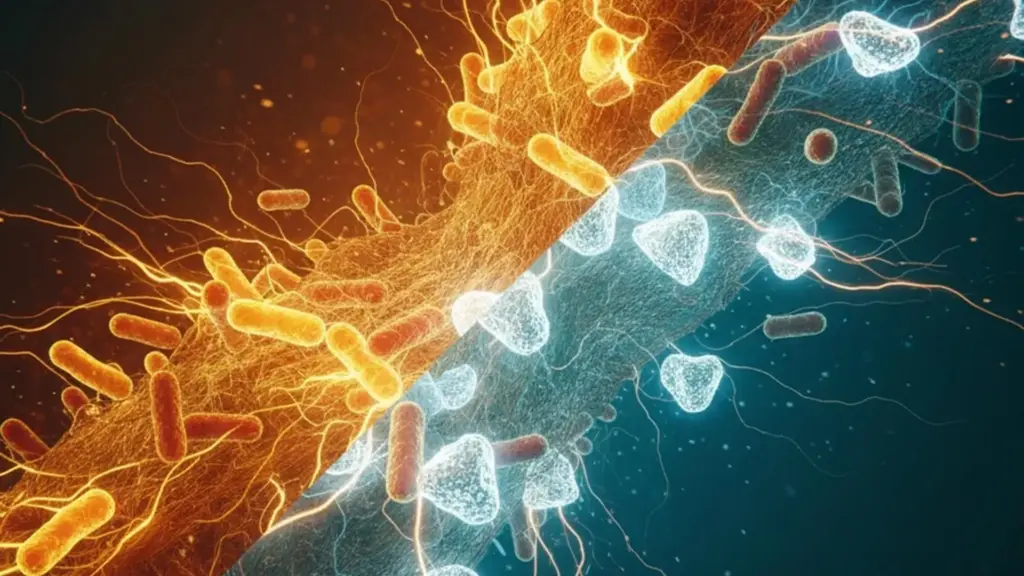
Bacteria are remarkably adept at surviving in constantly shifting environments. While this evolutionary adaptability is a testament to their resilience, it frequently creates profound challenges for human medicine, particularly when harmful microbial species develop resistance to traditional antibiotics and broad-spectrum disinfectants. For decades, the standard medical and dental approach to managing pathogenic bacteria has relied on aggressive eradication—waging a constant war to kill harmful microorganisms wherever they appear in or on the human body.
At the same time, modern science has made it clear that bacteria are not simply hostile invaders to be destroyed at all costs. An overwhelming body of research demonstrates that many microbial species play vital, irreplaceable roles in human health and biological functioning. The human body acts as a complex ecosystem for trillions of microbes, including the hundreds of diverse species that naturally inhabit the oral cavity. This dual reality—that bacteria can be both protective partners and potential threats—has raised an intriguing and revolutionary possibility in microbiological research: instead of attempting to blindly kill off bacteria with harsh chemicals, could scientists instead influence how these microorganisms behave, subtly guiding and encouraging healthier microbial communities?
A study published in 2025 in the journal npj Biofilms and Microbiomes suggests that this proactive approach may soon become a reality. Researchers investigating the dynamics of dental plaque discovered that actively interfering with the chemical signaling molecules that bacteria use to converse with one another can dramatically alter which species thrive within the community. Rather than wiping out the entire population, this targeted interference has the potential to shift the dental plaque microbiome away from disease-causing pathogens and toward bacteria associated with superior oral health.
How Bacteria Communicate in the Mouth
To understand the significance of this discovery, it helps to examine the environment of the human mouth, which serves as a bustling habitat for approximately 700 distinct species of bacteria. These microbes do not simply drift aimlessly or grow in complete isolation alongside one another; they live in densely populated, highly organized communities known as biofilms. Within these biofilms, many bacteria constantly exchange chemical signals through a sophisticated biological process called quorum sensing.
Quorum sensing is a mechanism that allows individual bacterial cells to detect how many neighboring cells are present in their immediate vicinity, enabling them to coordinate complex group behaviors that would be impossible or ineffective for a single bacterium acting alone. Among oral microorganisms, several bacterial species communicate using a specific class of chemical signaling molecules known as N-acyl homoserine lactones, or AHLs.
A collaborative team of researchers hailing from the College of Biological Sciences and the School of Dentistry set out to examine precisely how these AHL signals shape the structure and composition of dental plaque over time. Their primary scientific goal was to determine whether bacterial communication pathways could be artificially manipulated to help individuals maintain a healthier oral microbiome without resorting to scorched-earth antimicrobial treatments.
The oral microbiome encompasses the entire community of microorganisms residing within the mouth. When this delicate ecological community falls out of balance—a state known scientifically as dysbiosis—potentially harmful bacteria can multiply unchecked and achieve dominance. This microbial imbalance is a major contributing factor in the development of common and destructive conditions such as periodontal disease, an advanced form of gum disease that can lead to tooth loss and systemic inflammation.
Chemical Signals Can Cross the Gumline
During their investigation into dental plaque dynamics, the research team uncovered critical details about how these chemical signals operate across different regions of the oral cavity. They found that bacteria residing within dental plaque actively produced AHL signals in aerobic environments—those areas located above the gumline where oxygen is readily and abundantly available.
Crucially, the researchers discovered that these chemical messages were not confined to the upper regions of the tooth. The AHL signals could also be detected by bacteria living in anaerobic environments located beneath the gumline, where oxygen levels are exceptionally low. This cross-environment communication connection proved to be of paramount importance, because the specific environmental conditions found below the gumline naturally favor the proliferation of pathogenic bacteria strongly associated with periodontal disease.
To test whether this communication network could be intercepted, the research team utilized specialized biological tools known as lactonases. These specialized enzymes possess the remarkable ability to target and degrade AHL signals, effectively breaking down the communication molecules and disrupting the ongoing "conversations" taking place among the bacterial cells.
When the researchers actively disrupted AHL signaling using these lactonases, the composition of the dental plaque community underwent a notable transformation. The microbial population shifted away from pathogenic species and toward bacterial strains that are strongly associated with good oral health. These findings strongly suggest that carefully targeted enzymes could someday be formulated into clinical treatments designed to alter the makeup of dental plaque and help individuals maintain a healthy, balanced micro-ecosystem in their mouths.
Dental Plaque Behaves Like an Ecosystem
To better explain how dental plaque develops and changes, the researchers often compare the micro-environment of the tooth surface to a larger, more familiar natural habitat.
"Dental plaque develops in a sequence, much like a forest ecosystem," said Mikael Elias, an associate professor in the College of Biological Sciences and the senior author of the research study. "Pioneer species like Streptococcus and Actinomyces are the initial settlers in simple communities—they’re generally harmless and associated with good oral health. Increasingly diverse late colonizers include the ‘red complex’ bacteria like Porphyromonas gingivalis, which are strongly linked to periodontal disease. By disrupting the chemical signals bacteria use to communicate, one could manipulate the plaque community to remain or return to its health-associated stage."
In practical terms, this means that dental plaque is not a static formation that appears all at once in its final, harmful state; rather, it evolves through distinct stages over time. The earliest communities to colonize the tooth surface tend to contain relatively harmless, beneficial bacteria. However, if left undisturbed and allowed to mature into more complex communities, the plaque eventually incorporates aggressive species strongly linked to chronic gum disease.
The overarching hope among the researchers is that by learning how to interfere with bacterial communication, dental professionals may eventually be able to guide plaque communities backward into an earlier, healthier developmental state, completely bypassing the need to eradicate the entire resident microbial population.
Oxygen Changes How Bacterial Signals Behave
One of the most striking and unexpected discoveries made during the study was that the functional outcomes of bacterial communication depend heavily on the local availability of oxygen within the mouth.
"What’s particularly striking is how oxygen availability changes everything," noted Rakesh Sikdar, the lead author of the study. "When we blocked AHL signaling in aerobic conditions, we saw more health-associated bacteria. But when we added AHLs under anaerobic conditions, we promoted the growth of disease-associated late colonizers. Quorum sensing may play very different roles above and below the gumline, which has major implications for how we approach treatment of periodontal diseases."
This profound environmental dichotomy demonstrates that the exact same chemical signaling molecules can exert completely opposite influences on microbial communities depending entirely on where those signals are produced and received within the oral cavity. Above the gumline, where oxygen is plentiful, the act of disrupting AHL signaling favored beneficial bacteria linked with superior oral health. Conversely, beneath the gumline, the introduction of those same signals actively encouraged the proliferation of later-colonizing microbial species that drive disease progression.
A Different Strategy for Preventing Gum Disease
Armed with these insights, the research team is now looking toward the future. Their next steps involve investigating how bacterial communication pathways vary across different areas of the mouth and comparing these patterns among individuals at various stages of periodontal disease progression.
Rather than continuing to rely on broad-spectrum antimicrobial treatments that indiscriminately attack all oral bacteria—good and bad alike—the ultimate long-term goal of this research is to pioneer methods that can gently and strategically influence the internal balance of the microbial community itself.
"Understanding how bacterial communities communicate and organize themselves may ultimately give us new tools to prevent periodontal disease—not by waging war on all oral bacteria, but by strategically maintaining a healthy microbial balance," Elias emphasized.
The implications of this innovative approach may eventually extend far beyond the field of dentistry. Similar microbial imbalances, collectively referred to by scientists as microbiome dysbiosis, frequently occur in other regions of the human body and have been scientifically linked to a wide array of severe health conditions, including certain types of cancer.
By continuing to study how bacteria converse and coordinate their actions, researchers hope to lay a strong foundational framework for a new generation of targeted medical therapies. These future treatments would be specifically designed to steer complex microbial communities back toward healthy, balanced states, rather than defaulting to methods that simply destroy everything in their path.
The research was supported and funded by the National Institutes of Health.