




When a senior dog begins taking longer to rise from their bed, hesitates at the base of the stairs, or shows a sudden reluctance to embark on their usual daily walk, owners naturally look for ways to restore their pet’s comfort. In recent years, cannabidiol (CBD) has emerged as a popular consideration for managing these age-related changes. However, while these physical shifts are common, they do not pinpoint a specific medical cause on their own.
Veterinary experts emphasize that the most critical first step is a formal professional assessment. Establishing a definitive diagnosis allows owners to build a targeted care plan that combines environmental adjustments, appropriate exercise, and carefully evaluated supplements, while establishing a clear baseline to track whether any intervention is actually helping.
This coverage is presented in partnership with Bailey’s CBD. While Vetstreet may earn a commission on purchases made through links within this article, all editorial opinions, reviews, and clinical guidance remain entirely independent.
Understanding Changing Wellness Needs in Aging Canines
As dogs transition into their senior years, their daily requirements regarding physical activity, nutrition, home safety, and veterinary monitoring must adapt. It is important to recognize that aging is an individual process; there is no single, universal age at which every dog suddenly becomes a senior. A dog’s specific clinical health and physical capabilities matter far more than a chronological label. For example, a dog that has spent its entire life preferring brief, leisurely strolls presents a very different scenario from a highly active dog that suddenly stops enjoying a familiar route.
When monitoring an older pet, owners should try to distinguish between gradual, long-term patterns and sudden, acute changes. A slow decline in mobility occurring over several months suggests a different underlying issue than a limp that develops overnight or sudden, restless pacing after dark.

Each of these distinct observations provides a veterinarian with a highly valuable clinical starting point. Presenting a detailed timeline of these specific behavioral and physical shifts is far more useful to a practitioner than simply stating that a dog is "getting old." Veterinary medicine can often uncover highly practical ways to improve an older dog’s quality of life, regardless of whether CBD ultimately becomes part of the treatment plan.
Tracking Mobility and Behavioral Shifts at Home
To assist a veterinary team in making an accurate diagnosis, owners should closely observe how their dog performs ordinary, everyday tasks. Key activities to monitor include how easily the dog rises from a resting position, their willingness to walk to a favorite sniffing spot, their ability to step over a low threshold, and how easily they find a comfortable sleeping position.
Observations should focus on repeatable, daily routines rather than pushing a dog to its physical limits. Owners must never deliberately provoke discomfort or pain simply to test a dog’s physical boundaries.
When documenting these patterns, owners should look for specific, observable behaviors:
- Hesitation after resting or at stairways: Note whether the dog hesitates only in the morning or if the difficulty persists and changes throughout the day. This pattern helps veterinarians evaluate whether joint pain, muscle weakness, or a specific spinal condition is contributing to the stiffness.
- A sudden limp or a reluctance to bear weight on a limb: Document exactly when the limping began and whether it was preceded by a fall, a slip, or strenuous play. An acute change of this nature requires a prompt professional examination to rule out structural injuries or other urgent medical issues.
- Nighttime pacing, getting stuck in corners, or general disorientation: Note the dog’s sleep cycles, their orientation within familiar rooms, and any disruptions to their established routines. Nighttime restlessness can stem from a variety of factors, including chronic discomfort, sensory decline, changing toileting needs, or canine cognitive dysfunction.
These observations are diagnostic clues, not definitive proof of arthritis. Weakness, neurological conditions, soft-tissue injuries, and systemic illnesses can all mimic the signs of joint disease. If a dog experiences a sudden inability to stand, severe acute pain, collapse, or any other major physical decline, owners should seek immediate emergency veterinary care rather than attempting to manage the situation with an over-the-counter supplement trial.
What Science Says About CBD for Older Dogs
While CBD is frequently discussed as a supportive option for senior pets, scientific evidence does not support its use as a broad, general treatment for the aging process itself. Age alone does not dictate whether a dog will benefit from cannabidiol. Instead, the current scientific interest in CBD for older dogs is largely rooted in clinical research surrounding canine osteoarthritis, rather than studies proving it can generally reverse or improve the signs of aging.
In a controlled crossover clinical trial published in 2018, dogs diagnosed with osteoarthritis were administered either a specific CBD-based oil formulation or a placebo. The researchers observed improvements in some owner-reported pain scales and activity levels during the active CBD treatment phase.
However, this study was relatively small and conducted over a short duration. Furthermore, the specific formulation used in the trial cannot be assumed to be bioequivalent to the vast array of CBD oils, joint chews, and other supplements currently available on retail shelves.
This research establishes several practical boundaries for pet owners:
- A positive result in an osteoarthritis study does not guarantee that a product will resolve other mobility issues, such as nerve pain, muscle wasting, or ligament instability.
- The manufacturing standards, ingredient concentrations, and overall quality of commercial CBD products vary widely across the pet industry.
- Scientific findings associated with a specific study formulation do not automatically apply to every brand or product format.
Owners can evaluate options like Bailey’s mobility products as potential tools within a broader care plan, but the underlying clinical evidence must be discussed objectively with a veterinarian to manage expectations and ensure safety.

Holistic Joint Support and Environmental Adjustments
An effective mobility plan for a senior dog almost always requires a multi-faceted approach that goes beyond simply introducing a supplement. A veterinarian will typically evaluate the dog’s overall body condition, recommend appropriate low-impact activities, suggest physical rehabilitation, or prescribe targeted pharmaceutical treatments.
At home, simple modifications can significantly reduce the daily physical strain placed on an aging dog’s joints:
- Adding non-slip rugs or runner mats: Placing traction aids on hardwood, laminate, or tile floors can prevent painful slips and help a weak dog find secure footing.
- Utilizing sturdy ramps or steps: Providing assisted access to favorite resting spots, furniture, or vehicles eliminates the high-impact stress of jumping.
- Elevating food and water dishes: Raising bowls slightly can make eating and drinking much more comfortable for dogs suffering from neck, back, or elbow stiffness.
Implementing these environmental changes also improves the quality of an owner’s daily observations. If a dog stops slipping and rises more easily after traction mats are placed on the floor, this represents a highly successful intervention. By documenting these environmental adjustments, owners can avoid mistakenly attributing every physical improvement solely to the latest supplement added to the dog’s diet.
Ultimately, "joint comfort" should be defined by clear, achievable daily goals. Rather than aiming to make an older dog act "younger," owners should focus on tangible outcomes, such as helping the dog rise more easily in the morning, complete a short walk comfortably, or settle to sleep without constantly shifting positions.
Comparing Formulations: Oils versus Soft Chews
When choosing a CBD product, owners will find that oils and soft chews differ significantly in how they are measured, how readily they are accepted by pets, and how they combine with other active ingredients. The strongest or highest-concentration product is not always the most appropriate choice. Owners should prioritize a format that can be administered consistently and features a transparent ingredient list that aligns with the dog’s dietary needs.
Liquid CBD oils offer highly precise dosing, allowing owners to adjust the volume drop by drop. However, they require a dog to reliably consume the liquid, which can be challenging if the pet has a fluctuating appetite. In contrast, soft chews are highly convenient and palatable for dogs that enjoy treats, but they often contain additional active ingredients that may overlap with supplements the dog is already receiving.
[Bailey's Product Options for Mobility Support]

Product: Hip & Joint CBD Oil
Key Ingredients: CBD, turmeric extract, MCT carrier oil
Practical Use: Best for precise liquid dosing adjusted to the dog's exact needs.

Product: Hip & Joint CBD Soft Chews
Key Ingredients: CBD, glucosamine, MSM, green-lipped mussel
Practical Use: Convenient treat format; requires checking for ingredient overlap.

Product: Omega Hemp CBD Soft Chews
Key Ingredients: CBD, omega fatty acids
Practical Use: Supports skin and joint health; review alongside existing dietary fats.
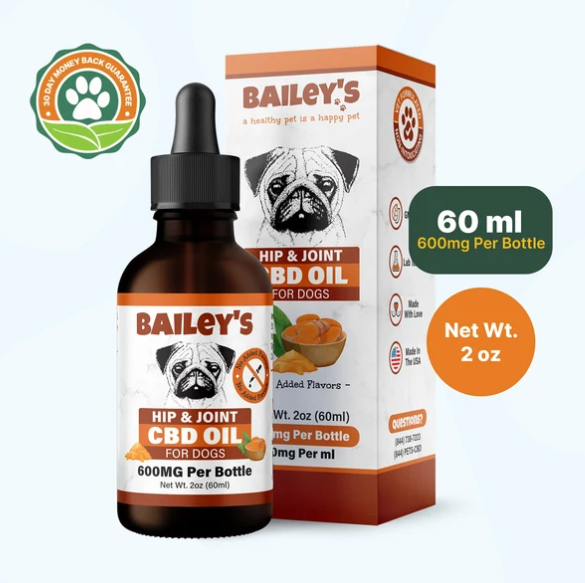
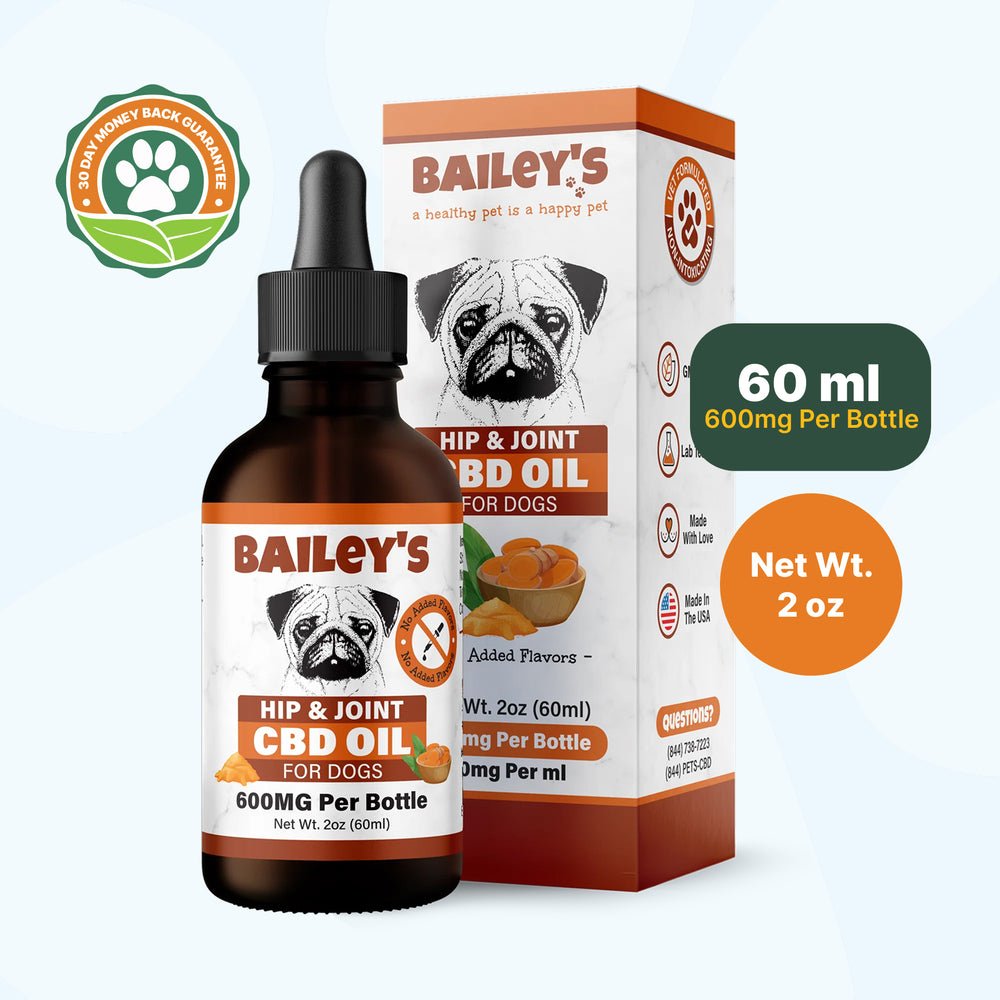
When comparing these options, owners should carefully review the entire ingredient panel. For example, Bailey’s Hip & Joint CBD Oil combines cannabidiol with turmeric extract in an MCT carrier oil, making it a straightforward liquid option.
Meanwhile, Bailey’s Hip & Joint CBD Soft Chews incorporate glucosamine, MSM, and green-lipped mussel directly into the chew. If a dog is already taking a standalone glucosamine and MSM supplement prescribed by a veterinarian, introducing these chews could lead to unnecessary ingredient duplication.
Similarly, Bailey’s Omega Hemp CBD Soft Chews introduce omega fatty acids, which must be evaluated alongside the fat content of the dog’s current daily diet. Owners should avoid "stacking" multiple mobility products, such as giving both an oil and a chew, as this can easily duplicate ingredients and complicate the veterinary team’s ability to monitor the dog’s response.
Dosing, Safety, and Potential Drug Interactions
There is no single, standardized CBD dose for senior dogs. While body weight is a key factor, a dog’s overall metabolic health, liver function, concurrent medications, and the specific formulation being used all play critical roles in determining a safe and effective serving size. Age alone is never a valid reason to automatically increase a dose.

Before administering any product, owners must clearly identify the exact milligrams of CBD per individual serving, rather than confusing it with the total milligram count listed on the entire bottle or package. If a product label is confusing, owners should consult the manufacturer or their veterinary team for clarification before administration.
Because senior dogs are more likely to have pre-existing organ dysfunction or be on prescribed medications, a comprehensive veterinary review is essential. CBD is metabolized by the liver and can alter how a dog’s body processes other pharmaceuticals. Owners should compile a complete, written list of everything their dog consumes, including:
- Prescribed pain medications, non-steroidal anti-inflammatory drugs (NSAIDs), and nerve pain therapies like gabapentin.
- Heartworm, flea, and tick preventives.
- Over-the-counter joint supplements, vitamins, and therapeutic diets.
Under no circumstances should an owner discontinue a prescribed veterinary medication or replace it with a CBD product without explicit professional guidance. It is also important to note that the U.S. Food and Drug Administration (FDA) has not approved cannabis-derived products for use in animals, which represents a key regulatory distinction from any manufacturer’s description of veterinary involvement in product formulation.
Evaluating Product Quality and Laboratory Testing
Because the pet supplement market is not subject to the same rigorous pre-market approval processes as prescription medications, the responsibility of verifying product quality often falls on the pet owner. Reputable manufacturers provide a batch-specific Certificate of Analysis (CoA) from an independent, third-party laboratory.
When reviewing a product’s lab results, owners should verify:

- The exact levels of CBD and tetrahydrocannabinol (THC), ensuring the THC content is negligible or non-detectable, as THC is toxic to dogs.
- The specific units of measurement to ensure they match the product label.
- The inclusion of comprehensive contaminant screening, verifying that the batch is free from heavy metals, pesticides, residual solvents, mold, and harmful bacteria.
As an example of industry transparency, Bailey’s maintains a publicly accessible laboratory results page where owners can look up the specific testing report matching the batch number printed on their product packaging. Keeping the original packaging and taking a photograph of the label is a practical way for owners to track any changes in formulation, strength, or packaging over time.
Implementing a Structured Home Mobility Record
To determine whether a new care routine is actually benefiting a senior dog, owners should establish a simple, structured observation log before making any changes. Consistently tracking a few ordinary activities under similar conditions—such as walking the exact same route at the same time of day—provides a much more reliable comparison than trying to judge a dog’s condition based on a single good or bad day.
Owners should avoid introducing multiple new supplements or medications simultaneously. Doing so makes it virtually impossible to identify which product caused an improvement or triggered an adverse reaction.
A written or digital log should document:
- The date, time, and specific activity being observed (such as rising from a bed or navigating a step).
- A clear description of what occurred, noting any hesitation, stiffness, or physical assistance required.
- The exact products administered, including the specific brand name, measured serving size, and time of administration.
- Any relevant external variables, such as changes in the weather, household flooring, or daily exercise duration.
A descriptive entry, such as "needed assistance climbing the back porch step on three consecutive mornings," is far more valuable to a veterinarian than a vague, subjective rating scale. If a dog’s mobility deteriorates, or if they exhibit any signs of gastrointestinal upset, lethargy, or behavioral changes, owners should stop administering any new supplements and contact their veterinary team immediately rather than waiting for a scheduled recheck.

Frequently Asked Questions
Is it safe to give a senior dog CBD every night?
Administering CBD to a dog on a nightly basis should only be done under a veterinarian-approved plan with a clear therapeutic goal. If an older dog is pacing, restless, or unable to settle at night, they may be experiencing physical pain, cognitive changes, or an underlying medical need to urinate. Using CBD to sedate a dog without investigating the root cause of their nighttime restlessness can delay necessary medical care.
What is the correct CBD dose for a 70-pound dog?
A dog’s weight is not the only factor in determining a safe and effective dose. A 70-pound senior dog may have underlying health conditions or be taking prescribed medications that alter how their body metabolizes CBD. Additionally, different oils and chews contain widely varying concentrations of active ingredients. Owners should bring the exact product packaging to their veterinarian to calculate an appropriate, safe starting dose.
Can CBD help manage sundowning or cognitive decline in older dogs?
CBD is not an established or clinically proven treatment for canine cognitive dysfunction, dementia, or evening disorientation (sundowning). Nighttime behavioral changes require a thorough veterinary evaluation, as systemic diseases, sensory loss, and chronic pain can all mimic cognitive decline. A veterinarian can help establish a comprehensive care plan rather than relying on a calming supplement to manage cognitive symptoms.
Which option is better for joint pain: CBD or gabapentin?
CBD and gabapentin are entirely different compounds and are not interchangeable. Gabapentin is a prescription medication commonly utilized by veterinarians to target specific neuropathic pain and chronic discomfort. CBD products are over-the-counter supplements with highly variable formulations and a different clinical evidence base. A veterinarian will determine the most appropriate option based on the dog’s specific diagnosis, health status, and existing medications.
What is the safest way to calm a dog showing signs of dementia?
If a dog diagnosed with canine cognitive dysfunction exhibits severe restlessness or anxiety, the owner should consult their veterinarian to review the dog’s current treatment plan. Restlessness can often be triggered by undetected pain or secondary illnesses. Owners should never introduce over-the-counter sleep aids, calming treats, or CBD products without first consulting their veterinary team to prevent adverse drug interactions.