


Selecting the right diet for a Golden Retriever requires looking beyond marketing claims, coat colors, and brand names to focus on specific life-stage nutrition, recipe formulations, and exact portioning. Whether caring for a rapidly growing puppy, an active adult, or a senior dog with changing mobility and metabolism, pet owners must match nutritional adequacy statements and caloric density to their dog’s specific individual needs.
A closer analysis of fresh food options from JustFoodForDogs (JFFD)—specifically comparing four popular choices: Chicken & Rice, Fish & Sweet Potato, Beef & Russet Potato, and Turkey & Whole Wheat Macaroni—illustrates how caloric variance and nutritional adequacy determine proper daily feeding strategies. The central principle of canine nutrition remains consistent across formats: a complete and balanced life-stage statement, precise daily caloric targets, and controlled treat allowances matter far more than generalized breed-specific packaging.
Choosing Golden Retriever Food by Life Stage
What is the best food for a Golden Retriever?
The optimal diet for a Golden Retriever is a nutritionally complete food formulated specifically for the dog’s current developmental phase, tailored to individual health requirements, and fed in precisely measured quantities. A growing puppy demands specialized growth nutrition to support skeletal and tissue development; an adult requires an appropriate maintenance allowance to support energy levels without driving unnecessary weight gain; and a senior canine often requires adjustments based on changes in muscle mass, physical activity, and overall body condition.
While understanding a Golden Retriever’s general physical traits provides helpful background context, superficial characteristics such as coat shade or line heritage do not alter fundamental physiological requirements. For example, an English cream Golden Retriever requires the exact same evidence-based nutritional approach as any traditional golden-coated retriever, with life stage, weight trends, and clinical health serving as the true drivers of dietary decisions.
Evaluating commercial options requires evaluating product labels for official nutritional adequacy statements rather than relying on marketing claims. Fresh, dry, wet, canned, and raw feeding formats must all fulfill the same basic standards for complete and balanced nutrition. Terms like "natural," "grain-free," or "limited ingredient" do not inherently guarantee superior health benefits or adequate formulation. Similarly, raw or home-cooked diets require precise formulation by qualified professionals alongside strict food-safety protocols, as visually recognizable ingredients alone do not ensure nutritional completeness.

Determining the right food for a Golden Retriever requires separating growth requirements from adult caloric control and senior care strategies:
- Growing Puppies: The primary objective is verifying growth adequacy, particularly for large-breed growth expectations. Relevant choices include JFFD Chicken & Rice and Fish & Sweet Potato. Key monitoring factors include growth trajectories, body weight progression, and adjusting meal sizes as the puppy develops.
- Adult Dogs: The focus shifts to matching maintenance caloric intake with physical activity to sustain an optimal body condition score. Options include Chicken & Rice, Fish & Sweet Potato, Beef & Russet Potato, or Turkey & Whole Wheat Macaroni, depending on individual tolerance and energy needs. Reassessment should focus on body condition, stamina, and ingredient digestability.
- Senior Dogs: The main priority is maintaining core nutritional intake while adapting to age-related changes. Seniors may thrive on an adult maintenance diet or require a tailored therapeutic recipe selected with veterinary guidance. Key areas for continuous monitor include muscle mass retention, appetite changes, weight fluctuations, joint comfort, and metabolic health.
JFFD Choices for Growing Golden Retriever Puppies
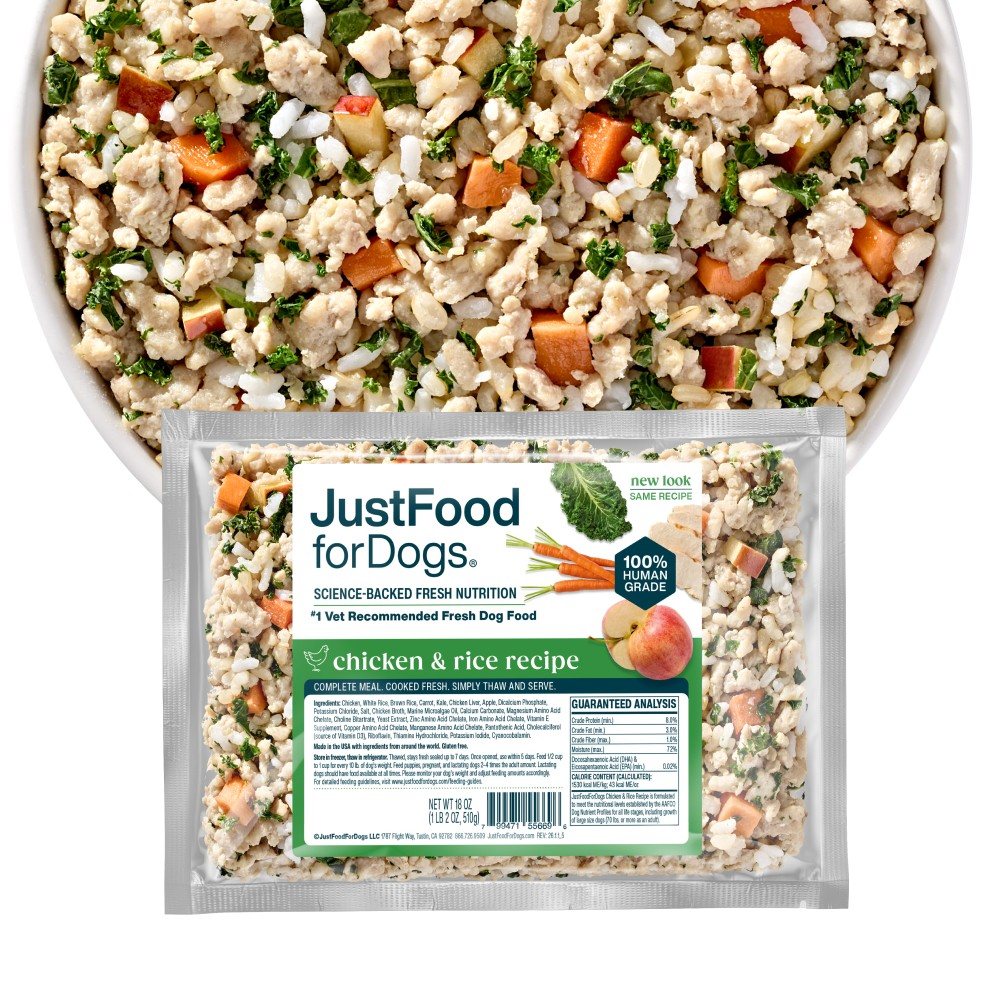
Nutritional management during puppyhood sets the foundation for lifelong musculoskeletal health. Within the JustFoodForDogs product line, two specific formulas feature complete nutritional adequacy statements for growth: the Chicken & Rice recipe and the Fish & Sweet Potato recipe. Crucially, both recipes contain official nutritional statements confirming suitability for the growth of large-size dogs expected to reach 70 pounds or more as adults. This explicit large-breed growth designation is vital when selecting food for Golden Retriever puppies, as improper mineral ratios or excessive energy intake during growth can contribute to developmental orthopedic disorders.
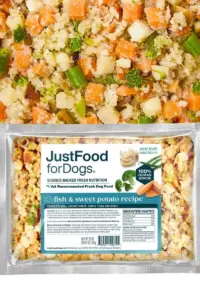
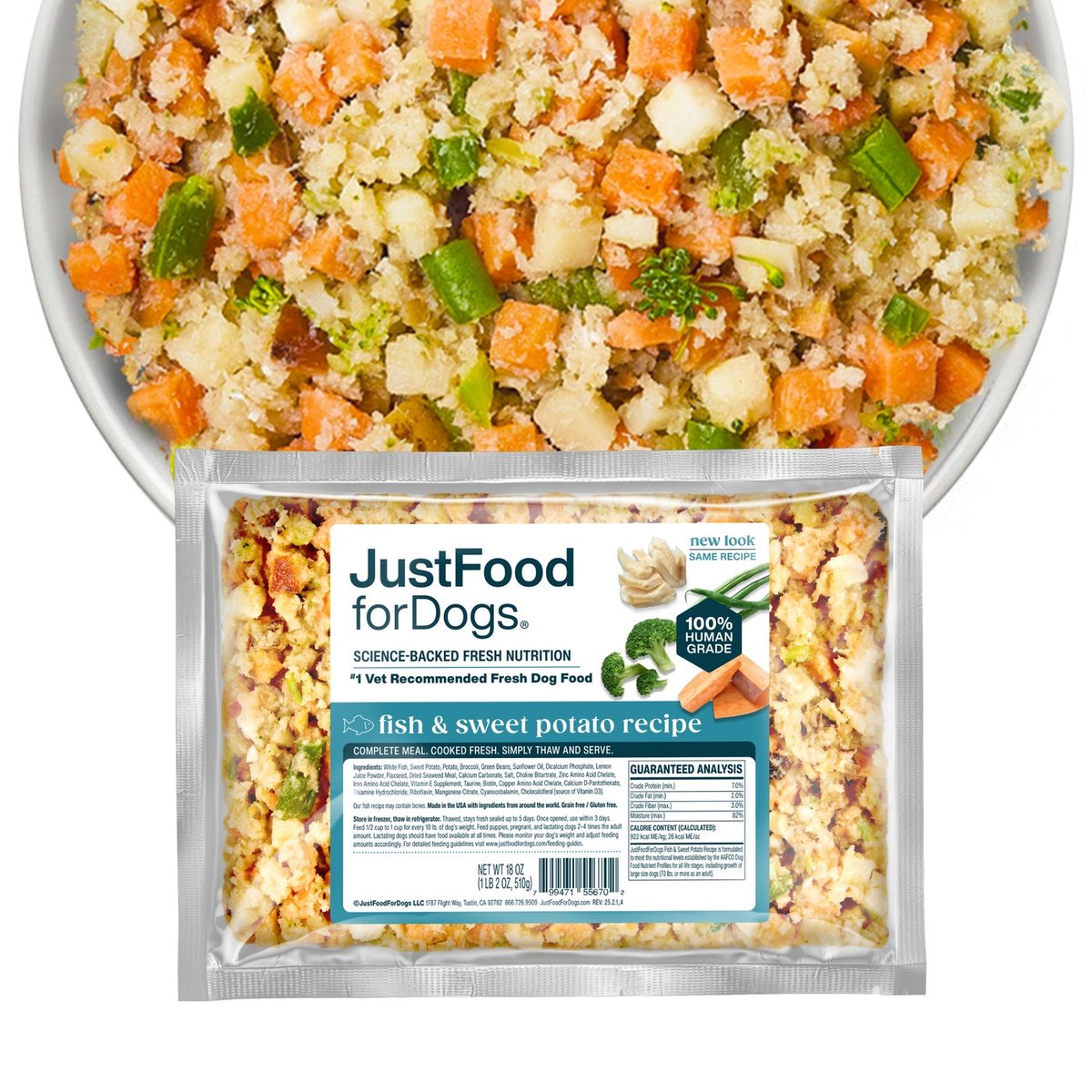
Understanding caloric density is critical when calculating puppy rations. The JFFD Chicken & Rice formula currently provides 1,530 kcal/kg, whereas the Fish & Sweet Potato formula supplies 922 kcal/kg using a white fish blend composed of cod, pollock, and haddock. Because their caloric densities differ significantly, an equal weight in grams of each recipe will deliver vastly different energy amounts. Owners cannot simply swap equal portions of these recipes without inadvertently altering the puppy’s daily caloric intake.
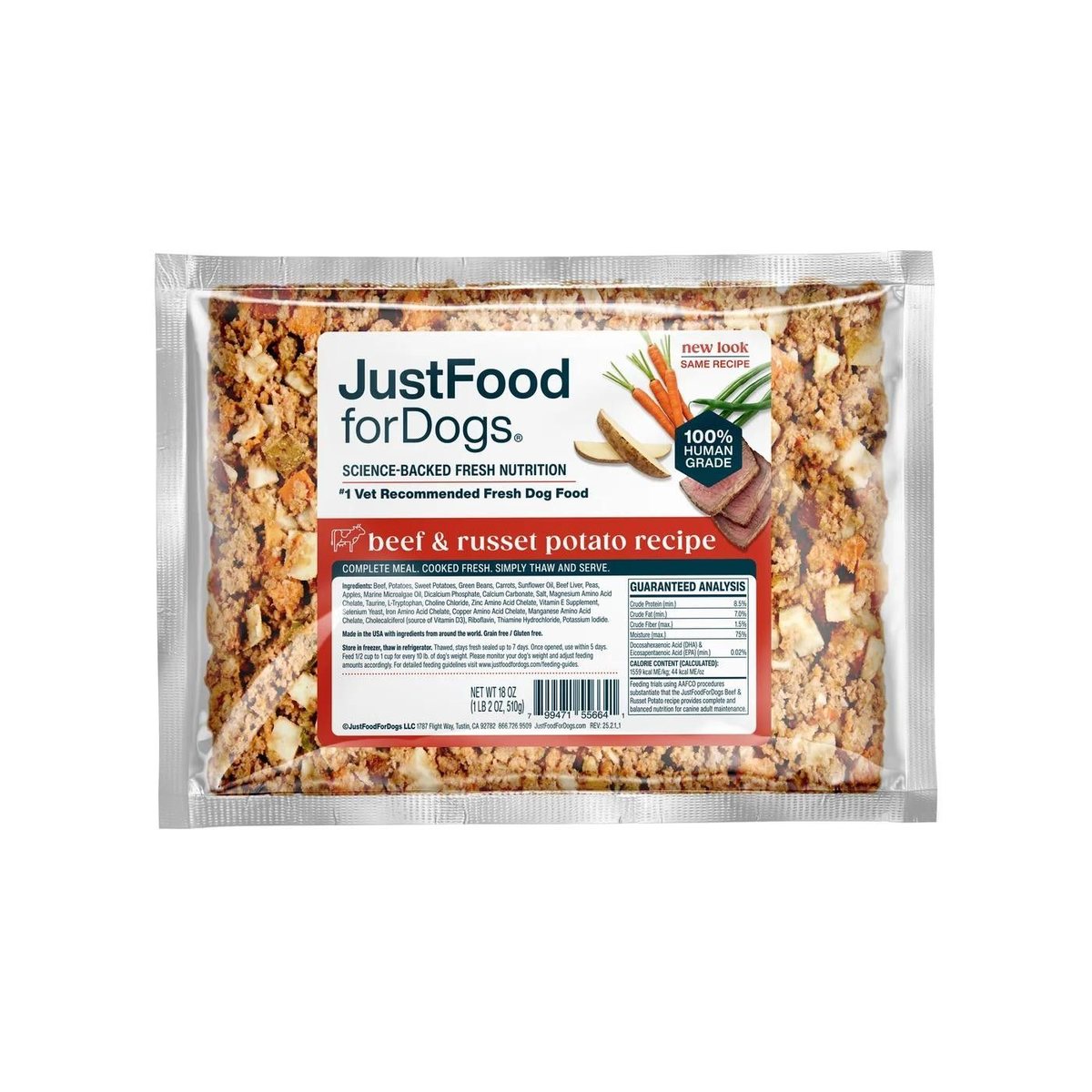
Conversely, adult maintenance recipes such as JFFD Beef & Russet Potato and Turkey & Whole Wheat Macaroni are not formulated for puppy growth. These maintenance diets should not be fed as a puppy’s primary meal plan, regardless of whether the puppy appears large for its age or displays a strong appetite for those specific protein sources.
When establishing a puppy’s dietary regimen, pet owners should consult their veterinarian to establish an accurate current weight, assess rate of growth, determine an appropriate target weight, and review daily caloric intake.
Owners should avoid adding unprescribed calcium, bone meal, or vitamin supplements to complete and balanced puppy foods. Adding external nutritional supplements disrupts carefully balanced nutrient ratios, potentially causing growth harm. Furthermore, a basic home-cooked chicken and rice meal lacks the essential vitamins and minerals present in professionally formulated fresh diets, which rely on precise nutrient blends to meet complete growth profiles.
For puppies with sensitivities to specific poultry proteins, the Fish & Sweet Potato recipe offers a fully qualified growth alternative. However, feeding plans must always calculate portion sizes using the recipe’s unique energy density rather than carrying over portion sizes used for denser diets like Chicken & Rice.
JFFD Choices for Adult Golden Retrievers
As Golden Retrievers reach physical maturity, nutritional priorities shift from supporting growth to maintaining a lean body mass and ideal physical condition. While JustFoodForDogs offers multiple recipes suitable for adult dogs, the formulas are not identical in nutrient delivery or caloric concentration. Owners must evaluate each recipe individually based on their dog’s precise daily energy demands and dietary tolerance.
All four JFFD recipes—Chicken & Rice, Fish & Sweet Potato, Beef & Russet Potato, and Turkey & Whole Wheat Macaroni—can be evaluated for healthy adult Golden Retrievers. However, their distinct energy densities dictate noticeable differences in serving sizes:
- Fish & Sweet Potato: 922 kcal/kg
- Beef & Russet Potato: 1,232 kcal/kg
- Chicken & Rice: 1,530 kcal/kg
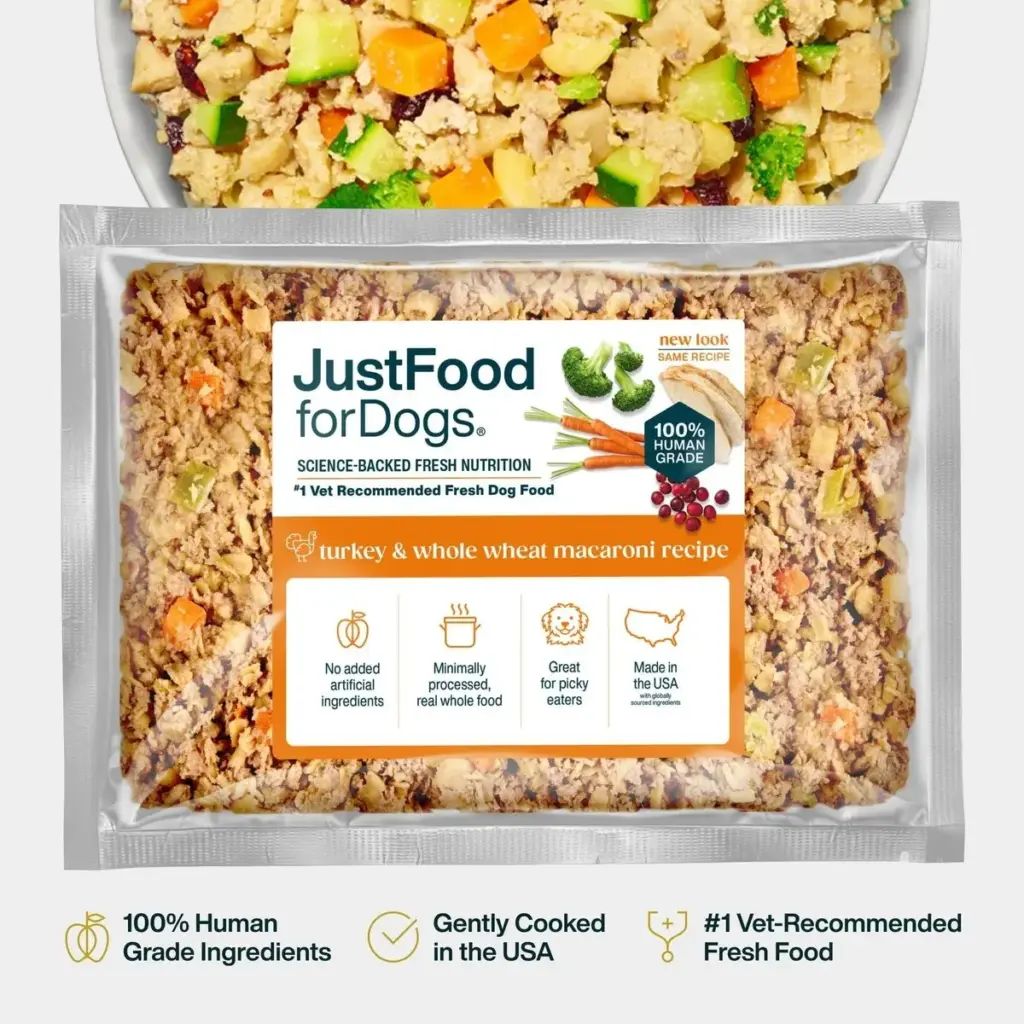
- Turkey & Whole Wheat Macaroni: 1,663 kcal/kg
Because of these differences in caloric density, providing equal calorie amounts requires serving a larger physical volume and gram weight of the Fish & Sweet Potato recipe compared to the other three formulas. Conversely, the Turkey & Whole Wheat Macaroni recipe carries the highest caloric density among the group, meaning it requires a smaller physical weight per meal to achieve the same total energy target. These density variations impact daily package consumption, food preparation volume, and overall routine feeding logistics.
When considering a formula like Turkey & Whole Wheat Macaroni, which carries an adult maintenance designation, owners should examine the complete ingredient list, required daily serving weights, and practical suitability for their dog before transitioning away from an existing food. Although a dog may enthusiastically consume a rich recipe, appetite alone does not indicate correct portioning or nutritional balance.
Dietary switches should be executed gradually over several days to allow the dog’s digestive system to adapt. During any diet transition, both the original and new foods must be weighed precisely to prevent accidental caloric overfeeding or underfeeding caused by mixing products with differing energy densities.
Feeding Senior Golden Retrievers
Aging in Golden Retrievers brings unique nutritional considerations, requiring personalized assessment rather than an automatic restriction of food volume. Senior dogs do not uniformly experience lower energy requirements. While some older Golden Retrievers slow down physically and require fewer daily calories to prevent weight gain, others struggle with muscle loss, diminished appetite, or age-related digestive changes that require higher energy availability or enhanced palatability.
Veterinarians emphasize evaluating body condition score (fat cover over the ribs and waist) separately from muscle condition score (fullness over the spine, skull, and hips). Scale weight alone cannot distinguish between loss of body fat and loss of lean muscle mass. Unexplained weight loss, rapid gain, or visible muscle wasting should prompt a comprehensive veterinary evaluation rather than a simple assumption that physical changes are merely normal signs of aging.
Practical considerations also emerge when feeding aging Goldens, including:

- Evaluating physical comfort while eating, such as whether raising food bowls aids senior dogs experiencing neck or spinal stiffness.
- Monitoring shifts in appetite, interest in food, and chewing comfort.
- Assessing digestive regularity and stool quality following recipe adjustments.
- Adapting package handling and preparation routines to accommodate altered meal schedules or smaller, more frequent feeding sessions.
For many senior dogs, a complete and balanced adult maintenance recipe remains entirely appropriate. The softer texture of fresh food can offer practical benefits for older dogs with dental sensitivities or reduced oral strength; however, a change in food texture is not a substitute for professional dental care, nor does it diagnose the underlying causes of sudden inappetence.
When managing a senior dog’s body weight, owners must preserve proper baseline nutrition. Attempting to reduce calories by significantly diluting a complete diet with non-starchy human vegetables or eliminating protein sources can cause nutrient deficiencies and accelerate muscle loss. Weight-loss strategies for senior dogs must always prioritize maintaining muscle mass and essential nutrient intake.
Portions, Treats, and Healthy Body Condition
Establishing an accurate feeding portion begins by identifying the dog’s daily caloric requirement and applying the recipe’s specific energy density. Portions should be measured by mass using a kitchen scale rather than by volume or visual estimation.
The mathematical formula to determine daily food weight is straightforward:
$$textDaily Mass (grams) = left( fractextMeal Calories TargettextRecipe Energy Density (kcal/kg) right) times 1,000$$

Using a digital kitchen scale guarantees consistent daily portions. Relying on visual estimates or scoop sizes often introduces significant measurement errors, particularly in households where multiple family members share feeding duties.
Can treats come on top of the calculated food allowance?
Treats, training rewards, dental chews, table food, and items used to administer medication must always be subtracted from the total daily caloric budget, rather than added on top of full meal portions. According to standard clinical guidelines from the American Animal Hospital Association (AAHA), complete and balanced dog food should account for at least 90 percent of a dog’s total daily caloric intake, leaving a maximum of 10 percent for external treats and extras. In cases involving medical management, treat allowances may be restricted even further.
To understand how daily caloric allocation works in practice, consider an illustrative daily allowance of 1,200 total calories for an adult dog. Under the 90/10 clinical rule:
- Total Daily Caloric Target: 1,200 calories
- Maximum Treat Allowance (10%): $1,200 times 0.10 = 120text calories$
- Remaining Meal Allowance (90%): $1,200 – 120 = 1,080text calories$
- Complete Food Share: $frac1,0801,200 = 90%text minimum$
- Daily Serving of JFFD Chicken & Rice (1,530 kcal/kg): $left(frac1,0801,530right) times 1,000 approx 706text grams per day$
Pet owners are not obligated to use the full 10 percent treat allowance. If fewer treats are given, the remaining calories should be allocated back to the primary balanced diet. Alternatively, reserving a portion of the dog’s measured daily meal ration to use as training rewards ensures strict adherence to caloric targets without adding unbalanced extras.
For overweight adult dogs requiring weight loss, successful management depends on establishing an appropriate calorie deficit while protecting essential nutrient intake. Choosing a low-fat diet alone does not guarantee weight loss if total caloric intake remains unmanaged, and drastically reducing a growing puppy’s intake based on adult weight-loss principles can severely harm health and development.

Feeding plans should be adjusted over time based on:
- Regular body weight measurements recorded on the same scale.
- Routine veterinary body condition scoring.
- Systematic adjustments to total daily caloric targets as weight goals are met.
Evaluating the overall cost of fresh feeding also requires factoring in exact daily intake requirements alongside safe handling and storage limits. Comparing base package prices without adjusting for caloric density can be misleading; a food with lower caloric density requires purchasing a higher physical volume to meet the same nutritional needs.
Additionally, fresh food handling mandates strict adherence to refrigerator storage timelines. According to standard JustFoodForDogs guidelines, fish-based fresh recipes remain safe in the refrigerator for up to 5 days sealed after thawing, and up to 3 days once opened. Non-fish recipes (such as Chicken, Beef, and Turkey) remain safe for up to 7 days sealed in the refrigerator after thawing, and up to 5 days after opening. Pet owners should establish clear defrosting schedules, use clean utensils, and plan container sizes to prevent food spoilage and waste.
Coat, Skin, and Digestive Concerns
While complete nutrition supports skin integrity and gastrointestinal health, changing a dog’s food should not be viewed as an immediate cure-all for chronic skin or digestive issues. Common clinical symptoms in Golden Retrievers—including chronic itching, recurrent hot spots, persistent ear inflammation, or ongoing loose stools—require professional veterinary diagnostic evaluation rather than immediate assumptions about protein allergies.
When consulting a veterinarian regarding suspected dietary issues, owners should provide a comprehensive dietary history. This record must detail all primary dog foods, commercial treats, dental chews, supplements, human foods, and recent diet changes. Detailed nutritional records offer far more diagnostic value than simply identifying a diet as "chicken-based" or "grain-free."
Switching to a fish-based recipe does not automatically make a diet hypoallergenic, nor does selecting a grain-free recipe inherently resolve skin inflammation. If a adverse food reaction is clinically suspected, a veterinarian may prescribe a strict, controlled elimination trial using specific novel or hydrolyzed protein sources. Unstructured, casual switches between commercial diets fail to isolate trigger ingredients.
During a formal dietary elimination trial, owners must strict follow protocols:
- Feed exclusively the prescribed diagnostic diet for the full duration recommended by the veterinarian.
- Eliminate all non-essential treats, flavored medications, human food scraps, and dental chews.
- Prevent access to outdoor scavenged items or shared food bowls in multi-pet households.
For dogs with sensitive digestion, owners should monitor individual clinical symptoms and stool consistency rather than relying solely on marketing claims. Furthermore, guaranteed minimum crude fat percentages listed on standard packaging labels do not confirm whether a recipe complies with specific clinical fat restrictions required for conditions like pancreatitis. When therapeutic dietary intervention is necessary, pet owners should rely on exact clinical dietary analyses and veterinarian-directed protocols.
Frequently Asked Questions
Can a Golden Retriever puppy eat JFFD adult recipes?
No. Maintenance-only recipes should not serve as a growing puppy’s primary diet. The explicit large-breed growth statements on JFFD Chicken & Rice and Fish & Sweet Potato distinguish them from Beef & Russet Potato and Turkey & Whole Wheat Macaroni, which are formulated exclusively for adult maintenance. Always confirm the life-stage statement on the packaging and calculate portions based on puppy growth requirements.
Does every senior Golden Retriever need fewer calories?
No. Daily caloric requirements depend on individual activity levels, metabolic rate, and underlying health status. While inactive senior dogs may require fewer calories to prevent weight gain, others experience age-related muscle loss or difficulty maintaining weight, requiring steady or increased energy intake. Each senior dog should be evaluated individually.
How often should Golden Retrievers eat?
Meal frequency depends on age, developmental stage, and individual medical needs. Adult Golden Retrievers typically thrive on two meals per day, whereas growing puppies generally require three to four evenly spaced meals to support energy needs and digestion. Always follow specific scheduling recommendations provided by your veterinarian.
What is the most common food allergy in Golden Retrievers?
There is no single food allergy specific to the Golden Retriever breed. While individual dogs can develop adverse reactions to specific proteins or ingredients, breed identity alone does not dictate food sensitivities. Identifying a true food allergy requires a veterinary-supervised dietary elimination trial rather than guessing based on popular breed assumptions.
What should Golden Retrievers avoid eating?
Golden Retrievers must avoid foods known to be toxic to dogs, including chocolate, grapes, raisins, onions, garlic, and products containing the sweetener xylitol. Additionally, growing puppies must avoid diets formulated exclusively for adult maintenance, as these lack the proper nutrient balance required for skeletal development.
How should I choose a dry or fresh food for a Golden Retriever?
Start by verifying the life-stage statement on the packaging, ensuring it includes large-breed growth suitability for puppies or complete maintenance adequacy for adults. Next, evaluate the caloric density, ingredient profile, and practical storage requirements against your dog’s specific health needs and household feeding routine. Whether selecting fresh, wet, or dry formats, dietary choice should be guided by nutritional completeness and individual metabolic requirements.