



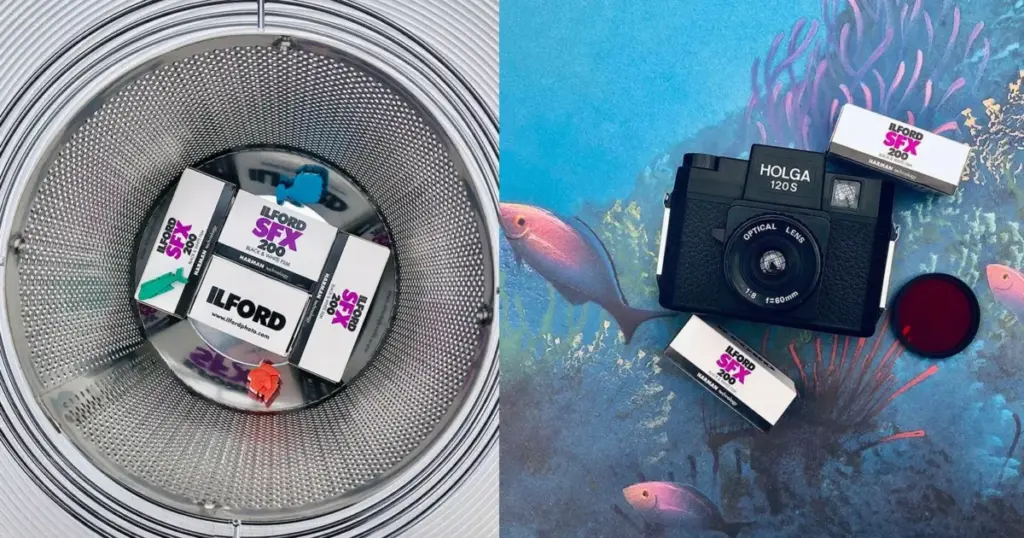
For years, a running joke among the staff at Portland, Oregon’s Blue Moon Camera and Machine claimed that pairing a Holga camera with a red filter and a roll of Ilford SFX was akin to shooting fish in a barrel—an infallible formula where failure was simply not an option. While that characterization leans slightly toward the hyperbolic, it captures a fundamental truth about one of the most creatively versatile and distinctive black-and-white stocks available to analog photographers today.
Ilford SFX is an ISO 200 black-and-white film defined by its panchromatic properties and an extended sensitivity to the infrared spectrum of light. When loaded into a camera and shot under standard daylight conditions without any specialized filtration, it performs much like any traditional black-and-white film, delivering expected tonal gradations and clean midtones. However, the true magic of the emulsion emerges the moment a photographer threads a heavy red filter—such as a Red 25 or Red 29—onto their lens, or takes the leap into true near-infrared territory with an R72 filter. By selectively blocking out portions of the visible light spectrum, these filters allow the film’s unique infrared characteristics to dominate the final image, producing stark, dramatic, and often surreal results.
Though SFX has maintained a dedicated following for decades, it has historically occupied a somewhat niche corner of Ilford’s broader catalog. Its journey has even included a brief brush with extinction; the film was temporarily discontinued in the early 2000s as the company underwent significant financial restructuring. Fortunately, once Ilford emerged from that turbulent transitional period, SFX was successfully revived. Because it rose, Lazarus-like, from a brief retirement, film enthusiasts often playfully refer to it as a "zombie film"—making it a fitting aesthetic choice for Halloween-season shooting. Furthermore, SFX is manufactured in both 35mm and 120 formats, a multi-format flexibility that immediately wins favor among analog shooters who work across different camera platforms.
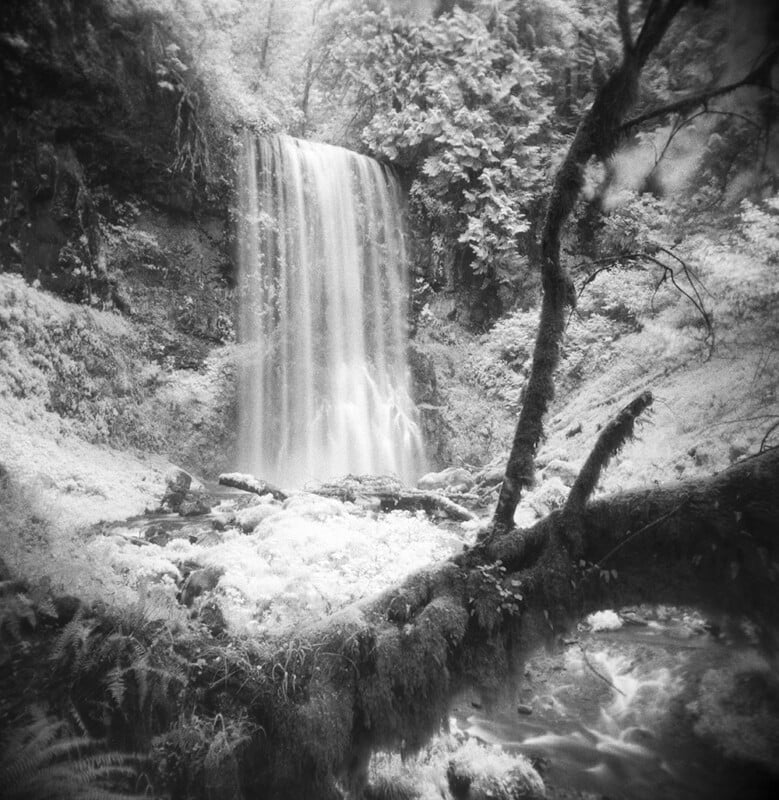
The primary allure of superpanchromatic film lies in its interaction with heavy filtration. When paired with a Red 25 filter, SFX acts as a rapid pathway to dramatic visual storytelling. In landscape photography, the combination suppresses blue light from the sky, rendering clouds in sharp relief against skies that appear deeply ominous and near-black. In portraiture, the film yields striking, high-contrast results characterized by luminous, glowing skin tones and deep, shadowy eyes. Whether applied to vast outdoor vistas or intimate character studies, SFX offers a playful and unpredictable medium for photographers eager to push the boundaries of conventional monochrome imagery.
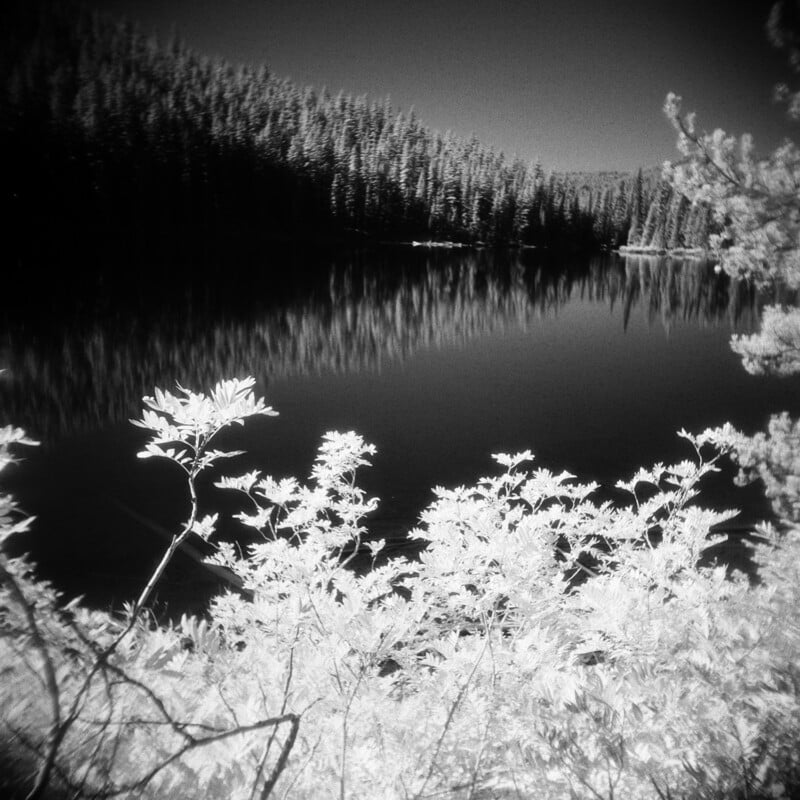
Achieving these striking effects naturally invites a closer examination of the filters required to shape the light. Among the available options, the Red 25 filter remains the most popular recommendation for photographers stepping into the world of SFX for the first time. The reasons for its popularity are practical: Red 25 filters are widely accessible, relatively inexpensive compared to specialized infrared glass, and require a manageable exposure compensation of approximately 2.5 stops. Crucially, a photographer can still see clearly through the viewfinder for composition, framing, and through-the-lens metering. As an added bonus, a Red 25 filter enhances contrast and tonal separation across virtually any standard panchromatic black-and-white film, making it a versatile tool for any analog kit.

Photographers seeking an even more pronounced effect occasionally turn to the Red 29 filter. Offering a slightly deeper red coloration than the 25, the Red 29 demands a minor adjustment of an extra half-stop of exposure compensation and yields an incrementally more intense infrared aesthetic. While the visual differences between the two filters are relatively subtle, and there is no pressing need to exhaustively hunt down a Red 29 if a Red 25 is readily available, it remains a viable alternative for enthusiasts looking to dial up the contrast.

Technically speaking, Ilford SFX is classified as a "near-infrared" film, meaning its light sensitivity extends into the near-infrared portion of the electromagnetic spectrum, running from roughly 750 nanometers out to 1400 nanometers, just beyond the visible red threshold of 700 to 750 nanometers. All commercial infrared films currently available on the market fall into this near-infrared category; even legendary discontinued emulsions like Kodak HIE maxed out around 900 nanometers. This designation occasionally triggers confusion among photographers who misinterpret "near-infrared" to mean "not quite infrared." On the contrary, when matched with the correct filter, SFX is entirely capable of generating remarkable, authentic infrared imagery.
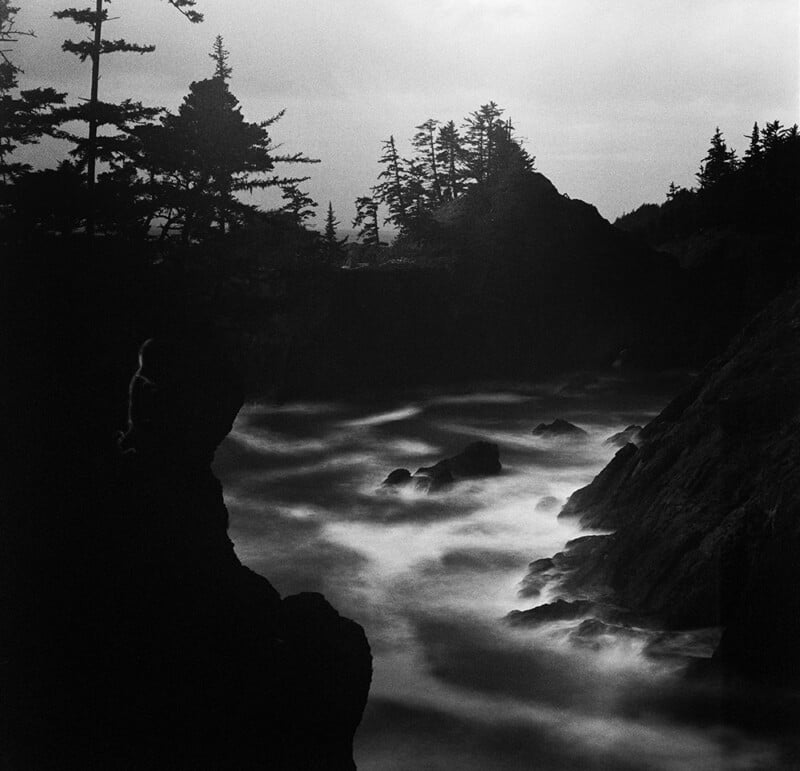
To step fully into the infrared realm, photographers often employ an R72 filter, which blocks out nearly all light wavelengths below 700 nanometers. By eliminating almost all visible light exposure, this filter forces SFX to operate almost exclusively within the infrared spectrum. Navigating an R72 filter, however, requires a deliberate shift in technique regarding exposure, composition, and focusing.
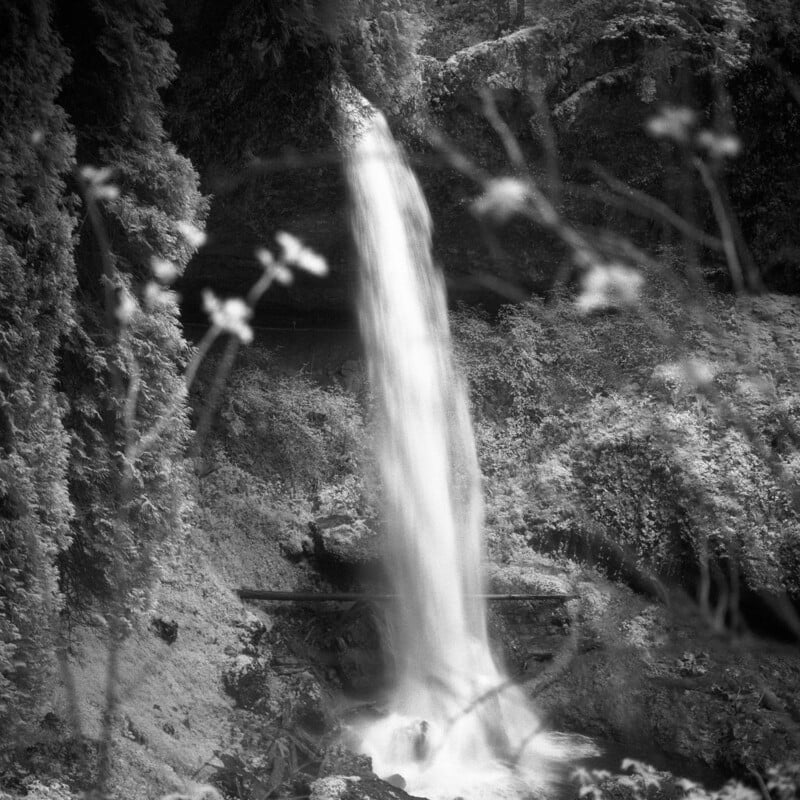
Because an R72 filter is profoundly opaque, it effectively blinds standard in-camera light meters, rendering through-the-lens (TTL) metering unreliable. The standard workflow under these conditions involves taking a baseline meter reading without the filter attached, using a handheld meter, or relying on a smartphone light-metering application, and then manually calculating the necessary filter factor adjustments. Experienced shooters frequently bracket their exposures when working through R72 filters, often capturing frames at plus-six and plus-eight stops over the base meter reading, with the plus-six exposure typically yielding the optimal balance of shadow detail and highlight retention. Because infrared light behaves unpredictably, maintaining a deliberate bracketing strategy serves as a reliable insurance policy against missed shots.
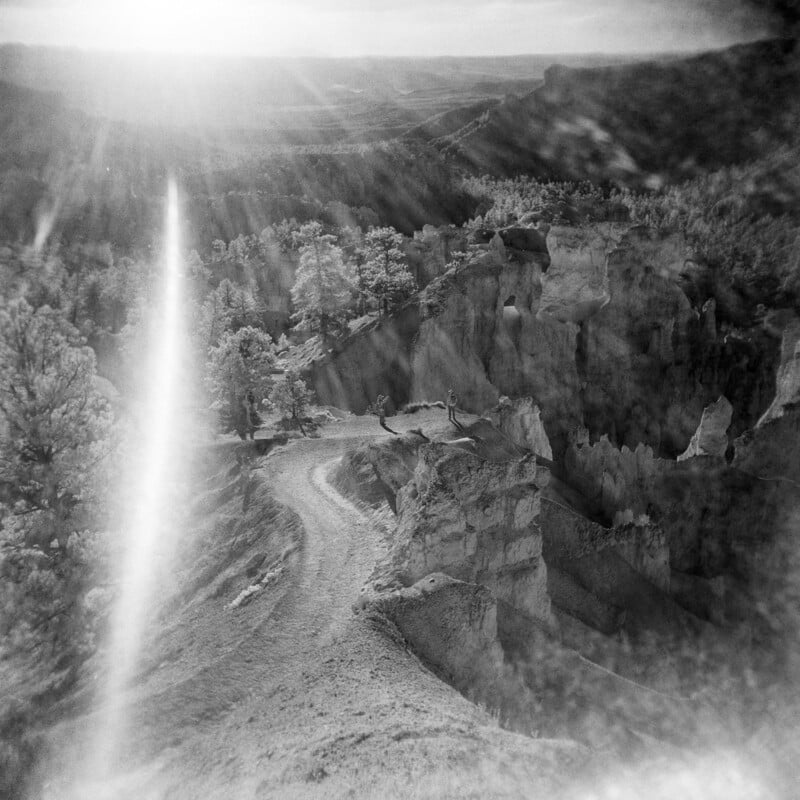
Composing and focusing similarly demand patience. Since looking directly through an opaque R72 filter is virtually impossible, photographers generally work from a tripod, locking in their composition and framing before screwing the filter onto the lens. Focusing requires a similar mindfulness; while stopping down to medium or small apertures provides plenty of depth of field to mask minor discrepancies, shooting wide open at apertures like f/2 or f/2.8 requires extra care. Because infrared light focuses at a slightly different plane than visible light, lenses often feature a small red dot or index mark on the focusing barrel to help operators manually compensate for the shift.
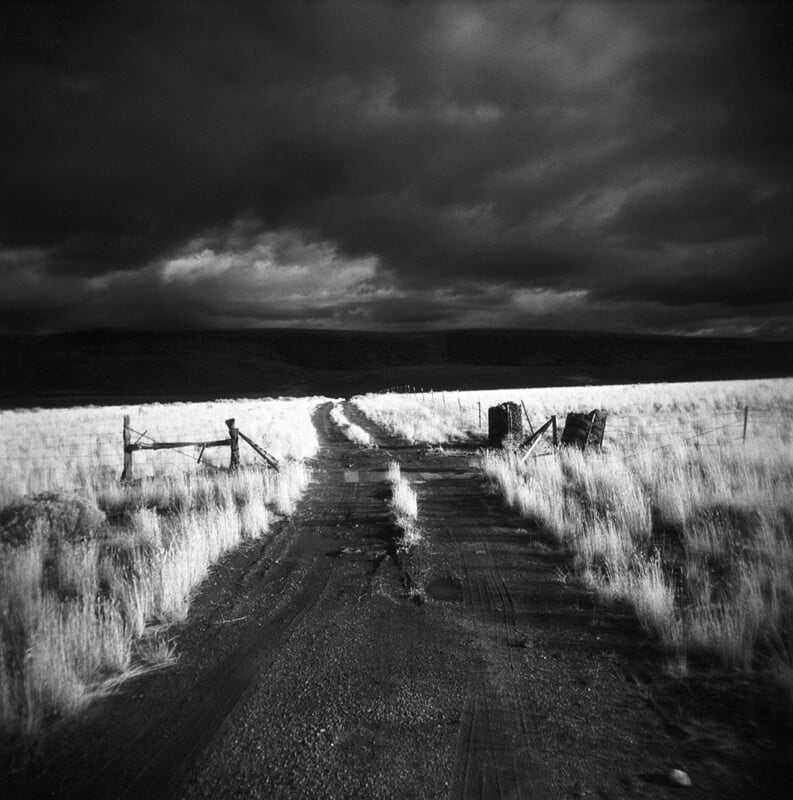
Beyond its infrared capabilities, Ilford SFX possesses distinct physical characteristics that define its aesthetic footprint. Most notably, the film is exceptionally grainy. Its grain structure is significantly more prominent than standard ISO 400 emulsions, and easily out-grains hypothetical high-speed black-and-white stocks. Whether this high level of grit is viewed as an asset or a drawback depends entirely on individual artistic preference. For photographers who embrace raw texture and grit, SFX delivers in abundance; for those who prioritize smooth, clinical tonality, the film calls for a more cautious approach.
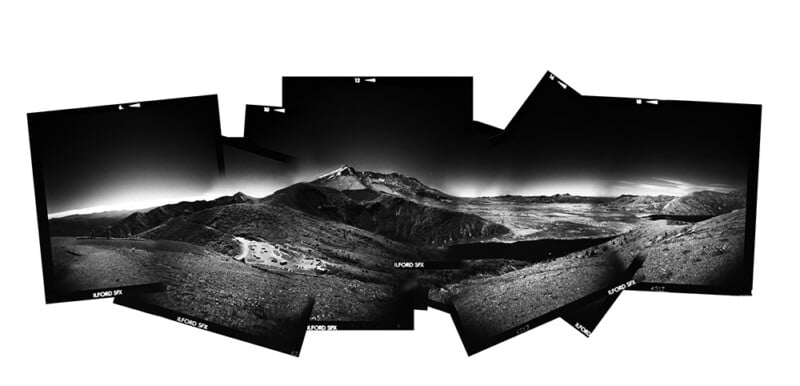
Furthermore, SFX exhibits exceptional natural contrast even when exposed without any optical filters. While pairing the emulsion with red or infrared filtration amplifies this contrast to dramatic extremes, the unassisted film still packs a powerful visual punch. Rather than whispering, SFX shouts—a bold characteristic that has endeared it to generations of experimental photographers looking to render the familiar world in unfamiliar, dramatic ways.
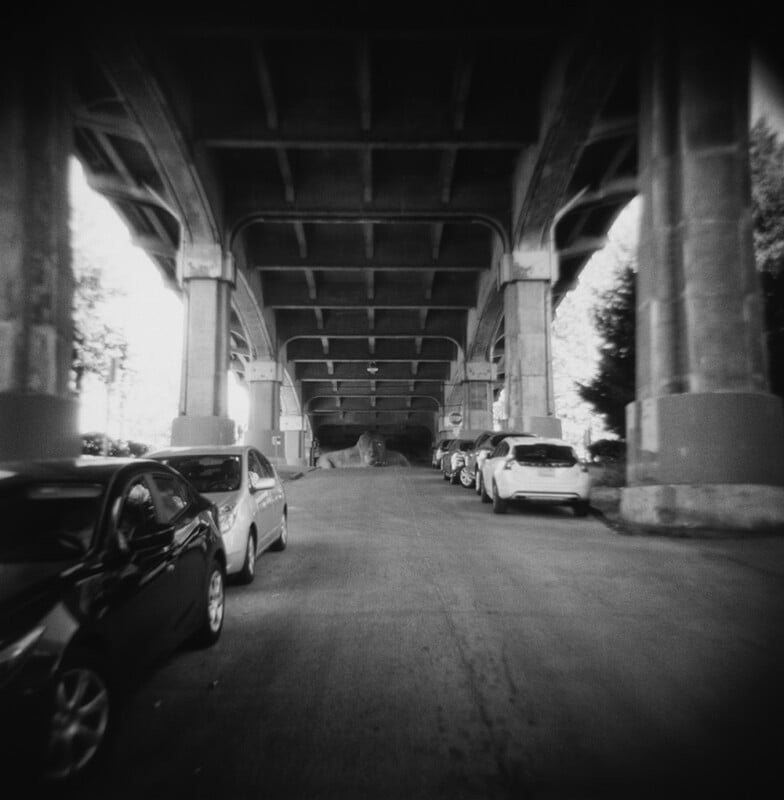
For those ready to explore the medium further, Ilford SFX 200 remains widely available through specialized analog retailers, offering a compelling invitation to step outside conventional visual boundaries and experience light from an entirely new perspective.