

The personal computer industry is facing a severe and persistent downturn, driven by ongoing component shortages and skyrocketing hardware costs that continue to deter buyers across the globe. According to new data released by the International Data Corporation (IDC), worldwide PC shipments dropped dramatically during the third quarter of 2026, marking a punishing continuation of a market contraction that has alarmed industry analysts and manufacturers alike.
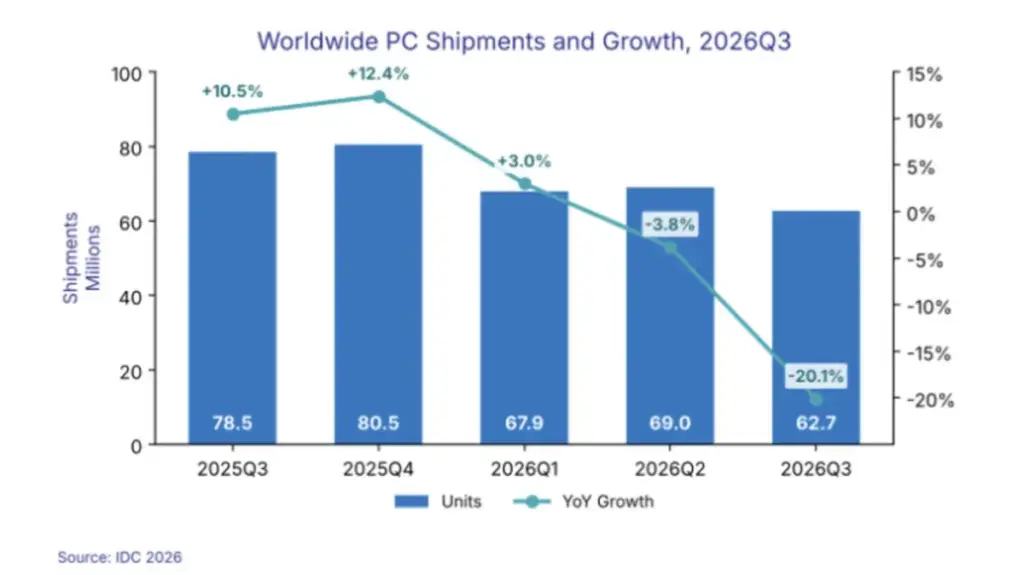
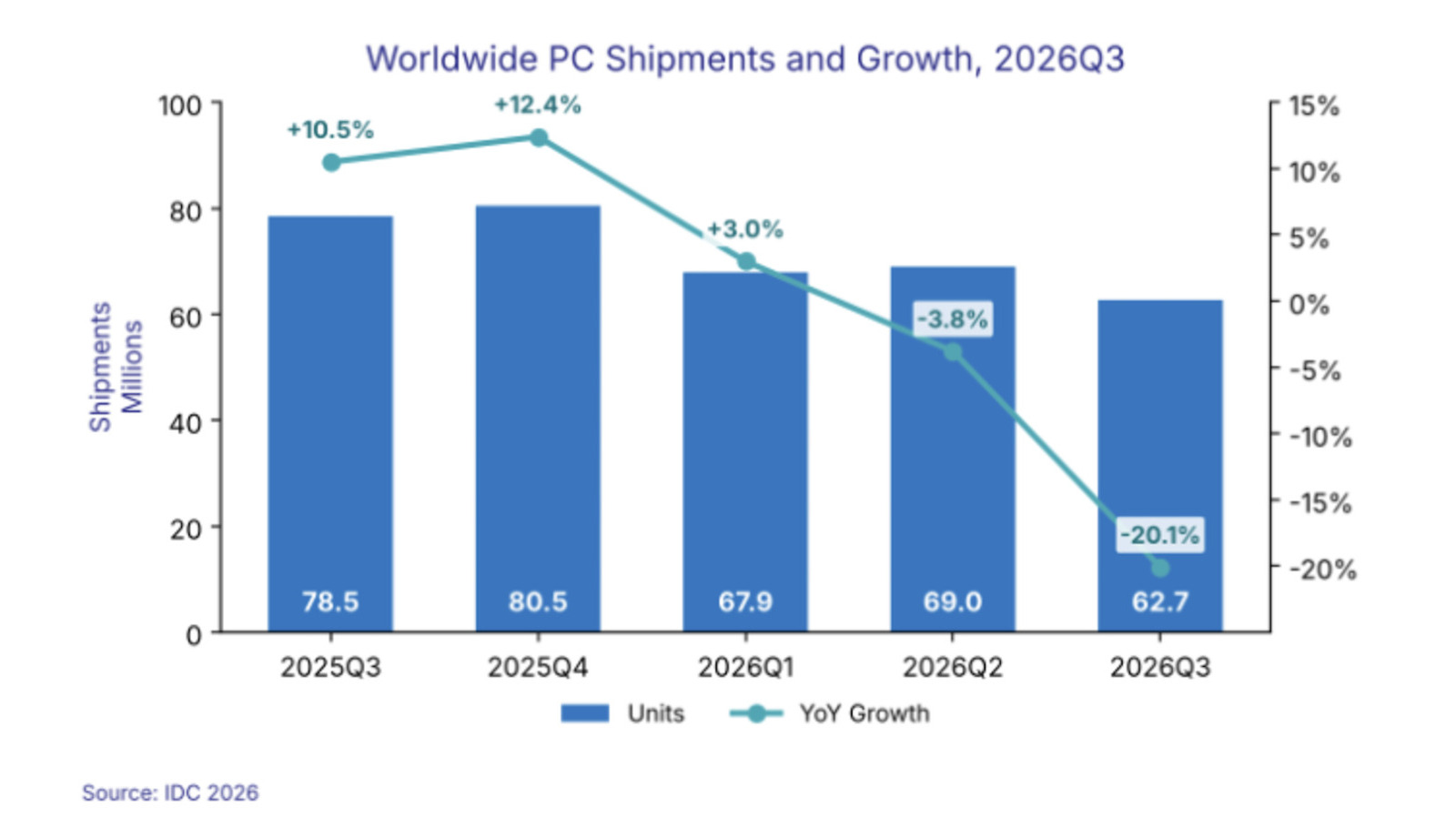
In its latest worldwide quarterly personal computing device tracker report, the IDC revealed that total global PC shipments for the third quarter of 2026 reached 62.7 million units. This figure represents a notable 9.1 percent decrease compared to the previous quarter, when shipments had already begun to slide. More alarmingly, the Q3 total reflects a staggering year-over-year drop of 20.1 percent when measured against the same period in 2025, underlining the depth of the current crisis affecting the technology sector.
Industry experts at the IDC have attributed this sharp decline primarily to persistent supply chain disruptions and elevated retail prices, phenomena that have collectively been dubbed "RAMaggedon" by market observers and consumers. These compounding pressures have severely dampened consumer interest and enterprise purchasing power, creating an environment where acquiring new hardware has become significantly more expensive.
The current contraction is part of a broader, troubling trend that first materialized earlier this year. The IDC reported its initial quarterly decline for PC shipments in nine quarters back in July 2026, a downturn directly triggered by mounting memory component shortages. That sobering milestone arrived just a few months after the organization was forced to cut its overall growth forecast for the entire 2026 PC market, signaling that the supply constraints would not be resolved quickly.
As the industry navigates this difficult landscape, the ripple effects are being felt throughout the supply chain, from component manufacturers to retail distribution channels. Supply chain managers and retail partners are increasingly growing cautious about holding excess stock in an economic climate where inflated prices are actively suppressing consumer demand.
Jitesh Ubrani, the IDC’s research director for consumer devices, elaborated on these shifting market dynamics in the organization’s announcement. Channels are now worried about carrying too much inventory into a market where high prices are suppressing demand, Ubrani noted, explaining the cautious posture currently being adopted by major distributors and retailers.
This cautious inventory management could potentially trigger short-term promotions as retailers attempt to move existing stock, offering a brief window of relief for budget-conscious consumers. However, market analysts warn that these potential discounts will not fundamentally alter the broader pricing landscape. Ubrani cautioned that consumers should not expect pricing anywhere near what it was a year ago, emphasizing that prices will remain elevated for the foreseeable future. With macroeconomic conditions continuing to worsen across many key global markets, the primary risk is that the outlook for the next few quarters may get worse before it finally begins to get better.
For individual consumers currently shopping for new computers or replacement hardware components, the current market reality demands a strategic approach. Industry advisors suggest taking advantage of whatever legitimate deals or promotional discounts can be found in the near term. Otherwise, for those who have the flexibility to wait, the IDC’s overarching recommendation is to hold off on major hardware purchases for at least another year. Market watchers hope that within that timeframe, component manufacturing capacity will catch up with demand, allowing global PC prices to gradually regain some sense of normalcy.