



Updated October 8, 2026, 02:35 PM
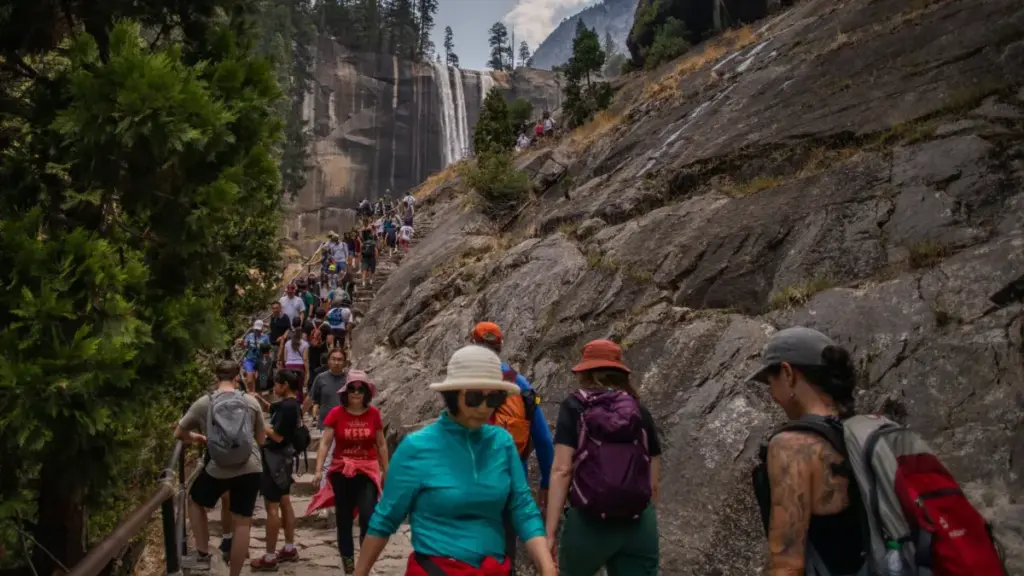
America’s national parks are busier than ever before, drawing millions of travelers seeking solace, adventure, and a connection with the country’s most breathtaking natural landscapes. This unprecedented surge in popularity has forced the National Park Service to implement a patchwork of reservation and permit systems for specific trails, scenic drives, and even entry to entire parks in an effort to curb overcrowding. However, new research indicates that these well-intentioned administrative mechanisms may carry an unintended socio-economic bias, consistently favoring wealthier visitors over others.
Published in the open-access scientific journal Nature Communications, the study examined reservation data across seven major national parks, including Acadia, Glacier, and Rocky Mountain National Parks. The findings reveal a distinct demographic pattern: individuals who successfully booked certain permits months in advance were statistically more likely to originate from wealthier zip codes. The same socio-economic advantage held true for visitors who managed to secure the parks’ most competitive and high-demand reservations.
Jonathan Hughes, an economist with the University of Colorado and the lead author of the study, noted that the mechanisms used to manage heavy visitor traffic have tangible ripple effects on who gets to experience public lands. Speaking on the implications of the research, Hughes pointed out that policy decisions frequently carry unforeseen outcomes regarding public access and recreation.
For his research, Hughes analyzed 11 distinct reservation systems operating within seven national parks between 2021 and 2024. These systems regulated either timed-entry windows, such as the popular system implemented at Rocky Mountain National Park, or vehicle access to specific congested corridors, like the iconic Cadillac Summit Road in Maine’s Acadia National Park. The scope of the study focused strictly on these access permits and did not examine reservations for overnight amenities such as backcountry campsites or developed campgrounds.
The empirical data uncovered notable income disparities among applicants. According to the research, visitors who successfully secured reservations for the most competitive permits hailed from zip codes with median household incomes between 3 percent and 5 percent higher than those who sought less-competitive access times. Furthermore, a temporal bias emerged regarding how far in advance bookings were made. Visitors who booked reservations well ahead of schedule tended to reside in significantly wealthier areas. Specifically, permits purchased six months in advance of a planned trip favored residents living in zip codes with a median income roughly 5 percent higher than the zip codes of visitors who acquired same-day permits.
Hughes readily acknowledged the intense operational pressures facing federal land managers, noting that turning to reservation systems is a logical response to mounting visitor numbers. The National Park Service logged an extraordinary milestone in 2024, recording more than 331 million visits across its vast network—a historic high that has strained infrastructure, parking lots, and natural habitats alike. In a clear signal that the agency is still actively experimenting with the most effective ways to manage heavy crowds without shutting out the public, the National Park Service actually abandoned timed-entry systems this year at some of its most heavily visited destinations, such as Arches National Park in Utah.
Despite the challenges of overcrowding, the trade-offs of rationing access remain a subject of intense debate among conservationists, economists, and park administrators. Visitors who successfully secure permits generally praise the systems because they drastically improve the overall visitor experience by reducing traffic gridlock and overcrowding at iconic viewpoints.
Elaborating on the benefits of these administrative controls, Hughes explained that limiting daily entries allows visitors to experience a genuine sense of isolation and wilderness solitude. Furthermore, natural resources are better protected when vehicles are not overflowing onto fragile roadsides, and wildlife populations experience less chronic disturbance from human traffic, demonstrating why parks initially adopted these protective management tools.
Nevertheless, Hughes emphasized that the foundational mission of the National Park Service requires its sites to be managed for the broad benefit and enjoyment of the entire public, meaning every citizen deserves a fair and equitable chance at access, regardless of their socioeconomic status.
According to the study, several interconnected structural and economic factors likely contribute to the disparities observed in the permit data. One primary driver is occupational flexibility. Individuals who successfully secure permits months in advance often possess greater latitude in their employment arrangements, allowing them to plan recreational travel far ahead of time.
Certain professions allow, or even mandate, that workers schedule extended time off and vacations many months in advance. These positions frequently align with higher-earning sectors of the economy. Conversely, workers in lower-wage professions often experience greater schedule volatility, where work shifts and days off may remain uncertain until just a few days before they occur, leaving them with very little flexibility to plan long-distance travel months ahead.
An individual’s available free time and daily schedule also play a critical role in securing high-demand permits. When a batch of competitive reservations drops online at a precise hour, a permit seeker working an hourly job or a rigid shift might find it impossible to step away from work or sit near a computer to snap up the permits before they sell out.
Compounding this issue is the digital divide and technological familiarity. Higher-earning individuals may possess greater ease and familiarity with navigating the technical intricacies of the federal recreation booking platform, recreation.gov. Additionally, when sheer speed is the determining factor in securing a competitive reservation, individuals who lack reliable, high-speed broadband internet access find themselves at a distinct disadvantage.
Highlighting the nuances of digital access, Hughes noted that available evidence suggests lower-income individuals frequently access the internet primarily through mobile phones rather than traditional desktop or laptop computers, which can introduce friction when trying to execute fast, multi-step online transactions.
Ultimately, Hughes hopes his research will provide valuable empirical insight for park managers as they continuously evaluate, refine, and adjust their permitting frameworks. The central challenge moving forward remains a delicate balancing act: protecting vulnerable ecosystems from destructive overuse while simultaneously fostering equal, democratic opportunities for the general public to recreate on public lands.
In evaluating potential solutions, Hughes suggested that park managers could consider adopting lottery systems for the most competitive reservations to remove the advantages of speed and advance notice, thereby ensuring a more level playing field. However, he was quick to point out that lotteries carry their own inherent drawbacks, most notably that participants often cannot guarantee a visit on the specific date that fits their personal schedules or seasonal preferences.
Will Rice, an associate professor at the University of Montana who specializes in researching equity issues related to public lands recreation and campground reservations, shares a nuanced view of potential management reforms. Rice expresses support for the lottery approach as a viable tool for enhancing fairness, and he also advocates for releasing permits in structured waves rather than all at once. Under this multi-tiered model, blocks of permits would become available in progressive stages, ranging from several months out down to weeks and even days in advance of the travel date.
Observing a growing trend across the federal park system, Rice noted that an increasing number of parks are experimenting with phased release schedules, though he emphasized that effectively communicating these complex timelines to the broader public remains vital to the success of such initiatives.
In addition to structural reforms in permit distribution, Rice has collaborated with the national organization Leave No Trace to develop ethical guidelines for reserving public campsites. These guidelines discourage practices such as attempting to hoard permits or create artificial buffer zones between camping parties by booking multiple concurrent sites. He suggested that similar public education and outreach campaigns could be intentionally designed and deployed to establish cultural etiquette norms around timed-entry permits.
Emphasizing the social responsibility inherent in public land recreation, Rice concluded that a significant element of enjoying these shared spaces involves being considerate of fellow citizens in how one responsibly obtains, utilizes, and cancels permits.