

At first glance, a baked potato may not seem like a dish that requires a great deal of culinary technique. It is often treated as an afterthought, a simple side dish thrown into the oven with minimal preparation. However, professional chefs and test kitchen experts are increasingly pointing out that there is a vast difference between a merely good baked potato and a truly great one. Achieving the pinnacle of potato perfection involves understanding the complex interplay between heat, moisture, internal temperature, and texture. Far from being a mindless process, perfecting this humble root vegetable relies on precise scientific principles that dictate everything from how the skin crisps to how the interior achieves its signature pillowy softness.
One of the most common pitfalls in home potato preparation is the popular habit of wrapping the russets in aluminum foil before baking. While this method does successfully trap moisture to yield a tender interior, it simultaneously creates a major drawback by rendering the skin far too soft, damp, and unappealing. Culinary professionals emphasize that for the most exceptionally crisp skin, the potatoes must be baked directly on the oven grate at a significantly high temperature. To push the texture even further, mimicking the savory appeal of a classic potato chip, cooks are encouraged to thoroughly scrub their russet potatoes, rub the skins generously with vegetable oil, and season them liberally with coarse salt before they ever enter the oven.
Counterintuitively, baking the potato raw and exposed to high heat does not prevent the interior from achieving the desired fluffy texture. According to culinary experts, the secret to a perfectly light and fluffy inside comes down entirely to reaching the correct internal temperature. Specifically, the core of the potato must hit at least 212 degrees Fahrenheit. While it may initially feel unusual or overly meticulous to whip out a digital meat thermometer and take your potato’s temperature, culinary professionals argue that this extra step is a completely fail-safe route to maximizing the overall enjoyment of the dish. It removes the guesswork from baking, ensuring that the potato is thoroughly cooked through without drying out the starchy interior.
The debate over the proper preparation does not end when the potato emerges from the oven. Culinary authorities and organizations have long disagreed on the best method for opening a baked potato to achieve the optimal mouthfeel. Some prominent institutions, including the Idaho Potato Commission, strongly swear that the physical manner in which a baked potato is opened profoundly affects its overall texture. Rather than reaching for a standard kitchen knife to slice the spud open, these traditionalists advocate for using a fork to gently poke a distinct plus sign into the surface of the potato, allowing the steam to escape gently while preserving the integrity of the flesh.
Other high-profile culinary figures take an entirely different, more aggressive approach to opening the cooked vegetable. Beloved food writer and cooking authority Nigel Slater famously prefers to strike the potato with the sheer force of a martial arts expert, treating the final moment of preparation as though it were part of a competitive combat demonstration. In a piece previously published for The Guardian, Slater vividly describes the technique for eager home cooks. He writes to bring your hand down fast and sharp as if you were doing a karate chop, but only hard enough to crack open the potato skin. Whether or not an everyday home cook wishes to attempt this dramatic feat is, of course, literally in the hands of the person baking the potato. Meanwhile, rigorous testing by professional test kitchens has found that a simpler approach—a single fork-pricked line drawn down the length of the spud—is actually the most effective method for letting the steam out without compromising the structure.
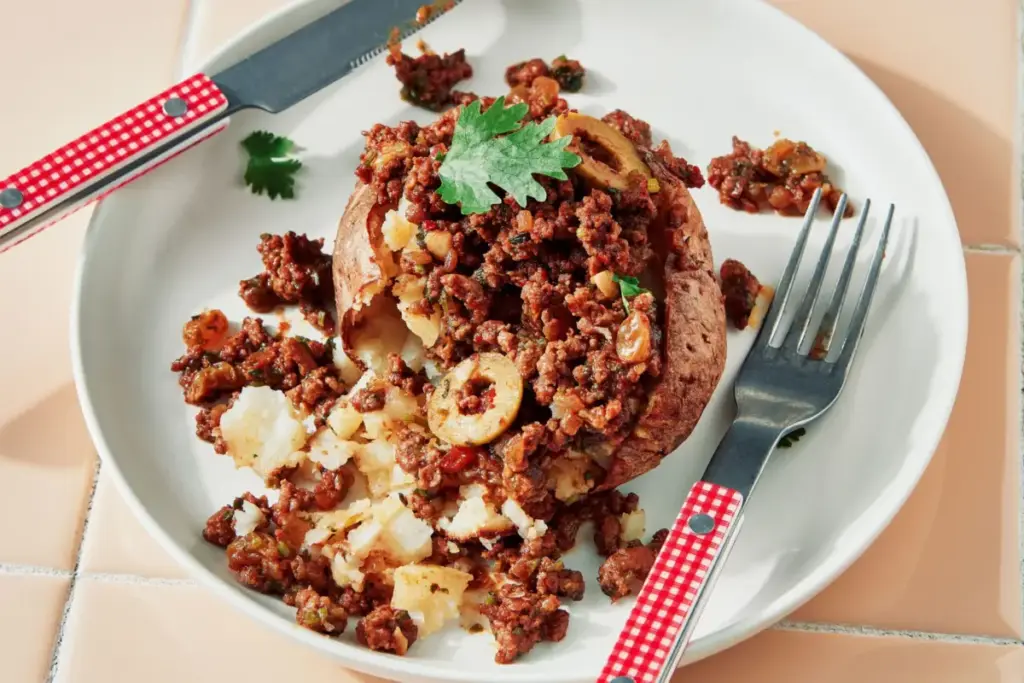
Once the potato has been properly opened and fluffed, it transforms from a simple side dish into a versatile canvas capable of holding an expansive array of fillings and toppings. A baked potato can easily be loaded with anything from classic tuna salad to rich and cheesy baked beans, making it a hearty meal suitable for any night of the week. Culinary editors highlight a more globally inspired variation featuring a picadillo-style mixture made with savory ground beef. This beef filling is packed with beneficial nutrients including protein, iron, and creatine, though alternative proteins like ground turkey or ground chicken work just as nicely for those seeking a different flavor profile or lighter meal.
To elevate the picadillo-inspired filling, the savory meat is adorned with sweet golden raisins and briny stuffed olives, creating a complex balance of flavors. A rich, spicy tomato sauce is then poured over the mixture, allowing the liquid to slowly and steadily soak into the potato itself. This patient absorption process further seasons the potato with every passing minute it rests on the plate. When constructing the sauce, culinary experts stress the importance of using a high-quality chili powder that consists of a well-balanced blend of spices—such as ground chiles, earthy cumin, aromatic oregano, and real garlic—rather than relying solely on plain dried ground chiles, which lack the necessary depth of flavor.
This attention to detail highlights a broader culinary philosophy championed by test kitchen professionals: healthy home cooking does not have to be overly complicated. In fact, culinary experts frequently note that the simpler a dish is, the better it ultimately tastes. Through dedicated food columns and recipe collections, professional kitchen editors continue to share approachable, feel-good recipes designed for any day of the week, helping home cooks rediscover the everyday versatility of humble ingredients. Ongoing nutritional discussions further reinforce that staple ingredients like white potatoes are far from being just empty calories, but are instead surprisingly nutrient-dense foods that fit seamlessly into a balanced, health-conscious lifestyle.