


As another U.S. presidential election cycle reaches its peak, the familiar political sparring match between competing campaigns has fully captured the national attention. For financially independent individuals and seasoned observers, however, the continuous barrage of campaign rhetoric regarding Harris, Trump, and the state of the union is recognized as largely outside individual spheres of influence. While researching candidates and casting a ballot remains a fundamental civic duty, the core philosophy of personal financial management dictates that once votes are cast, attention should immediately return to what can actually be controlled: personal savings, career growth, and mindful consumption.
Yet, amid the standard political posturing, a persistent area of public discourse demands correction: the fundamental understanding of money, the broader economy, and national wealth. Politicians have rarely been celebrated for their technical mastery of complex subjects like science, technology, or macroeconomics. However, the current election discourse has descended into a particularly superficial state, with candidates attempting to manipulate undecided voters in crucial swing states by promoting narratives based on emotional appeals rather than sound economic principles.

A striking example of this phenomenon is the opposition’s persistent framing of the current economic climate as a "bad economy" under the incumbent administration. In stark contrast to this political narrative, objective economic data reveals that the United States economy is exceptionally robust, boasting historic lows in unemployment. It is difficult to conceptualize a more fundamentally sound economic environment, and economists generally view the recent wave of higher inflation not as a sign of systemic failure, but rather as an indicator that the economy was operating at a high velocity, necessitating the application of monetary policy brakes through higher interest rates.
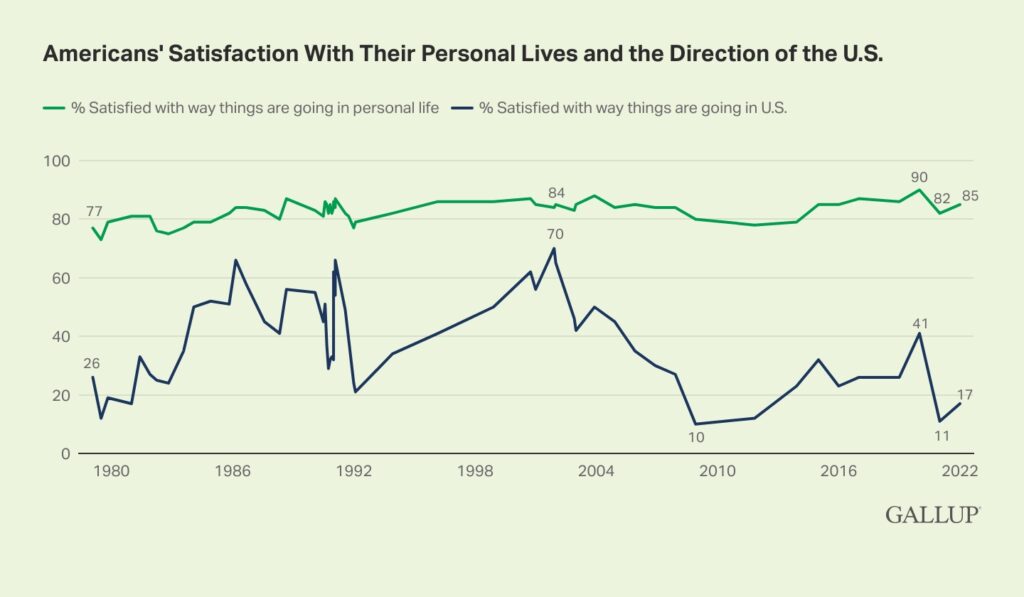
Despite these positive underlying fundamentals, public perception remains deeply pessimistic. Data from recent Gallup polling illustrates a profound disconnect between personal financial reality and broader economic sentiment. While the vast majority of respondents report that their personal financial situations are good, only a small fraction believe the national economy is performing well. Statistically, this widespread disconnect is a mathematical impossibility; if the majority of individuals are thriving financially, that condition is the exact definition of a healthy economy. Analysts note that this widespread misperception correlates closely with the amplification of economic misinformation across modern social media platforms.
While it is entirely possible to ignore political speeches and focus on personal endeavors, economic literacy remains a powerful asset. A precise understanding of how economic systems operate directly influences financial decision-making and long-term wealth accumulation. Examining the prevailing economic myths promoted by political figures highlights the significant gap between campaign rhetoric and economic reality.
The first major fallacy centers on the degree of presidential control over the national economy. During periods of economic contraction, opposition parties routinely attribute downturns to the sitting president, while incumbent administrations eagerly claim credit for periods of expansion. In reality, the American economy is far too vast and decentralized for any single political figure to control or even significantly steer. Operating as a massive engine that converts labor and raw materials into goods and services, the U.S. market accounts for roughly a quarter of global economic activity, meaning it remains heavily influenced by the remaining seventy-four percent of economic output generated across the globe.
Economic cycles of expansion and contraction are primarily driven by human behavior—periods of irrational exuberance and greed, such as the housing boom leading up to 2007, followed by inevitable corrections of extreme fear and pessimism, as seen during the financial crisis of 2008 through 2012. While fiscal policies, tax rates, and regulatory frameworks established by the government do play a role, the effects of these policies are often delayed and unpredictable. Drawing a direct causal line between a current president and day-to-day economic conditions ignores the reality that governments merely adjust the rudder while the broader economic vessel navigates vast global currents.
A closely related misconception involves the belief that the executive branch directly controls interest rates. Campaign rhetoric frequently features expressions of sympathy for middle-class Americans grappling with higher borrowing costs for mortgages, credit cards, and auto loans, accompanied by promises to force interest rates downward. Some political figures have even gone so far as to challenge the institutional independence of the Federal Reserve board members, suggesting executive oversight over monetary policy. In functional economic practice, monetary policy serves as a delicate gas and pedal mechanism for the economy. When growth slows and unemployment rises, lowering interest rates stimulates job creation and asset values. Conversely, when the economy overheats, rising inflation requires higher rates to stabilize the system. Centralizing this authority within the political executive branch, as seen in historical international examples, typically leads to severe monetary instability.
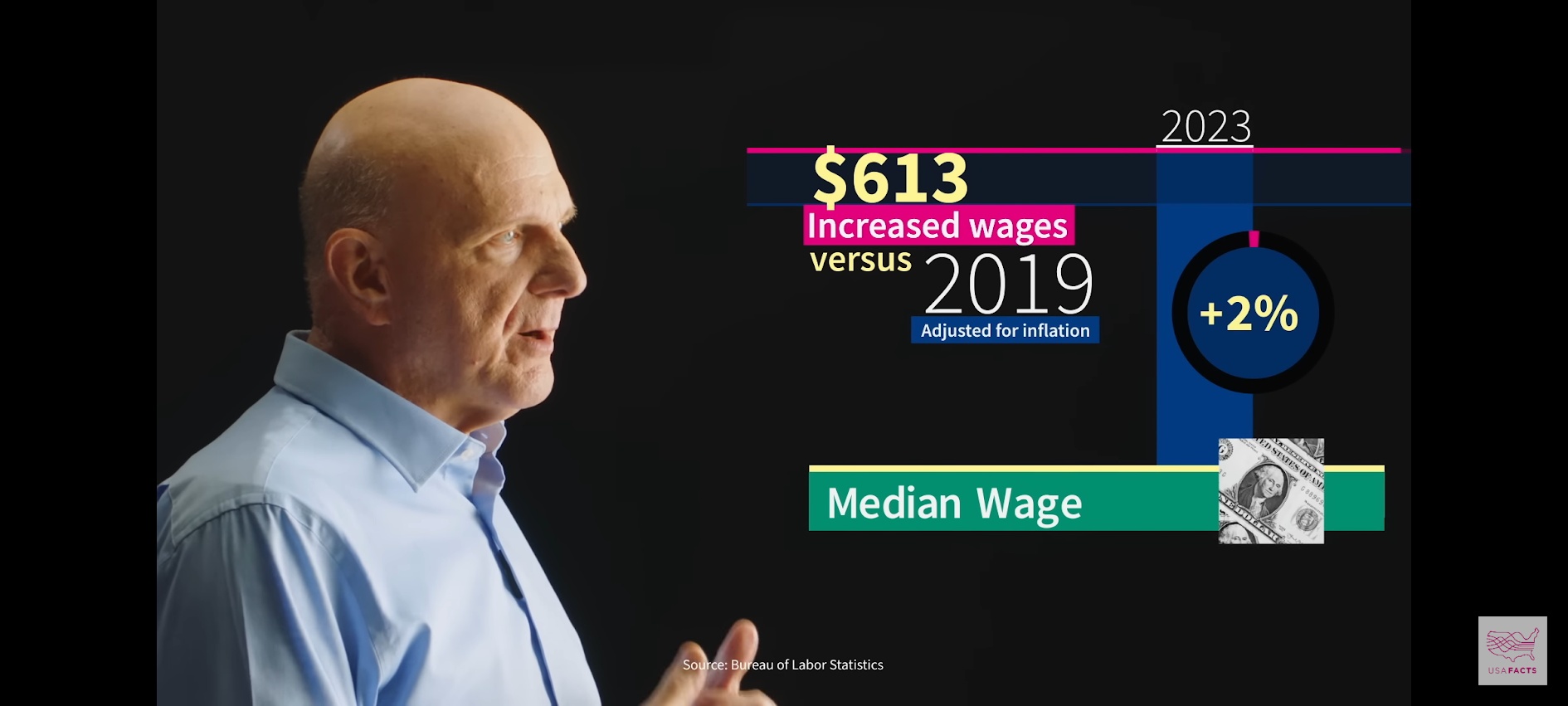
The debate surrounding inflation and its impact on household budgets represents another persistent political talking point. Following the global disruptions of the COVID-19 era, the economy experienced a period of rapid inflation driven by supply chain bottlenecks, factory closures, remote work shifts, government stimulus spending, and low interest rates. These pressures have largely subsided, bringing inflation back down to historically low levels. More importantly, comprehensive wage data demonstrates that overall compensation has outpaced inflation over the long term. Since 2019, consumer prices have risen significantly, but aggregate wages have risen at an even faster rate, leaving the average worker in a stronger financial position overall. Despite this data, political campaigns continue to treat inflation as an acute crisis, frequently making unrealistic promises to artificially roll back price levels and convincing voters that rising wages and prices inherently signal economic distress.
Accompanying the discourse on inflation is the frequent attribution of rising prices to corporate greed and profit-hoarding. While market systems grant business owners the freedom to set prices according to supply and demand, competitive pressures generally prevent arbitrary price inflation. Comprehensive analyses from independent economic researchers and journalistic outlets, including recent studies on grocery pricing, indicate that major retail sectors have not captured extraordinary windfall profits from the post-pandemic inflationary period.
Housing affordability presents a distinct set of challenges where political solutions often miss the mark. Over the past decade, housing prices and rental rates have outpaced general inflation and wage growth. While higher interest rates were intended to cool the housing market, they have instead created a dual burden of elevated purchase prices coupled with high borrowing costs for prospective buyers. Proposed political remedies, such as first-time homebuyer subsidies or targeted interest rate interventions, frequently risk exacerbating demand without addressing the root cause. Economists and housing experts widely agree that the sustainable solution lies in significantly increasing housing supply by removing regulatory hurdles, streamlining permitting processes, modernizing building codes, and reforming zoning laws that restrict residential development.
Similarly, political fixation on gasoline prices often overlooks broader consumer trends and historical context. When adjusted for inflation, gasoline prices remain comparable to historical averages seen decades ago. Furthermore, household expenditures on fuel represent a relatively minor fraction of overall disposable income, even when accounting for vehicle efficiency. With the accelerating transition toward electric vehicles—where total cost of ownership, maintenance requirements, and purchase prices for used models increasingly rival or exceed traditional combustion vehicles—the political emphasis on fossil fuel pricing mirrors debates over obsolete technologies of past eras.
Ultimately, contemporary political discourse surrounding the economy frequently emphasizes anxiety over metrics that have long since crossed the threshold of basic sufficiency. While income inequality remains a legitimate challenge requiring progressive taxation to maintain social cohesion, the pursuit of endless wealth accumulation yields diminishing returns regarding human well-being once basic security and comfort are achieved. As voters navigate the final weeks of the election cycle, recognizing the limits of political influence over macroeconomic trends allows individuals to tune out campaign noise, cast informed ballots, and refocus their energy on personal agency and long-term financial stability.