
When industry veteran Cyed Adraincem talks about his forthcoming restaurant, Hoy, he does so with the kind of hands-on, relentless dedication that defines the grueling realities of the hospitality business. Speaking recently about the final stretches before opening, Adraincem apologized for occasionally stumbling over his words, explaining that he had been up since four in the morning to personally wash the sidewalk outside his soon-to-be-opened establishment. He wanted to beat the morning foot traffic and ensure the exterior reflected the care going into the project.
That same meticulous attention to detail has characterized the entire buildout of Hoy, a high-energy Filipino street food concept designed to evoke the bustling atmosphere of a Manila night market. Though the restaurant has yet to officially open its doors to the general public, it has already generated substantial buzz across New York City’s crowded culinary scene. Through a distinct, off-kilter visual aesthetic, clever nods to contemporary pop culture, and transparent, behind-the-scenes glimpses into its research and development process, Hoy has established a distinct presence before serving a single skewer.
The venture represents the latest installment of "Getting on the Map," a series presented by Apple Maps exploring how creative bars and restaurants navigate marketing themselves in saturated urban markets. To understand the strategy and vision driving Hoy, Adraincem recently discussed the restaurant’s conceptual roots, its striking design choices, its merchandising plans, and how the team is managing unexpected regulatory hurdles ahead of its debut.
Bringing Filipino Street Food and American Diner Energy to New York
For Adraincem, who has spent nearly two decades working in the restaurant industry—including the past seven years entrenched in New York City’s cocktail bar scene—Hoy is an opportunity to fill a noticeable gap in the local dining landscape. He notes that Filipino cuisine remains largely underrepresented in the city, a reality he hopes to change by offering an accessible, vibrant, and approachable format.
Hoy’s menu centers on classic Filipino street food staples designed for speed and casual enjoyment. Diners can expect barbecue skewers, lumpia, and a selection of distinctive sandwiches. The menu is intentionally straightforward and unpretentious, relying on refined culinary techniques that Adraincem and his team have honed throughout their careers. In the current economic and cultural climate, Adraincem believes New York diners are searching for dining experiences that are casual, affordable, and grounded in good food and drinks rather than formal pretension.
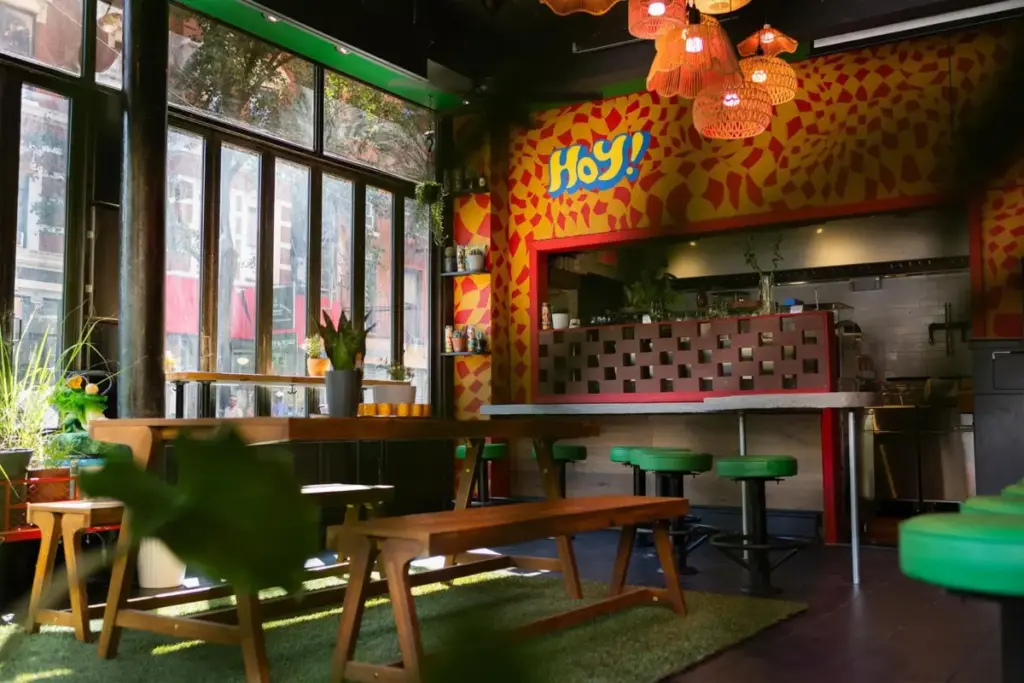
The physical space itself is heavily inspired by American diners—a personal favorite of Adraincem’s—blended with the high-energy, community-driven ethos of a Manila night market. Because the restaurant operates on a counter-service model, the layout is entirely front-facing. An open kitchen ensures that the dynamic interaction between the culinary team and the customers remains central to the experience. The energy is designed to flow continuously through the room, creating an immersive, conversational environment that mirrors an authentic street market affair.

Crafting a Visual Identity Grounded in Culture and Pop Culture
The branding and visual identity of Hoy are the result of a close collaboration between Adraincem and his cousin, the well-known Los Angeles-based Filipino American artist Kristofferson San Pablo. Together, they sought to capture the vibrant, visually stimulating atmosphere of a Manila night market without letting the design become overwhelming.
The walls feature patterns derived from some of the oldest traditional textile designs originating in the Philippines, offering a subtle yet striking nod to cultural heritage. Shelves throughout the dining room mimic the ubiquitous sari-sari stores found on street corners across the Philippines, which typically operate out of owners’ homes to sell everyday essentials. These shelves are stocked with personal items, including well-worn cookbooks passed down through Adraincem’s family alongside volumes from local culinary favorites, establishing the conceptual baseline for the restaurant’s offerings.
Crucially, the branding deliberately steers clear of predictable visual tropes often associated with Filipino culture, such as the prominent display of the sun and stars from the national flag or traditional barong tagalog garments. Instead, the team leans into idiosyncratic cultural touchstones like the traditional novelty "barrel man" carvings—souvenirs historically crafted by lower-income artisans to generate income—as well as imagery celebrating the water buffalo (carabao) and rural life. Adraincem views these elements as opportunities to introduce lesser-known aspects of Filipino culture to a broader audience while celebrating the inherent humor and playfulness embedded in the tradition of the gag gift.
This cultural framework is paired with a sharp, rapid-fire approach to contemporary pop culture. Well before opening, the team has rolled out humorous visual pieces, including a sports-themed graphic referencing a high-profile basketball moment. According to Adraincem, San Pablo’s familiarity with internet culture allows them to conceptualize and execute these timely pieces almost instantaneously, keeping the brand agile and culturally resonant online.
Merchandising as Culture and Community
Beyond the physical dining room, Hoy is launching with an ambitious merchandise program. While many hospitality ventures introduce apparel and branded goods only after establishing financial stability and brand recognition, Adraincem is leaning into merch from day one.
Drawing from his seven years behind the bar, Adraincem observed firsthand how rapidly hospitality merchandise flies off shelves, with service industry workers frequently wearing gear representing other beloved establishments. Recognizing that modern consumers increasingly use clothing and accessories to signal their personal tastes and community allegiances, he views merchandise as both an essential branding tool and a valuable secondary revenue stream.

The initial rollout will feature standard items such as t-shirts, hats, and tote bags, with plans to expand into seasonal offerings, house slippers, and potentially custom interpretations or keychains of the iconic barrel man. Furthermore, much of the merchandise line is designed to be collaborative, serving as a platform to support other independent artists and local creatives from New York and Los Angeles.
Designing on a Budget and Navigating Opening Delays
Bringing Hoy to life has required extensive logistical legwork, particularly given the current economic climate for small businesses. Adraincem notes that managing the buildout has meant conducting rigorous price comparisons across major retailers and suppliers to stretch resources, alongside integrating personal knickknacks and art pieces contributed by friends and family.
To enhance the atmosphere and mimic the tropical climate of the Philippines, the restaurant incorporates substantial greenery, including a custom pot pond constructed from a large planter. In a corner building benefiting from abundant natural light, the team is actively cultivating lemongrass, a calamansi tree, and labuyo chiles, blurring the line between indoor dining and an urban garden.
Despite meticulous planning, the restaurant’s official launch has faced unexpected hurdles. Due to ongoing processing issues with the New York City Department of Buildings regarding gas line approvals, Hoy is currently unable to operate its kitchen equipment onsite.
Rather than remaining entirely shuttered while awaiting regulatory clearance, the team has pivoted to engage with the local community immediately. Hoy has opened its doors to host a series of pop-up residencies, partnering with Queens-based Filipino pastry vendor Arellano Pandesal to offer baked goods while the Hoy team manages the beverage program. Additionally, the space is set to host a recurring community marketplace showcasing local vendors, friends, and family, providing an alternative avenue to build anticipation and welcome the neighborhood into the space.