


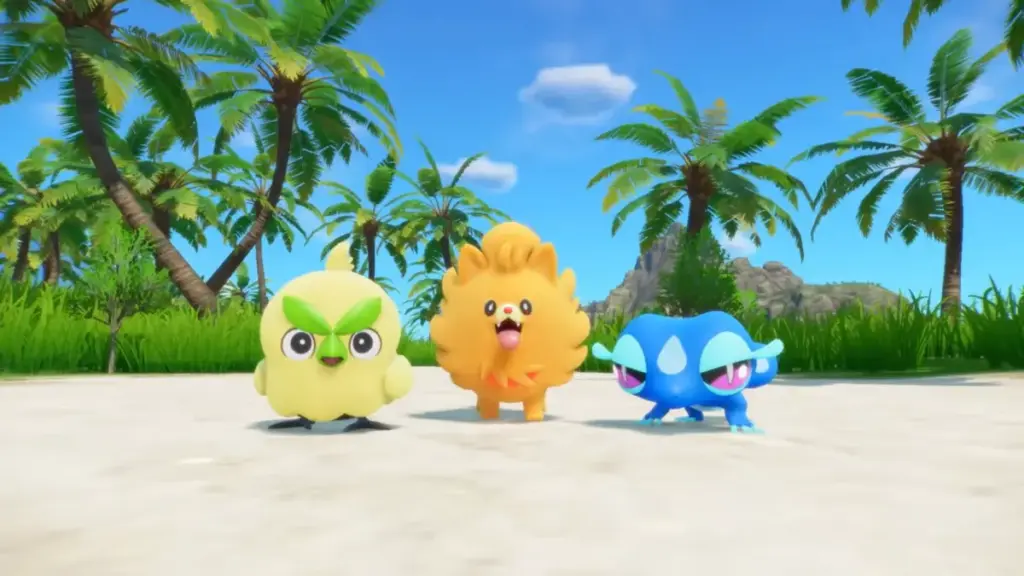
If the latest wave of gaming leaks and community rumors holds any weight, the next mainline entries in the Pokémon franchise—tentatively referred to as Pokémon Winds and Pokémon Waves—might shatter records by introducing a staggering 300 new creatures. While these whispers from the community should be approached with a healthy degree of skepticism, the prospect alone has sparked intense debate among veteran players and long-time fans who wonder whether the franchise’s traditional creature-collecting formula can sustain such an unprecedented expansion.
Should the rumors prove accurate, an influx of 300 additions would mark the largest single-generation expansion in the history of the Pokémon series. Historically, the number of new monsters introduced with each generation has fluctuated significantly. The franchise began in 1998 with the original 151 Pokémon, a roster that many fans still consider the gold standard of creature design. Subsequent generations introduced varying counts: Generation 2 added 100 creatures in 2000, Generation 3 brought 135 in 2003, Generation 4 introduced 107 in 2007, and Generation 5 reached a then-high of 156 new monsters in 2011. Following generations saw more conservative additions, with Generation 6 introducing 72, Generation 7 adding 88, Generation 8 contributing 96, and the most recent Generation 9 expanding the Pokedex by 120 monsters.
Within the community, opinions are sharply divided. Some fans view the prospect of 300 new creatures as an exciting, massive sandbox for exploration and discovery, while others worry it would oversaturate an already dense compendium of digital monsters. Adding further nuance to the leaks is the suggestion that this sizable figure might not represent 300 entirely original species. Instead, the total could encompass a mix of brand-new Pokémon alongside a substantial number of alternate forms, regional variants, and evolutionary branches.

From a gameplay perspective, however, the distinction between a totally original creature and a regional variant often blurs. A prominent example is Alolan Ninetales, which differs fundamentally from its standard counterpart in appearance, typing, moveset, and strategic application. Whether utilized on a player’s active roster or faced across the battlefield against an opponent, variants demand the same level of strategic memorization and tactical adjustment as entirely new species. Consequently, whether these additions come in the form of completely original designs or alternate variants, the sheer volume remains daunting.
300 New Pokémon Is Way Too Many New Pokémon
The logistics of managing such a massive roster raise questions about how modern Pokémon games are structured. For decades, the core identity of the franchise centered around the traditional six-Pokémon party. Players would carefully select six monsters, level them up from the very first gym badge all the way through the Elite Four, and forge long-term bonds over the course of an extensive role-playing journey. There was an intentional sense of friction and commitment to swapping party members out, requiring players to weigh their options seriously before introducing a new creature into the active lineup.
That foundational philosophy began to shift with the release of Let’s Go, Pikachu! and Let’s Go, Eevee!, which allowed players to access and swap their party Pokémon from virtually anywhere at any time. More recently, real-time mechanics in titles like Legends: Z-A actively encouraged fluid team management on the fly, gradually eroding the traditional permanence of the six-Pokémon party. Introducing 300 new creatures into the upcoming Winds and Waves games would likely accelerate this shift, further pushing players toward revolving-door roster management rather than deep, singular attachments.

Beyond gameplay mechanics, questions of creative longevity continue to follow the franchise’s design team. Critics within the community frequently point to increasingly literal or unconventional design inspirations from recent generations—such as inanimate objects or food-based creatures—as evidence that the developers are stretching for ideas. While design preferences are subjective, community data underscores a lingering attachment to older generations. A comprehensive survey conducted by a prominent YouTuber involving more than 26,000 respondents revealed that over 50 Pokémon received zero votes in popularity polls, with only a single monster from the original 151 failing to secure a single vote. Meanwhile, the most beloved creatures in the franchise’s history continue to heavily skew toward earlier generations.
For every celebrated recent design like Dragapult, players encounter simpler concepts like Applin or Flamigo. While a more modest generation size of 100 to 150 new Pokémon allows developers to focus on quality and distinct identity, stretching that capacity to 300 new designs strains credulity, even for a studio as experienced as Game Freak.
Ultimately, the ideal size for a new generation remains difficult to determine without official details regarding the structure, region, and core mechanics of Pokémon Winds and Waves, which The Pokémon Company has kept closely guarded. Until official announcements shed light on what the next generation holds, the idea of managing 300 new entries serves as a fascinating glimpse into the logistical and creative challenges facing modern monster-collecting RPGs.