

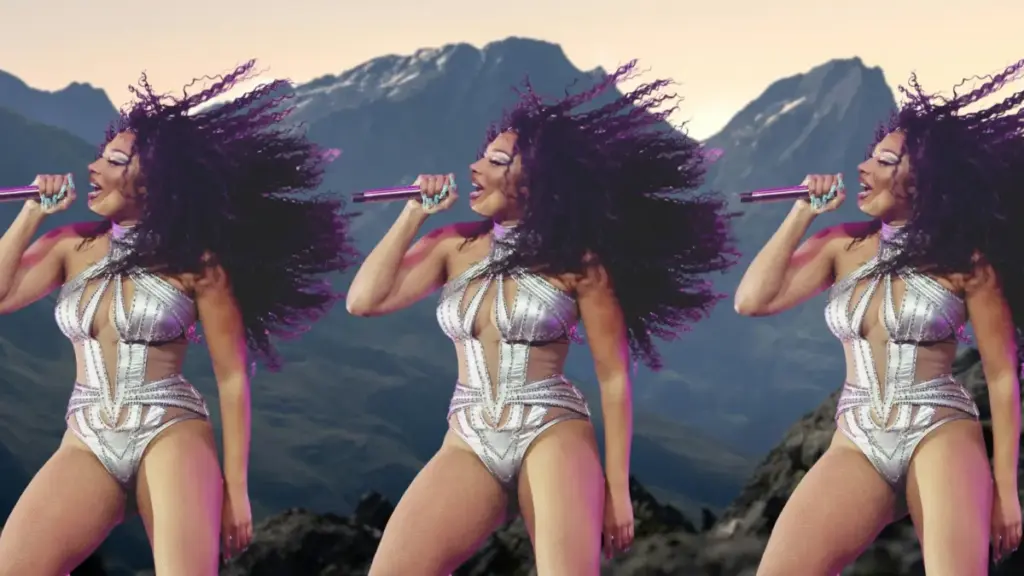
The Grammy Award-winning rapper and fitness enthusiast Megan Thee Stallion has recently turned a classic bodyweight exercise into a viral fitness talking point, jokingly suggesting a rebrand for a longtime staple of Pilates and barre classes: the donkey kick. In a recent interview, the artist highlighted the movement as her go-to exercise for keeping her glutes strong, playfully dubbing them "stallion kicks." While the cultural endorsement has brought fresh attention to the exercise, fitness professionals point out that the burn is entirely serious, offering distinct biomechanical benefits that translate directly from the gym floor to rugged outdoor trails.
The donkey kick is hardly a recent invention, having spent decades as a foundational movement in various group fitness environments, barre studios, and core-conditioning classes. However, its newfound popularity highlights a broader conversation about how targeted, isolated muscle work can support complex athletic endeavors. As a certified personal trainer, integrating this movement into routine programming has long served as an effective method for isolating stubborn posterior chain muscles. For hikers, runners, and backpackers navigating uneven terrain, understanding why the donkey kick is so effective—and how to apply it properly—can transform lower body preparation and enhance movement efficiency on the trail.
How to Do the Donkey Kick
The mechanics of the donkey kick are refreshingly straightforward, requiring minimal space and zero complex machinery. Practitioners begin on all fours, positioning the wrists directly beneath the shoulders and the knees aligned beneath the hips to establish a stable table-top base. From that starting position, one leg is lifted straight up while maintaining a 90-degree bend in the knee. With deliberate control, the leg is lowered back down to the starting position to complete a single repetition.
While traditional programming often relies on standard sets of ten repetitions per leg, exercisers can scale the volume depending on their current fitness level and endurance goals. Completing a set number of repetitions on one side before switching to the opposite leg constitutes a single set, with many fitness routines incorporating roughly three sets to achieve optimal muscle activation. Because the movement relies purely on body weight and gravity, maintaining strict control throughout each phase of the repetition is essential for keeping the target muscles engaged without relying on momentum.
Why Donkey Kicks Are So Excellent for Glute Isolation
At first glance, the donkey kick appears deceptively simple compared to heavy compound lifts. Yet, this simplicity is precisely what makes it unique. Many lower-body exercises traditionally relied upon to build lower body strength—such as squats, lunges, step-ups, and deadlifts—are inherently multi-joint movements that recruit a wide array of muscle groups simultaneously. While compound movements are vital for overall functional strength, they also involve significant contributions from the hamstrings and quadriceps, which can sometimes overshadow the glutes.
In contrast, the donkey kick keeps the knees bent throughout the movement, a mechanical adjustment that largely takes the hamstrings out of the equation and forces the glutes to shoulder the burden. This isolation targets the posterior muscles intensely. The gluteus maximus, which is the largest muscle in the buttocks, handles the heavy lifting required to elevate the leg against gravity, while the gluteus medius and gluteus minimus—two smaller muscles located along the side of the hip—engage to provide critical pelvic stability. Furthermore, the core musculature must remain tightly braced to prevent the torso from swaying or arching, ensuring that the movement originates strictly from the hip joint. Practitioners can easily identify correct form by the intense tension localized directly in the glutes.
Despite these distinct advantages for isolation, fitness experts note that the donkey kick does possess certain limitations. Primarily, it is not a highly functional movement in the traditional sense, meaning the trajectory of the exercise does not closely mirror the movement patterns humans use in daily life or standard athletic competition. Movements like step-ups, squats, and lunges mimic the functional biomechanics of climbing uphill, descending steep inclines, or stepping over obstacles on a trail, whereas a donkey kick is executed in a quadruped position.
Additionally, introducing significant external load to the donkey kick presents a challenge. While exercisers can modify the intensity by placing a dumbbell behind the knee, looping a resistance band above the joints, or strapping on ankle weights, piling on heavy external resistance is mechanically awkward. Consequently, athletes eventually reach a ceiling regarding the amount of progressive overload they can achieve with donkey kicks alone, meaning the exercise works best as a complementary tool rather than a primary driver of maximal strength.
The Best Way for Outdoor Athletes to Benefit From Donkey Kicks
For outdoor enthusiasts who spend their weekends running, hiking, or backpacking, the donkey kick serves a very specific and highly valuable purpose when integrated correctly into a training regimen. Rather than relying on the movement to build massive raw strength, fitness professionals recommend utilizing the donkey kick as a dynamic activation tool during a warm-up.
According to guidelines from organizations like the International Sports Sciences Association, incorporating isolated activation movements into a pre-workout routine helps "wake up" dormant muscle groups, allowing for more effective recruitment during subsequent physical activity. For hikers and runners preparing to tackle steep mountain paths, performing a few sets of donkey kicks before hitting the trail ensures that the glutes are fully engaged and ready to fire from the very first step.
When the glutes are properly activated prior to outdoor exertion, athletes can generate more forward propulsion with each stride, distributing the workload more evenly across the lower body. This improved muscular recruitment can help alleviate undue stress on the knees, potentially reducing the risk of common overuse injuries and persistent joint discomfort. Additionally, the motion provides a gentle, dynamic stretch to the hip flexors—a muscle group that tends to become chronically tight due to prolonged sitting and modern sedentary habits. By loosening the hip flexors and priming the posterior chain, outdoor athletes can navigate changing elevations and uneven terrain with greater comfort, stability, and endurance.