



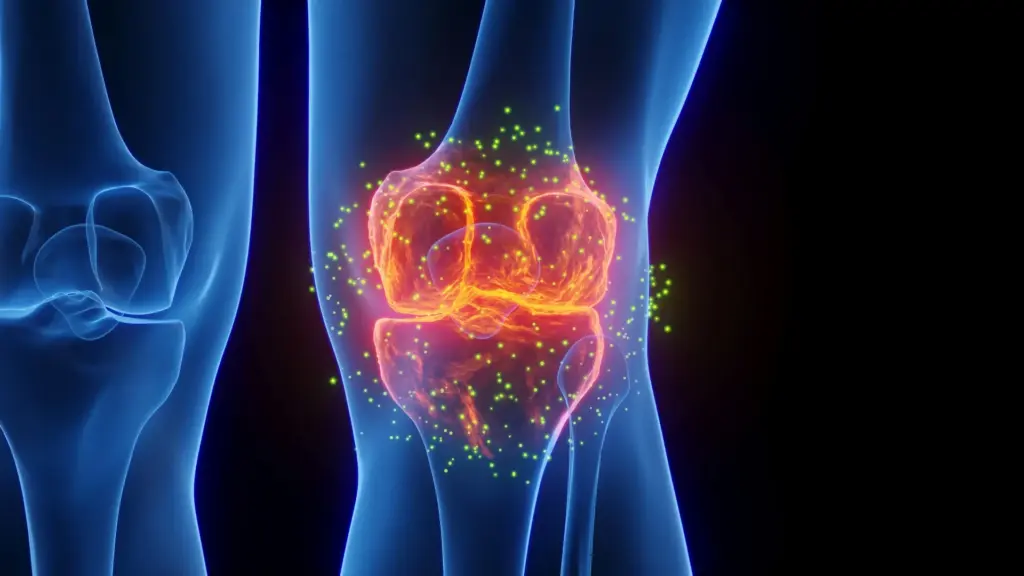
For millions of people living with osteoarthritis, the daily reality is defined by persistent pain, joint stiffness, and an increasing difficulty in performing everyday activities. Traditional therapeutic approaches—ranging from over-the-counter pain medications and nonsteroidal anti-inflammatory drugs to intra-articular steroid injections—frequently offer only temporary relief. While these common interventions may blunt symptoms for a limited period, medical science has long recognized that they fail to halt the underlying structural damage driving the disease forward. As cartilage continues to wear away, patients often face a deteriorating quality of life that can ultimately culminate in major surgical interventions, including total joint replacement procedures.
A breakthrough study conducted by researchers at Yale University, however, points toward an entirely different medical paradigm. In findings published in the journal Bioactive Materials, a team of scientists has demonstrated that lacosamide—an established medication primarily prescribed for epilepsy—can serve a dual purpose in treating osteoarthritis. According to the study, the drug is capable of actively reducing joint pain while simultaneously reversing cartilage damage. Crucially, the regenerative and analgesic effects were found to be exceptionally robust when the medication was delivered directly into the targeted joint space using a specialized, temperature-sensitive hydrogel system.
Why Osteoarthritis Damages Cartilage
Osteoarthritis is frequently described in colloquial terms as a simple condition caused by wear and tear, but this characterization overlooks the complex biological mechanisms that govern joint health. Within a healthy human joint, specialized cells known as chondrocytes maintain the structural integrity of cartilage through a continuous, delicate balancing act. These cells constantly synthesize new tissue matrix while simultaneously managing the removal of older material.
In an osteoarthritic joint, this vital equilibrium is severely disrupted. Cartilage begins to degrade at a pace far outstripping the body’s ability to replace it. Over time, the protective cushioning thins and eventually disappears entirely, allowing the underlying bones to grind directly against one another. As the disease advances, patients experience mounting pain, loss of mobility, and structural deformation, frequently leaving joint reconstruction or total knee replacement as the only remaining options.
"There is a major unmet need in osteoarthritis," says the study’s principal investigator, Chuan-Ju Liu, PhD, who serves as the Charles W. Ohse Professor of Orthopaedics & Rehabilitation at Yale. "We need therapies that don’t just mask pain but actually change how the disease progresses."
At present, no pharmaceutical product approved by the U.S. Food and Drug Administration possesses the dual capability of halting osteoarthritis pain while simultaneously preventing or reversing the structural breakdown of articular cartilage. The research spearheaded by Liu suggests that medical science may finally be closing in on a single therapeutic strategy capable of addressing both critical aspects of the disease simultaneously. By repurposing an existing medication and combining it with an advanced biomaterial designed to retain the drug within the joint cavity, the research team has outlined a pathway toward preserving joint tissue while providing sustained, localized pain relief that avoids the necessity of addictive opioid medications.
A Protein Linked to Pain and Cartilage Loss
The focal point of the Yale investigation is Nav1.7, a specific protein that functions as a voltage-gated sodium channel. These channels operate as microscopic gates embedded within cell membranes, where they play a fundamental role in generating and propagating electrical signals throughout the body. For years, the scientific and medical communities believed that Nav1.7 operated primarily within specialized peripheral nerve cells tasked with transmitting pain sensations upward to the brain. Because of this localization, the protein has long been a subject of intense interest for pharmaceutical development aimed at novel pain management solutions.
However, more recent investigations conducted by Liu and his research team uncovered a surprising and previously unappreciated biological role for the protein. The scientists discovered that Nav1.7 is also highly active inside chondrocytes—the exact cells responsible for manufacturing and maintaining cartilage tissue.
In a healthy joint, Nav1.7 expression remains relatively quiet and subdued. In contrast, within an osteoarthritic environment, the activity of the protein increases substantially. The researchers found that this pathological upregulation does more than simply amplify pain signaling along nerve pathways; it actively drives chondrocytes toward a catabolic state, pushing them to dismantle the very cartilage they are programmed to preserve.
This dual involvement makes Nav1.7 an unusually promising and unique therapeutic target. Because the protein influences both the subjective sensation of pain and the physical, destructive deterioration of joint architecture, inhibiting it could theoretically neutralize two distinct facets of the disease with a single mechanism.
"When Nav1.7 becomes dysregulated, it contributes to both joint degeneration and pain," Liu explains. "Our findings suggest that Nav1.7 is a dual-acting target. By blocking this single protein, we can potentially quiet the pain nerves and tell the cartilage cells to not only stop breaking down but start repairing as well."
Epilepsy Drug Shows Potential for Cartilage Repair
Rather than attempting the lengthy and unpredictable process of discovering and developing an entirely new molecular entity from scratch, Liu’s team elected to test existing pharmacological agents known to inhibit sodium channels. Among the candidates evaluated, lacosamide emerged as the standout compound. It produced powerful biological effects at significantly lower concentrations than older medications in the same chemical class, while simultaneously demonstrating a much more favorable safety profile.
Lacosamide is widely recognized in clinical practice as an established treatment for managing epilepsy seizures. However, the Yale researchers discovered that its regenerative impact on cartilage was heavily dependent on precise dosing parameters.
The relationship between concentration and effect was not linear; simply increasing the amount of the drug did not yield better outcomes. At an optimal, low concentration, lacosamide successfully stimulated chondrocytes to synthesize the structural proteins necessary for building new cartilage matrix, while concurrently suppressing the biochemical pathways responsible for tissue degradation. When the concentration of the drug deviated outside this narrow therapeutic window—becoming either too high or too low—the beneficial effects rapidly diminished.
"This tells us the system is finely tuned," Liu notes. "There is an optimal range where the drug helps restore balance without overcorrecting. What stood out was not just its effectiveness, but how little of a dose was needed."
Further biochemical analysis revealed that lacosamide also alters intercellular communication within the joint environment. The medication stimulated the release of two important signaling proteins: HSP70 and midkine. Heat shock protein 70 (HSP70) assists cells in managing cellular stress and actively supports tissue repair mechanisms, whereas midkine plays a critical role in modulating inflammation and shielding joint tissue from progressive degeneration. Together, the upregulation of these proteins appears to cultivate a biological microenvironment that strongly favors the preservation and restoration of healthy cartilage.
"These proteins create a supportive environment for cartilage maintenance," Liu explains. "They allow the effects of the drug to extend beyond individual cells and influence the entire tissue."
Smart Hydrogel Keeps the Drug Inside the Joint
While oral administration of lacosamide proved effective during preliminary preclinical testing, taking the medication by mouth introduces systemic circulation. Drugs distributed throughout the entire body via the bloodstream carry an inherently higher risk of causing unwanted side effects in unrelated organ systems. To circumvent this limitation, the researchers turned their attention to intra-articular injections, a method that places the therapeutic agent directly into the interior of the affected joint.
Yet, this approach presented a significant physiological hurdle that needed to be overcome. "The knee joint, which is also the most common location for osteoarthritis, naturally acts like a leaky bucket," Liu says. "The body’s drainage system can clear out liquids injected into the knee within hours."
To counteract this rapid clearance and keep the medication localized for an extended period, the Yale team engineered a specialized hydrogel composed of Collagen II. This advanced biomaterial exhibits thermoreversible properties, meaning its physical state changes in response to temperature variations. The hydrogel remains in a liquid state while contained inside a cool syringe, allowing for smooth and easy injection. Once delivered into the warmer environment of the human joint, it rapidly transitions into a firm, cohesive, jelly-like matrix.
Inside the joint cavity, the gel functions as a local pharmacological reservoir. It traps the lacosamide molecules, preventing them from being immediately washed away by synovial fluid drainage, and gradually releases the drug into the surrounding tissue over a span of several weeks.
"The hydrogel acts as a local reservoir," Liu says. "It holds the drug in place in the location it is needed most and releases it slowly over time. It transforms a daily pill into a long-lasting, local treatment that stays active for a month or longer."
In the course of preclinical evaluations, a single intra-articular injection of the lacosamide-loaded hydrogel administered every four weeks prevented cartilage loss more effectively than continuous daily doses of oral medication.
Existing Drug Could Speed Clinical Testing
A principal advantage of utilizing lacosamide is that the compound has already cleared extensive regulatory hurdles and is an approved medication for human use. This established clinical history could potentially accelerate the timeline for moving into human clinical trials for osteoarthritis patients, bypassing many of the early-stage safety evaluations required for entirely novel pharmaceutical candidates.
Furthermore, lacosamide has previously undergone human testing in clinical settings for specific neuropathic pain conditions linked to genetic mutations in Nav1.7. These prior human data provide the research team with heightened confidence that the promising results observed in laboratory and preclinical models will eventually translate into meaningful, structural relief for patients suffering from degenerative joint disease.
This innovative research underscores a broader, forward-looking trajectory in modern medicine: the convergence of pharmacotherapy with advanced biomaterial engineering to achieve precise control over drug delivery location and kinetics. If this localized, dual-action strategy successfully translates to human clinical applications, it could eventually reduce the frequency of invasive medical procedures, minimize systemic side effects, and provide long-lasting defense against the structural degeneration characteristic of arthritis.
"We are not just developing a treatment," Liu concludes. "We are developing a system that allows the medicine to work more effectively where it matters most. Our goal is to move beyond symptom control and towards true disease modification. This effort brings us closer to that reality."