
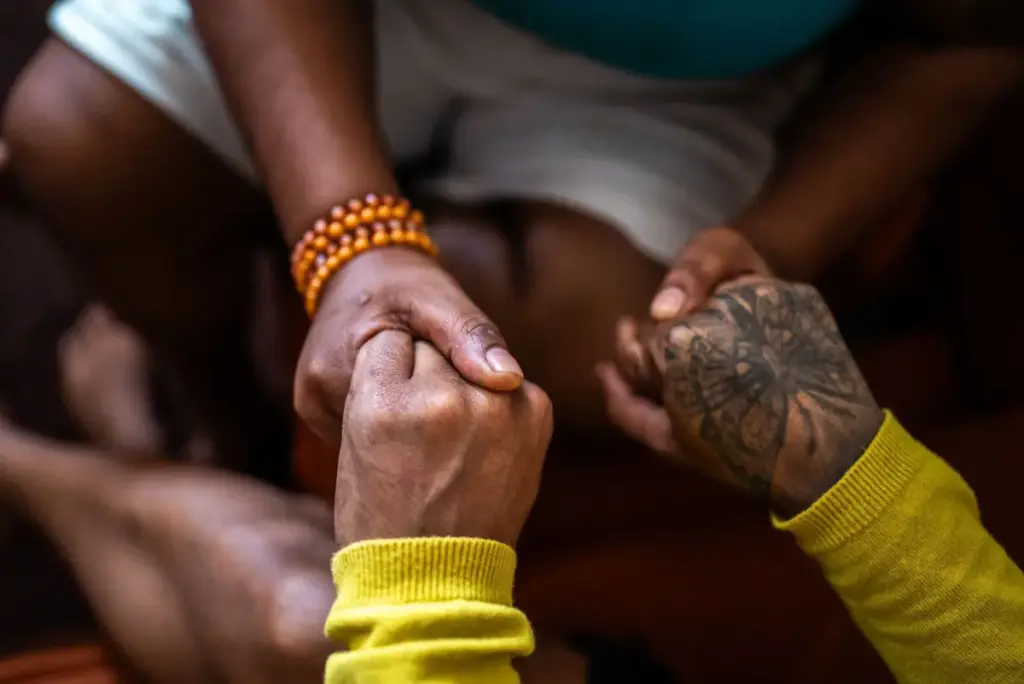
When it comes to Black women’s breast health, the statistical landscape rarely paints a hopeful picture. National health data shows that Black women are diagnosed with breast cancer at a younger median age—60 years old, compared with 62 for white women—and face a staggering 38% higher likelihood of dying from the disease. Across every known stage of breast cancer, they experience the lowest survival rates. Furthermore, roughly one in five Black women diagnosed with breast cancer learn they have triple-negative breast cancer (TNBC), an aggressive and hard-to-treat form of the disease that impacts this demographic at rates higher than any other racial or ethnic group.
Yet these metrics fail to capture the profound human reality of the diagnosis: the middle-of-the-night phone calls, the impromptu head-shaving gatherings, the therapeutic breakthroughs, and the defining moments when a woman gazes at her daughter or granddaughter and recognizes them as reason enough to fight. Black women have always been far more than a data point, and that truth resonates deeply in the ways they confront, endure, and rebuild their lives in the aftermath of a breast cancer diagnosis.
Thirteen women across the United States have chosen to step forward, refusing to let their experiences be reduced to mere statistics. They are individuals with demanding careers, children, distinct humor, enduring faith, and complex emotions whose encounters with breast cancer changed them in ways both devastating and profound. By forging their own paths through grueling treatments and beyond, they have constructed a legacy of community, purpose, and a hard-won blueprint for survival that they are actively passing down to every woman who follows.

"I put my boxing gloves on and fought with everything I had."
Monique Bass, 53, had always maintained a proactive stance toward her health. As a single mother of twin sons and a grandmother of four, she began scheduling annual mammograms at age 40. However, it was a self-examination performed while lying in bed at age 47 that altered the trajectory of her life. She discovered a lump that felt distinctly abnormal.
Over the next three years, Bass underwent three tissue biopsies of the lump, each returning benign results. While medical professionals advised continued monitoring, Bass pushed back. The lump was growing, and her intimate knowledge of her own body told her something was fundamentally wrong. She insisted on a lumpectomy to remove and test the tissue. The definitive diagnosis revealed stage 1 invasive ductal carcinoma, an aggressive form necessitating immediate chemotherapy.
Bass received the news while sitting inside a car wash. The timing coincided with the height of the COVID-19 pandemic in 2020, forcing her to navigate much of her medical journey in isolation, compounded by the emotional strain of going through a divorce. Her regimen included multiple rounds of harsh chemotherapy drugs and 21 radiation sessions. Hair loss proved particularly difficult, though she notes that her hair eventually returned thicker and more vibrant.

Anchored by her faith, Bass eventually founded "What’s Behind the Bra?", a New Jersey-based nonprofit organization that distributes comfort care packages to breast cancer patients year-round and hosts a weekly support podcast.
"I surrounded myself with love and laughter."
Jaqueline Beale, 64, inherited a family history heavily marked by cancer, including her mother’s battle with the disease. When she detected a lump during a self-exam at age 40, the discovery was not entirely unexpected. Although initial sonograms and mammograms appeared clear, Beale trusted her instincts and pursued a biopsy.
When the radiologist called with the results—stage 1 breast cancer confined to the site of origin—he was standing on a busy New York street trying to hail a cab. Despite the blunt delivery of the news, Beale managed to find moments of levity, integrating humor into her coping mechanism throughout treatment. She explicitly asked her family for laughter alongside their love, turning even difficult transit moments into shared jokes about navigating illness.

"What once felt like the end became the beginning of something greater."
Annita White, 51, was five months overdue for her routine mammogram. Juggling responsibilities as a single mother of two boys, a higher education administrator, and a first-year PhD student, she consistently prioritized other demands. When she finally attended the screening, she expected standard clearance, but a follow-up call revealed a previously undetected mass.
A technician’s observation during the subsequent biopsy confirmed her intuitive fears before the official diagnosis arrived the following day. Chemotherapy, surgical removal of her breasts, and the loss of her hair left her feeling vulnerable and stripped of bodily autonomy. Her primary driving force was the fear of running out of time to watch her sons mature and eventually meet her grandchildren.
Three years later, White is cancer-free, has completed her doctoral degree, and embraces her identity as "Dr. Nita," serving as a member of the African American Breast Cancer Alliance survivor network to support others facing the disease.

"The clouds are moving. The sun has decided to show itself."
Marylande Regis, 38, had lived in her new Georgia home for just four months when her life pivoted. A registered nurse, realtor, wife, and mother of three, she discovered a lump shortly after weaning her infant son. Initial medical advice dismissed the finding as a clogged milk duct due to her young age, but Regis persisted. Further evaluation revealed an aggressive stage 2B, BRCA1-positive breast cancer that had already spread to surrounding lymph nodes.
Regis endured six months of chemotherapy, a bilateral mastectomy, radiation, a total hysterectomy, and breast reconstruction over an 18-month period, all while grieving the loss of friends and a cousin to the disease. The loss of control proved most challenging for someone accustomed to managing every detail of family life. Today, supported by her husband and parents, Regis finds strength in everyday milestones, such as walking her autistic son to the bus stop and watching her children pursue their own futures.
"Sickness had never been my world."
Judy Fambrough-Billingsley, 75, had lived a life defined by extraordinary physical activity, including daily walks, swimming, Zumba, and decades of soccer, without ever needing prescription medication. Born in Germany and naturalized in the U.S., illness had never crossed her horizon. When she noticed growing lumps despite a clean mammogram earlier that year, medical testing revealed cancer.

Drawing on her formative years growing up during the Civil Rights Era—where her parents were active NAACP members and she served in youth leadership roles—Fambrough-Billingsley approached her diagnosis with the same resilience she applied to fighting systemic injustices throughout her life.
"I was so used to always being the strong one."
Taylor Johnson was approaching 30 when she discovered a lump on her left breast. Initially denied a mammogram due to her age, she advocated for a biopsy, which confirmed stage 2 triple-negative breast cancer. Undergoing six months of chemotherapy, surgery, and radiation, Johnson balanced her own physical toll with the emotional responsibility of remaining stable for her five-year-old daughter. Supported by prayer groups and her medical team at the Mayo Clinic in Arizona, she discovered a profound inner resilience that redefined her understanding of strength.
"I wanted to feel supported through it, not just survive it."
Jessica Ncube, 41, spent her career as a licensed clinical social worker caring for others. A routine mammogram caught her cancer before any physical symptoms appeared. Following unclear margins after a lumpectomy, she chose to undergo a double mastectomy and reconstruction. Transitioning from a professional identity centered on being strong for others to acknowledging her own vulnerability allowed Ncube to find a balance between resilience and emotional softness.

"Cancer doesn’t define you. You define you."
Ameiko Newman, 40, received her diagnosis unexpectedly after being rushed to the hospital for abdominal pain. Amid ongoing chemotherapy and immunotherapy treatments, Newman discovered a new sense of purpose: designing specialized scarves for chemotherapy patients through her business, catering particularly to Black women seeking style and comfort during treatment.
"I shifted to being overly optimistic."
Charlotte Connor, 38, discovered a lump following a breast augmentation at age 30. Initial dismissals delayed diagnosis, but by the time a biopsy was performed a year later, the mass had tripled in size, revealing stage 2A ductal carcinoma. Adopting an intentional mindset of optimism to protect her young daughter’s emotional wellbeing, Connor relied on a close circle of friends who hosted a head-shaving party prior to her treatment-induced hair loss.
"We have been through challenges our whole lives. This is just one more."
Donna Culmer discovered a stage 1 cancer in 1999 following routine screenings and follow-up examinations for a separate fibrocystic lump. Serving in the Navy at age 46 while raising three children, she underwent grueling chemotherapy and a mastectomy. Supported by her family and church community, Culmer reflects on her journey 27 years later, emphasizing resilience and the evolution of modern medical treatments.

"Therapy fortified me to get through cancer."
Patricia Fox was just 26 when she discovered a rapidly developing lump in her breast. Initial medical resistance nearly turned her away due to her age and breast density, but she insisted on a biopsy, leading to an estrogen receptor-positive stage 2A diagnosis. Working through intense emotional distress with the help of therapy, Fox overcame the cultural stigma surrounding mental healthcare in the Black community and now advocates for open psychological support during medical crises.
"I turned to prayer to remain calm."
Annette Colden, 63, was motivated to maintain regular screenings after witnessing her sister’s protracted battle with cervical and breast cancers. Following initial inconclusive imaging, a subsequent mammogram at age 42 detected stage 0 breast cancer. Anchored by her faith and a sense of inner peace, Colden channeled her experience into peer support work, assisting patients through the Roswell Park Comprehensive Cancer Center.
"I quit my life and started a new one as an advocate."
Ricki Fairley was 55 and standing in an airport security line when she received a stage 3A triple-negative breast cancer diagnosis. Facing an aggressive disease with limited targeted options, Fairley fundamentally restructured her life—quitting her job, ending her marriage, and later battling a metastatic recurrence before achieving remission. That second chance at life catalyzed her transition into advocacy, leading her to co-found The Black Breast Cancer Alliance to address systemic disparities and reduce mortality rates for Black women nationwide.