


By Emily Halnon
Published October 31, 2026
The forest sounds empty, but I know it is not. Earlier today, walking along the lakeshore in Washington’s Gifford Pinchot National Forest, I spotted hoof prints, a cougar track, and coyote scat.
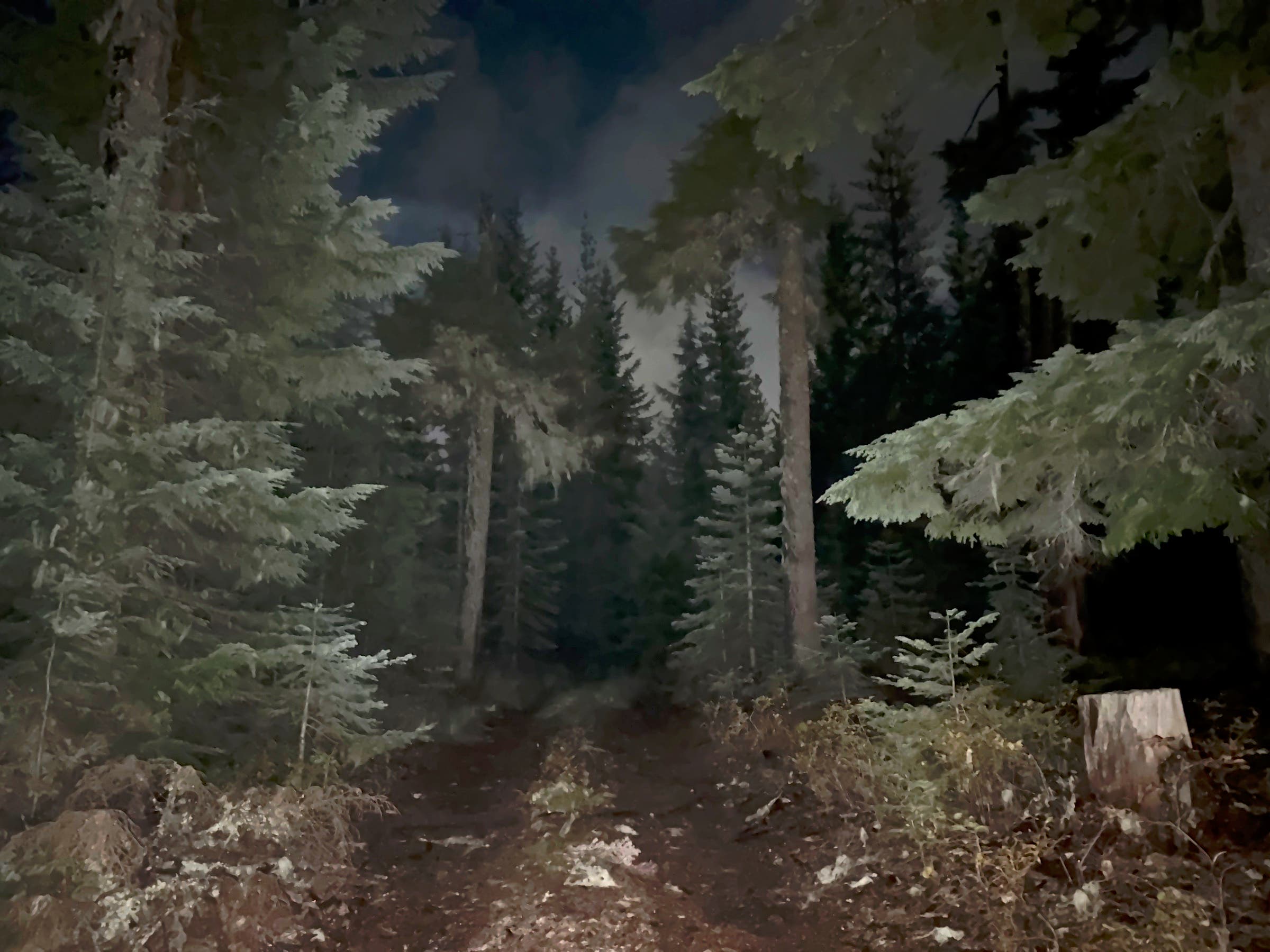
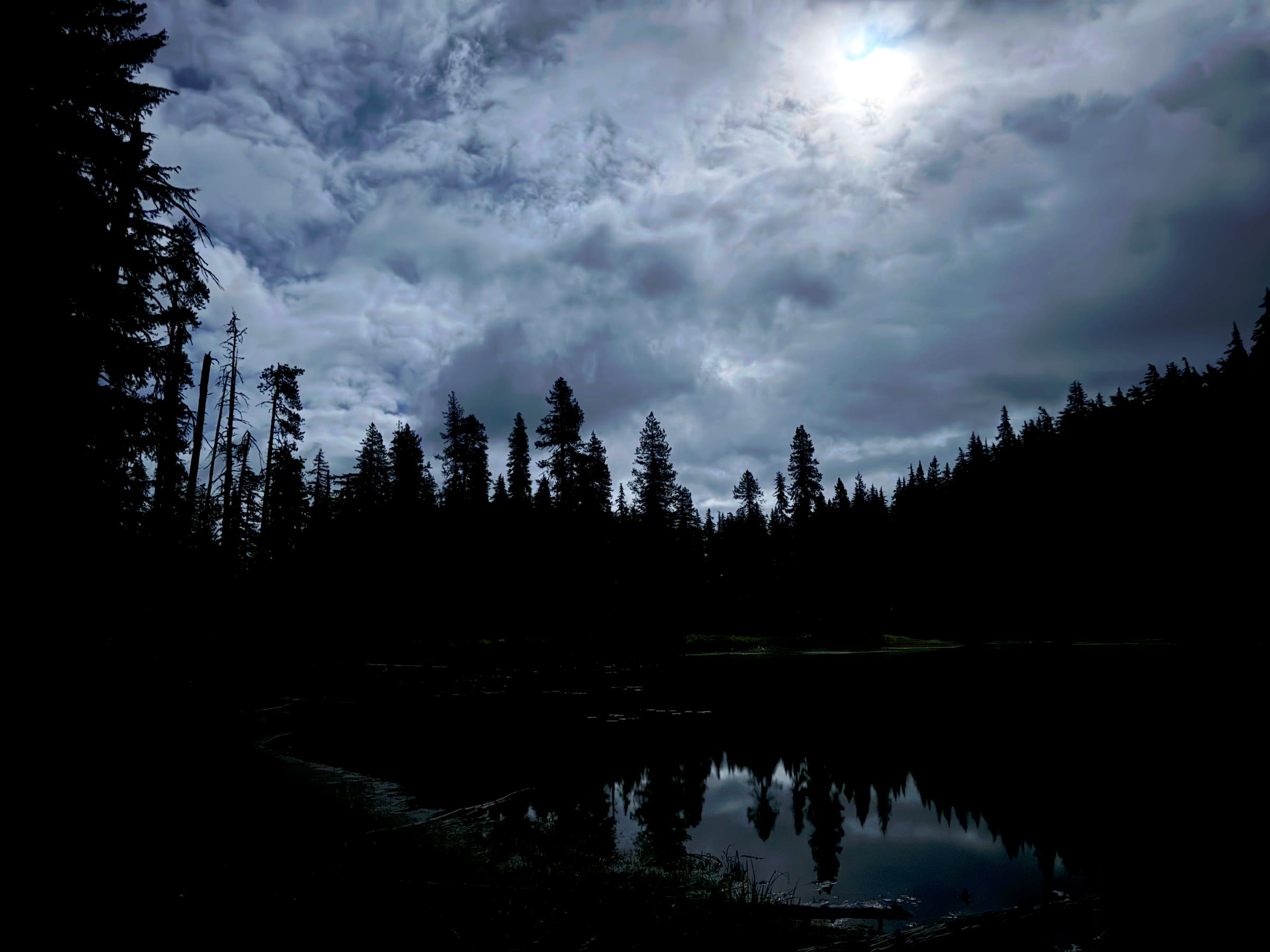
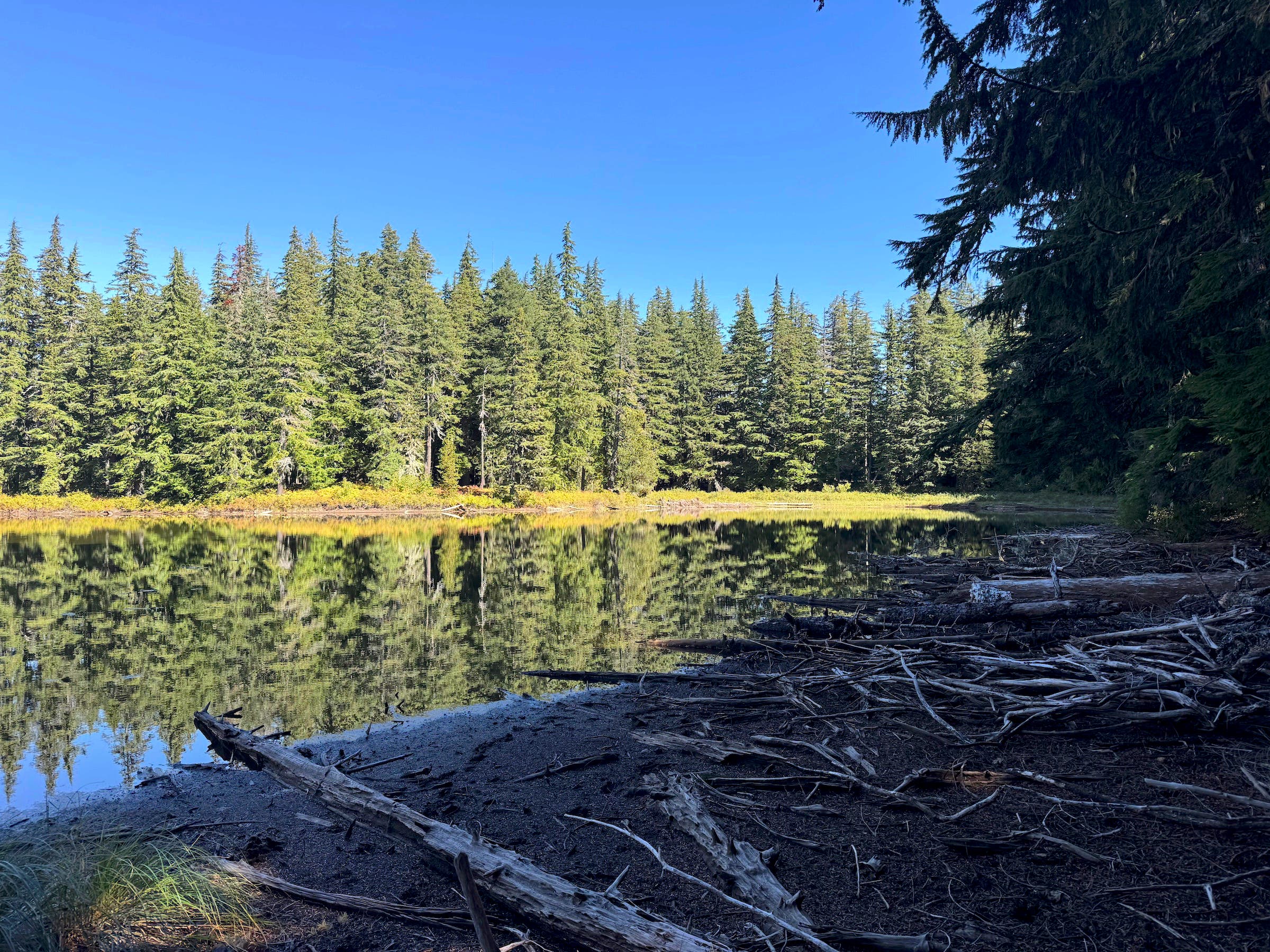
The trees have all turned black beneath the night sky. The only light comes from a full moon creeping through the clouds, casting long, fractured shadows across the damp ground. Deep in the wilderness, it is so quiet that I can hear my own heartbeat thumping against my ribs. No creature is giving its location away by making noise—yet it is glaringly obvious that we are not alone as we stand on the edge of a lake with waters as dark as midnight. I look out at the dense shadows pooling between the towering evergreens and wonder what could possibly be hiding in the forest.
Beside me, Tanner Hoskins raises a thermal scope to his eye and meticulously scans the tree line to search for hidden heat signatures. He pauses as he sweeps his device toward the far, murky corner of the lake.
“I think I’ve got something moving,” he whispers.
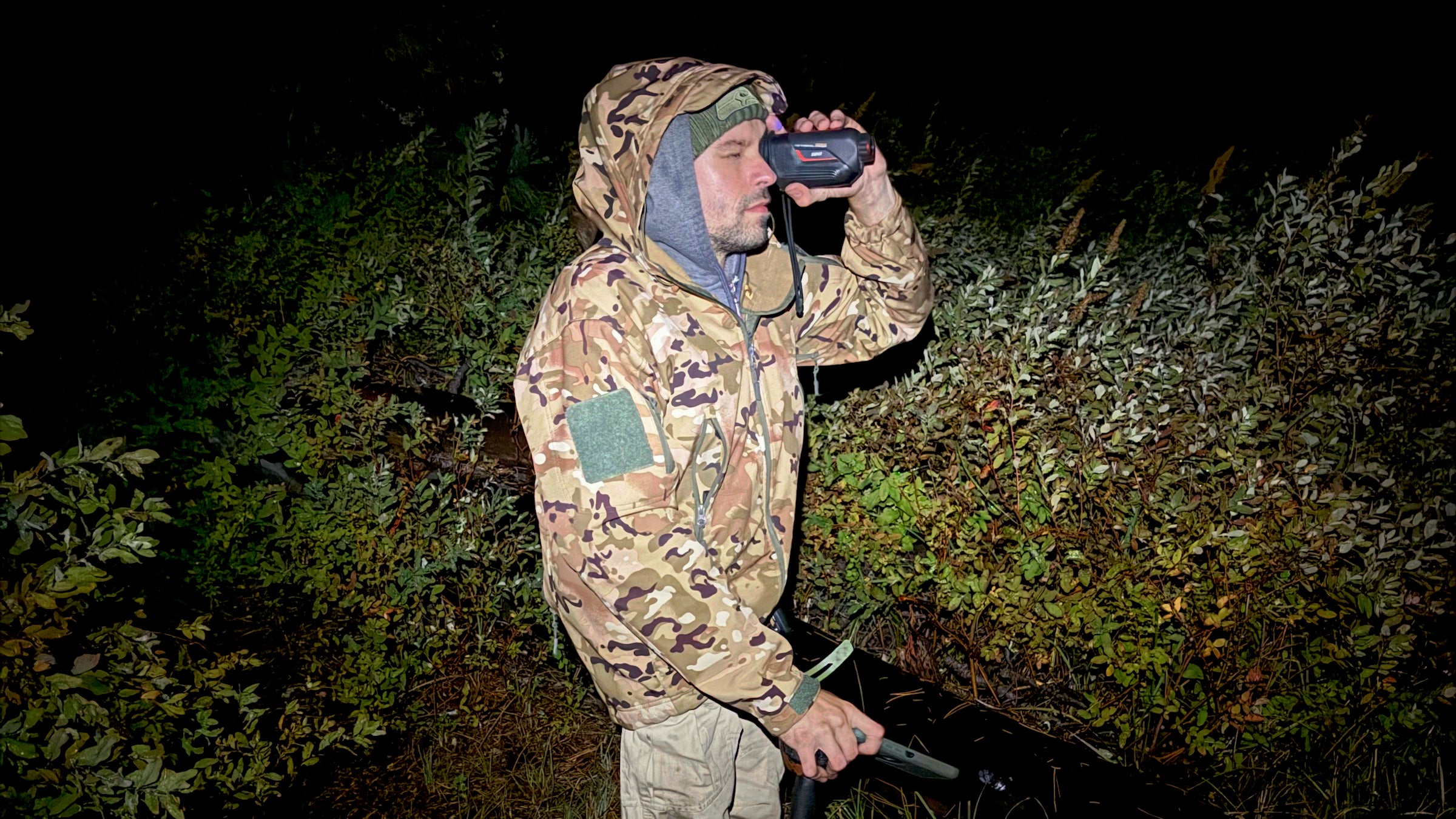
For the past six years, Hoskins and a tight-knit group of friends have been combing the rugged wilderness of the Pacific Northwest in search of an answer to a single, enduring question: What else is out there? I have tagged along for a weekend excursion to find out what happens when ordinary people go looking for tangible evidence of the unknown.
The Origin of the Hunt
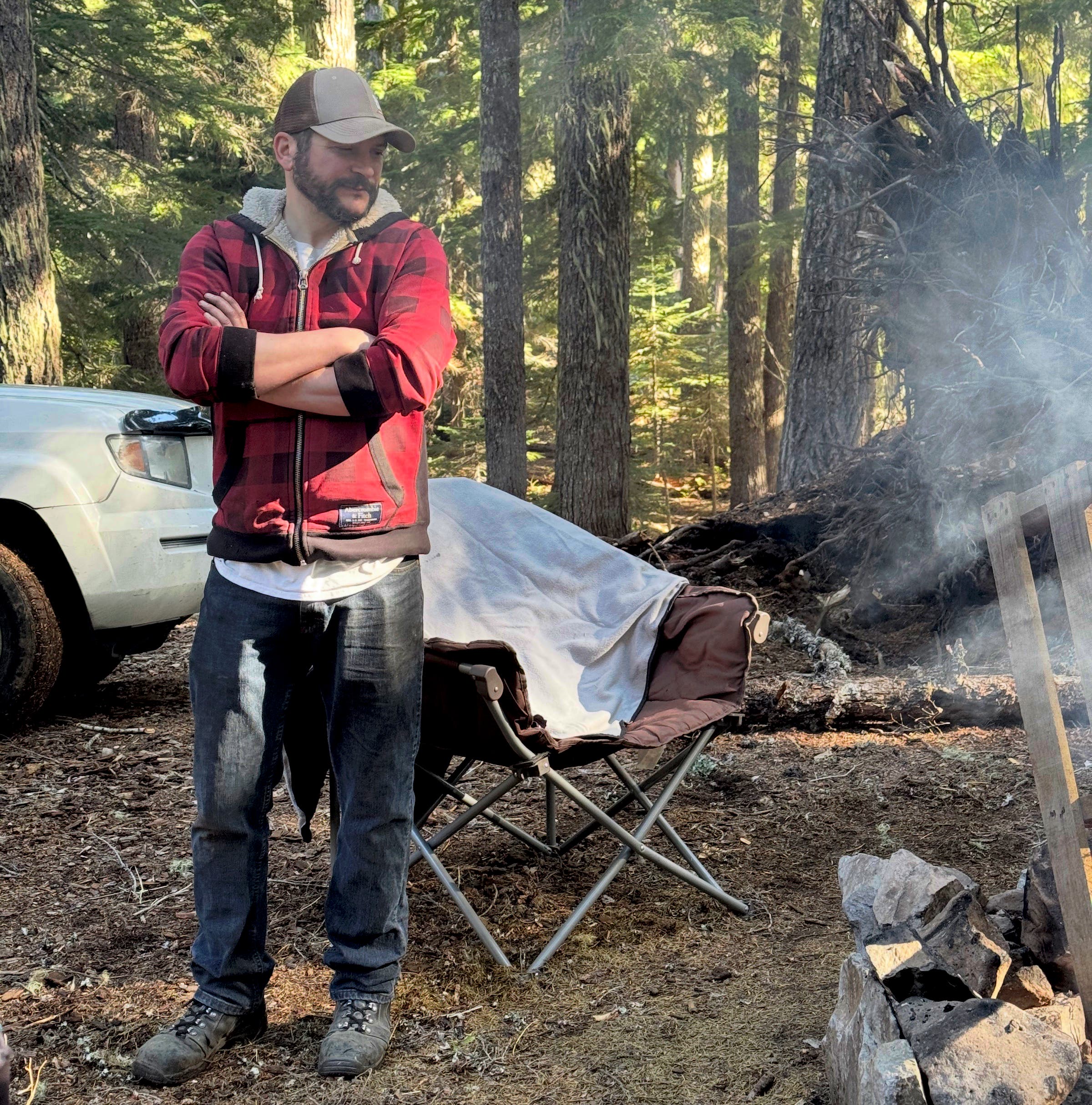
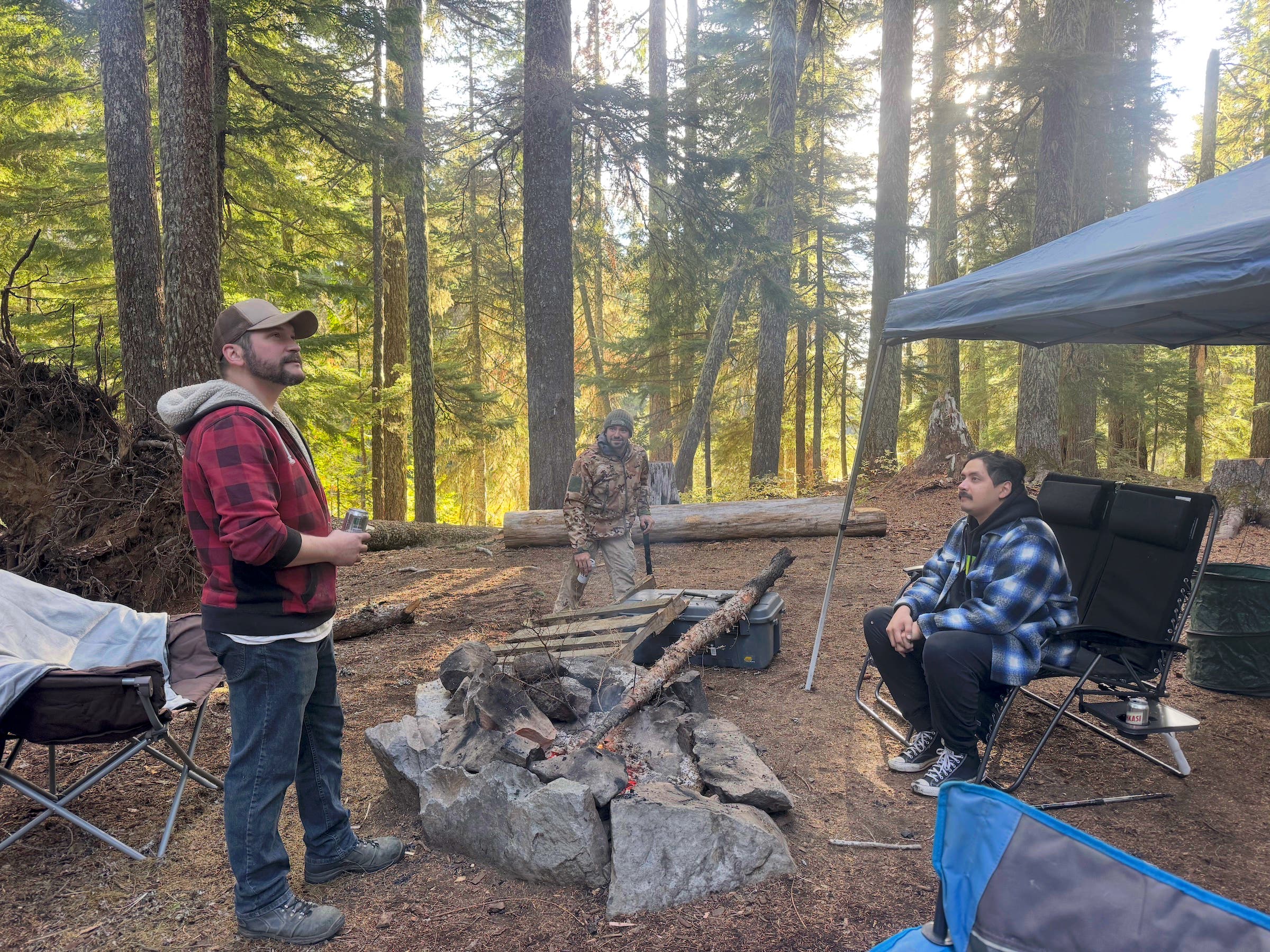
About two miles away as the crow flies, a dispersed campsite sits tucked quietly into a grove of tall pine trees. It was here, on a chilly July night in 2020, that decades-long buddies Kelly Stolp and Mike Palagi sat around a crackling campfire with Stolp’s sons and Palagi’s fiancée. Flames licked the dark sky as they laughed and traded stories into the night, a familiar scene for the friends who originally met while serving in the United States Army in 2005.
Eventually, Stolp retired to his tent while the fire was still burning down to embers. Deep in the night, he heard a loud, guttural howl that sounded remarkably like a car engine trying to turn over in freezing weather. Then came footsteps—slow, steady, and drawing closer to his tent. They seemed far too heavy to belong to a human, carrying more of a physical stomp than a casual step. He could feel each individual footfall reverberating through the earth beneath him, and he knew without a hair of doubt that they were coming from a two-legged creature.
Stolp grew up on a sprawling 35,000-acre ranch in Montana, has hunted for decades, and has recreated in the great outdoors since he was old enough to walk. He went on his first backpacking trip at the age of twelve. As an avid outdoorsman thoroughly familiar with the wildlife roaming the American West—having once even had a grizzly bear wander directly into his camp—he immediately recognized that what he was hearing was not a bear, cougar, elk, or coyote.
Stolp lay motionless and listened as the creature approached his tent, brushing heavily up against the huckleberries just feet away. Though the night air was a cool 50 degrees, he was completely drenched in sweat. Then, he heard the footsteps slowly retreating up the dry creekbed that winds past the campsite.
The following morning, he mentioned the encounter to Palagi, telling him that something large and bipedal had moved through their camp during the night. Palagi laughed off the claim, pointed to an empty whiskey bottle as the likely explanation, and dropped the subject for the remainder of the day.
However, at 3:00 A.M. that very night, Stolp heard the footsteps return. Thump. Thump. Thump. The same strange, guttural howl was now echoing from two different directions simultaneously.
Stolp sat upright in his tent. “Mike. It’s back.”
He heard the sharp click of a gun being racked, followed by Palagi’s voice: “Kelly, I’m up.”
“Two legs or four?” Stolp asked.
Palagi did not hesitate. “Bipedal, man.”
“How big?”
“Really fucking big.”
Both men rolled out of their tents. Stolp shouted into the darkness, “We’re armed, show yourself.”
Having both trained as military snipers, Palagi and Stolp instinctively knew how to clear a tactical space. They swept through the camp with their weapons ready, but found nothing. Still, the two men, who do not scare easily, chose to spend the rest of the night locked inside their vehicles.
“I’ve spent my entire life outdoors and encountered everything the wilderness has to offer,” Stolp reflected later. “But I’d never slept in my truck, not even when a grizzly came through my camp.”
The next morning, the men attempted to recreate the heavy stomping sound they had heard in the dark. Neither of them is small; Palagi played college football in Montana as a defensive lineman, and Stolp possesses a similarly imposing physical build. Yet even when Palagi jumped with his full body weight, he could not come close to replicating the earth-shaking thuds of the night before.
From the Backcountry to the Internet
The following Monday at Shriners Children’s Hospital in Portland, where Stolp worked as an electrician alongside Palagi—who served as a maintenance engineer—Stolp pulled a coworker and security guard named Tanner Hoskins aside.
“You have to promise you won’t tell anyone,” Stolp told him, acutely aware of how ridiculous the story sounded and determined not to be labeled a believer in Bigfoot.
Hoskins, however, proved more receptive. Growing up, his great-grandmother had warned him about “hidebehinds,” a mythical, large creature blamed for the mysterious disappearances of loggers in the remote forests of Idaho. When combined with local folklore, Stolp’s account made him wonder if the Pacific Northwest truly harbored such unknown entities. Hoskins swore secrecy, but after going home, he built a website for the Pacific Northwest Bigfoot Search to share his friend’s story and invite others to submit their own.
Tales of towering, mysterious, forest-dwelling humanoids have circulated across global cultures for centuries. Bigfoot, frequently referred to as Sasquatch, derives its name from an anglicized version of “Sasq’ets,” a term from the Coast Salish peoples of British Columbia. Across generations, Indigenous oral traditions have described these beings in various ways, ranging from physical animals to spiritual guides.
Today, the cultural footprint of Bigfoot has expanded dramatically. Its likeness appears on bumper stickers, retail apparel, and highway crossing signs, while online communities like the Bigfoot subreddit boast nearly 300,000 members. The phenomenon has spawned podcasts, academic symposiums, dedicated cruises featuring daily lectures, and numerous television series, including eleven seasons of Animal Planet’s Finding Bigfoot and dozens of episodes of the Travel Channel’s Expedition Bigfoot.
While the subject captures public imagination, definitive scientific validation remains elusive. Organizations like the Bigfoot Field Research Organization have compiled over 5,000 reported sightings, with Washington state alone accounting for more than 700. Despite decades of anecdotal accounts, photographs, and video footage, the creature—if it exists—remains famously camera-shy.
Bigfoot researchers generally maintain that science requires physical proof, often summarizing the community’s mantra as “science wants a body.” While most hunters are not hoping for harm to come to the animal, they acknowledge that a naturally deceased specimen in an accessible location would provide the concrete evidence needed by the scientific establishment. A handful of academic anthropologists, including the late Grover Krantz and Jeffrey Meldrum, have dedicated years to studying the subject, while primatologist Jane Goodall has publicly expressed an open-minded stance on the global ubiquity of similar folklore.
The Search Party and the Missing Persons Project
Since launching their online database in 2021, Hoskins and his core group have received nearly 300 reports ranging from footprints and vocalizations to visual sightings. While Hoskins notes that many reports must be viewed skeptically, he finds accounts from anonymous professionals—such as loggers, law enforcement officers, and government workers—particularly compelling.
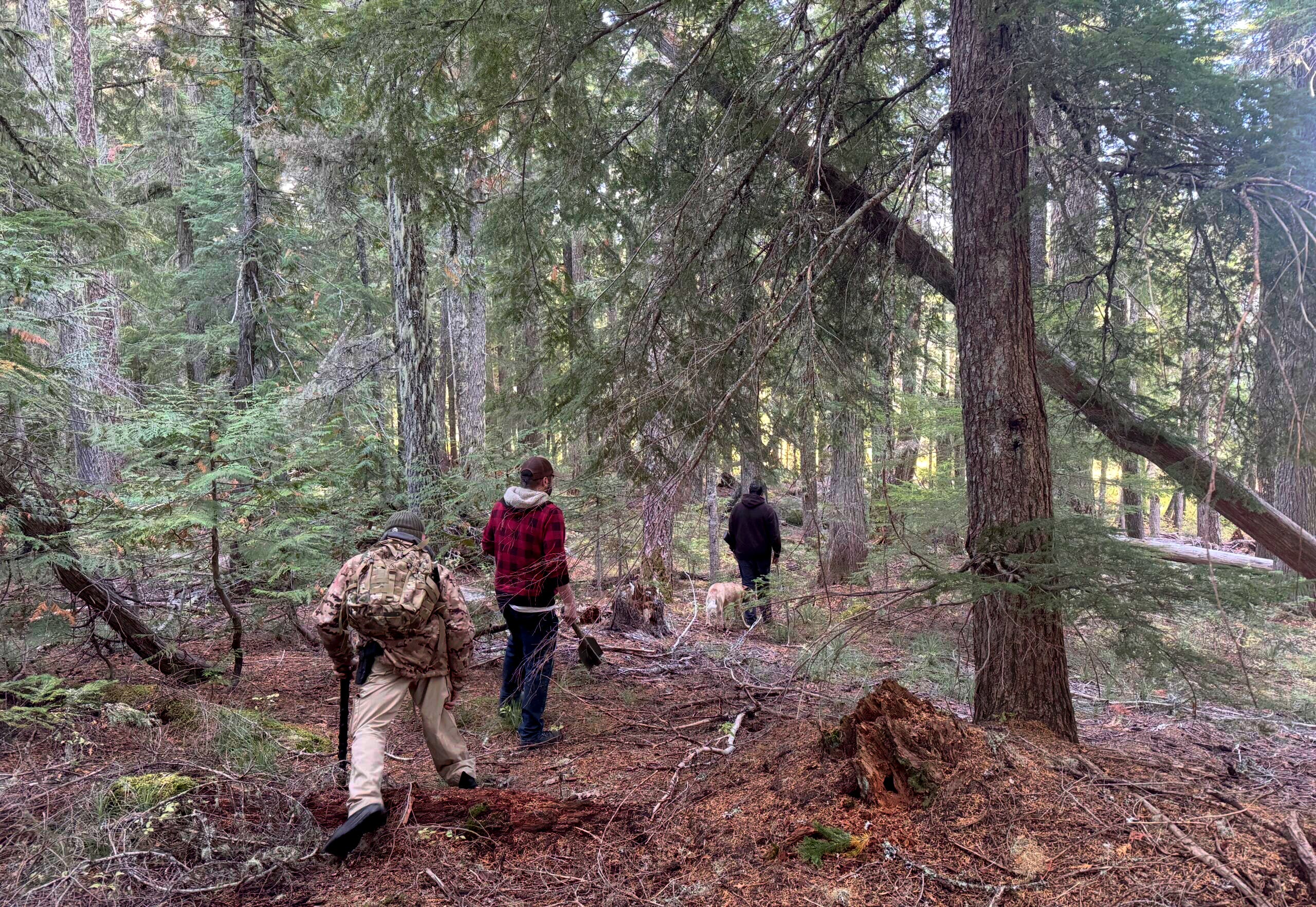
The Pacific Northwest Bigfoot Search evolved beyond a digital archive into an active field expedition. Every month or two over the last five years, four core members have regularly ventured into the wilderness: Hoskins, Stolp, Palagi, and Alberto Quinones, a warehouse manager married to Hoskins’s cousin.
At 30 years old, Quinones is the youngest of the group. Stolp, 48, manages massive construction projects. Palagi lives outside Portland with his pets, while Hoskins acts as the de facto leader, maintaining strict communication protocols to ensure everyone’s safety on every trip. Ironically, half of the group members remain skeptical; Palagi openly challenges theories, and Stolp insists he does not blindly believe in the legend. Even Hoskins maintains an 80 percent skepticism rating, noting that he needs a direct visual confirmation to push him the rest of the way.
Beyond their hunts for Sasquatch, the group expanded their backcountry efforts into something with immediate humanitarian impact: the Pacific Northwest Missing Persons Project.
In 2021, a family contacted Hoskins asking the group to keep an eye out for Glenn Austin Oldfield II, who went missing while camping alone in the Gifford Pinchot National Forest in 2015. Prompted by this request, Hoskins contacted the Washington State Patrol and received a list of 34 individuals reported missing in the forest since 1979. Realizing that the navigation and tracking skills used to identify disturbed soil and abnormal footprints could also apply to finding clothing scraps or human remains, the group broadened their mission.
Hoskins eventually compiled a list of roughly 500 missing persons across Oregon, Washington, Idaho, Montana, and California, carrying reference sheets of personal belongings on every outing. They view their work as continuing the search after official search-and-rescue operations scale back due to funding constraints.
“I want these families to get the closure they deserve,” Hoskins says.
For Hoskins, this work provides a deep sense of purpose. Born with severe scoliosis and having undergone 14 surgeries, including the amputation of his right leg as a toddler, he was barred from pursuing careers in military service or law enforcement due to physical standards. Despite early medical predictions that he would never walk or run, he refuses to let physical limitations curb his dedication to the backcountry.
In Search of Wonder
The 1.3-million-acre Gifford Pinchot National Forest, where I join the team, is historically rich in folklore and historical reports. It encompasses Ape Canyon—named after an alleged 1924 encounter by gold prospectors—and Skookum Meadows, where mud imprints attributed to an unknown primate were discovered in 2000. The concentration of reports in the 1960s even prompted Skamania County to pass a protective ordinance carrying potential jail time or fines for harming a Sasquatch, a statute enacted partly out of concern for the safety of heavily armed hunters traversing the region.
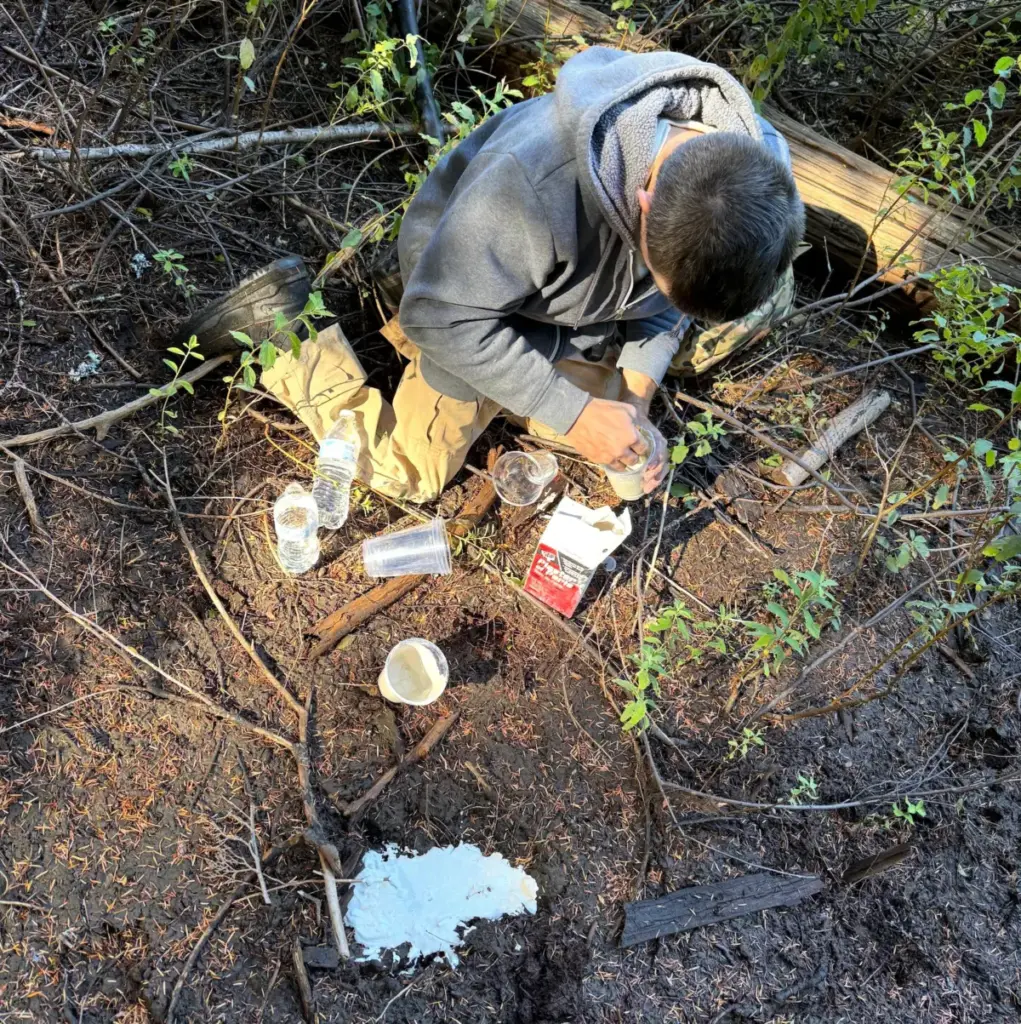
As our weekend search concludes at the edge of the alpine lake, Hoskins carefully cleans a newly poured plaster cast of a footprint found in the mud. When he lifts the hardened plaster to reveal the impression, it turns out to be an indistinct shape rather than a clear, definitive print.
I feel a brief wave of disappointment, but the reality quickly sets in: even an undeniable, perfectly preserved footprint would not fundamentally change the underlying motivation of the group. Whether they encounter definitive proof of Bigfoot or simply uncover another unidentifiable blob in the dirt, the true value of these expeditions lies elsewhere. Between demanding careers, commutes, and daily stresses, these men return to the dark trees of the Pacific Northwest because the wilderness offers a rare space for camaraderie, processing grief, and experiencing a sense of wonder in a complicated world.