

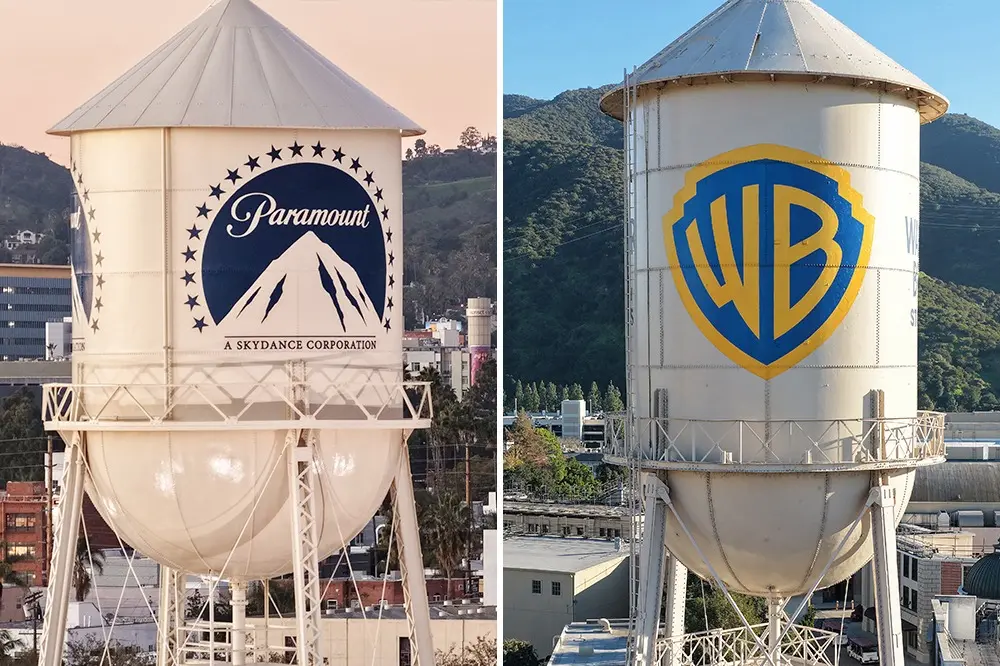
Paramount Skydance is moving closer to the finish line of its yearlong pursuit of Warner Bros. Discovery as the company’s weekend settlement negotiations with state attorneys general reach a critical and decisive stage. The massive corporate consolidation effort, which has captivated and alarmed the entertainment industry for months, now hinges on the final hours of discussions regarding regulatory clearance and behavioral safeguards.
Meanwhile, opponents of the mega-merger are rallying to protest what they warn is shaping up to be a capitulation by the 12-state coalition that previously sued to block the Paramount-Warner Bros. combination on antitrust grounds. The high-profile opposition has galvanized labor groups, activists, and prominent creative talent alike, creating an intense pressure cooker environment for state regulators as they weigh the final terms of a potential settlement agreement.
The federal antitrust lawsuit filed back in July by a coalition of 12 states, including key media and economic hubs such as California and New York, represents the final major hurdle that Paramount must clear to officially close its massive $110 billion acquisition agreement. The deal was originally struck in late February, setting off a complex and protracted regulatory battle. Paramount faces immense financial pressure to finalize the transaction, as the company is contractually on the hook to pay Warner Bros. Discovery shareholders an additional $7 million per day starting October 1 if the transaction remains unclosed. This steep financial penalty has injected an undeniable sense of urgency into Paramount’s negotiation strategy. Sources familiar with the situation indicated that the closed-door negotiations led by California Attorney General Rob Bonta appeared to be moving in a positive direction as of the weekend.
The negotiating teams were expected to remain in active communication throughout Sunday, though they planned to pause by evening to observe the Yom Kippur holiday in the event that a final agreement had not yet been reached. As these high-level talks continued with the expectation that the situation could come to a head as soon as Sunday night, anti-merger activists mobilized quickly, organizing a series of public rallies across Oakland, Los Angeles, and New York to voice their fierce opposition to the terms currently rumored to be on the table.
California Attorney General Rob Bonta has previously demanded strict "structural remedies" as part of any settlement agreement to properly mitigate the immense market power of the combined entity. However, recent rumors and media reports have indicated that his office may ultimately agree to terms that fall significantly short of structural breakups. The Wall Street Journal, citing unnamed sources familiar with the discussions, reported that the prospective deal might center on operating the two historic studios "separately for a period" rather than immediately combining their corporate infrastructure and physical operations.
Interestingly, David Ellison, the CEO of Paramount Skydance, has already expressed willingness to operate the studios separately in some form. In a February 28 letter addressed to California Democratic lawmakers Senator Adam Schiff and Representative Laura Friedman, Ellison outlined his vision for the future of the companies. "My promise to you is to build a stronger Hollywood, by keeping both of these legacy studios operating separately, thereby preserving and potentially increasing jobs," Ellison wrote at the time.
The ongoing discussions have also reportedly included concrete output commitments—including Ellison’s longstanding pledge to produce at least 30 feature films a year, according to two sources with direct knowledge of the talks. Meeting remotely over the weekend, the negotiating parties have also reportedly discussed a written agreement ensuring that the combined company remains rooted in California, alongside the appointment of a third-party "editorial adviser" to oversee journalistic independence at CNN and CBS.
Despite these proposed concessions, Attorney General Bonta has repeatedly argued that such "behavioral" remedies are inherently weak, short-term solutions that are notoriously difficult for state regulators to effectively monitor and enforce over time. In an exclusive interview with Variety last month, Bonta explicitly dismissed separate studio operations as a mere behavioral remedy rather than a true structural safeguard. "There needs to be separate ownership," Bonta said. "If it’s under the same Paramount-Warner Bros. merged-entity roof, that’s not separate."
Nevertheless, sources close to the situation reinforce the suggestion from the Wall Street Journal report that enforceable commitments requiring Paramount to operate some or all of the Warner Bros. Discovery assets as separate entities from Paramount for a fixed duration could provide a viable path forward for a comprehensive settlement. Such an agreement might also incorporate legally binding job preservation commitments for a designated period of time to appease state employment concerns.
Observers noted that key corporate lieutenants, including HBO CEO Casey Bloys and JB Perrette—president of WBD streaming and gaming and the business leader of HBO Max—appear to be shifting smoothly into deal-closing mode. Both executives are exceptionally well-versed in this high-stakes environment, having navigated years of massive media mergers and acquisitions during their respective tenures at Time Warner and Discovery Communications. Merger-watchers quickly took note that Bloys and Perrette cut prominent figures in the social events surrounding the Emmy Awards this past week, projecting confidence. "Casey looks happier than he has in a long time," noted one knowledgeable industry source.
A representative for Paramount Skydance declined to comment regarding the ongoing settlement discussions.
Outside the studio gates, the raw emotions stirred by this latest wave of industry consolidation show no signs of cooling down. The grassroots advocacy organization known as the Block the Merger coalition issued a sharp warning that the rumored settlement terms are entirely unacceptable, characterizing them as "an insult to everyone who has stood up against this harmful transaction."
Prominent actor Mark Ruffalo, who has emerged as one of the most outspoken celebrity opponents of the corporate merger, actively rallied his considerable social media following to pressure Attorney General Bonta not to cave to corporate lobbying. Ruffalo’s advocacy creates a uniquely complex and awkward dynamic for the entertainment industry, as he happens to star in the critically acclaimed HBO drama series Task, which was recently picked up for a second season by the very network undergoing this corporate transition. Furthermore, the four-time Oscar nominee earned an Emmy nomination this year for his work on Task. Despite these industry ties, Ruffalo has remained entirely undeterred in his public opposition.
"Don’t you dare @AGRobBonta, do not cave," the actor wrote in a public post on X. "You work for the people — the very people who will be hurt if you let this lousy deal filled with empty promises go forward."
Ruffalo urged his fans and concerned citizens to turn out in person at Attorney General Bonta’s office in Oakland to voice their strong opposition to the transaction. Similar public demonstrations were scheduled for Monday outside the office of New York Attorney General Letitia James, and for Tuesday outside the headquarters of the Writers Guild of America West in Los Angeles.
The Writers Guild of America has pursued its own independent antitrust lawsuit against the transaction, arguing in court filings that the multi-billion-dollar deal will unlawfully suppress competition and reduce the overall market for writers’ creative work. While the WGA is a formal party to the legal stipulation that successfully blocks the merger from moving forward prior to a scheduled March 2027 federal trial, the guild has not been directly involved in the executive-level settlement negotiations between Paramount and the state attorneys general.
The overarching legal battle is scheduled to go before U.S. District Judge Araceli Martinez-Olguin, as Paramount actively seeks to impose a massive $1.88 billion bond requirement on the WGA and the opposing states as the financial price for keeping the merger at bay during ongoing litigation.