


Baked potatoes may not immediately strike home cooks as a culinary canvas requiring precise technique, but the gastronomic gap between an ordinary baked potato and an extraordinary one is vast. For generations, home cooks have relied on aluminum foil as a default step in the baking process, wrapping russets tightly before placing them in the oven. While this method successfully traps moisture to yield a tender interior, it simultaneously compromises the exterior, rendering the skin limp, soggy, and entirely devoid of texture.
For culinary enthusiasts seeking the ultimate contrast of textures—a shatteringly crisp skin encasing a cloud-like interior—experts advise abandoning the foil entirely. Baking scrubbed russet potatoes directly on the oven grate at a relatively high temperature transforms the exterior into a delicacy that approaches the savory crunch of a potato chip. To achieve this phenomenal transformation, culinary professionals recommend rubbing the clean, dry skins generously with vegetable oil and coating them liberally with coarse salt before they enter the heat.
Counterintuitively, this high-heat, direct-grate method does nothing to diminish the fluffy, light texture of the potato’s interior. The secret to achieving that coveted, pillow-soft consistency is entirely dependent on internal temperature rather than trapped steam. When a potato reaches an internal temperature of at least 212 degrees Fahrenheit, the starches gelatinize properly, resulting in the ideal fluffy texture. While taking the temperature of a baking potato with a meat thermometer might initially feel unconventional or overly meticulous, culinary tests prove it is a foolproof route to maximizing enjoyment and eliminating guesswork in the kitchen.
Beyond the baking process, the method of opening a cooked potato has long been a subject of passionate culinary debate among chefs, institutions, and food writers alike. Traditionalists, including representatives at the Idaho Potato Commission, assert that the way a baked potato is opened significantly affects its overall mouthfeel and texture. Rather than reaching for a standard kitchen knife, proponents of this school of thought recommend using the tines of a fork to gently poke a clean plus sign into the surface of the potato, allowing steam to escape gently while preserving the integrity of the fluffy flesh.
Other culinary figures take a drastically different, more dramatic approach to opening the steaming spud. Beloved food writer and author Nigel Slater famously prefers to strike the potato with the decisive energy of a martial arts practitioner. In a piece published for The Guardian, Slater details his preferred technique, advising home cooks to bring their hand down fast and sharp, mimicking a karate chop, but applying only enough force to crack open the potato skin. Whether or not to attempt this high-impact kitchen feat remains a personal choice left entirely in the hands of the individual potato-baker. However, extensive kitchen testing reveals that a simpler, more controlled approach—specifically, a single fork-pricked line drawn down the entire length of the spud—proves to be the most consistently effective method for letting steam escape without creating an unnecessary mess.
Once properly baked, cracked open, and prepped, the humble baked potato transcends its side-dish status and becomes a robust main course capable of holding an endless array of hearty fillings. Historically, baked potatoes have been dressed with everything from classic sour cream and chives to comforting heaps of tuna salad or rich, cheesy baked beans. Contemporary variations, however, are pushing the boundaries of flavor by incorporating complex, globally inspired flavor profiles that turn a simple starch into a complete, nutrient-dense meal.
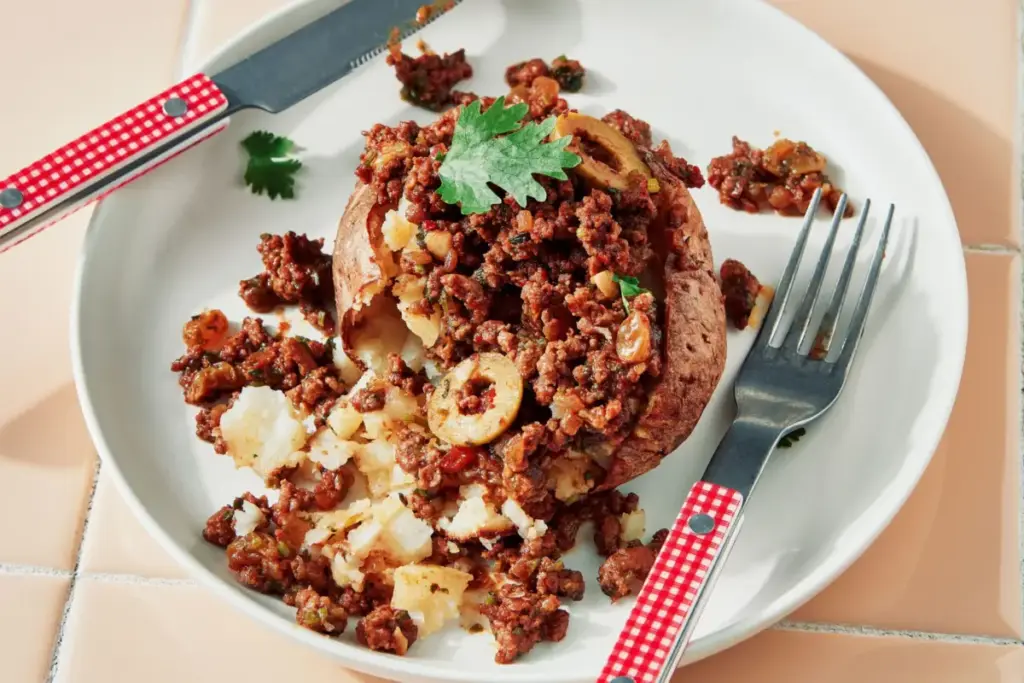
A striking example of this culinary evolution is the integration of a picadillo-inspired mixture featuring seasoned ground beef. This savory topping not only delivers an exceptional depth of flavor but also provides substantial nutritional value, offering high amounts of protein, iron, and creatine. For those seeking alternative proteins, ground turkey or chicken serve as excellent, equally flavorful substitutes. This meat-based mixture is further elevated with the unexpected, delightful addition of sweet golden raisins and briny stuffed olives, creating a harmonious balance of savory, sweet, and salty notes in every single bite.
To tie the dish together, a vibrant and spicy tomato sauce is spooned generously over the filling. As the potato sits, this sauce slowly and methodically soaks into the fluffy interior, seasoning the potato further with every passing minute and ensuring that no bite is left dry or unflavored. Culinary experts emphasize that achieving the ideal flavor profile for the sauce requires paying close attention to the spice cabinet. Home cooks are advised to utilize a high-quality chili powder that consists of a complex blend of multiple spices, including ground chiles, earthy cumin, aromatic oregano, and pungent garlic, rather than relying solely on single-ingredient dried ground chiles.
This emphasis on flavor-forward, unpretentious cooking aligns with a broader philosophy that healthy home cooking does not need to be complicated or intimidating. In fact, culinary history consistently demonstrates that the simpler a dish is, the better it tends to taste when executed with proper technique and quality ingredients. This approach is championed by culinary experts who curate feel-good recipes designed to bring comfort and satisfaction to any day of the week.
Furthermore, the revival of the humble white potato in contemporary nutritional conversations challenges long-standing misconceptions about the tuber. Contrary to outdated beliefs that white potatoes represent empty calories, nutritional science highlights them as wholesome, nutrient-dense foods that offer significant health benefits, making them a worthy foundation for creative, satisfying, and nourishing weeknight meals.