


Wildwood is in theaters on October 23.
There is something inherently wondrous about the transportive power of stop-motion animated films when they are executed at the exacting standard that Laika consistently sets for itself. That sense of pure wonder is certainly the driving force behind Wildwood. Adapted from the first novel in Colin Meloy and Carson Ellis’s acclaimed Wildwood Chronicles, the film sees director Travis Knight and the master craftspeople at Laika turning in a staggeringly beautiful, surprisingly dark fantasy adventure. The movie boasts exciting action, enchanting and enchanted natural settings, and talking woodland creatures holding down actual jobs—and that is all before the main characters even leave the familiar streets of Portland to journey deep into the mysterious heart of Wildwood.
A Landmark Achievement in Scope and Scale
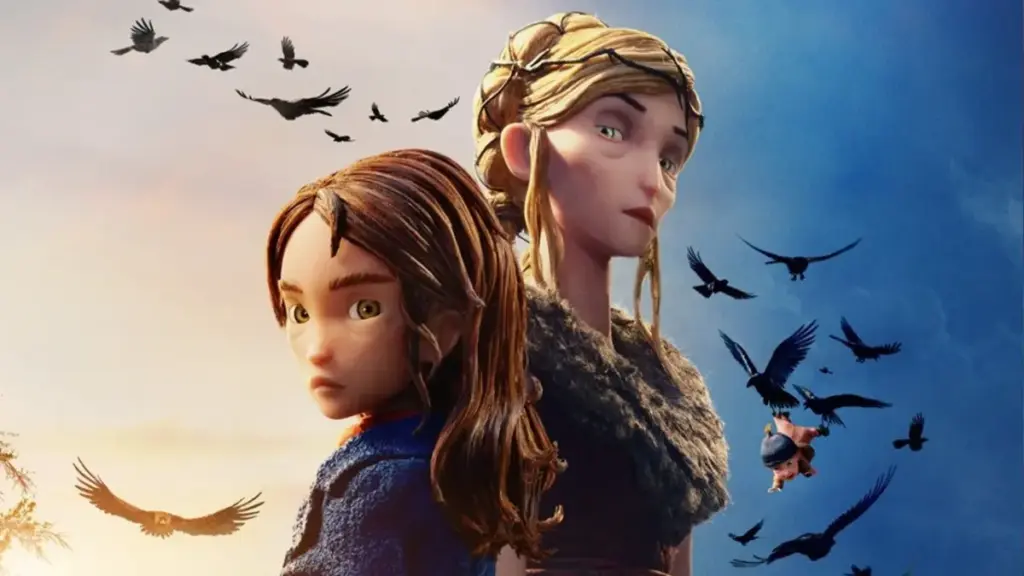
Wildwood is most immediately impressive in its sheer, sweeping scope. As the new recordholder for the longest-ever stop-motion animated film, clocking in at a substantial 131 minutes, Knight luxuriates in building out the rich mythology of Meloy and Ellis’s novels directly onscreen. The narrative kicks off when 13-year-old Prue McKeel, played by Peyton Elizabeth Lee, and her classmate Curtis, played by Jacob Tremblay, find themselves on a perilous mission into the magical forest realm of Wildwood. Their primary objective is to rescue Prue’s kidnapped baby brother, Mac, who has been seized by a murder of crows.
As the children venture deeper, the intricate web of societies, races, and governing systems that prop up the setting becomes endlessly fascinating to track. Much of this is thanks to just how gorgeous the visual execution looks frame by frame. Laika’s previous films have consistently pushed the boundaries of what is possible for stop-motion animation, and the jaw-dropping artistry on display in Wildwood proves they are breaking new ground once again. From the intricately authentic, grounded rendering of modern-day Portland to each of the vastly different domains housed within the massive, mystical forest, the film is fathomless in its obsessive attention to fine detail.
Long stretches of the cinematic experience achieve such a profound sense of immersion that, at its most effective moments, it is remarkably easy to forget that Wildwood is a stop-motion film at all. This illusion is even more impressive when taking into account the wide array of complex fantasy trappings, shifting environments, and bustling creature populations that the production seamlessly deploys.
Pushing the Envelope of PG-13 Fantasy
At times, it is genuinely surprising just how far director Travis Knight is willing to push the envelope for a project that might look, on the surface, like a standard family-friendly animated romp.
The nature-centric magic and anthropomorphic characters that Prue and Curtis encounter along the way will undoubtedly feel comfortably familiar to any seasoned fans of portal fantasies. Viewers will likely draw thematic and stylistic parallels to works like Spirited Away, Labyrinth, or The Chronicles of Narnia, not to mention Laika’s own modern classic, Coraline. However, Knight leans into the storytelling economy afforded to him by those established archetypes with immense confidence. The "just go with it" style of his approach to the history and lore of Wildwood leaves moments where the movie breezes through necessary exposition feeling entirely inoffensive. This narrative briskness is especially forgivable in light of just how fully realized and lived-in the world feels by the time the credits roll.
Through it all, the narrative stakes of the story feel remarkably high thanks to the quickly cascading conflicts that Prue and Curtis’s impulsive actions set off the moment they cross the border into the forbidden wilderness. Losses in this narrative genuinely feel real, setbacks carry heavy consequences, and characters die with a surprising frequency. At times, viewers may find themselves taken aback by just how far the creative team is willing to go. While nothing in the runtime approaches the hellish nightmare fuel present in Phil Tippett’s R-rated, stop-motion masterpiece Mad God, make no mistake: Wildwood more than earns its PG-13 rating.
Character Dynamics and Pacing Complexities
That intense commitment to high-stakes storytelling does not prevent character motivations from occasionally becoming stumbling blocks for the broader narrative, though. As fantastical and brilliantly conceived as Wildwood’s world-building is, human protagonist Prue does occasionally feel a bit lost in the cinematic shuffle. Prue is depicted as a very modern 13-year-old girl who frequently bristles against her granola-crunching parents, played by Maya Erskine and Jake Johnson. She bears the full brunt of emotional responsibility for losing her baby brother, giving the character a tremendous weight to shoulder as the plot demands increasing amounts of bravery and pluck.
Peyton Elizabeth Lee’s vocal performance is energetic and dynamic enough to keep Prue consistently likable, but the script unfortunately doesn’t find much room for her to be defined by anything other than the immediate wrongs she is desperately trying to right. That creative choice may be partially by design—perhaps implemented to allow younger audience members to easily project themselves into her grand adventure—but it ultimately leaves Prue feeling somewhat less memorable than the breathtaking, multifaceted world she is adventuring through.
Similarly, Curtis, a tabletop role-playing game enthusiast who is still stubbornly stuck on hot chocolate while his peers have moved on to coffee, plays out a very expected "zero to hero" character arc. Jacob Tremblay handles the character’s comedic timing and earnest vulnerability quite well. However, the film’s script frequently takes Curtis away from Prue for extended stretches of the narrative. During these structural detours, the pacing tends to drag slightly when the audience checks back in with him and the heroic bandits he crosses paths with deep within enemy territory. While the record-breaking 131-minute runtime more than justifies itself from a purely visual and artistic standpoint, plot detours like this do occasionally leave the middle stretch of Wildwood feeling a bit long in the tooth.
Darkness, Grief, and Evocative Imagery
Working to expand her own power and influence within the forest is Alexandra, the governess of the South Wood, voiced by Carey Mulligan. Alexandra’s deep, paralyzing grief stemming from the movie’s shockingly macabre opening scene drives her toward increasingly dark and desperate choices as the story progresses. Alexandra’s relationship to her overwhelming grief is far more interesting and psychologically believable than her elaborate political machinations to quell it, but Mulligan’s quavering, edgy vocal performance remains a consistent high point of the film.
Some late narrative effort is made to draw direct thematic parallels between Alexandra and Prue’s modern parents, a connection that could have potentially transformed Alexandra into an even more compelling and nuanced antagonist. Unfortunately, those conceptual threads do not feel properly seeded into the early scenes of the film to make their eventual convergence entirely satisfying. Nevertheless, out of Alexandra’s profound grief, director Knight manages to produce some of Wildwood’s most striking and evocative imagery. Those gothic, shadow-drenched visual touches provide a welcome and striking contrast to the bright, teeming, sun-dappled life that makes up the majority of the movie’s primary visual identity.
A Stellar Supporting Cast of Magical Creatures
Whatever minor shortcomings might be left to be desired by the human main players are more than thoroughly made up for by Wildwood’s brilliantly cast supporting roster of magical creatures, soldiers, and heroes. The ensemble list reads like a Hollywood who’s who: Mahershala Ali and Amandla Stenberg star as badass woodland bandits; Richard E. Grant voices a regal owl king named Owl Rex; Tom Waits portrays a rage-filled coyote soldier; and Charlie Day embodies a cowardly, turncoat coyote soldier.
From characters as physically imposing as Angela Bassett’s giant eagle General down to micro-scaled roles like Awkwafina’s spunky rat Septima, the voice cast serves as a vital anchor for the film’s distinct personality. The vibrant color and distinct vocal textures that each of these actors add to the mix—particularly in the ways the animal characters’ more base, instinctive behaviors peek through in their intellectual personalities—do just as much to create an authentic sense of place as any of the sun-dappled valleys or ivy-ridden ancient ruins that Prue and Curtis traverse.
Masterful Action and Orchestral Scoring
As Prue and Curtis attempt to outwit Alexandra’s formidable forces, the action sequences in Wildwood are breathlessly staged and meticulously choreographed. The early kidnapping of baby brother Mac by a vicious murder of Alexandra’s crows, followed by the high-speed chase through Portland that ensues, hints at some of the gonzo, kinetic camera work that is yet to follow. Once the real world is firmly in the rearview mirror, Knight draws inspiration from every corner of his meticulously populated stop-motion frames to add surprising, tactile twists to fight choreography or to exponentially increase the looming danger of being caught and killed by the forest’s denizens.
Knight also demonstrates a judicious, practiced eye for knowing precisely when to lock the physical camera style into a more grounded, observational mode and when to let the framing off the chain for maximum emotional impact. All of that kinetic excitement is very effectively supported and elevated by composer Dario Marianelli’s sweeping score. The lively orchestral bedrock shifts fluidly, being led alternately by delicate folk string arrangements or more modern guitar sounds depending on the specific environment and mood of the scene.
Verdict
Wildwood is an arresting, visually ambitious fantasy epic made all the more impressive by the reality that its fully realized and meticulously thought-out world is entirely handmade and hand-animated. The staggering level of craft on display from Laika and director Travis Knight through this poignant story of grief, responsibility, and growing up is deeply commendable. Furthermore, Wildwood’s massive sense of both physical scale and unbridled whimsy are constant sources of joy throughout the lengthy runtime.
While the film’s grand ambitions are not always consistently matched by the individual emotional arcs of Prue, Curtis, and villain Alexandra amidst all that visual splendor—especially given how long the movie runs—the rich emotional authenticity that the massive voice cast brings to the table does a tremendous amount of heavy lifting to make up for any narrative shortcomings.