



Published October 11, 2026
On a bright and sunny afternoon in May, an ordinary outing on the water turned into an absolute tragedy. Jeru Bague and Mariz Bello, a recently married couple, accidentally fell off their paddleboard on Browning Lake, a popular destination nestled near the outdoor recreation mecca of Squamish, British Columbia. Both individuals drowned, adding their names to an unusually grim and devastating year for local waters. At the time of the incident, provincial statistics revealed that 42 people had already drowned in British Columbia—a staggering rate that sat fully 50 percent higher than the figures recorded the previous year.
To a casual observer, the solution in such moments might seem deceptively straightforward. In the case of Bague and Bello, conventional thinking suggests they simply needed to reach out and grab the floating paddleboard. However, human physiological responses to falling into cold water are far more complex, rapid, and perilous than popular imagination suggests.
For decades, the public conversation surrounding cold-water accidents has focused almost exclusively on hypothermia. Yet medical science shows that a profound drop in core body temperature typically requires at least half an hour to set in. In reality, a substantial proportion of cold-water fatalities occur long before hypothermia ever has a chance to take effect. Even more puzzling to emergency medical professionals and researchers, a significant number of open-water deaths happen shortly after a swimmer has been successfully rescued from the water.
Statistical data underscores how counterintuitive these aquatic tragedies can be. More than half of all open-water drownings occur within a mere three meters—less than ten feet—of absolute safety. Furthermore, two-thirds of the victims who perish in these environments are categorized as competent swimmers. Similarly, the vast majority of triathlon-related fatalities take place during the initial few hundred meters of the swimming leg, long before physical exhaustion or systemic chilling can compromise an athlete’s body.
To shed light on these underappreciated dangers, a comprehensive new scientific review published in the Journal of Applied Physiology offers a vital mapping of peer-reviewed physiological data. Led by Italian researchers Laura Leuci and Luca Carenzo, the review synthesizes decades of scientific literature to examine precisely how humans succumb to cold water—and, crucially, how individuals can maximize their chances of survival when the worst happens. Researchers separate these physiological threats into four distinct, chronologically progressing stages.
The Cold Shock Response
The immediate danger upon sudden immersion in cold water—generally defined as temperatures falling below 15 degrees Celsius, or 59 degrees Fahrenheit—is an automatic physiological reaction known as the cold shock response. The very first thing that happens to the body is a massive, involuntary gasp of air. If a person happens to be submerged beneath the surface when this reflex triggers, the consequences can be immediate and catastrophic, instantly kickstarting the drowning process as water enters the airways.
Following the initial gasp, the victim typically enters a state of rapid hyperventilating that lasts for one to three minutes. In choppy or turbulent open water, maintaining synchronized breathing between incoming waves becomes exceptionally difficult, once again sharply elevating the risk of inhaling water.
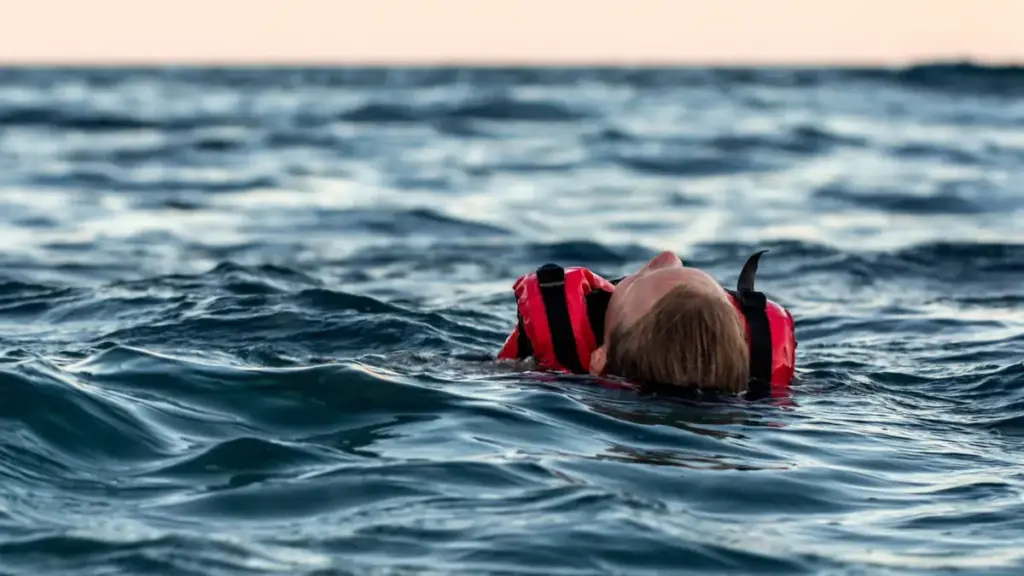
Countering this initial panic requires resisting the urge to thrash or swim immediately. Organizations like the Royal National Lifeboat Institution champion survival techniques such as "Float to Live," which instructs individuals to lean back and float on their backs with their faces safely clear of the water until the intense hyperventilation phase subsides. Modern personal flotation devices are purposefully engineered to roll a person into this correct orientation automatically. However, even without a lifejacket, the same fundamental biomechanics apply: by spreading the limbs wide and tilting the head backward, a person can generally maintain buoyancy with their face exposed to the air.
Even if a swimmer successfully manages their breathing and buoyancy, another profound physiological hazard lurks during this initial stage. Sudden cold immersion intensely activates the sympathetic, or fight-or-flight, nervous system. This autonomic surge commands the heart to beat in an extremely rapid and ultra-regular rhythm, causing heart rates to spike by 15 to 30 beats per minute within mere seconds.
Complicating matters further, if the victim’s face happens to be submerged during this spike, an ancient evolutionary mechanism known as the mammalian diving reflex kicks in. This reflex attempts to slow down the heart rate automatically to conserve oxygen while the body is underwater.
The simultaneous activation of these opposing neural impulses creates a perilous phenomenon known as "autonomic conflict." This conflict generates severe electrical instability within the heart muscle, potentially triggering dangerous cardiac arrhythmias—though researchers note this vulnerability is most acute in individuals with pre-existing heart conditions. Because studying these rapid cardiovascular changes in laboratory settings is both extraordinarily difficult and hazardous, scientists continue to debate the exact pathways. Nevertheless, the overarching clinical takeaway remains clear: a significant portion of cold-water drownings are likely caused by sudden cardiac arrest occurring immediately upon immersion, rather than the gradual onset of cold itself.
Mitigating this initial shock is possible through specific physiological adaptations. Habituation plays a powerful role; regular, controlled exposures to cold water systematically blunt the severity of the cold shock response, with protective adaptations persisting for months. Additionally, the shock response is noticeably less severe when a person enters cold water gradually rather than diving or jumping in all at once.
Swimming Failure
For those who survive the initial cold shock, a secondary phase begins as the external cold gradually penetrates the body over the subsequent thirty minutes. Acting from the outside inward, the cold environment progressively robs the extremities, muscles, and peripheral limbs of normal function.
As skin temperatures drop below 15 degrees Celsius (59 F), human fingers rapidly become clumsy and uncoordinated. When temperatures decline further, falling below approximately 8 degrees Celsius (46 F), tactile sensation and fine motor control vanish entirely. This functional deterioration severely impairs a person’s ability to swim effectively, maintain a grip on the side of an overturned boat, or haul themselves out of the water—all while the body’s internal core temperature remains remarkably close to normal.
Faced with this impending loss of physical capability, a swimmer must make a critical tactical decision: whether to attempt swimming toward a distant point of safety, such as a shoreline or a boat, or to remain entirely still. In water measuring 12 degrees Celsius (54 F), an average person wearing only a standard swimsuit can typically cover about 1,250 meters before hitting swimming failure, while someone clothed can manage roughly 800 meters. When swimming is necessary, experts advise utilizing a backstroke, relying primarily on gentle leg kicks while keeping the arms tucked close to the body to minimize thermal heat loss.
If safety lies beyond that swimming threshold, the priority must shift entirely to thermal conservation. Abandoning any attempt to swim, the individual should assume the Heat Escape Lessening Position—commonly known as the HELP position—by drawing the knees tightly to the chest and holding the arms close to the torso. Engaging in active swimming in such conditions only accelerates heat loss and hastens physical collapse.
Hypothermia
Eventually, typically after the first half-hour of continuous immersion, the body’s core internal temperature may cross the threshold below 35 degrees Celsius, or 95 degrees Fahrenheit. At this juncture, clinical hypothermia sets in, progressively clouding cognitive function, judgment, and conscious awareness.
As core temperatures continue to plummet below approximately 30 degrees Celsius (86 F), the individual inevitably loses consciousness. If this occurs while floating in open water, drowning is the most probable outcome. Even if the airway is somehow maintained, a failing core temperature will eventually cause the heart to stop beating entirely.
Dr. Laura Leuci and her colleagues emphasize that the medical literature contains a surprising number of documented cases where severe hypothermia victims have been successfully resuscitated long after their hearts had ceased beating. In rare historical examples, individuals have survived up to three hours underwater with core temperatures dropping as low as 13.7 degrees Celsius (56.7 F). This extraordinary survival window occurs because extreme cooling forces the brain into a specialized metabolic standby mode that drastically reduces its requirement for oxygen.
However, medical professionals caution that individuals cannot rely on this protective metabolic shutdown in typical cold-water emergency scenarios. True neuroprotection through cooling requires the body to cool down gradually before the heart stops. In sudden cold-water immersion, the abrupt onset of the cold shock response frequently causes cardiac arrest to occur prematurely—long before the body’s core has fully cooled—creating a lethal mismatch.
Circum-Rescue Collapse
One of the most perplexing and cruel phenomena associated with cold-water immersion is circum-rescue collapse, wherein individuals perish precisely at the moment of rescue, or immediately before and after extraction. Because this occurrence is documented with alarming frequency, researchers recognize it is not merely a matter of tragic coincidence; specific physiological mechanisms inherent to the rescue process itself trigger the fatal event.
Historically, medical professionals attributed this phenomenon to "afterdrop," a continuing decline in core body temperature that occurs even after a victim has been removed from the cold environment and subjected to active rewarming. The prevailing theory suggested that cold blood pooled in the peripheral limbs was pumped back toward the core, temporarily chilling internal organs further. While afterdrop remains a documented physiological reality, contemporary scientists no longer view it as the primary driver of rescue-related mortality.
Instead, modern research points toward the sudden loss of hydrostatic pressure—the constant physical force exerted by surrounding water against a submerged body. While a person is immersed, this external water pressure forces blood out of the extremities and concentrates it within the body’s core. When the victim is suddenly hoisted out of the water, that supportive pressure instantly vanishes, allowing blood to rush backward into the limbs. This rapid redistribution can trigger a catastrophic drop in systemic blood pressure.
The hazard is magnified significantly if a victim is extracted in a vertical orientation, such as being winched upward by a helicopter rescue cable, which encourages blood to pool heavily in the legs. To counter this risk, modern maritime rescue protocols strongly advise emergency personnel to keep recovered victims in a horizontal position during and immediately following extraction from the water.
An additional physiological risk factor involves the profound emotional and psychological impact of impending rescue. Parallels have long been observed in avalanche survivors who occasionally deteriorate rapidly immediately after being unearthed. While much of the evidence remains anecdotal, Leuci and her co-authors speculate that the sudden psychological relief of rescue triggers a severe "parasympathetic surge," abruptly shifting the nervous system from high-alert fight-or-flight to a rest-and-digest state. This sudden neural shift can similarly induce a dangerous, precipitous drop in blood pressure.
Ultimately, these intricate physiological nuances operate secondary to fundamental water-safety principles: maintaining a thorough awareness of the local environment, exercising careful preparation, and—most crucially—consistently wearing a properly fitted personal flotation device. Yet for anyone who experiences an unexpected plunge into frigid waters, understanding that the initial moments of entry and the final moments of extraction carry risks just as severe as the time spent enduring the cold may prove the difference between life and death.