

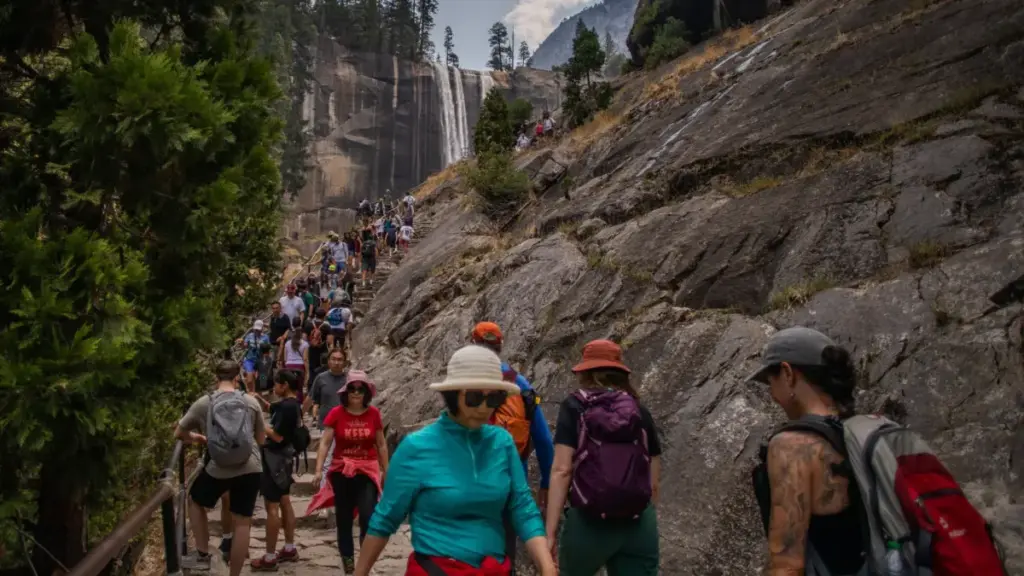
America’s national parks are experiencing an era of unprecedented popularity—so busy, in fact, that managing the massive influx of travelers has become one of the National Park Service’s most pressing challenges. To combat severe overcrowding, traffic gridlock, and environmental degradation, many parks now require reservations or permits for specific trails, scenic drives, or even entry into the park itself. However, a new study suggests that these well-intentioned reservation systems may carry an unintended consequence: disproportionately benefiting wealthier visitors.
Published in the open-access scientific journal Nature Communications, the study examined reservation data across seven iconic national parks, including Acadia, Glacier, and Rocky Mountain. The research revealed a distinct socioeconomic pattern among visitors who successfully secured access. Individuals who booked certain permits further in advance were consistently more likely to originate from wealthier zip codes. That trend held equally true for travelers who managed to nab the parks’ most competitive and high-demand reservations.
"How you allocate these permits seems to matter for who gets to recreate," Jonathan Hughes, an economist with the University of Colorado and the author of the study, told Outside. "We adopt policies, and sometimes they generate unintended consequences."
To uncover these patterns, Hughes analyzed 11 distinct reservation systems operating within the seven national parks between 2021 and 2024. These systems governed timed entry windows, such as the popular system implemented at Rocky Mountain National Park, or controlled vehicle access to specific, high-traffic park areas, such as the famous Cadillac Summit Road in Acadia National Park. The scope of the study focused strictly on access permits and did not analyze reservations for internal amenities like backcountry permits or frontcountry campsites.
The findings paint a clear picture of disparity based on timing and competitiveness. According to the research, visitors who secured reservations for the most competitive permits hailed from zip codes with median household incomes between three and five percent higher than those of visitors who sought less-competitive permits. Furthermore, the timeline of booking directly correlated with wealth. Visitors who secured reservations well ahead of their travel dates tended to come from significantly wealthier zip codes. Specifically, permits purchased six months in advance of a trip favored residents in zip codes with a median income five percent higher than the zip codes of residents who managed to secure same-day permits.
Hughes readily acknowledged that park managers have turned to reservation systems out of absolute necessity to ease the mounting strains of overuse. The National Park Service logged more than 331 million recreation visits in 2024, marking a historic high for the agency. Yet, in a clear signal that the National Park Service is still actively experimenting with how best to manage crowds and balance public access, the agency even abandoned a timed-entry system this year at some of its most heavily visited locations, such as Arches National Park.
"People who got permits love this system because there’s a lot of good reasons to ration access. It improves people’s experience," Hughes said. "You can have that isolation, solitude in the wilderness. Nature is protected because you don’t have people parking off the roadside, and the animals are less disturbed so there’s lots of good reasons why parks do this."
Despite these undeniable ecological and experiential benefits, Hughes emphasized that the foundational mission of the National Park Service is to manage its protected sites for the collective benefit of the entire public. That core mandate means every American deserves a fair and equitable chance at access, regardless of their socioeconomic standing.
Delving into the mechanics of why these permitting systems lean toward the affluent, Hughes pointed to several contributing factors that create systemic inequality. Workplace flexibility emerged as a primary driver. For instance, individuals who successfully book travel arrangements months in advance likely possess the occupational freedom and job stability to do so.
"Some professions you can, or maybe are even forced to, schedule your vacation many months in advance. Maybe those tend to be higher-earning professions," he explained. "Whereas in other professions, maybe your schedule is more up in the air up until a few days before you’re actually working so you have a lot less flexibility."
An individual’s disposable free time and daily routine also play critical roles in the reservation race. When a high-demand permit goes live on a booking platform at a precise time of day, a permit seeker working an inflexible, lower-income hourly job might not be able to step away from work, take a break, or be near a computer to complete the transaction. Hughes added that higher earners may also possess greater familiarity with the necessary technology and the specific knowhow required to smoothly navigate the federal government’s centralized reservation portal, recreation.gov. When milliseconds and sheer speed matter for securing a competitive reservation, individuals lacking reliable broadband internet or high-speed connections are inherently placed at a disadvantage.
"There’s some evidence that lower income folks tend to access the internet more from phones than they do from computers so maybe that’s an issue," Hughes said.
Ultimately, Hughes hopes his research will serve as a constructive resource for park managers as they continuously evaluate, modify, and refine their permitting systems. The core challenge for the agency remains walking a tightrope between not overburdening the fragile natural landscape and creating equal, barrier-free opportunities for the broader public to recreate within it.
Reflecting on potential solutions, Hughes suggested that park managers could consider adopting a randomized lottery system for the most competitive reservations to ensure a baseline of absolute fairness. However, he was quick to note that lotteries come with their own distinct set of drawbacks, most notably that participants often cannot guarantee a visit on the specific date that aligns with their personal schedules or vacation plans.
Will Rice, an associate professor at the University of Montana who studies equity and recreation access issues related to public lands and campgrounds, offered additional perspectives on reforming the current framework. Rice expressed support for the lottery approach to reservations and also advocated for releasing permits in staggered waves, which allows for greater equity across different types of travelers. Under this multi-tiered model, batches of permits would become available in progressive stages, ranging from several months out down to weeks, and ultimately to just days in advance of the entry date.
"We’re seeing more and more parks do this," Rice told Outside, while stressing that effectively communicating these complex release timelines to the general public remains vital for the system to work as intended.
Beyond structural changes to how permits are distributed, Rice has collaborated with the Leave No Trace organization to develop ethical guidelines for reserving public campsites. These guidelines discourage practices such as attempting to create artificial buffer zones between camping parties by booking multiple concurrent sites. He suggested that similar public education campaigns could be thoughtfully designed to foster a culture of etiquette and consideration around timed-entry park permits.
"There is a big piece of being considerate to others in how you responsibly obtain, use and cancel permits," Rice said.