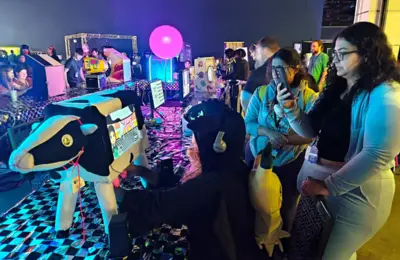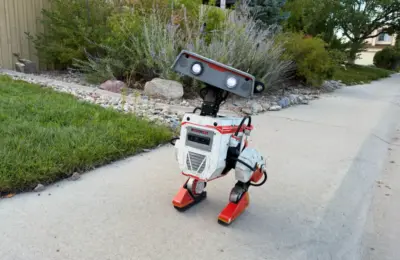


The historic Gazometro Ostiense in Rome is once again transforming into a sprawling hub of human ingenuity as Maker Faire Rome — The European Edition opens its doors for its 14th edition. Running from October 23 to 25, 2026, the annual exhibition brings together makers, forward-thinking companies, start-ups, academic researchers, and students from across Europe to showcase more than 400 exhibition stands filled with working prototypes, interactive displays, and groundbreaking technologies.

Organized by the Rome Chamber of Commerce through its special agency Innova Camera, this year’s event features robust participation from the academic and educational sectors. Specifically, 26 secondary schools and 27 universities and research centers are taking part, presenting 145 distinct projects. Built around three foundational pillars—innovation, creativity, and discovery—the three-day program emphasizes hands-on experience, inviting visitors to test new technologies, engage directly with creators, and witness scientific research transition from isolated laboratories into the public eye. While the primary venue remains the Gazometro, parts of the expansive program extend to the nearby Istituto Superiore Antincendi, reinforcing the event’s deep integration with Rome’s urban and institutional landscape.
Humanoid Robots Take to the Football Pitch
One of the most anticipated additions to the 2026 edition is Italy’s inaugural International Italian Open RoboCup Humanoid Soccer tournament. Pitting university and research center teams against one another, the matches feature five autonomous humanoid robots per side. Once the referee signals the start of a match, the mechanical athletes operate entirely on their own, reading the pitch, tracking the ball, and making real-time tactical decisions without human intervention.

Among the standout competitors is SPQR, the robotics team from the Department of Computer, Control and Management Engineering at Sapienza University of Rome. Having competed in the international RoboCup circuit since 1998 and led by engineer and researcher Vincenzo Suriani, SPQR recently reached the final of the World Humanoid Robot Games in Beijing, where they earned distinction as the sole non-Chinese team remaining in contention during the final three days of competition.
Robotics Beyond the Laboratory
Complementing the public exhibition floor, the Institute of Robotics and Intelligent Machines is hosting the eighth edition of its annual conference, I-RIM 3D 2026. The scientific agenda delves into assistive and medical robotics, collaborative systems, embodied intelligence, and physical AI, alongside industrial applications for autonomous agents. For the general public, the newly introduced I-RIM 3D DEMO program bridges the gap between academic theory and practical observation by offering continuous live demonstrations throughout the event.

In tandem, the I-RIM 3D Exhibition showcases hardware developments from various academic institutions, while the RoboPitch initiative grants selected start-ups and research groups a platform to present robotics proof-of-concept projects directly to potential investors, corporate partners, and innovation hubs. Additional commercial insight is provided by CNA Roma, which highlights how smaller enterprises and traditional craftspeople can successfully integrate robotics and artificial intelligence into their daily operations.
Italian Craftsmanship Meets Advanced Technology
A major thematic focus for the 2026 fair is AvantCraft, a curated exhibition exploring the ongoing evolution of Italian craftsmanship in the wake of digital fabrication, advanced robotics, and artificial intelligence. Curated by Stefano Micelli, Professor of Business and Management at Ca’ Foscari University of Venice, and organized by Upskill 4.0, the exhibition is divided into three distinct zones: mobility and precision engineering; contemporary craft spanning ceramics, glass, scagliola, and inlay; and fashion, jewelry, and biomaterials.

The physical artifacts on display tell a compelling story of heritage meeting high-tech manufacturing. Visitors can inspect high-performance vehicles, titanium bicycles, 3D-printed ceramics, hand-set titanium jewelry, and experimental materials derived from industrial waste. A centerpiece of the automotive display is the Dallara Stradale, a vehicle manufactured in an environment where advanced composite engineering coexists with meticulous manual assembly. Emphasizing mechanical purity and analog driving dynamics over superfluous electronics, the car represents a philosophy dedicated purely to performance and driving engagement.
Technology Built Around People
A significant portion of the exhibition floor is dedicated to practical technologies designed to solve everyday human challenges, particularly in the realm of workplace safety. Research presented collaboratively by Inail and the Italian Institute of Technology (IIT) highlights wearable devices and training systems aimed at risk mitigation. Among these is an advanced eye-tracking system designed to study visual attention and hazard perception in industrial environments.

Furthermore, Inail and Sapienza University of Rome are showcasing the SIDE haptic exoskeleton, a system engineered to recreate physical forces within virtual and augmented reality environments. This technology allows workers to train safely for high-risk scenarios, such as navigating confined or hazardous industrial spaces, without exposure to real-world dangers. IIT and Inail are also exhibiting the XoTrunk and FleXoTrunk wearable prototypes, which provide lower-back physical support during heavy manual handling, alongside an integrated wearable airbag system capable of distinguishing normal movement from an accidental fall to protect the torso and neck within milliseconds.
From Food Design to Farming in Space
The agrifood sector at Maker Faire Rome highlights contributions from a consortium of scientific organizations, including CREA, ENEA, CNR, Sapienza University of Rome, the University of Tuscia spin-off Value Groovers, and the Euro-Mediterranean Center on Climate Change (CMCC). CREA is featuring innovations in food design, a software-controlled micromalting system, and 3D food printing technologies. Meanwhile, ENEA explores sustainable food production in extreme environments, encompassing space agriculture, cellular agriculture, and plant biotechnology.

The National Research Council (CNR) is presenting its FoodEye technology, which utilizes spectroscopy to evaluate food quality, nutritional profiles, geographical origin, and potential contamination or food fraud. In the field of digital agriculture, Value Groovers has developed a software platform to help farmers optimize plant-protection treatments and determine precise intervention timing. Terravionics combines Internet of Things (IoT) sensors, Earth observation data, and algorithmic analysis to support proactive tree management, while Yeastime applies ultrasound technology to industrial fermentation processes to reduce operational times and energy consumption.
Books Become Part of the Programme
Expanding the cultural breadth of the event, Books@MFR26 introduces a dedicated editorial strand focused on science, technology, and broader societal transformations. Featuring authors and panel discussions on the main stage, the program covers topics ranging from educational reform and space colonization to quantum physics and evolving human relationships. As part of an interactive community initiative, visitors are invited to bring a favorite book on science or technology, deliver a brief two-minute pitch on why others should read it, and contribute their copy to a shared library collection known as BiblioMaker.

From Historic Icons to Modern Practicality
A diverse array of standalone exhibits continues to draw considerable attention on the exhibition floor. A genuine DeLorean DMC-12, designed by Giorgetto Giugiaro and immortalized by popular culture, has been transported to Rome from the Enter Technikwelt Solothurn museum in Switzerland. Demonstrating autonomous engineering, Sapienza Corse is presenting the Gajarda AWD Hybrid Driverless racing car, a Formula Student vehicle outfitted with specialized cameras and actuators capable of navigating a course without a human driver.
Individual makers are also well-represented, including a 17-year-old Italian creator showcasing a neural headset that translates bodily signals into digital commands, paired with a 3D-printed bionic hand controlled via computer vision and electromyography. Other notable projects include the Da-Vinci Bicycle, which merges Leonardo da Vinci’s historical aerial screw design with virtual reality simulation, and the Gran Sasso Science Institute’s interactive dark-matter exhibit, featuring a working cloud chamber linked to the DarkSide-20k experiment.

Culinary automation finds a practical application in Robby Minichef, a prototype kitchen robot trained by professional chefs to replicate the exact timing and physical motions required to prepare traditional dishes like spaghetti cacio e pepe. From Sardinia comes P3DALO, a five-meter inflatable pedal boat featuring modular paddlewheels and structural components largely produced on a standard desktop 3D printer, allowing the entire watercraft to be disassembled and transported in a conventional car.
Institutional Collaboration and Ongoing Research
The National Research Council is maintaining a robust presence with diverse projects spanning environmental science, open-source technology, and biomedicine. Among its most unusual displays is Babots, an initiative exploring biological robotics through modified C. elegans worms intended for indoor farming applications. Another CNR-led exhibit investigates atmospheric water harvesting via 3D printing, while the Melandetect project introduces an app-based approach to predictive dermatological diagnostics, and RoseBio focuses on personalized oncology research.

The educational and gaming zone prioritizes direct engagement, featuring MakerCamp—an official Minecraft Education Partner—hosting coding and problem-solving workshops alongside robot battles, circuit printing stations, and chemistry demonstrations. With 417 registered classes participating in the 2026 STEAM in Minecraft competition, the initiative underscores the growing role of digital platforms in modern pedagogy.
Institutional backing remains strong, with Eni returning for its thirteenth consecutive year as the Main Partner, utilizing its historic Gazometro site to host the event and presenting an interactive exhibition space titled Pioneers to Makers to mark the centenary of Agip. Additional institutional support is provided by Regione Lazio, Roma Capitale, the Italian Trade Agency, and numerous academic and industrial partners, ensuring Maker Faire Rome remains a definitive showcase for European innovation, creativity, and technological discovery.