



In feline nutrition and veterinary medicine, the gut microbiome has moved to center stage. The vast community of microorganisms inhabiting a cat’s digestive tract plays a critical role in overall gastrointestinal function, metabolic balance, and immune health. As interest in targeted microbiome support grows, pet owners and veterinary professionals are increasingly looking at prebiotics—specialized non-digestible ingredients designed to nourish beneficial gut microbes.
However, incorporating prebiotics into a cat’s daily care routine involves more than selecting a popular supplement. Veterinary experts emphasize that choosing an appropriate prebiotic requires a clear understanding of feline digestive physiology, careful reading of product labels, and a comprehensive review of the cat’s complete feeding plan.
How Prebiotics Work Within the Feline Microbiome
The feline gut microbiome is a complex ecosystem where different species of bacteria and yeast perform distinct biological functions. The dietary components that reach the lower digestive tract directly influence which microbial populations thrive. Prebiotics act as specific nutrient sources for these beneficial microbes, promoting their growth and metabolic activity.
Among the most commonly used prebiotic ingredients are fructooligosaccharides, frequently abbreviated as FOS, and inulin. These compounds belong to a class of fermentable fibers that resist upper gastrointestinal digestion and travel to the colon. There, native gut bacteria break them down through fermentation, a process that yields short-chain fatty acids such as butyrate. These fatty acids help maintain the chemical environment of the intestinal lumen and serve as an energy source for colonocytes.
Scientific research demonstrates that specific dietary fibers can measurably alter the feline intestinal flora. A study evaluating eight healthy adult cats examined the effects of diets supplemented with short-chain FOS, galactooligosaccharides, or a combination of both. The research revealed that these prebiotic ingredients significantly increased certain beneficial fecal bacterial populations, particularly Bifidobacterium species, while altering specific markers of fermentation. Notably, the study found no significant differences in fecal dry matter or overall stool output between treatments.
Veterinary researchers note that while such studies confirm that selected ingredients can modulate feline microbial populations, they do not imply that prebiotics act as a universal cure for gastrointestinal disease. Controlled feeding trials in healthy research animals provide valuable insights into biological mechanisms, but they do not supply individualized therapeutic dosing for commercial supplements used in clinical settings.
To help pet owners evaluate what their animals are receiving, some supplement manufacturers emphasize formulation transparency. For example, Animal Biome S. boulardii + FOS Powder clearly identifies its prebiotic component on the product label, specifying 225 milligrams of GOFOS alongside the yeast probiotic Saccharomyces boulardii per scoop. This precise labeling allows pet parents and veterinarians to quantify exact ingredient amounts before integrating a product into a cat’s feeding regimen.
Distinguishing Prebiotics, Probiotics, and Digestive Enzymes
Understanding gut health products requires differentiating between three fundamentally distinct categories of digestive support: prebiotics, probiotics, and digestive enzymes. Although these terms are often grouped together in commercial marketing, they perform entirely different roles within the digestive tract.
Prebiotics provide non-living, fermentable substrates that feed existing beneficial microbes. Probiotics, by contrast, introduce live microorganisms directly into the digestive tract. Enzymes represent a third category altogether, acting as biological catalysts that assist in breaking down dietary proteins, fats, or carbohydrates during digestion.
Confusing these categories can lead to misunderstandings about how a supplement functions. An ingredient does not become a probiotic simply because it supports digestive comfort, nor is a probiotic limited strictly to bacterial strains. The beneficial yeast Saccharomyces boulardii, for instance, is a widely utilized probiotic organism featured in several feline digestive formulations.
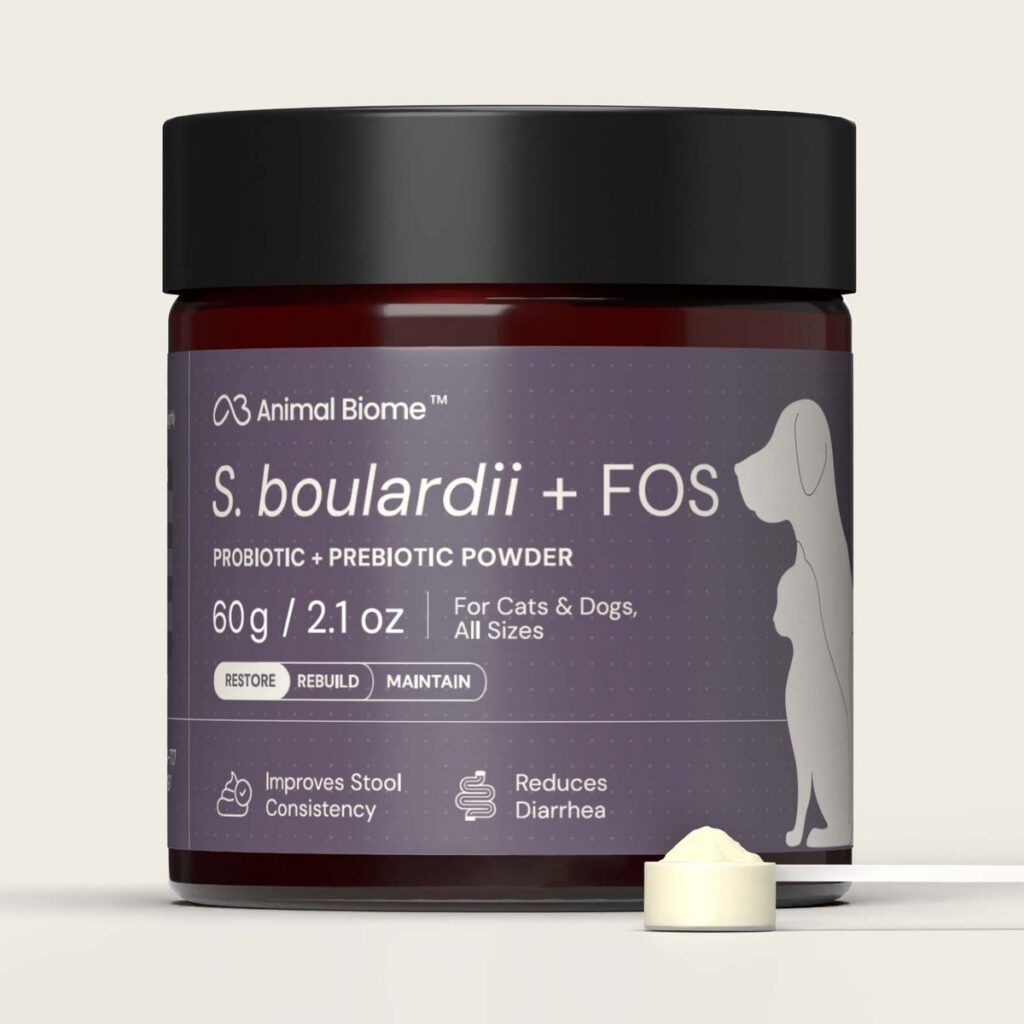
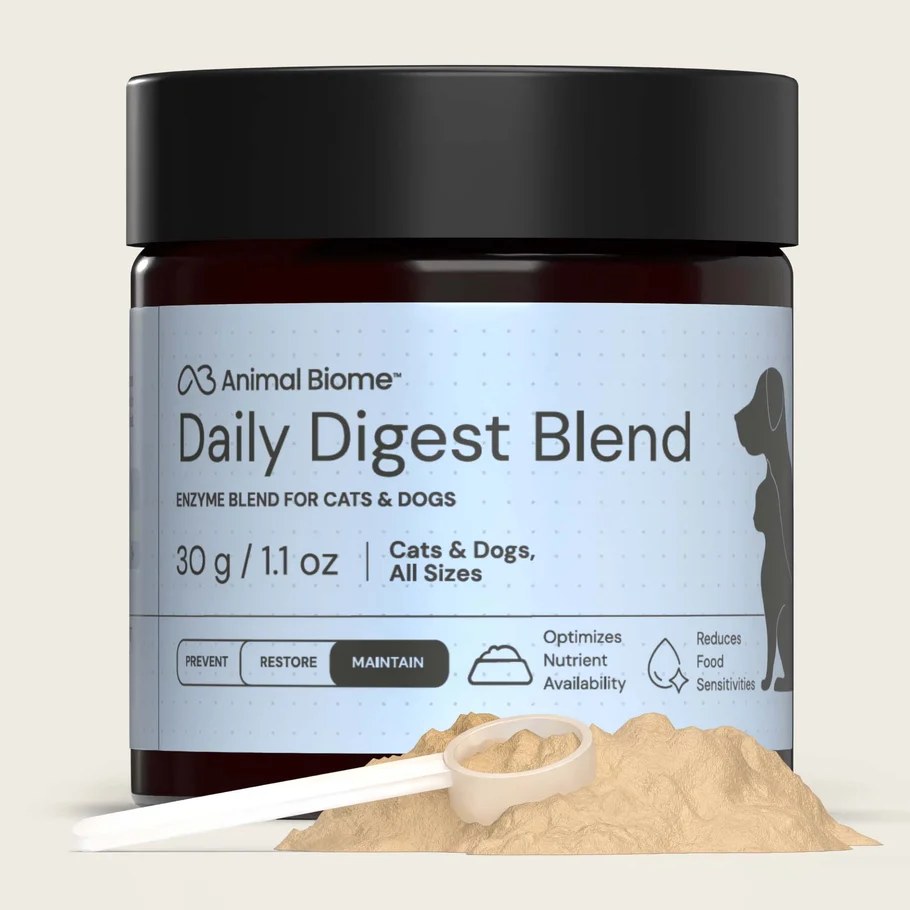
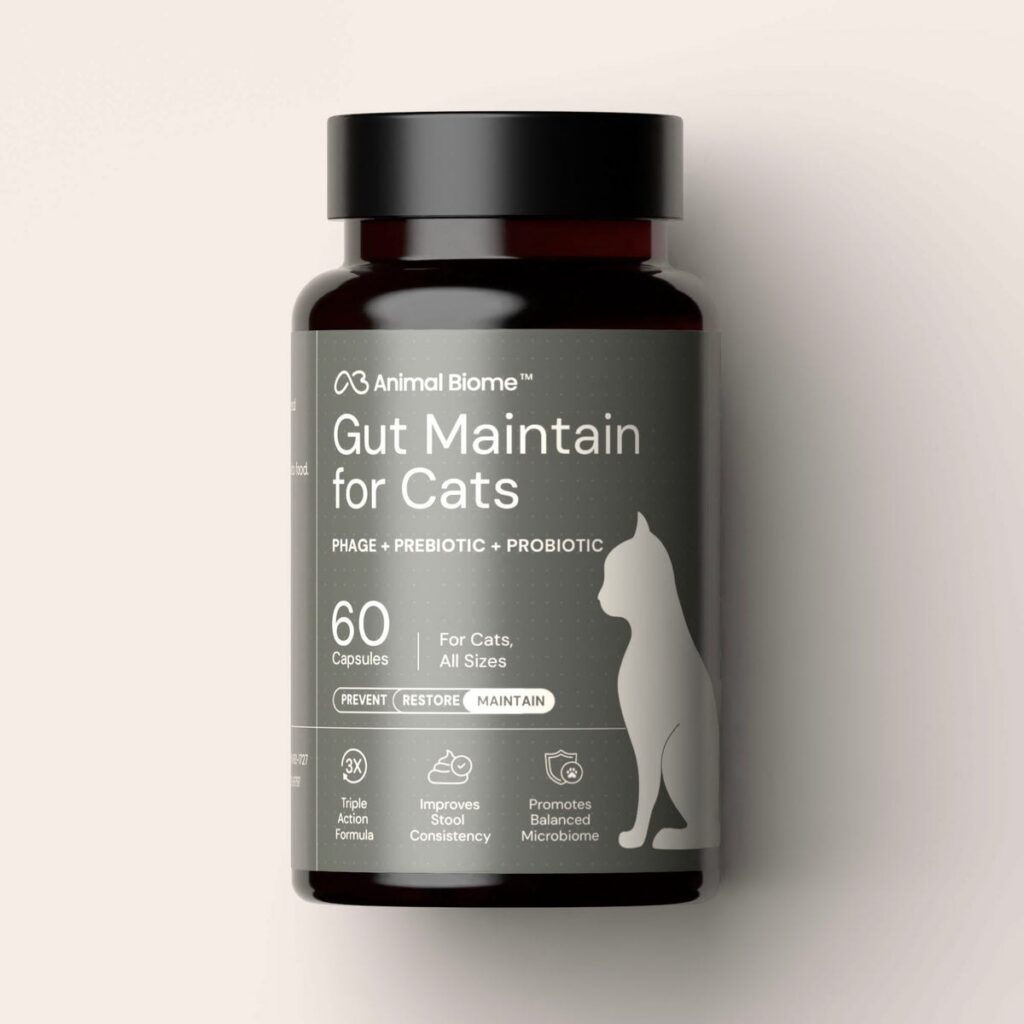
Commercial products often blend these functional categories to address different care goals. Animal Biome S. boulardii + FOS Powder pairs live yeast with prebiotic fiber for direct microbial support. The same manufacturer’s Daily Digest Blend takes a broader approach, incorporating digestive enzymes alongside prebiotic FOS. A third formula, Gut Maintain for Cats, utilizes a distinct combination featuring S. boulardii, BIO-MOS (mannan-oligosaccharides), and a targeted bacteriophage blend known as PreforPro.
Because each formulation serves a different purpose, veterinary professionals advise against arbitrarily combining multiple supplements. Deciding between a formula designed for everyday digestive enzyme support, routine microbiome maintenance, or targeted yeast supplementation depends entirely on the cat’s specific health status and feeding routine.
When primary concerns revolve around managing active gastrointestinal signs, such as acute or chronic diarrhea, veterinary guidance remains essential. Broader therapeutic selections depend on underlying clinical causes, individual tolerance, and formula safety rather than simply selecting a product with the highest colony-forming unit count or the most complex ingredient list.
When Prebiotics Belong in a Feline Care Plan
Determining whether a cat would benefit from prebiotic supplementation begins with an evaluation of the animal’s baseline health. There is no single clinical sign or visible symptom that specifically diagnoses a "prebiotic deficiency." Loose stools, appetite changes, and occasional digestive upset can stem from dozens of distinct medical conditions, ranging from simple dietary indiscretion to complex systemic disease.
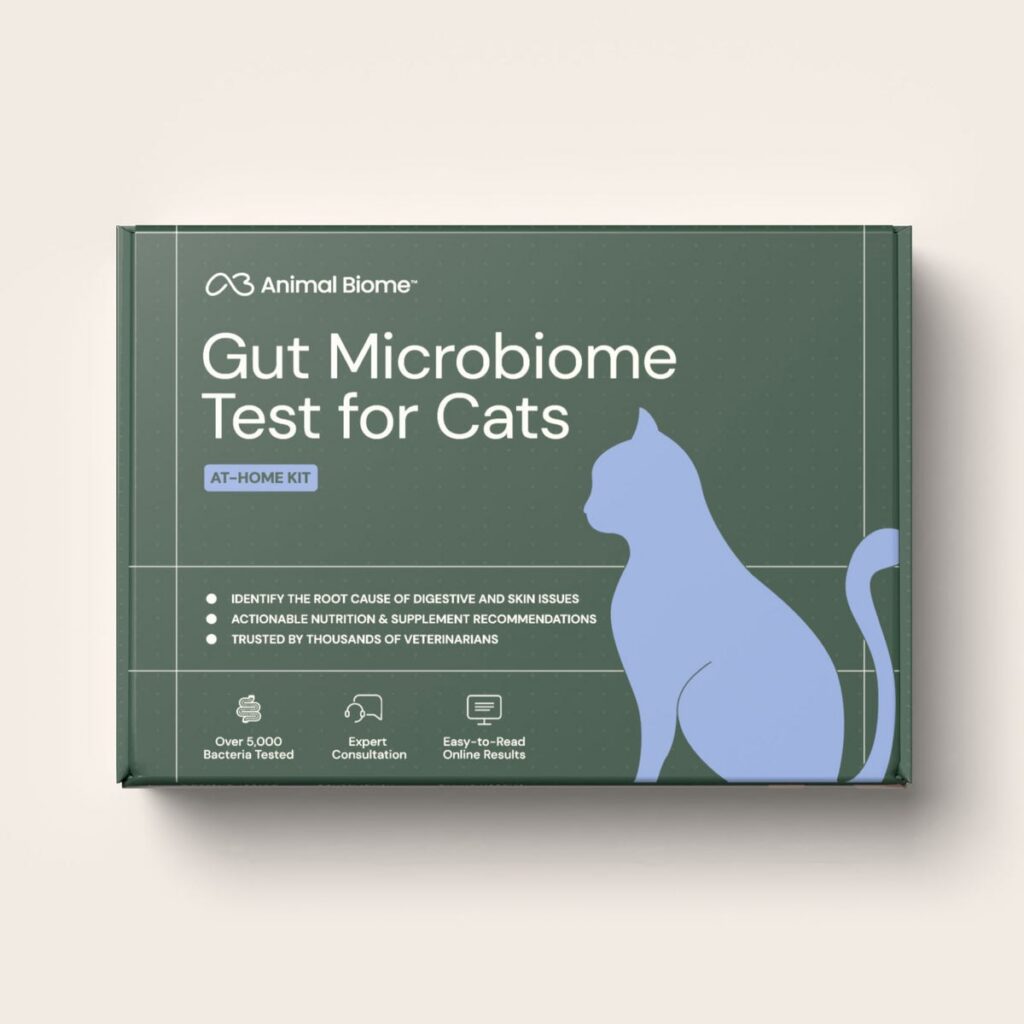
For pet owners interested in analyzing their cat’s internal microbial ecosystem, specialized screening tools are available. The Animal Biome Gut Microbiome Test for Cats utilizes genomic sequencing to profile the bacterial populations present in a stool sample. The resulting report provides a snapshot of microbial diversity that can inform long-term care discussions with a veterinarian. However, clinicians stress that microbiome profiling is an educational and supportive tool, not a diagnostic test for acute infections, intestinal parasites such as Giardia, food allergies, or exocrine pancreatic insufficiency.
Furthermore, a stool analysis showing altered bacterial populations does not automatically mean an owner should immediately add large amounts of prebiotic fiber to the cat’s diet. Stool testing results must always be interpreted alongside the cat’s clinical history, current diet, prescribed medications, and physical examination findings.
For cats suffering from chronic gastrointestinal issues such as Inflammatory Bowel Disease (IBD), introducing prebiotics requires careful clinical oversight. The Cornell Feline Health Center notes that feline diarrhea can stem from infectious agents, dietary sensitivities, inflammatory disorders, or metabolic illnesses. In cats diagnosed with IBD, prescription diets and targeted medications form the foundation of management. Introducing multiple new supplement ingredients simultaneously can obscure dietary responses and make it difficult to determine whether a cat is improving or experiencing a reaction to a new compound.
Conversely, for a healthy cat that is eating normally, maintaining weight, and producing normal stools, routine dietary additions should have a clear, defined rationale. Rather than adding supplements under the vague assumption of improving "gut health," pet owners and veterinarians should agree on specific observational goals, such as maintaining consistency during diet transitions or evaluating long-term tolerance.
Navigating Product Labels and Building a Dietary Inventory
Before purchasing any digestive supplement, pet owners should conduct a thorough inventory of everything their cat currently consumes. Prebiotic ingredients are frequently included in commercial cat foods, including daily wet recipes, dry kibble, and specialized therapeutic diets.
Reviewing a cat’s current intake requires examining the exact recipe name and ingredient statement of every food, treat, and supplement provided. Brand names alone are insufficient, as manufacturers frequently alter ingredient profiles between different flavor varieties or product lines.
When reading commercial pet food and supplement labels, prebiotics usually appear in the ingredient list under specific names such as fructooligosaccharides, inulin, chicory root, or galactooligosaccharides. However, general label claims require careful scrutiny. A manufacturer listing "chicory root extract" may not disclose the exact concentration of active inulin provided per serving.
Similarly, the "crude fiber" percentage listed in a food’s guaranteed analysis does not indicate whether prebiotic fibers are present or in what amounts. Crude fiber measures insoluble structural components rather than the specific fermentable fibers that nourish gut microbes. Marketing terms such as "natural prebiotics" also lack regulatory definitions regarding potency, making precise identification of individual compounds essential.
To evaluate potential dietary overlap, owners should record the exact recipe, daily intake, and identified prebiotic ingredients across all parts of their cat’s routine. Comparing the regular diet, existing supplements, and any proposed addition reveals whether a cat is already receiving prebiotic compounds.
This detailed review often uncovers unexpected ingredient duplication. For example, an owner might administer one product categorized as an enzyme blend and another categorized as a probiotic, only to discover upon reading the fine print that both contain FOS. While ingredient overlap is not inherently harmful, knowing the total cumulative intake prevents unintended over-supplementation.
Ingredient quantitation varies significantly across product formats. Animal Biome’s S. boulardii + FOS Powder lists 225 milligrams of GOFOS per provided scoop, whereas its Daily Digest Blend contains 432.21 milligrams of NutraFlora FOS embedded within a 600-milligram ProBiome Enzyme Blend per scoop. Comparing these specific milligram amounts provides a clear picture of total intake that generic product descriptions cannot supply.

Veterinary clinical teams also caution against using household cutlery to measure powdered supplements. Powder density varies between formulations, meaning a standard household teaspoon does not deliver a consistent weight or serving size. Using the scoop provided with each specific product container ensures accurate administration.
When analyzing a cat’s daily routine, consideration must also be given to feeding behavior. In multi-cat households or homes where cats graze on dry food throughout the day, ensuring that a specific cat consumes an exact dose of a powdered supplement mixed into food can be challenging. If a cat regularly leaves half its meal unconsumed, recording that variable helps veterinarians understand the actual dose delivered.
If an owner considers changing supplement formats—such as transitioning from a powder to an openable capsule for administrative ease—a side-by-side comparison of active ingredients remains necessary. Capsules and powders within the same product family may utilize different prebiotic sources, yeast concentrations, or binding agents, turning a simple packaging switch into a formal change in formulation.
Guidelines for Introducing a Prebiotic Supplement
Once an appropriate product has been selected in consultation with a veterinarian, the introduction should be handled systematically to minimize digestive disruption. Maintaining a stable baseline diet during the trial period is critical for accurately evaluating the cat’s response.
Supplements should be introduced gradually according to specific manufacturer instructions or veterinary direction. For example, guidelines for Animal Biome S. boulardii + FOS Powder recommend starting with half the standard daily serving and slowly increasing to the full amount over several days.
During the initial phase of supplementation, owners should establish a daily log to monitor three key parameters: stool consistency, daily appetite, and overall energy levels. Stool appearance should be recorded using consistent descriptive terms—such as well-formed, soft, or watery—rather than subjective impressions. Noticing changes in stool frequency, volume, or the presence of mucus provides valuable context for follow-up veterinary visits.
Appetite monitoring is equally critical. A supplement that improves stool consistency is not beneficial if its odor or taste causes the cat to reduce its overall food intake. Cats that refuse food are at risk for metabolic complications such as hepatic lipidosis. Pet owners should never withhold regular meals to force a cat to consume food mixed with a supplement. If a cat consistently rejects a supplemented portion, the strategy should be re-evaluated.
At an agreed-upon review date, the pet owner and veterinarian should review the tracking log to assess whether the supplement achieved its intended purpose. If the cat shows positive tolerance and stable digestion, the routine can be maintained. If no observable benefits occur, or if mild digestive upset develops, the clinical team can decide whether to adjust the dose, explore alternative formulations, or discontinue the product altogether.
Immediate veterinary evaluation is necessary if a cat develops acute clinical signs, including persistent vomiting, total loss of appetite, severe lethargy, abdominal pain, or visible blood in the stool. Dehydration can develop rapidly in cats suffering from ongoing fluid loss, making prompt medical assessment far more important than attempting home dietary adjustments.
Frequently Asked Questions About Feline Microbiome Support
Is it safe to give cats probiotics every day?
Many probiotic and prebiotic products formulated specifically for feline use are designed for daily administration. However, ongoing use should always be confirmed with a veterinarian and aligned with a clear health goal. Because a cat’s health status, baseline diet, and medical needs evolve over time, long-term supplement routines should be periodically reviewed to ensure they remain appropriate.
Can pumpkin act as a probiotic for cats?
No. Pumpkin provides dietary fiber, but it contains no live microorganisms and is therefore not a probiotic. While plain canned pumpkin is sometimes used as a source of fiber to manage mild bowel irregularity, its nutrient profile and fiber composition are distinct from purified, measured prebiotic formulations like FOS or inulin.
Are homemade fermented foods suitable probiotics for cats?
Veterinary nutritionists advise against offering homemade fermented foods, such as unpasteurized yogurts, kefir, or fermented vegetables, to cats. These foods contain variable, unstandardized microbial strains and may introduce unnecessary sodium, fats, or dairy sugars that can cause digestive upset. Formulated feline supplements provide verified strains, guaranteed viable counts, and appropriate species-specific dosing.
Is commercial yogurt an acceptable source of probiotics for cats?
Although some yogurts contain live bacterial cultures, dairy products are not recommended as primary probiotic sources for cats. Many adult cats are lactose intolerant, and consuming dairy can trigger gastrointestinal distress, diarrhea, or gas. Additionally, commercial yogurts frequently contain added sugars, artificial sweeteners, or flavorings that are unsuitable or toxic for felines.
What is the most effective natural prebiotic for cats?
There is no single prebiotic ingredient that is universally superior for every cat. Ingredients such as fructooligosaccharides (FOS), inulin, and galactooligosaccharides (GOS) have documented effects on feline gut microbial populations. The most effective option depends on the individual cat’s digestive tolerance, diet history, and specific health targets as evaluated by a veterinarian.
What is the optimal time of day to administer digestive supplements?
Timing generally depends on the specific instructions supplied by the product manufacturer. Many digestive powders and enzymes are designed to be mixed directly into wet food during regular meal times. Establishing a consistent daily feeding routine ensures accurate dosing and allows owners to monitor whether the cat consumes the full amount provided.