

Mechanical keyboards are beloved by typists, office workers, and gamers alike for their tactile feedback, satisfying acoustics, and endless customization options. From custom keycaps and artisan switches to programmed macros, personalizing a desktop setup has become a massive hobby in its own right. Now, a clever 3D-printing project is taking keyboard modification a step further by bridging the gap between traditional typing layouts and classic gaming peripherals.
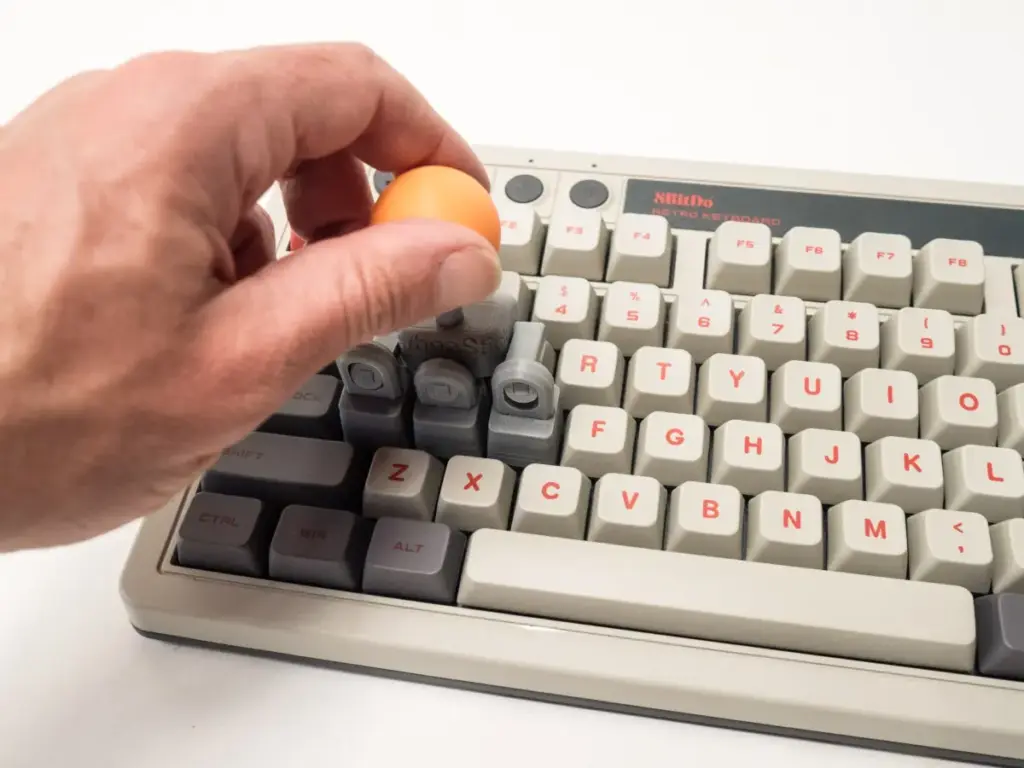
Designed by Korean maker FunOrNothing, the KeyboaStick is an innovative 3D-printable model that transforms a standard set of mechanical keyboard keys into a functional, articulated joystick. Aimed at breathing new life into standard desktop layouts, the accessory offers an intriguing bridge for retro gaming enthusiasts who prefer tactile physical feedback over tapping individual keys during gameplay.
The project is available in various iterations, with the standard version specifically designed to replace the conventional WASD keycaps commonly used for movement in PC gaming. Once installed, the individual keycaps connect to a central mechanical joystick via a series of articulated linkages. One of the most notable engineering features of the design is that the joints mostly print in place. This reduces the need for complex multi-piece assembly or additional hardware, while making the file forgiving enough to print successfully even on older or less-than-perfectly calibrated 3D printers.

For enthusiasts interested in printing their own, the files are hosted for free on MakerWorld, though physical prints are also offered through commercial channels with pricing ranging up to $17. Assembly is designed to be straightforward, allowing users to snap the components together with minimal post-processing required. While initial user testing noted that movement could feel slightly sticky when aiming laterally—and that over-enthusiastic handling could occasionally pop the top cap off its mount—the physical contraption holds up surprisingly well under actual gameplay conditions. Reviewers testing the peripheral found that it was robust enough to successfully navigate demanding retro titles like Sonic the Hedgehog 2, clearing the Emerald Hill Zone without the unique controller layout creating a prohibitive disadvantage.
The popularity of the KeyboaStick has also brought attention to the challenges faced by independent digital designers in the 3D-printing community. The model’s unique mechanics have unfortunately made it a frequent target for unauthorized copying and distribution by unscrupulous online sellers. Despite these copyright challenges, supporters can ensure the original creator is properly credited and compensated by downloading the official files directly through MakerWorld or by purchasing authorized physical prints from the official RadianLab store hosted on Etsy.
As the ecosystem around the KeyboaStick continues to evolve, the designer has expanded the product line beyond the initial WASD configuration. Alternative versions have been developed to accommodate other key groupings, alongside a quick-replace variant designed for easier swapping between standard typing and gaming setups. Furthermore, a redesigned Pro version featuring performance enhancements and refined ergonomics has been introduced, available as a physical print through the RadianLab Etsy storefront for users looking for an optimized gaming experience.

Whether the peripheral truly improves gaming performance remains a matter of personal preference and execution. While the joystick handles fast-paced platforming action capably, missed inputs or sudden failures during intense sessions—such as meeting an untimely Game Over in the notoriously difficult Chemical Plant Zone—might ultimately come down to user error rather than mechanical design. Nonetheless, the KeyboaStick stands out as a creative intersection of modern desktop customization, accessible additive manufacturing, and classic video game nostalgia.