



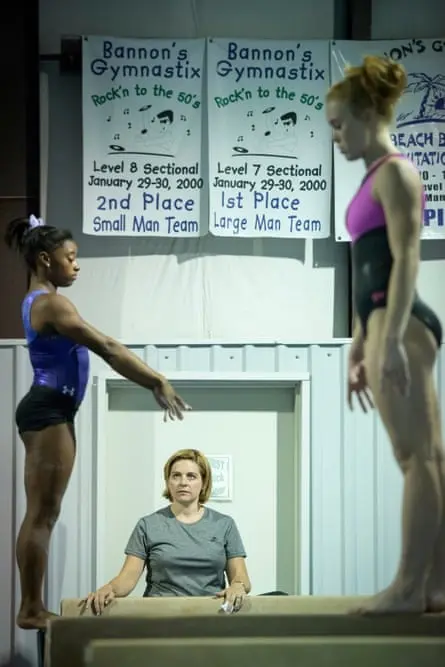
It has been a decade since the Indianapolis Star published explosive allegations of sexual abuse against Larry Nassar, the former team physician for USA Gymnastics, triggering a monumental reckoning for the sport across the globe. The exposure of Nassar’s systemic crimes eventually prompted hundreds of women to come forward with harrowing accounts of abuse, implicating not only USA Gymnastics but also Michigan State University where Nassar maintained an official medical presence. His eventual conviction and sentencing to multiple consecutive prison terms totaling up to life imprisonment sent shockwaves through the international sports community, permanently altering the landscape of elite athletics.
Yet, ten years after those initial revelations, survivors and athlete advocates gathered on a large houseboat moored in Rotterdam—just three tram stops away from the Ahoy Arena, where the World Gymnastics Championships were taking place—to sound the alarm over what they describe as a dangerously slow pace of meaningful institutional change.

While Nassar remains the most notorious and documented offender within the sport’s dark history, the unfolding scandal laid bare a broader, systemic failure. It exposed how international gymnastics governing bodies had long prioritized medals, prestige, and financial returns over the safety, well-being, and basic human rights of young athletes. Investigators and survivors alike soon realized that the institutional rot extended far beyond the United States, raising difficult and urgent questions for sports federations worldwide regarding their failure to shield children from rampant physical, emotional, and sexual abuse.
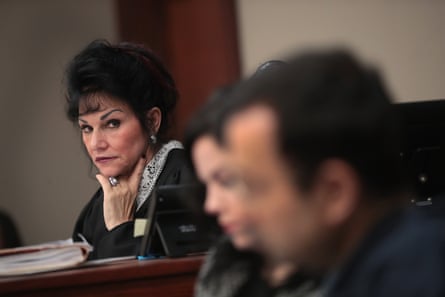
The seismic impact of the Nassar case was amplified significantly by the historic courtroom proceedings overseen by Judge Rosemarie Aquilina. When agreeing to Nassar’s plea deal, Judge Aquilina made the unprecedented and courageous decision to allow his victims to speak directly in her courtroom. Over the course of seven grueling days, 169 individuals took the stand to deliver blistering, emotionally charged testimonies detailing the devastating scope of Nassar’s abuse and its lingering psychological aftermath. Millions of people around the world tuned in to watch the proceedings as survivors confronted their abuser face-to-face. Ultimately, Judge Aquilina sentenced Nassar to up to 175 years in prison, which, combined with subsequent federal and state convictions, resulted in a total sentence of 300 years to life.
Reflecting on those extraordinary court sessions from the helm of the Rotterdam houseboat, Judge Aquilina recalled the profound transformation she witnessed in the courtroom. Working with such a vast number of victims revealed a clear pattern: when survivors speak out publicly, they visibly shed their pain, stand taller, and experience an automatic sense of relief and release. She noted how the list of willing speakers steadily grew from a dozen to scores of women, each one emboldened by the courage of the person who spoke before them. In a safe, validating space, these women were finally heard and believed, given the opportunity to look Nassar in the eye and declare that they were human beings with names, not mere numbers.
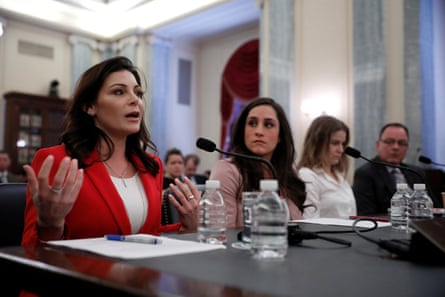
Among the prominent figures motivated to speak during that period was Olympic gold medalist Aly Raisman, who delivered a blistering condemnation of USA Gymnastics for its role in enabling Nassar’s actions. Raisman was joined by fellow gold medalist Jordyn Wieber, Olympic bronze medalist Jamie Dantzscher, and former U.S. national champion Mattie Larson. Furthermore, the mother of Maggie Nichols—the gymnast who first formally reported Nassar’s abusive behavior—read a powerful statement on her daughter’s behalf. Simone Biles, widely regarded as the greatest gymnast of her generation, later revealed her own experience as a survivor on social media before testifying publicly before the US Senate Judiciary Committee.
Two years after Nassar was sentenced, the release of the documentary film Athlete A, named in honor of Maggie Nichols, further galvanized the global movement. The film shone a harsh spotlight on the traditional coaching culture built on strict compliance, institutional fear, and enforced silence, detailing precisely how Nassar was able to operate unchecked for decades. The documentary served as a catalyst, opening floodgates of disclosure across the international sporting community.
For individuals like Kim Shore, a former Canadian gymnast from the 1980s who later served on the board of directors of Gymnastics Canada, the documentary and the U.S. court testimonies provided a devastating yet clarifying revelation. Shore, who experienced extensive mistreatment during her competitive career and later entered sports governance after failing to stop the cycle of abuse within her own family, recalled breaking down in tears while watching the survivors speak in court. Despite urging her fellow board members to watch the testimonies, she believes none of them did. For Shore, the organizational reaction from national governing bodies was utterly lacking, driven largely by institutional defensiveness and a desperate desire to avoid legal liability.

Similarly, Eloise Jotischky, a 23-year-old former gymnast who won a landmark civil lawsuit against British Gymnastics for the abuse she endured during her career, noted that the documentary provided survivors with the vocabulary necessary to articulate their trauma. Jotischky described elite gymnastics culture as functioning much like a closed, isolated cult or a coercively controlling domestic relationship. Young athletes are routinely pulled away from normal schooling, separated from friends, and subjected to an intense, round-the-clock lifestyle that deprives them of a normal childhood. Because these athletes are minors, the fundamental failure of adult duty of care becomes glaringly apparent. Jotischky ultimately stopped training at age 14, consumed by self-blame until exposure of systemic issues helped her understand that the problem lay within the abusive environment, not within herself.
The parallel experiences of former British gymnast Claire Heafford highlight the psychological toll of elite sport. Struggling with unaddressed trauma and psychiatric issues following her competitive career, Heafford found herself inexplicably drawn to professional wrestling—a hyper-masculine performance art characterized by explicit, visible violence—which she later recognized as an instinctive psychological inversion of the quiet, coercive control she had endured in gymnastics. When Athlete A was released, the realization hit her instantly. Recognizing that the culture of control and psychological manipulation was pervasive and normalized throughout the sport, Heafford founded Gymnasts for Change, an international alliance dedicated to advancing safer practices and bringing survivors together.
The global fallout from the Nassar scandal forced various governments and sports organizations to reckon with institutional failures. In the United States, the FBI formally acknowledged that its handling of the initial investigation was inexcusable, and Congress established the US Center for SafeSport, though that body has faced substantial ongoing criticism. USA Gymnastics cycled through four presidents in less than two years, committed to adopting numerous recommendations from independent safety reports, and established an Athlete Bill of Rights. Today, USAG maintains that athlete safety is its foremost priority, supported by mandatory safeguarding training for all adult members and a board of directors that includes former elite athletes and a dedicated survivor representative.

International ripples were felt strongly in Australia, Brazil, and Great Britain. In the UK, an independent review led by Anne Whyte QC concluded that physical and emotional abuse were systemic within British gymnastics. This prompted British Gymnastics to introduce a comprehensive 40-point action plan centered on a zero-tolerance approach to abuse and the cultivation of an environment where both athletes and coaches feel empowered to foster safe, positive experiences.
Efforts to reform coaching philosophies from the ground up have been championed by figures like Aimee Boorman, the former coach of Simone Biles. Having experienced negative coaching practices firsthand as a child gymnast, Boorman deliberately structured her career around ensuring that no young athlete would ever have to experience the fear and degradation she once felt. Despite being told by traditionalists that she was "too nice" to achieve elite success, Boorman rejected conventional metrics that equated abuse with discipline. Her definition of success centers on raising happy, healthy athletes who retain a lifelong love for the sport—a philosophy proven entirely compatible with the highest levels of competitive achievement, as demonstrated by her historic partnership with Biles.
Across continental Europe, former athletes have similarly stepped forward to demand accountability. Former Dutch gymnast Petra Witjes authored the memoir Silenced for Gold, detailing the systemic abuses she faced and her subsequent battle to expose them. Witjes described a culture of total isolation where coaches actively worked to sever trust between athletes and their parents, convincing children that families could never truly understand elite gymnastics. In Germany, former gymnast Adina Hausch recounted how a catastrophic training injury that shattered her leg ultimately brought a sense of relief, freeing her from years of training continuously through severe physical pain.

Despite these individual reckonings and various institutional policy updates, advocates emphasize that the pace of reform remains frustratingly sluggish. Charlotte Jacobs, an 18-year-old who quit the sport after enduring severe emotional abuse during training in the UK, pointed out that non-physical abuse—such as relentless public ridicule, arbitrary restrictions on basic bodily needs like water and restroom access, and pervasive intimidation—remains deeply embedded in many gym environments.
Kim Shore argues that true, lasting reform requires top-down leadership from international governing bodies like World Gymnastics. Without unified global standards, problematic coaches simply migrate from club to club, or across national borders, evading accountability when local disciplinary measures fail. While World Gymnastics has introduced initiatives such as the Safeguarding Policy, the 10 Golden Rules of Gymnastics, a dedicated Safeguarding Commission, and the Gymnastics Ethics Foundation—which has handled nearly 500 reports—critics argue that sports federations remain reluctant to fully engage with survivors due to deep-seated fears of financial liability and institutional exposure.
World Gymnastics maintains that creating a safe environment for current and future generations is an absolute priority that requires translating updated rules and policies into meaningful, everyday practice across all member federations. However, survivor advocates like Heafford remain deeply critical of current disciplinary processes, asserting that national bodies often fail to collaborate authentically with survivors or deliver genuinely transparent and satisfactory outcomes for those who report abuse.
Human rights experts warn that the risks to young athletes are only intensifying as international sports expand. Minky Worden of Human Rights Watch points to major upcoming youth athletic events featuring thousands of elite competitors aged 18 or younger, noting that these children are frequently monetized within high-performance systems that still lack adequate, independent protection. Advocates like Hausch advocate for structural boundaries, such as raising the minimum competition age to 18 to spare young adolescents from the crushing physical and psychological pressures of senior-level international competition.
Furthermore, legal experts and advocates emphasize critical gaps in existing legislation. Eloise Jotischky, who is now pursuing a legal education informed by her own experiences, points out that laws addressing coercive control—such as the UK’s Serious Crime Act and Domestic Abuse Act—remain largely restricted to domestic and familial settings. Consequently, coach-athlete relationships, where young people spend up to thirty hours a week under intense psychological influence, lack explicit legal recognition regarding coercive control, leaving significant legislative ground unaddressed.
Ten years after the initial revelations in Indianapolis, the overarching narrative emerging from survivors and advocates is one of profound frustration. While sports federations worldwide have introduced varying layers of policy reform under immense public pressure, survivors continue to feel alienated from the very administrative structures designed to protect them. As long as athletic governing bodies keep independent survivor expertise at arm’s length, the foundational culture of the sport risks remaining fundamentally unchanged, leaving future generations of athletes vulnerable to the same systemic failures.